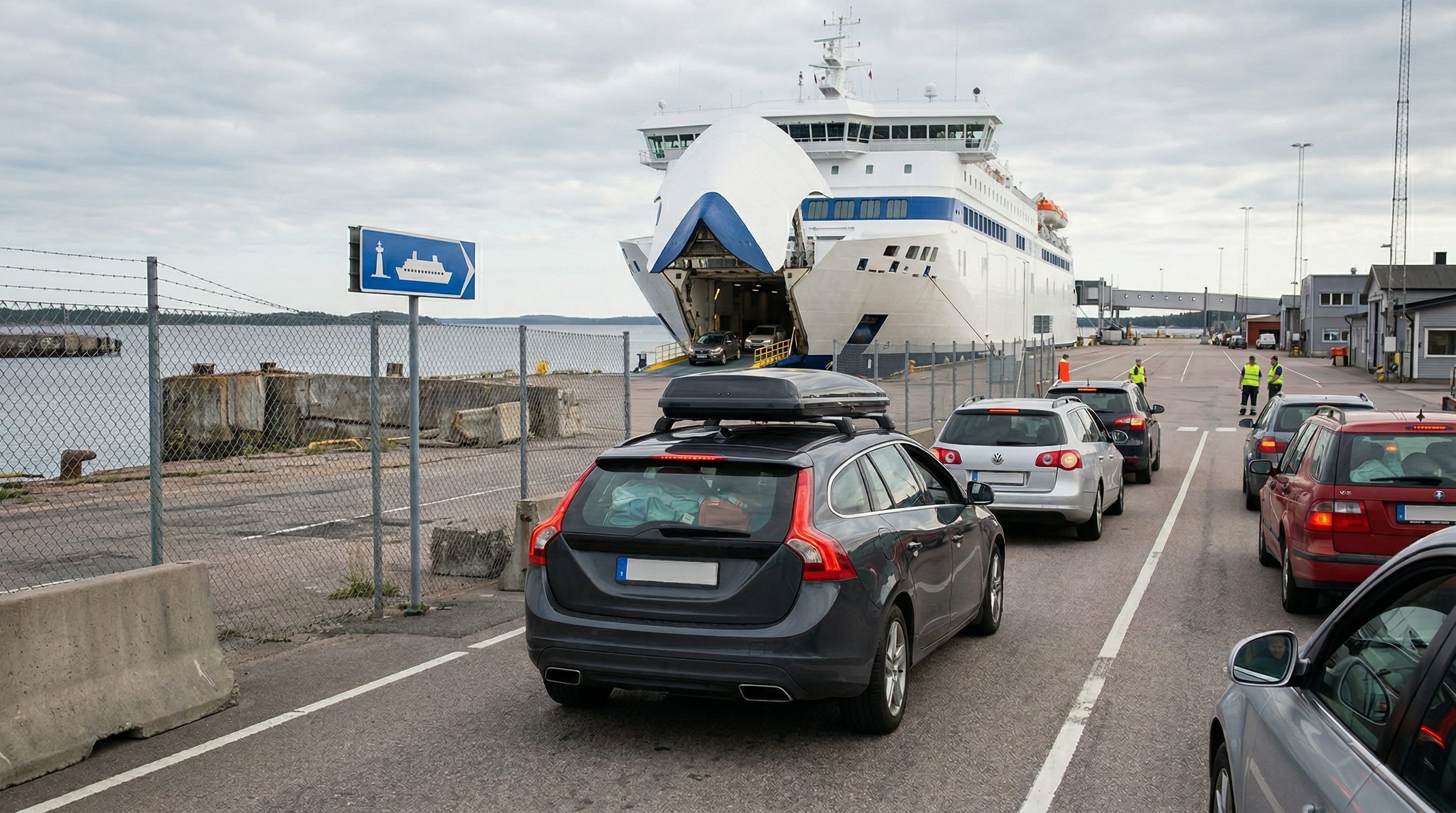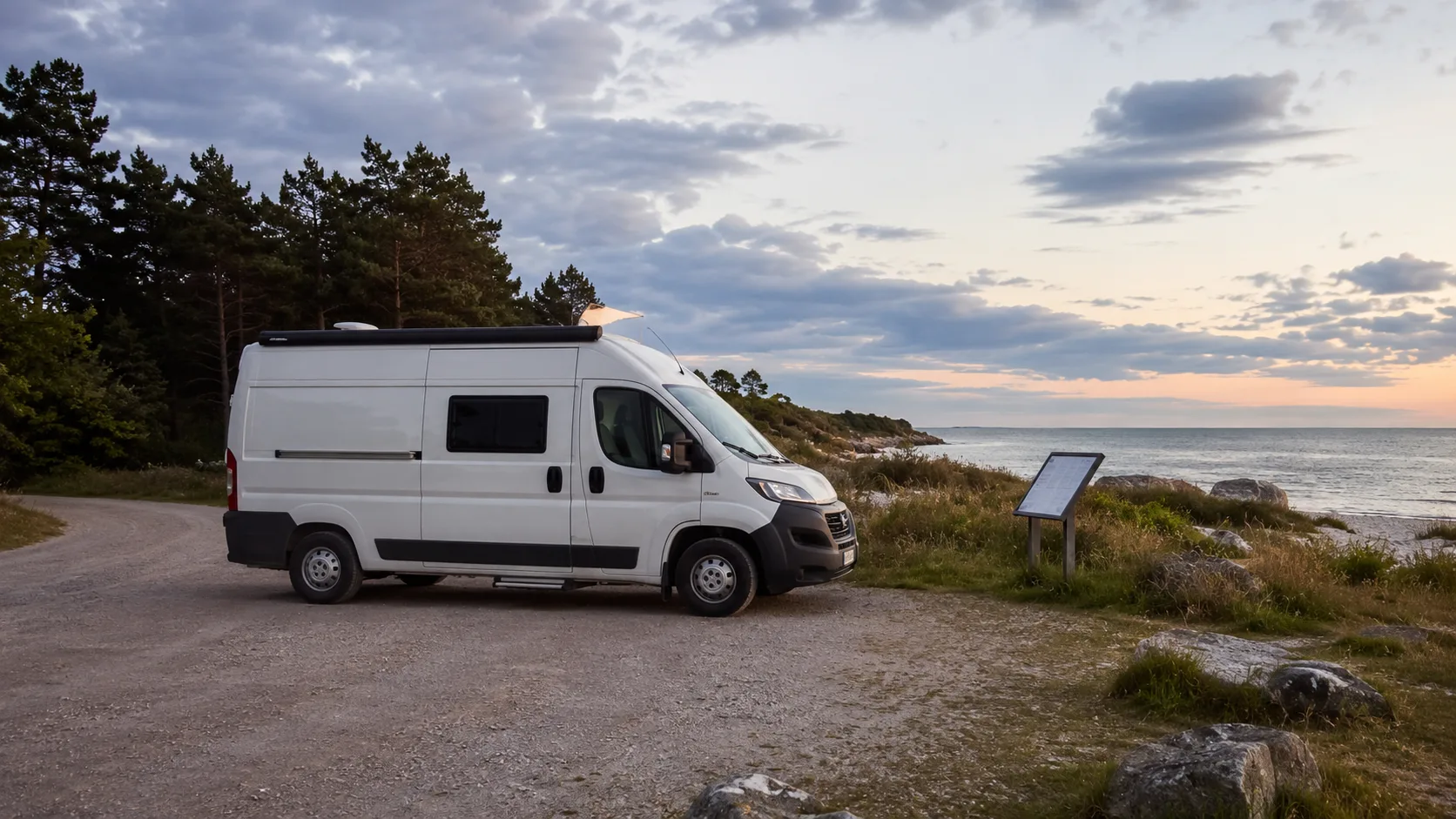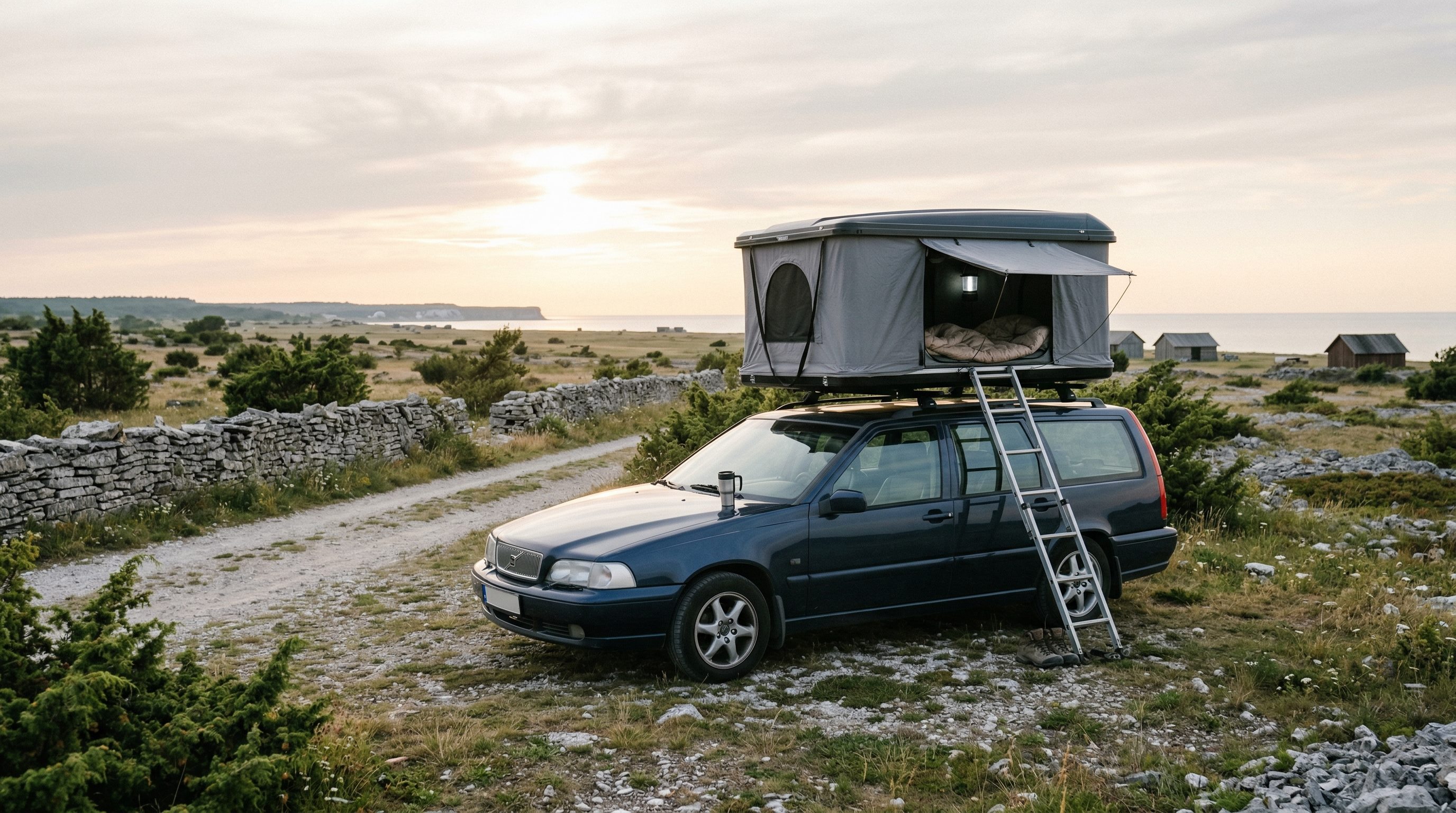
A Gotland rooftop-tent trip begins before the ferry ramp. Roof load, actual vehicle height, luggage and the first lawful night all need attention. The island is exposed, windy and built on uneven limestone.
A rooftop tent raises the centre of gravity and drag on the drive to Nynäshamn or Oskarshamn. Measure the complete vehicle and use our Gotland ferry-cost guide before booking.
Replace the postcard expectation with the island's reality
The clifftop sunset is often a poor sleeping place. Gotland's flat coast provides little natural shelter, and a calm evening can become a night of vehicle movement and loud fabric.
Separate dinner and photography stops from overnight places. Move inland or behind a bank, pine stand or stone wall when the forecast demands shelter.
Let wind decide the night
A rooftop tent acts as a large sail. On the Eksta coast, a mild south-westerly can turn into uncomfortable gusts from another direction.
The ordinary gravel place several kilometres from the sea may provide far better sleep than the exposed shoreline. Follow the tent manufacturer's wind limits and close the tent when conditions require it.
Level the car and secure the ladder
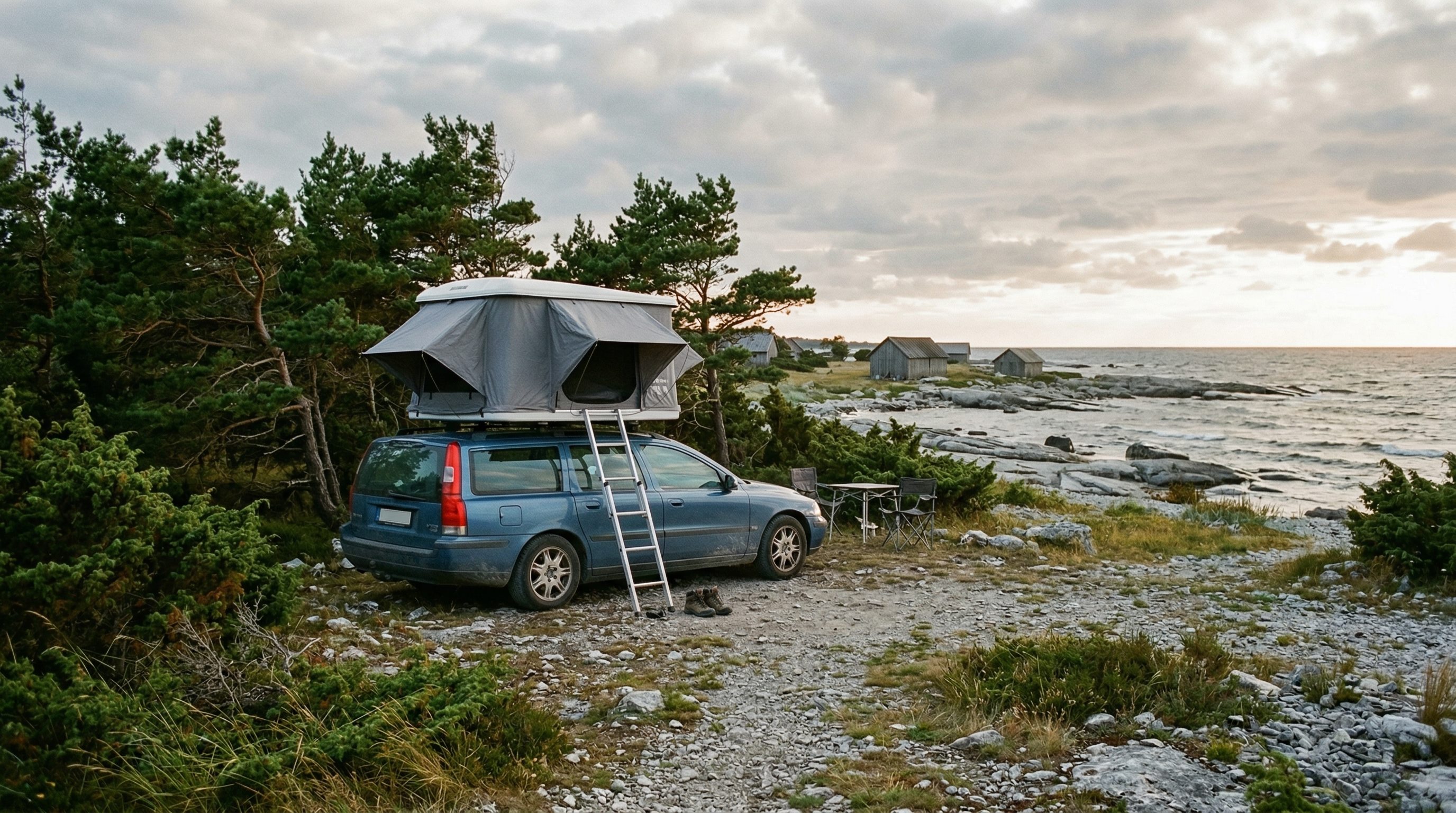
Dry limestone is firm but uneven. A few degrees of slope can ruin sleep, so carry suitable levelling ramps and position the car before opening the tent.
Many tent ladders form part of the support. They can sink in soft ground or slip on hard rock. Follow the model's setup instructions and confirm stable contact rather than improvising with loose stones.
Respect protected and working land
A rooftop-tent journey involves a motor vehicle. The Right of Public Access does not allow driving or parking anywhere in nature, and Gotland contains sensitive reserves and bird-protection areas.
Never block agricultural or forestry access, park on a meadow or argue with a prohibition sign. Read our guide to wild camping on Gotland for the distinction between parking and camping.
Choose function over the view
A photography stop favours exposure and scenery. A night needs shelter, stable ground, safe access and a workable setup around the boot, ladder and stove.
A pine clearing without a sea view can provide the better adventure because everybody sleeps. Ask whether rain will drain, the boot can open and the morning exit remains simple.
Keep a private archive of wind and ground
After several coastal nights, east and west blur together. The useful detail is whether a place worked in a southerly wind, required two ramps or became exposed from the north-east.
Log the journey in FARON and keep wind direction, ground and exposure beside the location. The trip map turns those notes into future decisions, while FARON for rooftop tents explains the wider private archive.
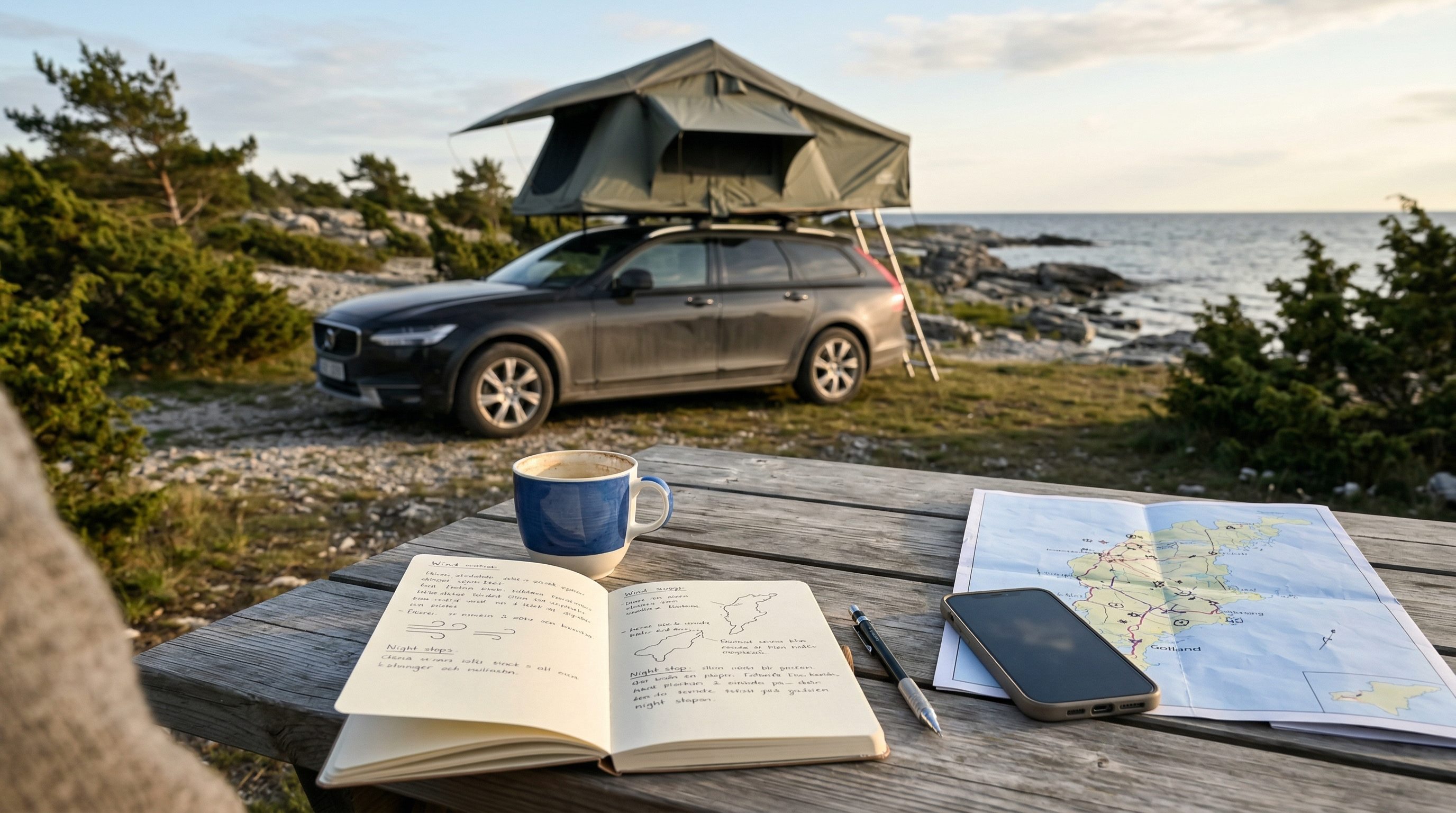
Leave with knowledge, not only photographs
Gotland's rooftop-tent freedom comes from adapting to conditions, not standing anywhere. Save each choice while fresh, then begin the next island journey with your first FARON record.
FAQ
What should I prepare for a rooftop-tent trip to Gotland?
Confirm roof limits, actual ferry dimensions, secure packing and a lawful first-night backup. On the island, prioritise shelter and stable ground.
Is wind a major problem for rooftop tents on Gotland?
Yes. The island is exposed and wind can change quickly, so follow equipment limits and use trees, banks or terrain for shelter where parking is permitted.
How do I choose a good rooftop-tent place?
Choose lawful parking on firm, level ground with a clear exit and shelter. Check signs, local rules and protected-area regulations.
How do I save the best Gotland nights?
Record the coordinate, wind, ground, exposure and one photograph privately in FARON so the next decision uses your own experience.