Start with three decisions
- Choose one route: the west-coast loop between Bergen and Kristiansund via the Atlantic Road, or Lofoten via Narvik. Combining both in two weeks creates mostly driving.
- Separate tents from vehicles: Norway's right to roam covers tenting on uncultivated land under stated conditions, not automatic motorhome parking.
- Pack for sudden weather: warm base layers, a proper rain jacket and reliable storm protection matter more than another gadget.
Choose a coherent route instead of trying to complete Norway.
A Norwegian road trip can feel like an expedition on its first day. Distances, light and weather change the rhythm, whether you leave the E6 north of Trondheim or drive south from Bodø late in the afternoon. Success comes from understanding geography, vehicle rules, ferries and weather — then leaving time to stop.
Choose between two realistic first routes
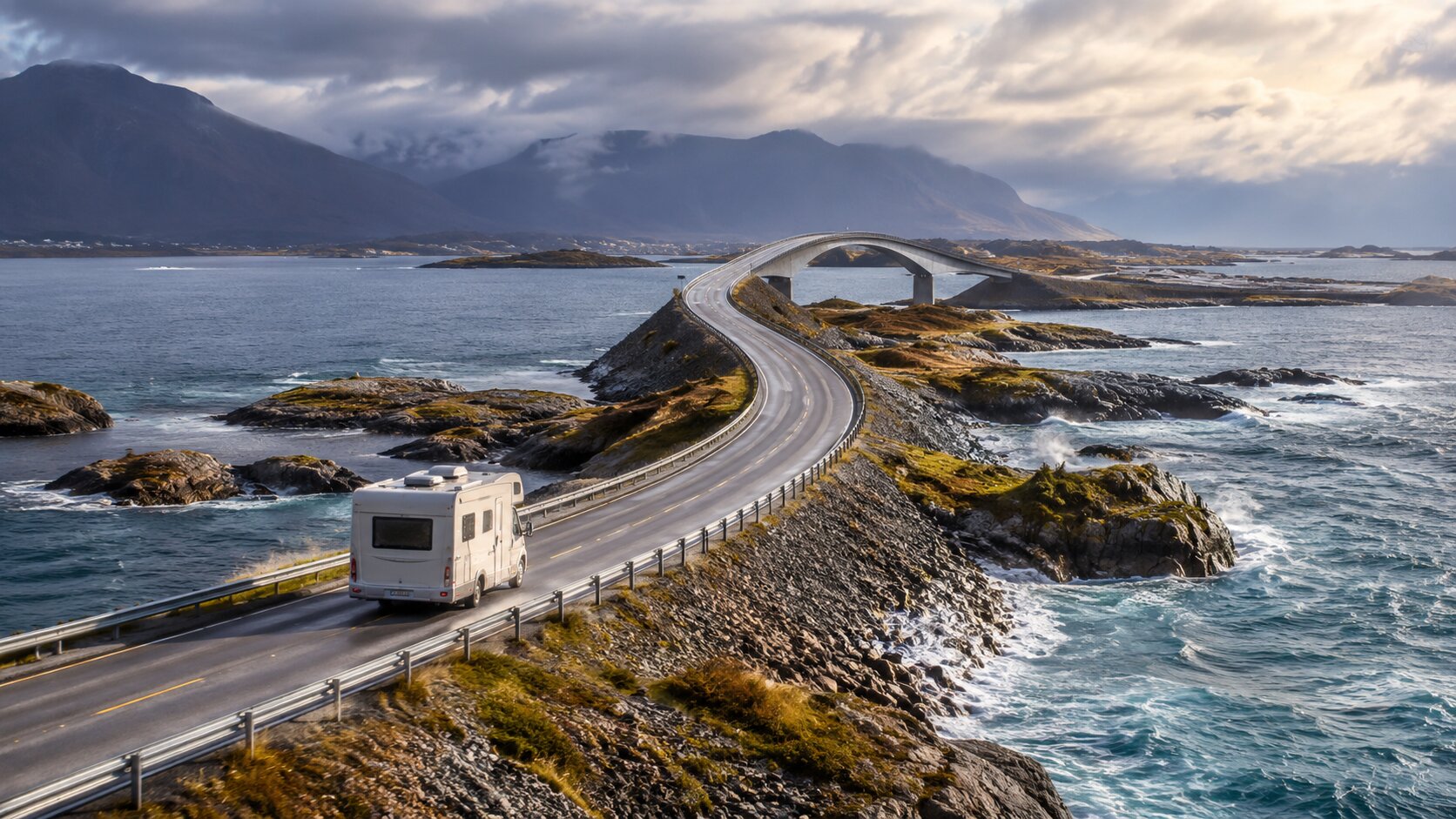
The west-coast route runs between Bergen and Kristiansund with the Atlantic Road as one highlight. Enter through Oslo or Sweden's west coast, then let Hardangerfjord, Sognefjord and the smaller ferries set the pace. The official Atlantic Road scenic route between Kårvåg and Bud is 36 kilometres, but the approaches and surrounding coast are the real journey. Allow roughly two weeks for actual stops.
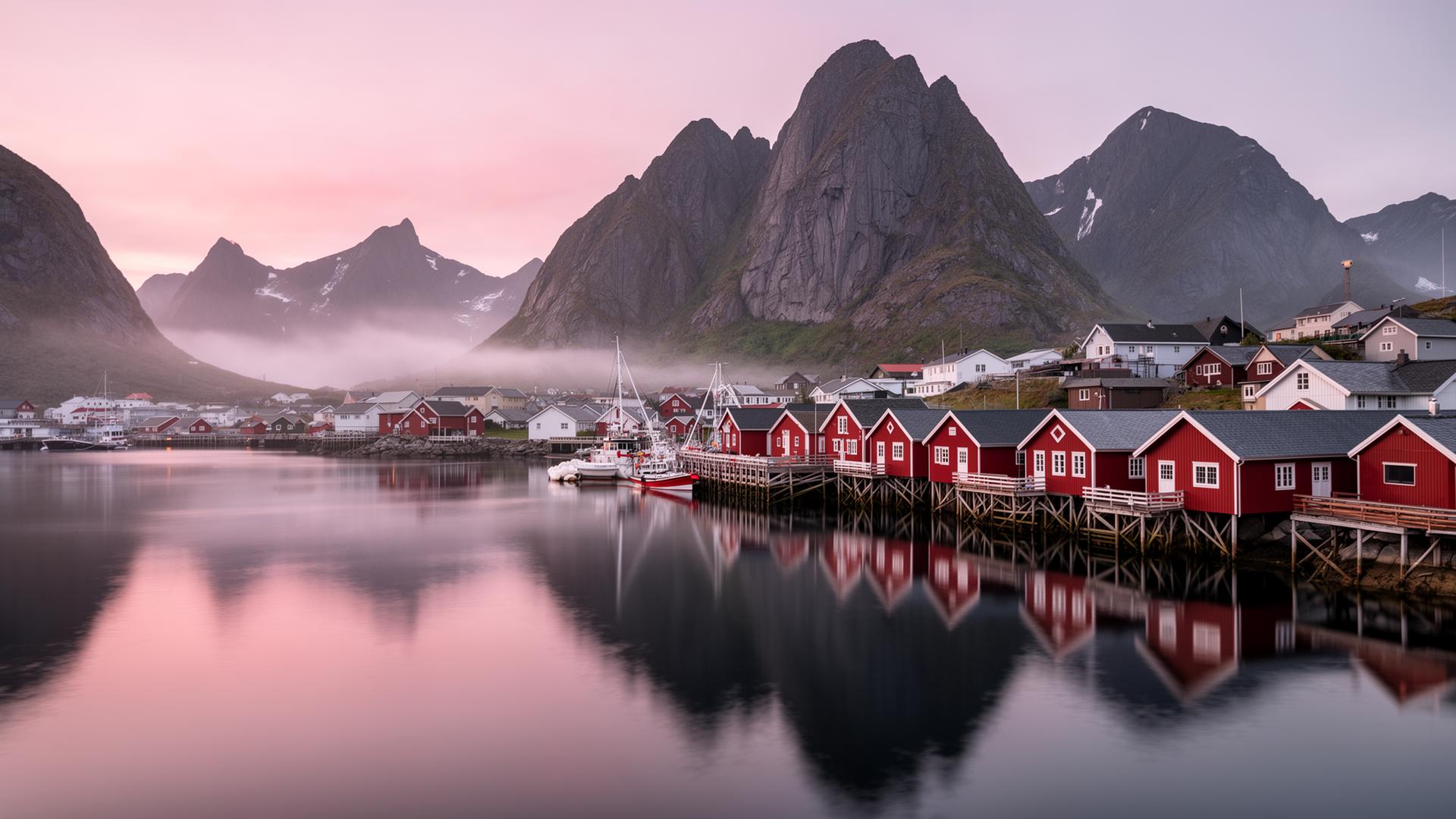
The northern alternative reaches Lofoten through Sweden and Narvik, then follows the E10 between Reine, Hamnøy, Henningsvær and Eggum. A whole week can pass within a hundred kilometres. With three weeks, add Vesterålen and Senja, but little more if the trip should remain calm. The Lofoten motorhome guide covers the Bodø–Moskenes ferry and the narrow E10 in more detail.
Understand Norway's wild-camping distinction
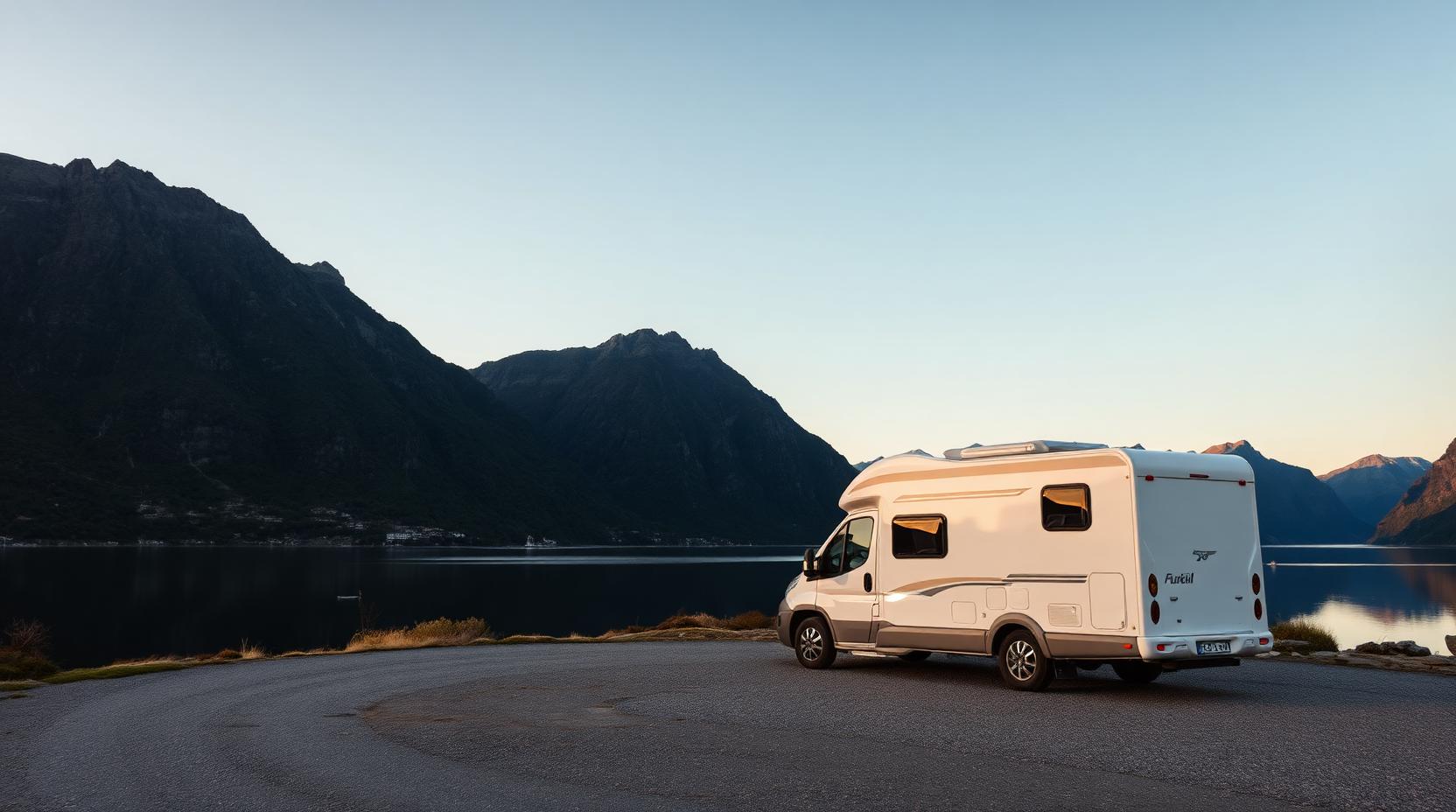
The Norwegian allemannsretten allows responsible access and tenting on uncultivated land, normally for up to two nights without permission. That right concerns tents; it does not automatically authorise a parked motorhome, campervan or rooftop-tent car.
A vehicle must be legally driven and parked, while local rules can still prohibit camping or overnight stays. Such restrictions are increasingly common in Lofoten and busy fjord districts. Use formal motorhome areas, small campsites, municipal parking that explicitly permits overnight stays and suitable rest areas. Read every current sign.
Plan the ferry and mountain road as separate legs
Start with the ferry’s two ports and your travel date. Vegvesen’s ferry search lets you choose departure and arrival terminals and a departure time. Then confirm the timetable, any reservation and check-in deadline with the operator. A blanket allowance of 30–60 minutes tells you little when the next sailing or space for your vehicle determines the wait.
For a day with two ferries, I would begin with the crossing offering fewer usable departures. Work out the drive to its port, the crossing, the next drive and your breaks. If missing one ferry puts your overnight stop out of sensible reach, choose a closer end point for the day.
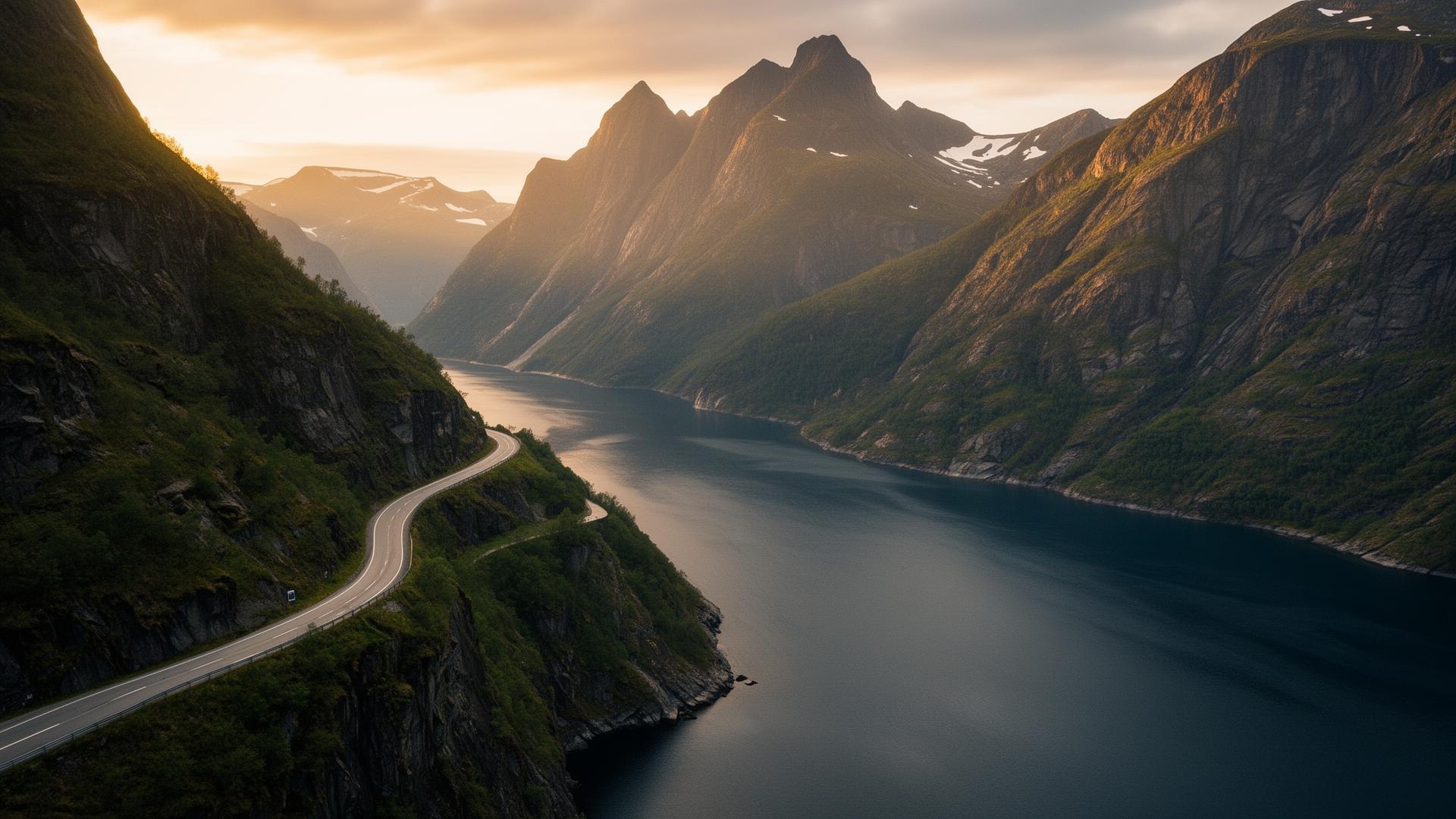
A mountain road needs its own decision. The Sognefjellet scenic route runs 108 kilometres between Lom and Gaupne, reaching 1,434 metres above sea level. The Rustasætre/Vegaskjelet–Turtagrø section closes in winter; night and weather closures can also occur after the seasonal opening. Norwegian mountain roads do not share one opening date.
Choose your day’s road in Vegvesen’s traffic map and read its alerts before setting out. If a pass is closed, replan from your current location before booking the next night. Keep an alternative. Leave some slack. A shorter day with time to stop is often more useful than a route that depends on every ferry and mountain pass working exactly as expected.
Carry food, water and weather protection
Bring staple food and refill fresh items in Norwegian supermarkets. Most ordinary shops close on Sundays, with limited exceptions, so verify local opening times before depending on a Sunday purchase.
Water, showers and waste disposal are common at staffed campsites and motorhome areas but less frequent in the mountains and outer Lofoten. Start looking for water before the tank falls below one quarter, and carry rubbish to a staffed disposal point rather than overloading a roadside bin.
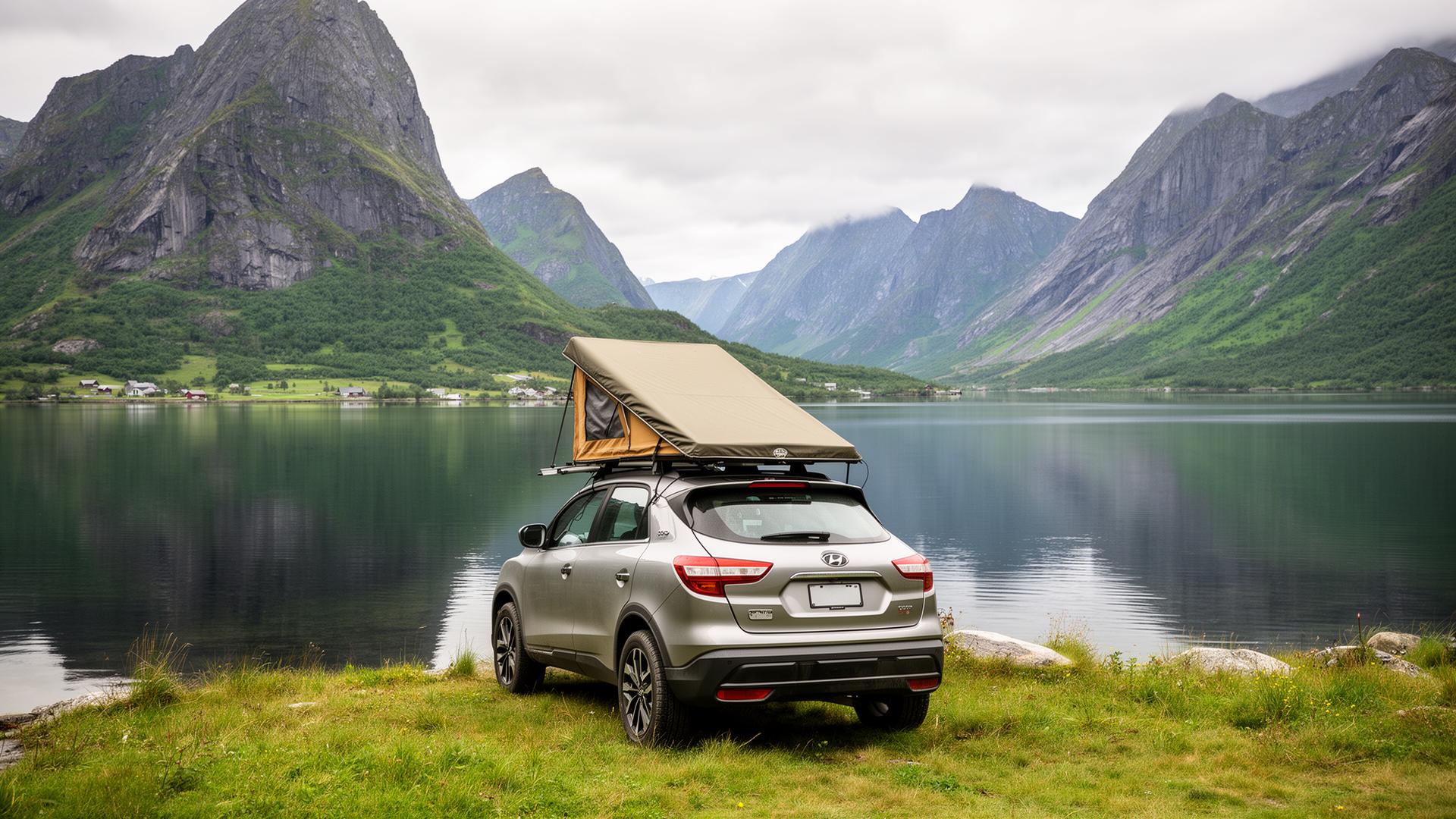
An August week can move from twenty degrees and clear light to eight degrees, driving rain and a westerly gale. Pack warm layers, waterproofs and strong footwear even in midsummer. A rooftop tent needs a wind plan, not just rain protection.
Choose the season deliberately
Late June through the first half of August is a reasonable first choice for a summer trip, but peak season guarantees neither open mountain roads nor available overnight stops. For a quieter trip, I would also consider late August or early September and check the opening days of the campsites and attractions actually included in the route.
Later autumn brings campsite closures, possible mountain snow and seasonal-road closures. A winter Lofoten journey belongs to a heated, winter-tested vehicle and an experienced crew; it is not the easiest first Norwegian trip.
Keep the detail the landscape cannot remember for you
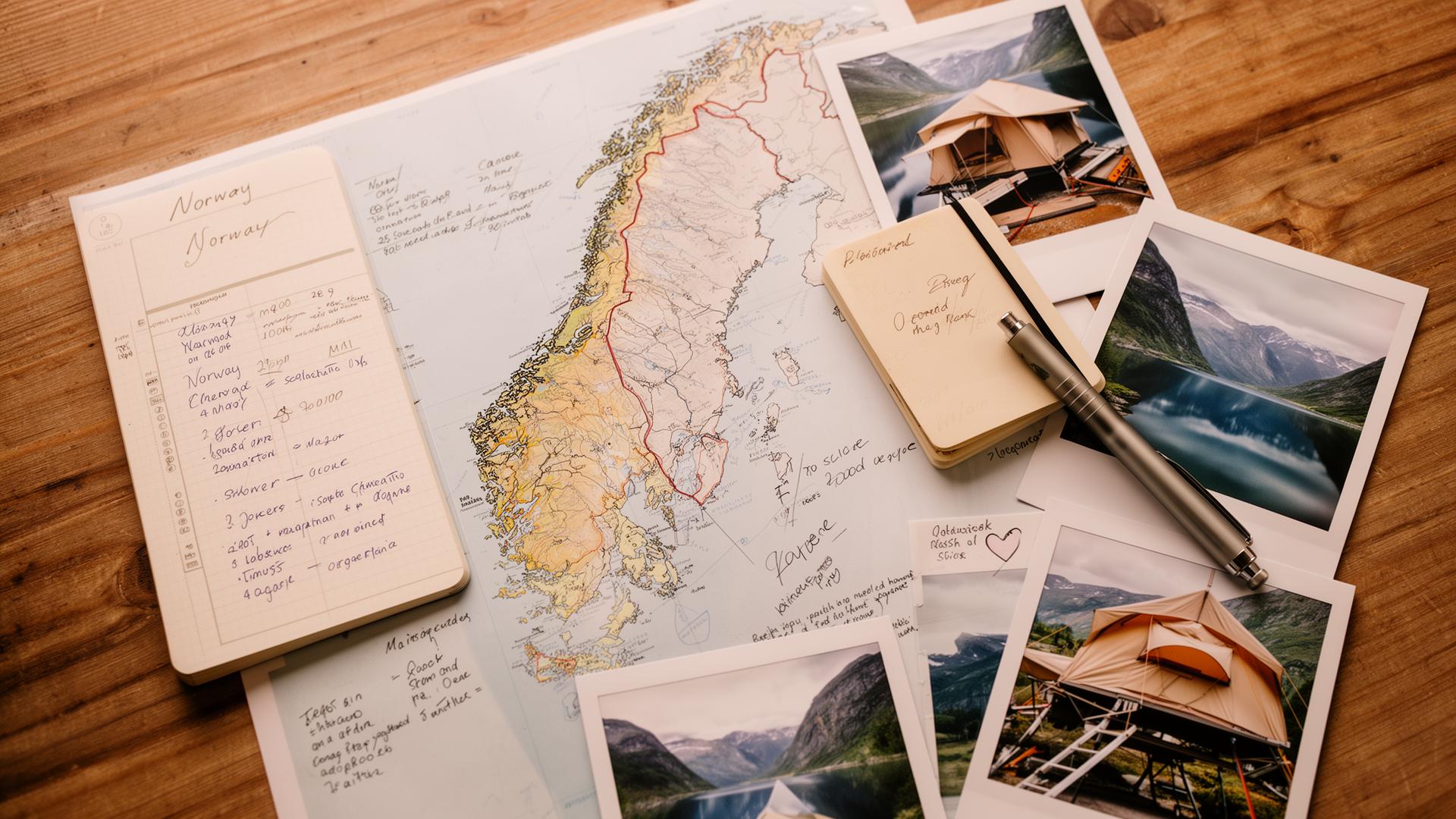
The Hardanger farmer's parking area, the ferry with the shortest queue and the quiet turn from the E10 disappear before the great views. Save the coordinate, photograph and one practical sentence.
Use Log overnight stays to keep them private, then revisit the whole route on the trip map. Ferry stages, tunnels and elevation can explain why one day felt much harder than its distance suggested.
Frequently asked questions
May I wild camp anywhere with a motorhome in Norway?
No. The right to roam covers tenting on uncultivated land under stated conditions, while a motorhome must be legally parked and comply with local overnight rules.
How much of Norway fits into two weeks?
Two weeks suit either the Bergen–Kristiansund west-coast route or an unhurried Lofoten journey. Combining both usually creates too much driving.
When do Norway's mountain roads and ferries open?
Opening dates differ by road, year and weather; ferry departures depend on the route and date. Check current road status with Statens vegvesen and confirm the ferry timetable with its operator rather than relying on one opening month.
How can I save Norwegian overnight places privately?
Log each night in FARON with its position, photograph and short note. It remains private unless you explicitly share it.