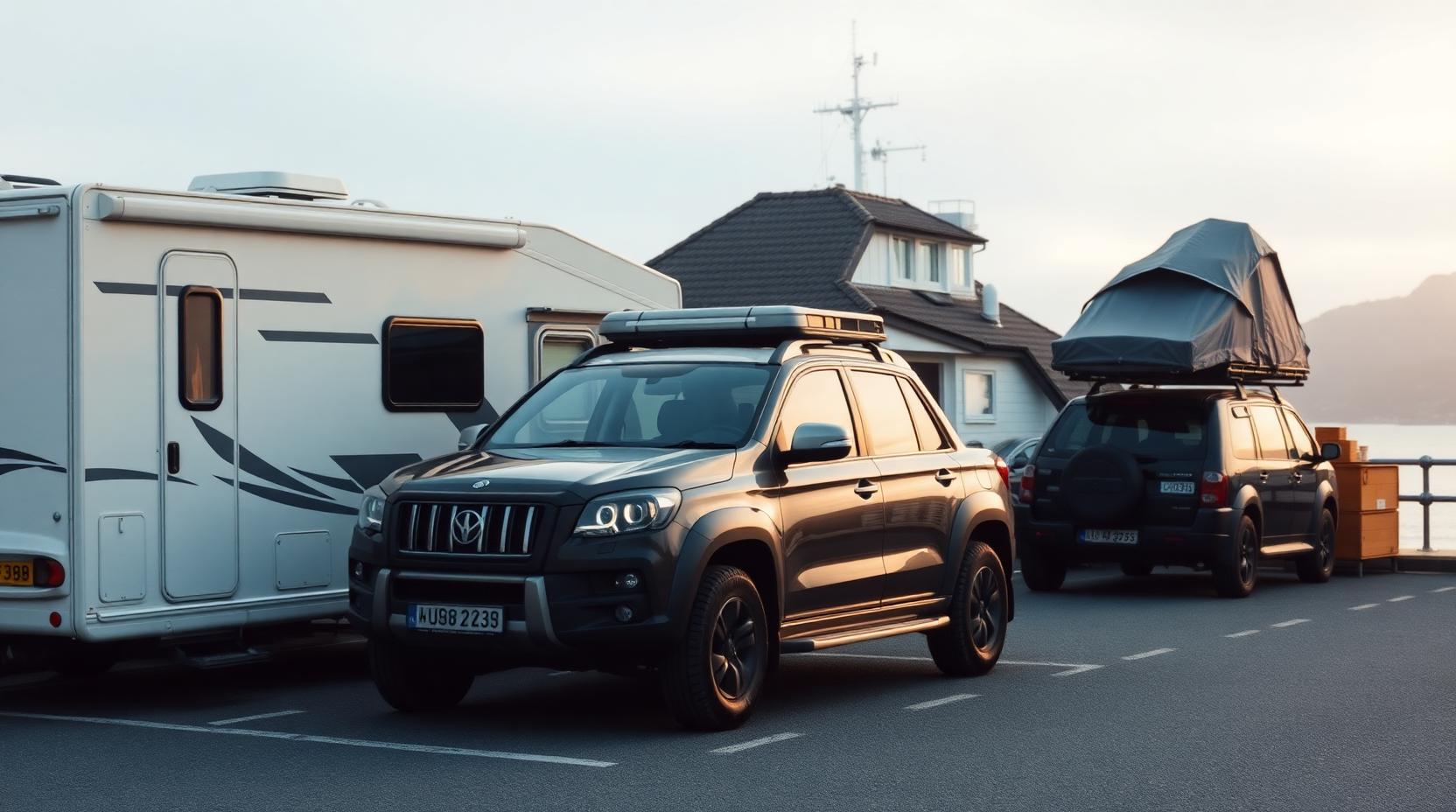
Many mistakes on a Norway trip cannot be repaired at the roadside. They belong at the kitchen table: a ferry assumed to be booked, no toll arrangement, the wrong gas connection, a first-night shop costing more than expected and insurance that does not cover the vehicle you are driving.
This checklist is for a motorhome, campervan or rooftop-tent car. Settle ferries, tolls, food, gas and insurance before the landscape takes over.
Check which ferries need a reservation
Many Norwegian domestic ferries function as part of the road network. You arrive, join the queue and board when directed. Payment may use the registration plate, AutoPASS or an operator's payment system. Procedures differ, so check the current operator for every crossing on your route.
Longer and international crossings are more sensitive to capacity. Reservation arrangements for Bodø–Moskenes and check-in times can change; crossings from Hirtshals to Norway are worth booking early with a motorhome in summer. Vehicle height and overall length often affect the price, so measure the full outfit.
Treat the check-in time in your booking as a deadline. Do not rely on one general margin for every company or route.
Arrange AutoPASS and toll payment
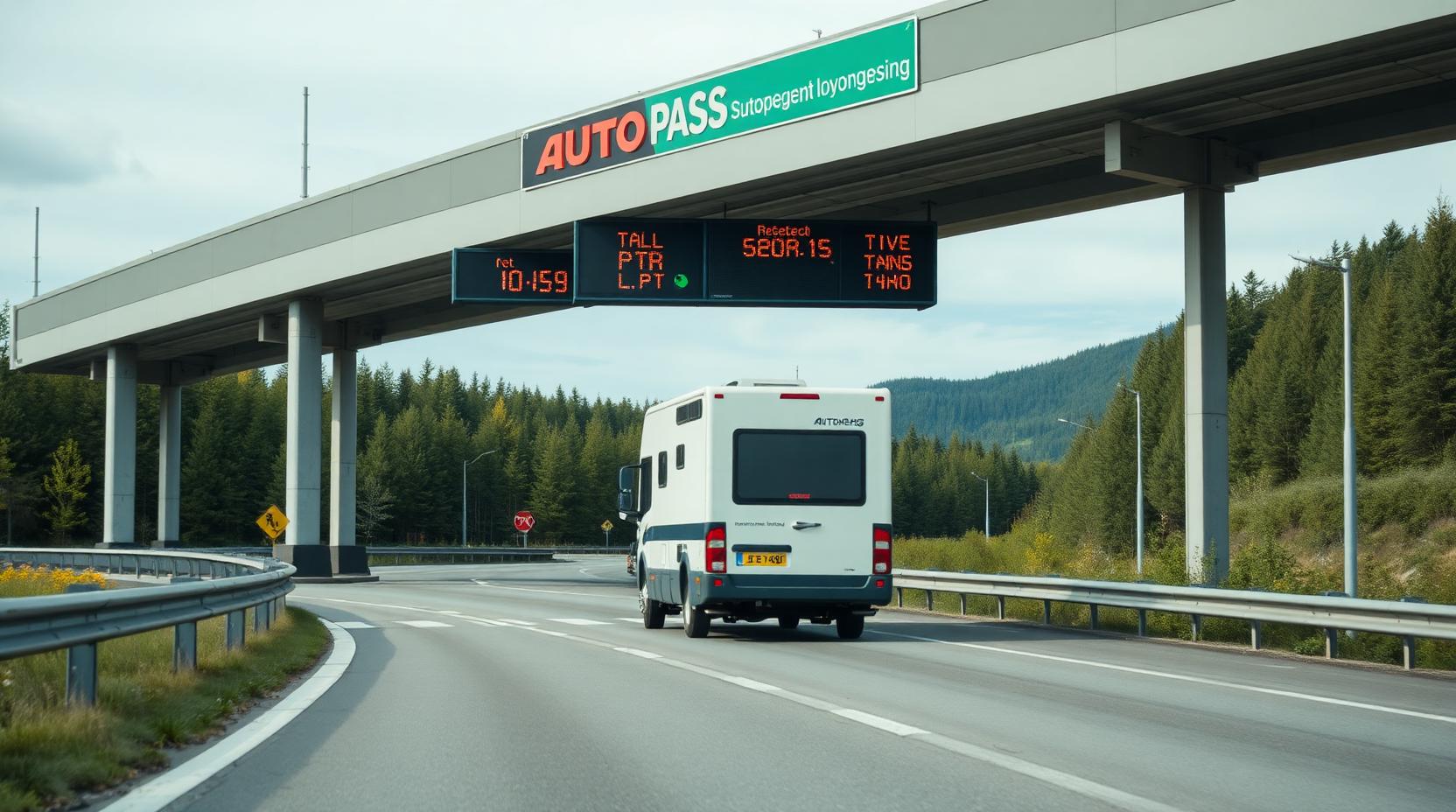
Norwegian toll points are automatic. A toll tag is read or the registration plate photographed. Foreign vehicles can be registered with Epass24 and driven without a tag; an AutoPASS user agreement provides a tag and discounts.
As of January 2026, AutoPASS states that foreign light vehicles with an agreement receive a 20% discount on toll transactions, while Epass24 registration without a tag receives no discount. Order a tag well before departure because light-vehicle tags are not issued at the border. Vehicles above 3,500 kg can be subject to separate rules.
Ferries may also charge automatically. Verify whether the particular route uses AutoPASS for ferries, FerryPay or another operator process.
Pack staples and buy fresh food locally
Norwegian groceries often cost more than Swedish ones, although the difference varies by product, shop and location. Do not fill the vehicle with three weeks of food. Bring compact staples such as coffee, tea, crispbread, pasta, spices and road snacks; buy fresh bread, milk, fruit, vegetables, fish and meat along the route.
A flask is a small but effective saving on long driving days. Fill it at breakfast and two roadside breaks no longer depend on a café being open.
Check gas bottles, valves and adapters
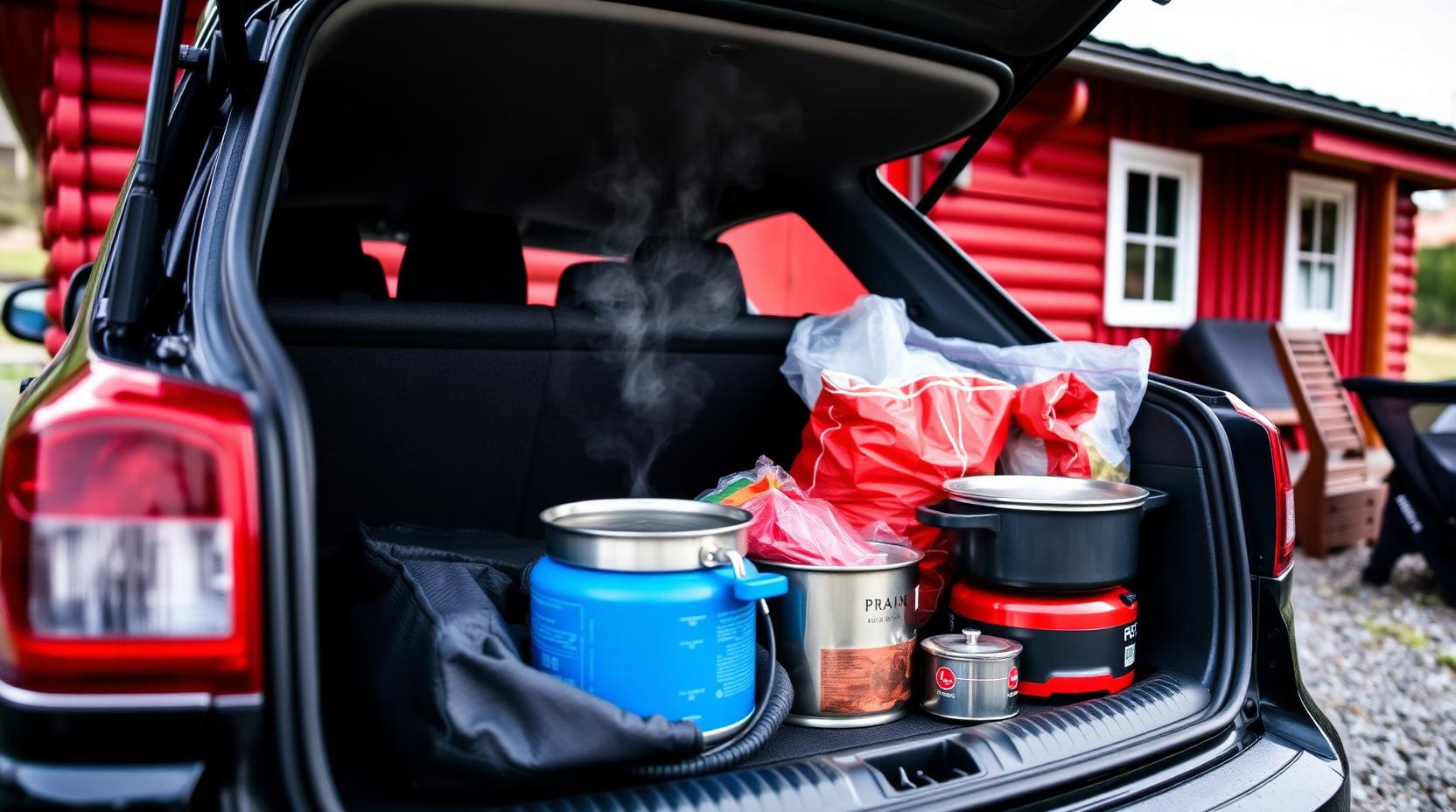
Swedish and Norwegian exchange bottles do not automatically use the same system. Do not assume a Swedish bottle can be exchanged in a Norwegian shop. For a short trip, leave with sufficient filled Swedish bottles.
For a long journey, research a compatible Norwegian bottle and the correct regulator or adapter before departure. Never improvise gas fittings. Rooftop-tent travellers using screw-thread camping cartridges generally have simpler supply needs, but should still check availability on the planned route.
Inspect fixed motorhome or campervan gas systems, hoses and regulators during the week before leaving.
Confirm insurance for the actual vehicle and equipment
Ask the insurer to confirm three points in writing: geographical cover in Norway, roadside assistance and alternative accommodation, and whether a rooftop tent counts as an insured accessory. Rental vehicles and trailers need their own checks.
Motorhome policies may cap cover for belongings left inside. Check bicycles and expensive outdoor equipment separately, then use suitable locks or trackers rather than assuming the vehicle policy covers everything.
For necessary healthcare during a temporary stay, each Swedish traveller — including children — should carry a European Health Insurance Card. Norway is covered through the EEA. The card is free from Försäkringskassan, valid for three years and applies on the same terms as residents within the eligible healthcare system.
Keep the practical lessons for next year
Once in Norway, log each night with its position and one useful note. Next year, you will know which Lofoten parking place worked, which ferry connection was easiest and where a useful food shop sat along the route.
FAQ
Do I need to reserve Norwegian ferries?
Many short domestic ferries accept vehicles in the ordinary queue, while long or international crossings are worth reserving. Always check the current operator, capacity rules and check-in time.
Do I need an AutoPASS tag?
No. You can register a foreign vehicle with Epass24 without a tag, but an AutoPASS agreement can provide toll discounts and should be arranged before departure.
How expensive are groceries in Norway?
They are often more expensive than in Sweden, with substantial variation between goods and shops. Bring compact staples and buy fresh food locally rather than overloading the vehicle.
Does Swedish vehicle insurance cover Norway?
Often, but you must confirm the policy's geographical cover, assistance terms and treatment of accessories such as a rooftop tent with your insurer.