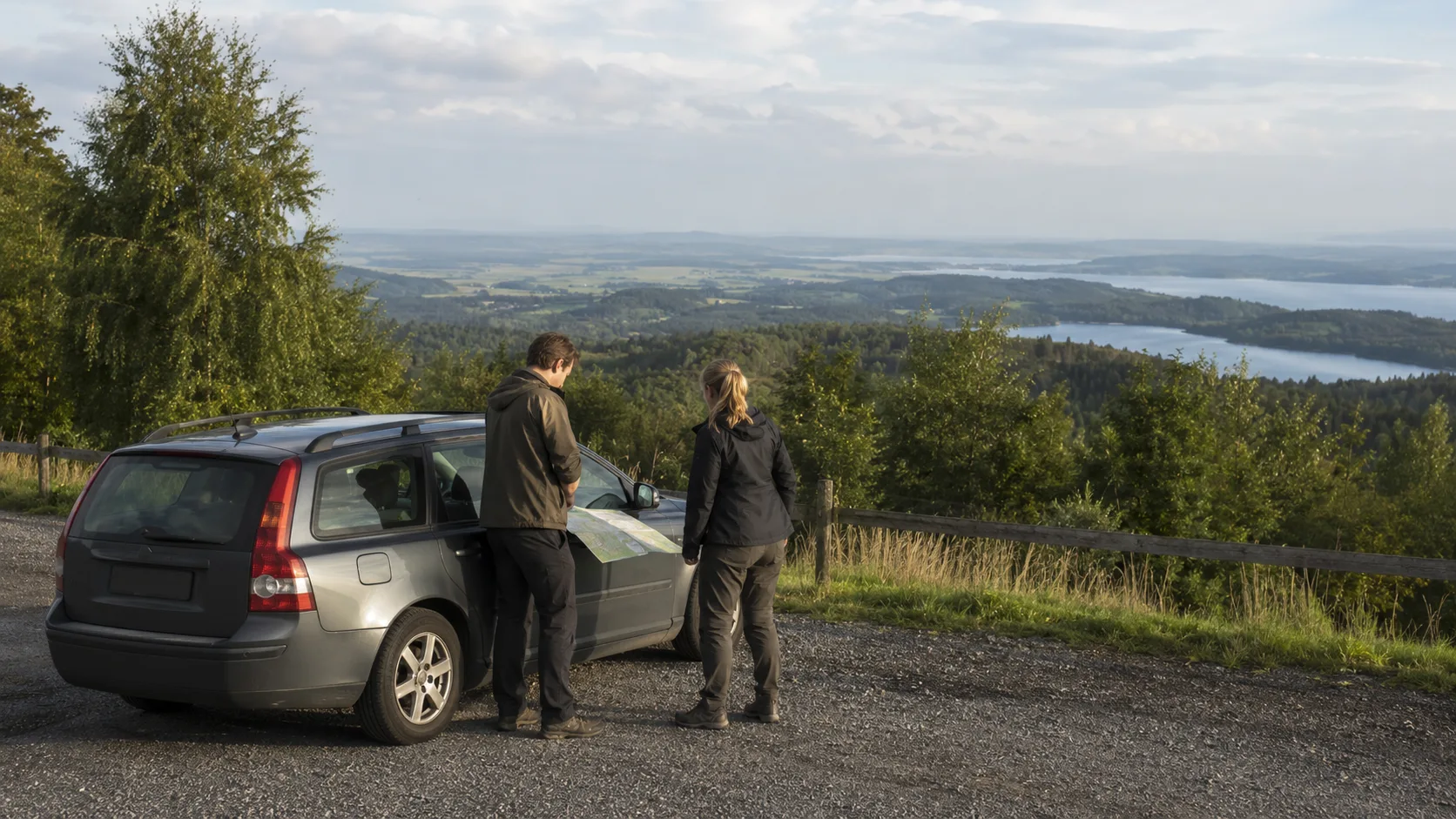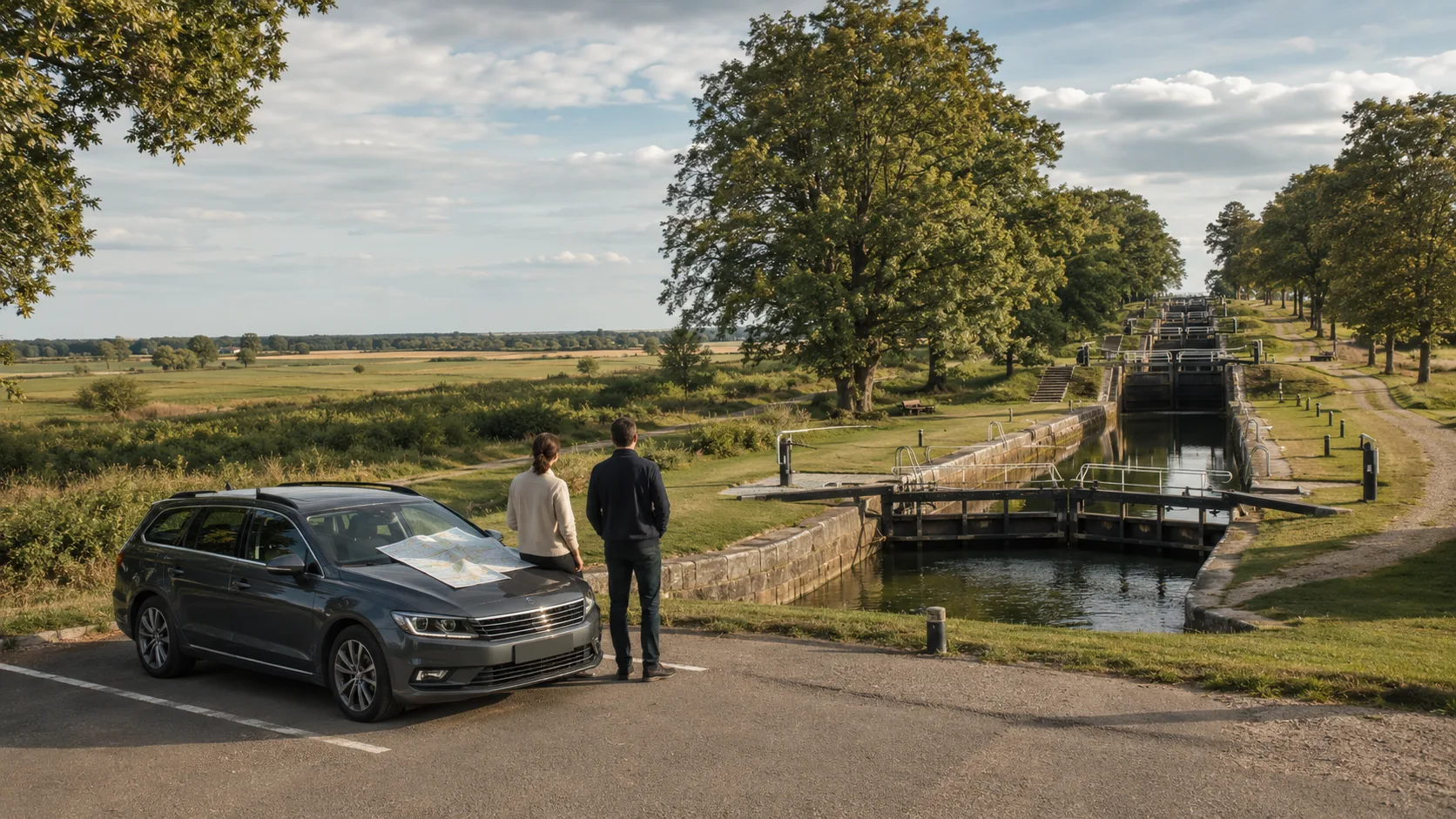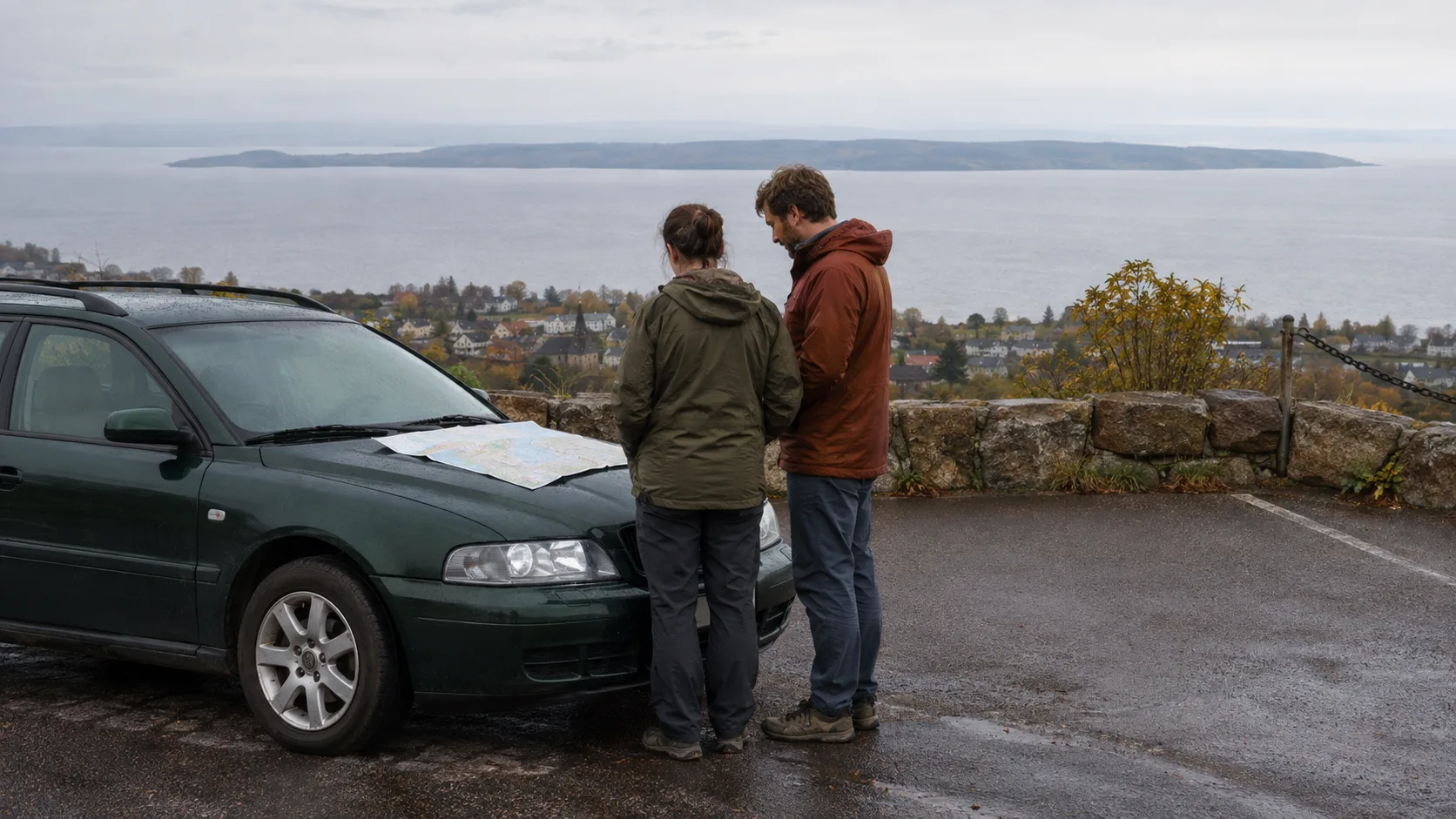
Jönköping County is the Swedish journey where a Lake Vättern ferry, a wooden town and a vast bog can fit into one week. Gränna and Visingsö work best when you accept the ferry timetable and slow the day down, while Eksjö, Store Mosse and Isaberg reward a looser road-trip plan with room for walking, weather and changing opening hours.
1. Jönköping beside Lake Vättern
Jönköping gives this journey its urban starting point: a proper city on the southern shore of Lake Vättern, but with industrial history close enough to explore on foot.
The most useful focus is Tändsticksområdet, the Matchstick District, rather than trying to cover the whole city. The preserved industrial environment surrounds Tändsticksmuseet, housed in a listed wooden building from 1848. At the industry's peak, around 2,000 people worked in Jönköping's match production.
Allow a few hours if you want the museum, a walk through the district and some time beside Vättern. It suits travellers who want history without committing an entire day to a city. Before departure, check the museum's current opening hours and decide where a larger vehicle can reasonably be left; parts of the historic district itself are car-free.
2. Gränna and its harbour
Gränna needs a different pace. The small town sits steeply above Lake Vättern, with the harbour below and the ferry to Visingsö turning it into both a destination and a departure point.
Rather than treating Gränna as a shopping stop, choose one thing to do properly. Walk between the older streets and harbour, spend time with the town's Brahe history or visit a museum that matches your interests. Then leave margin around the waterfront instead of scheduling the ferry immediately after arrival.
A couple of hours works for a focused visit; longer makes sense if Gränna is also your base for Visingsö. Check current ferry departures, harbour conditions and any attraction opening hours before fixing the day's order.
3. Visingsö for island time
Visingsö deserves its own half or full day. The crossing from Gränna currently takes about 25 minutes, but the important planning detail is not the number itself: ferry timing and vehicle space determine how freely you can structure the island visit.
You do not automatically need to take the car. Walking, cycling and local transport can make more sense if you want to stay around Visingsborg, the harbour and the southern part of the island. Taking a vehicle gives more freedom over a longer day but introduces another constraint around ferry capacity.
A missed departure can quietly remove a later stop from the day. That is why Visingsö should not be squeezed between Gränna and Eksjö as if the ferry were a bridge. Give the island its own margin.
Check the current Visingsötrafiken timetable, vehicle availability and traffic information shortly before travelling.
4. Habo kyrka
Habo kyrka is deliberately a small stop. The reason to come is the church itself, particularly the richly painted wooden interior.
The building received its present appearance in 1723 and its galleries, enclosed seating and painted surfaces make the interior very different from the larger stone churches many international visitors encounter elsewhere in Sweden.
Allow perhaps an hour rather than trying to turn Habo into a full sightseeing day. It fits travellers interested in architecture, painting, social history or anyone wanting a calm cultural break between longer road-trip stages.
Churches remain working places of worship. Check the current opening arrangements, services and closure dates before making a detour.
5. Taberg for geology and mining history
Taberg rises abruptly south of Jönköping and brings geology into a journey that has so far been dominated by Lake Vättern and cultural history. Its summit reaches roughly 343 metres above sea level, more than 100 metres above the surrounding landscape.
The mountain is an unusual ore body with a long mining history. Come for a marked walk, the geology and the view rather than assuming that old mine workings are freely accessible.
The nature reserve has specific restrictions. Motor vehicles must remain on designated roads and places, camping is prohibited, fires are limited to designated places and mine shafts or passages may only be entered as part of specially organised guidance. At the time of writing, the stairs by the mine and the lower section of Masugnsleden are closed because of rockfall risk, with no reopening date published.
Two or three hours gives the visit space without turning it into a hiking day. Check reserve information and any guided mine visit separately before setting out.
6. Åsens by cultural reserve
Åsens by in Aneby Municipality preserves a northern Småland farming landscape rather than one isolated monument. Sweden's first cultural reserve was established here in 2000, protecting a landscape of old buildings, small fields, meadows, pasture, stone walls and traces of older farming.
Walk slowly. Look closely. A longer visit makes more sense here than rushing between individual buildings, because the relationship between farms, fields, roads and grazing land is the point.
Allow a couple of hours, particularly if you enjoy rural history, photography or travelling with children who benefit from an outdoor cultural stop.
This is also a regulated reserve. Vehicles, loose dogs and fires are subject to specific rules, so use current visitor information and signs rather than assuming that general access elsewhere in Sweden applies here.
7. Eksjö old town
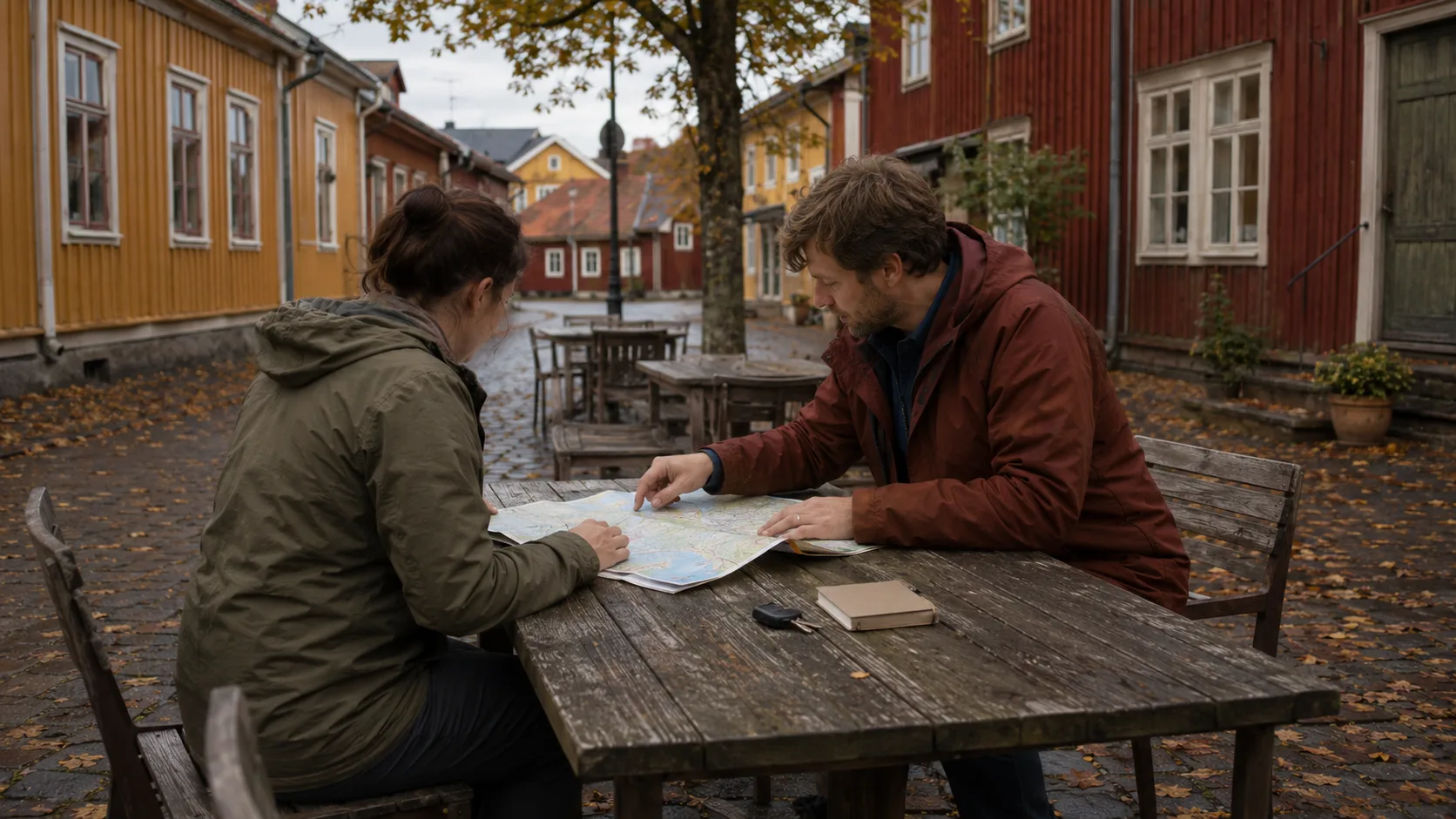
Eksjö gives the trip its clearest townscape: a coherent wooden centre where the streets themselves are the attraction.
The northern part of the town escaped the large fires that reshaped many Swedish wooden towns. Visit Eksjö describes 48 listed buildings in Gamla stan, and the old town received a Europa Nostra diploma in 1997 for conservation work. It is not a UNESCO World Heritage Site.
Give yourself several hours. Walk first, then decide whether Eksjö Museum or a guided town walk deserves the rest of the visit. That works better than treating the centre as a short photo stop.
It suits architecture and history travellers particularly well, but the compact streets also make it an easy change of pace after longer nature stops. Check the museum and guided-tour schedule before arrival.
8. Store Mosse National Park
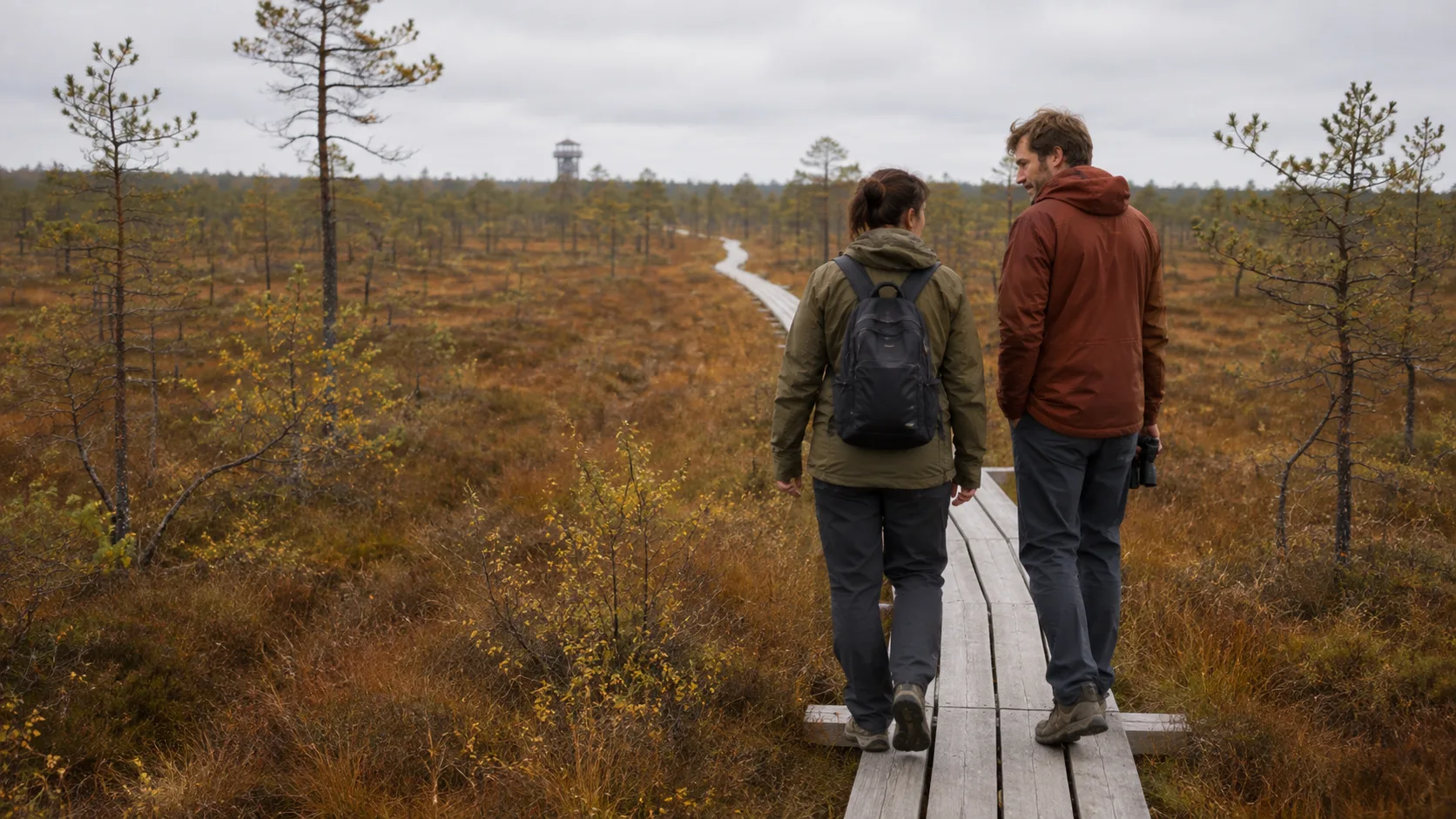
Store Mosse changes the scale completely. The landscape opens into bog, wetland, forest and bird habitat, with boardwalks carrying walkers across terrain that cannot be understood from the road.
Start at naturum Store Mosse if it is open. The visitor centre can help match a trail to the day's weather, available time and walking ability. Families wanting something short can use Skogstrollens stig, a 500-metre gravelled path near naturum; longer routes give a much stronger sense of the national park.
This can be anything from a short nature stop to most of a day. Birdwatchers and walkers should generally allow more time than someone using the visit as a break between towns.
Parking does not equal permission to stay overnight. Current national-park rules prohibit sleeping overnight in motorhomes, campervans, caravans and vehicles with rooftop tents within the park. Check the current rules and signs for your exact vehicle and entrance.
9. Värnamo and Vandalorum
Värnamo works well as the art-and-design counterpoint to Store Mosse. At Vandalorum, the visit is determined by what is actually on the walls rather than by a fixed permanent attraction list.
On 1 September 2026, exhibitions included work by Lars Tunbjörk, Aino and Alvar Aalto and Ingela Ihrman. Adult admission was 130 SEK, but exhibitions, prices and opening hours change and should be checked before travelling.
Allow two or three hours for Vandalorum. Add Apladalen if you want a park walk and a less structured second half of the stop.
Rain helps here. Plans change. A wet afternoon that weakens an Isaberg hiking or cycling plan can become a Vandalorum day instead, which is one reason not to pre-book every hour of a Småland road trip.
10. Isaberg near Hestra
Isaberg is the active day. The useful approach is to choose one main activity before arriving rather than assuming everything on the mountain will be running.
Hiking is the simplest choice. Mountain biking, lift-served riding, rodel and the tree-top adventure all bring their own season, ticket and booking arrangements. In early September 2026, for example, lift-served mountain biking was scheduled mainly for weekends rather than every day.
Give Isaberg at least half a day if activity is the purpose of the visit. A full day makes more sense for cycling or a booked activity.
It suits travellers who want to finish the journey moving rather than sightseeing. Check the exact activity page for opening times, age or height requirements, booking, price and weather restrictions before driving to Hestra.
A flexible 4-day or 6-day Jönköping County road trip
Four days is enough if you keep the journey around Lake Vättern and the eastern highlands. Start with Jönköping and Habo kyrka, give Gränna and Visingsö their own day, then use the remaining time for Eksjö rather than attempting to collect every stop. The island is the part least suited to a rigid schedule, so place its ferry-dependent day where you have margin.
With six days, the county becomes much more varied. Taberg and Åsens by can connect the Jönköping area with Eksjö, while Värnamo, Store Mosse and Isaberg create a western loop through art, bog and active forest country. The exact order matters less than leaving room for a ferry change, rain, a museum that deserves another hour or an activity that needs advance booking.
Four to six days still forces choices. A booked Visingsö ferry is a fixed point; an Isaberg day may move when the weather changes. FARON can be used as a private travel archive and planning aid to place the Jönköping County stops in an upcoming trip, then save the places that actually became stops, photographs, notes and what worked once the journey is over. Afterwards you can see which stops actually happened on the map instead of preserving only the original plan.
If you want to extend the journey, you can continue west towards Halland, continue south through Kronoberg County or continue east through Östergötland. For a looser journey, it also helps to choose worthwhile stops without overfilling the day.
To decide whether your next trip should be slower, more active or more stop-heavy, find the travel rhythm that suits you.
FAQ
How many days do you need for a Jönköping County road trip?
Four days is enough for a focused trip around Jönköping, Gränna, Visingsö, Habo and Eksjö. Six days gives enough margin to include western and southern stops such as Store Mosse, Värnamo and Isaberg without turning each day into a sequence of short visits.
Should you take a car on the ferry to Visingsö?
Take the car if you want to cover more of the island during a longer day; walking or cycling works well for a shorter visit. Check the current ferry timetable and vehicle availability before travelling.
Which places in Jönköping County work well with children?
Visingsö, Store Mosse and Isaberg can work particularly well with children when the activity matches their age and energy. Skogstrollens stig at Store Mosse is only 500 metres, while Isaberg activities have individual age, height and booking conditions that should be checked first.
Can you stay overnight at Store Mosse, Taberg or Åsens by?
Do not assume that you can stay overnight at any of them. Each site's current regulations, signs and designated areas must be checked separately, and this article does not promise overnight access for cars, motorhomes, caravans, campervans or rooftop tents.