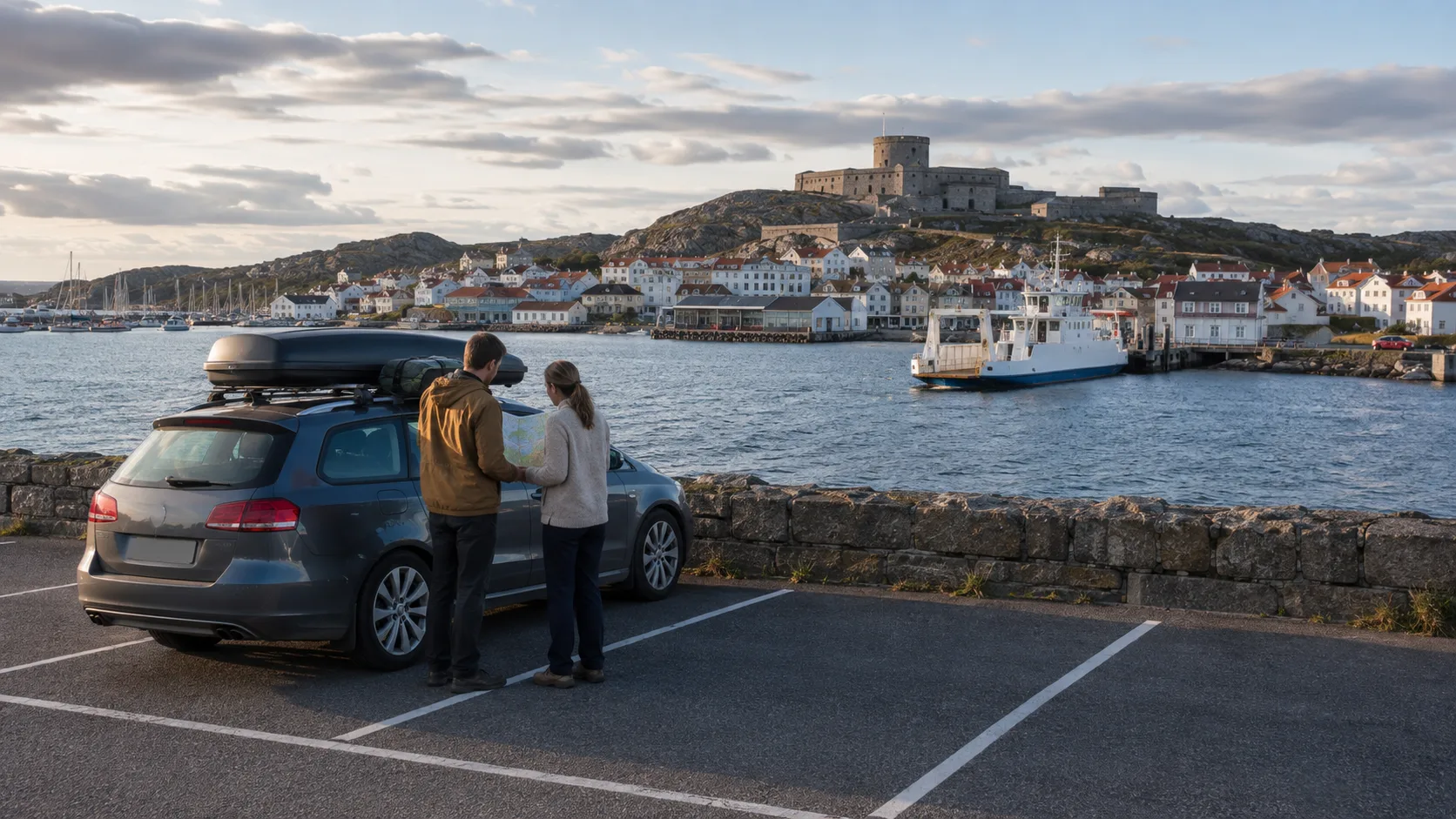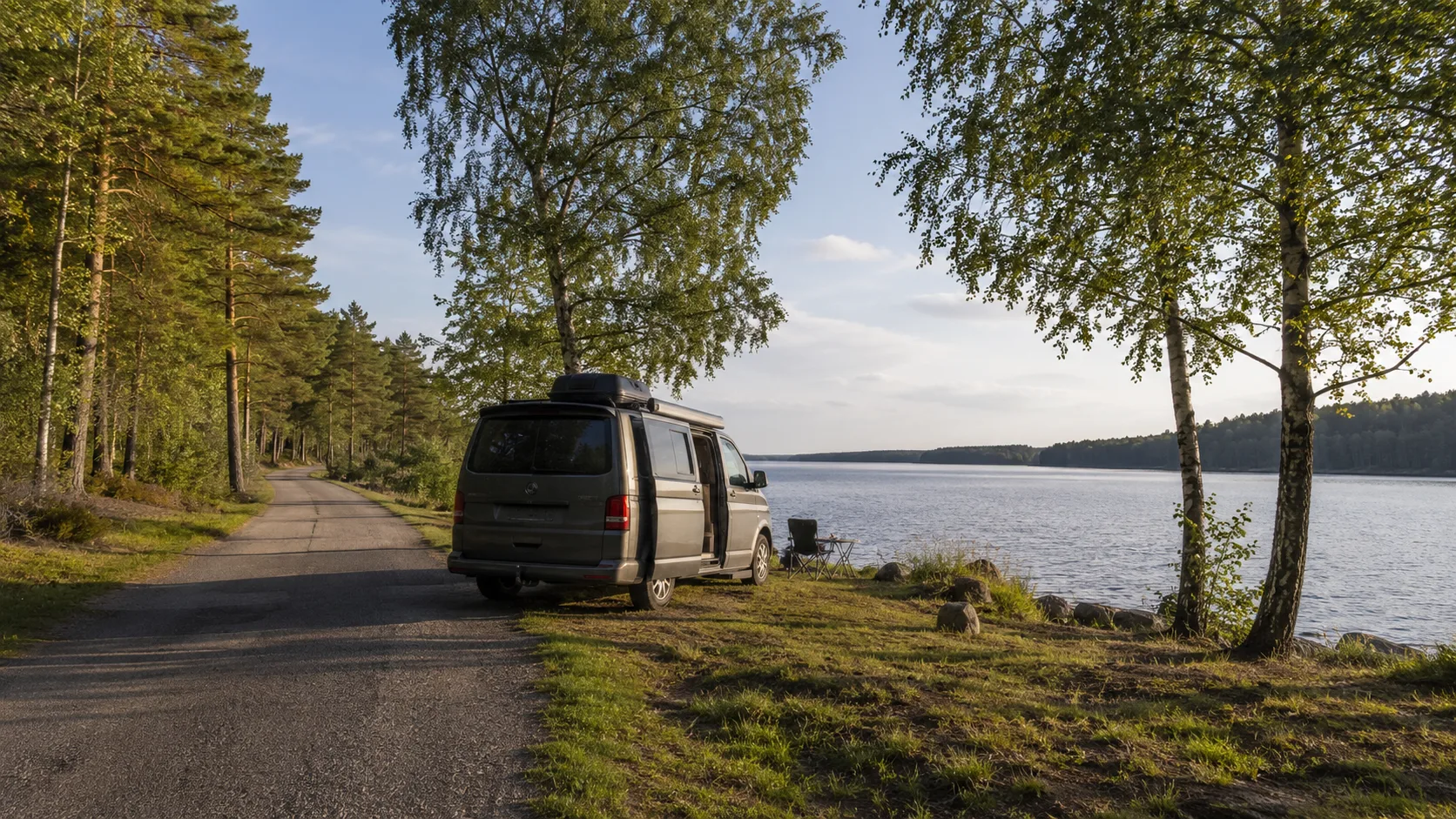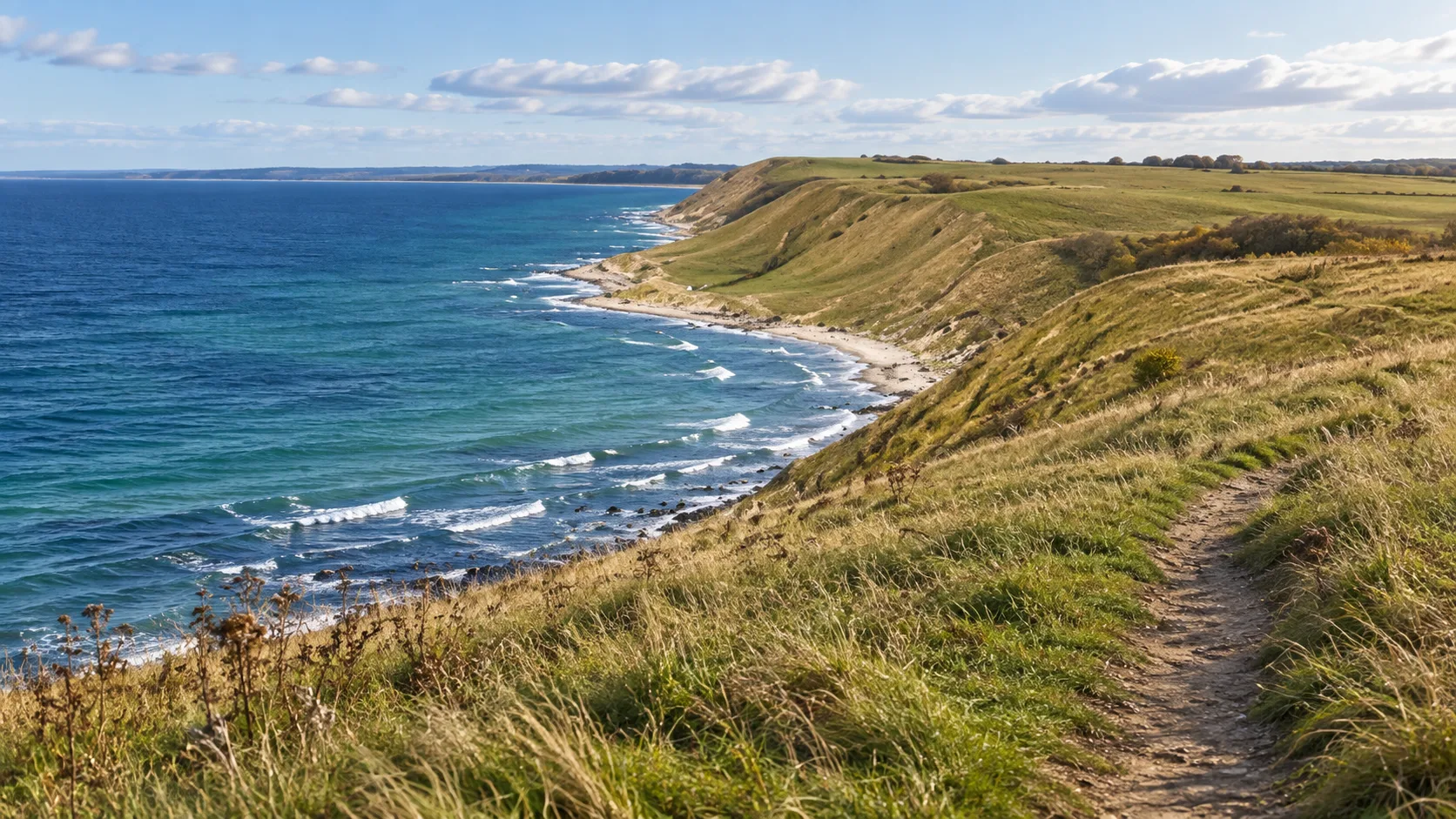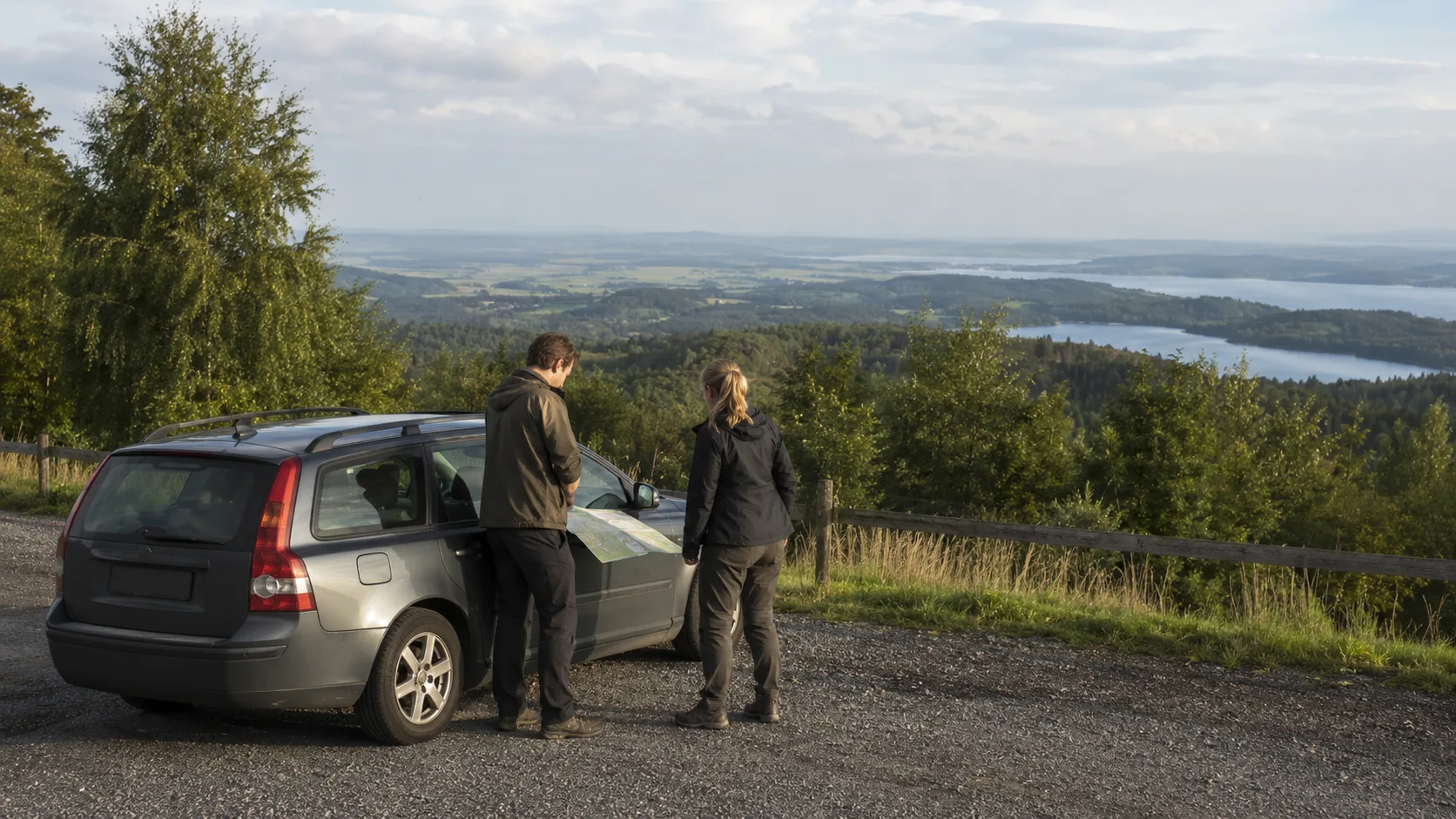
Fortress. Bird hide. Beech forest. Sand dunes. Halland changes quickly as you travel south from Fjärås through Varberg and Falkenberg to Halmstad and Laholm, with enough inland detours to stop a West Coast Sweden road trip becoming five versions of the same beach day.
Choose one part of Halland for a day trip
For a first visit, I would choose a base before choosing attractions. A day in Varberg need not include Halmstad as well. Pick the part of Halland that suits what you want to do:
- History and a town walk: choose Varberg, with the fortress and seafront as the main visit. Add Getterön if you want time for birds.
- Technology or woodland: choose Grimeton or one trail in Åkulla. Give the tour or walk its own half-day instead of treating both as quick detours.
- Town and beach: choose Falkenberg with Skrea, or Halmstad with Tylösand. One town and its coast are enough for a full day.
- A smaller town stop: choose Laholm and add one stretch of the southern coast if the weather suits.
Keep the unchosen places for another day. These are alternatives, not a route through all four areas.
Suppose you have 4 hours in Varberg before continuing south. I would spend 2 at the fortress or museum, leave 1 for lunch and use the remaining hour for the seafront. Adding a Grimeton tour would mean removing part of that plan, not simply adding another pin.
1. Fjärås Bräcka and Lake Lygnern
Fjärås Bräcka is a useful northern starting point because the landscape explains itself before you have driven very far into Halland. The glacial ridge rises about 60 metres above the coastal plain, with Lake Lygnern on one side and the flatter country towards the sea on the other. On a clear day, the contrast is unusually easy to read from one place.
Allow an hour or two if the view is the main reason for stopping, and longer if you want to walk. There are currently five marked routes in the reserve; the short Naturstigen is 1.5 km, while the longer Limmahögsslingan is 5.4 km. Families and travellers who want to stretch their legs without committing half a day can keep this stop short.
Check Naturum Fjärås Bräcka's current opening hours if the visitor centre or café matters to you, and check the reserve information before choosing a trail. A motorhome or caravan also needs a more deliberate arrival plan than a normal car: never assume that a marked visitor destination means suitable space for every vehicle.
2. Varberg Fortress, the seafront and Kallbadhus
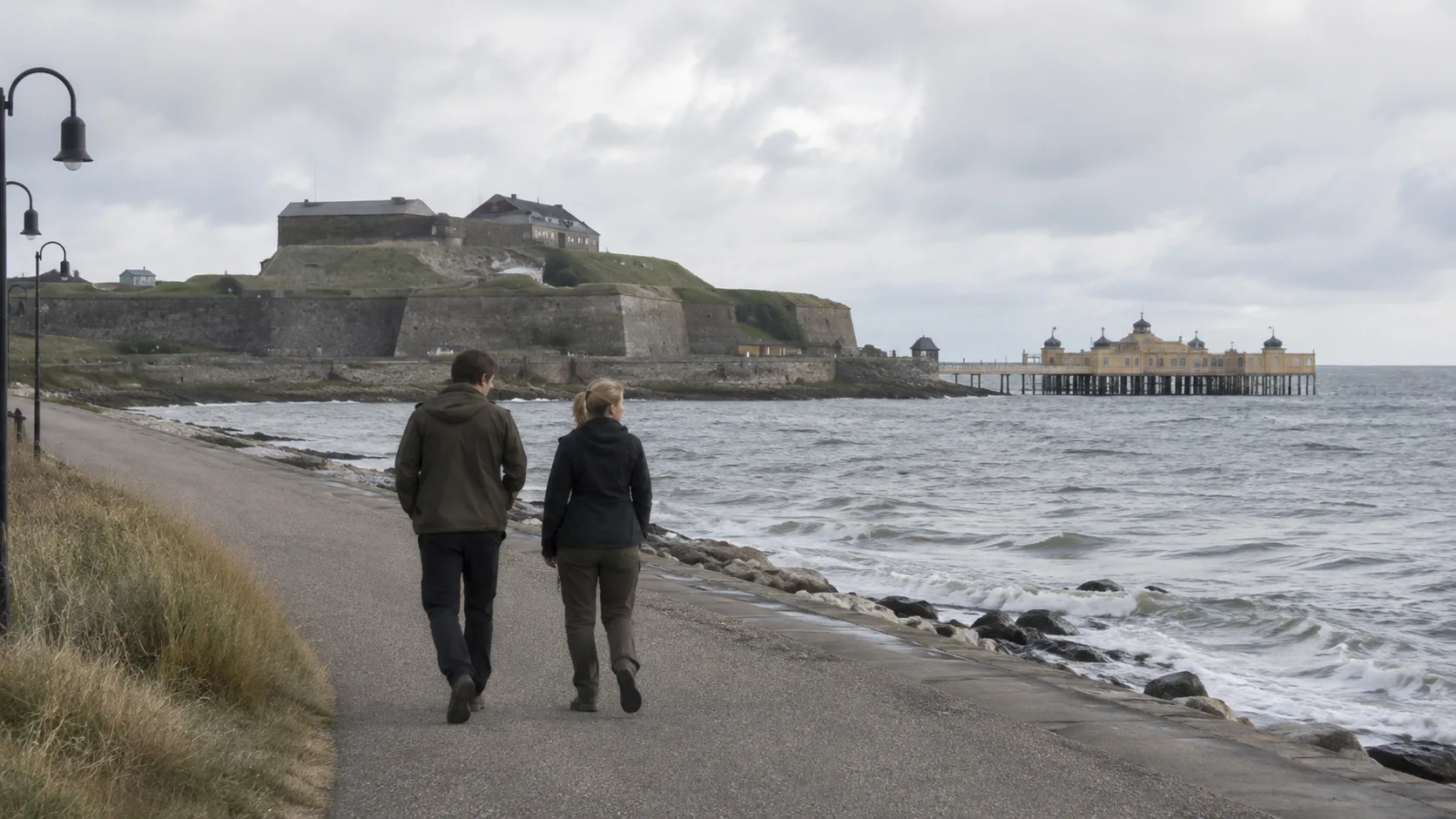
Varberg is the stop that gives the Halland coast some weight. Start around Varberg Fortress rather than driving straight to the beach: the heavy stone fortifications, Halland Museum of Cultural History and open sea make this feel very different from the resort towns farther south.
The fortress grounds can be visited separately from the museum. Exhibitions and guided tours have their own times and tickets; choose the visit you want using Halland Museum of Cultural History's current programme before setting the rest of the day.
From here, continue on foot along the waterfront towards Varberg Kallbadhus. Half a day works well if you mainly want the fortress exterior, town and seafront; allow longer if the museum or a booked activity matters. Varberg suits travellers who want history and a walkable town rather than another full beach afternoon. Check museum hours, any Kallbadhus access you intend to use and current parking arrangements before setting out.
3. Naturum Getterön and the bird reserve
Getterön is close to Varberg but should be treated as a separate stop. The point here is birds, wetlands and watching quietly from the infrastructure provided for visitors.
Spring and autumn are particularly important periods for migrating geese, ducks and waders, but the reserve also has winter birdlife. More importantly, access is tightly controlled: there is a year-round prohibition on entering the reserve outside the roads and walking paths that lead to the hides and visitor facilities. Camping, caravans, fires and motor vehicles away from roads and parking areas are among the activities restricted by the reserve rules.
A couple of hours can be enough for Naturum, the nearby hides and a slow look across the wetlands. Birdwatchers may stay much longer. Bring binoculars if you have them, but the more important preparation is checking the current reserve information and following the marked access routes when you arrive.
4. Grimeton Radio Station World Heritage Site
Six tall masts in open countryside are the first clue that Grimeton is not a normal museum stop. The radio station was built to connect Sweden with North America and became a UNESCO World Heritage Site in 2004; today its preserved transmitter environment tells the story of long-distance wireless communication on a physical scale that phones have largely made invisible.
Give it roughly two hours if you want the exhibition and transmitter hall rather than simply seeing the site from outside. It suits adults and older children who enjoy engineering, communications, industrial history or places where the original machinery is the attraction.
Choose your type of visit before choosing a time. During regular opening, the visitor centre, transmitter hall and exhibition are open. Limited self-check-in gives access to the hall and exhibition while the visitor centre is closed. Check Grimeton's opening and ticket information for your date; self-check-in is not a booked guided tour.
5. Åkulla bokskogar
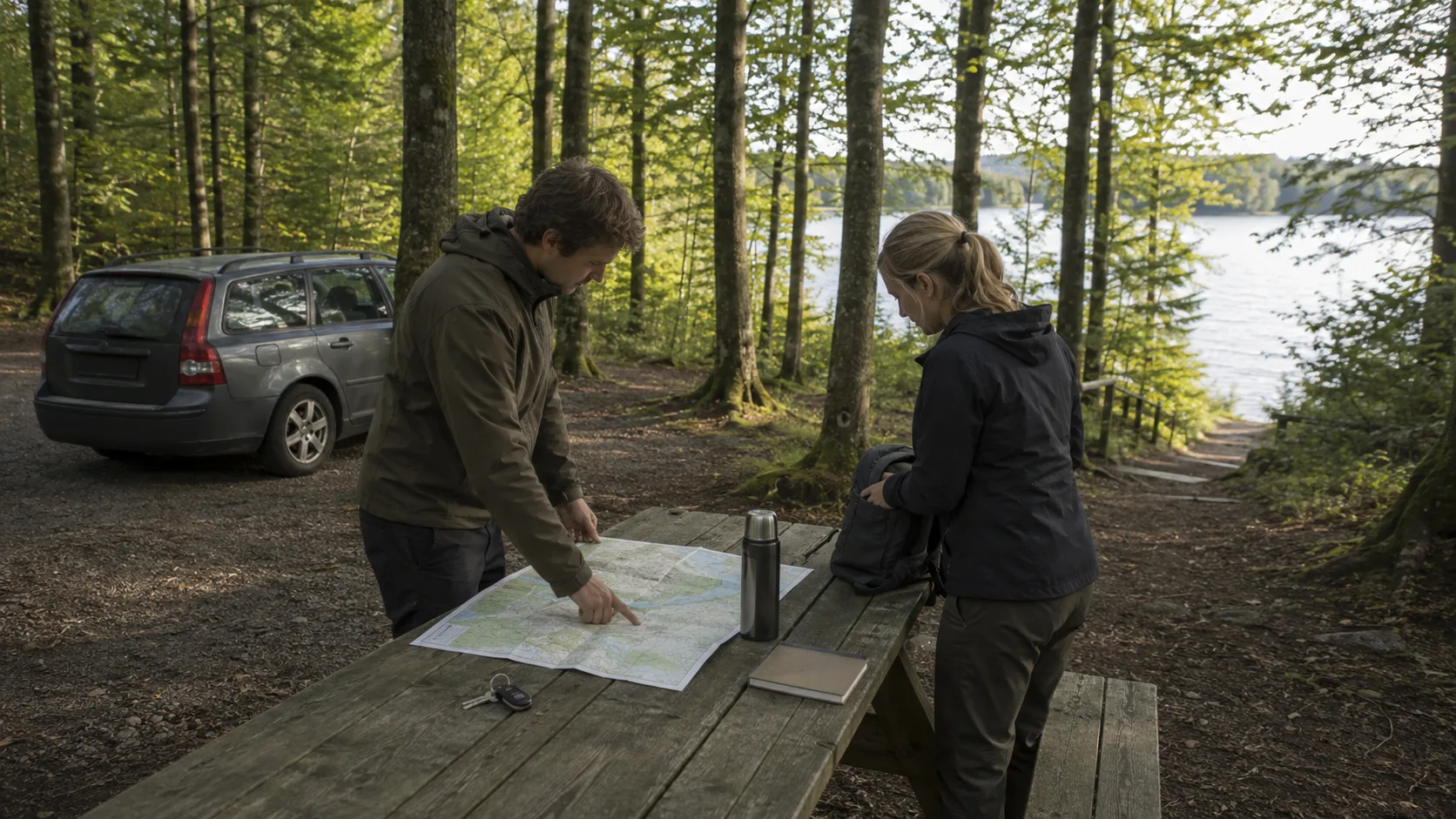
Leave the coast behind for a while. Åkulla bokskogar is a landscape of beech-covered hills, lakes and several separate nature reserves connected by a wider trail system.
For a manageable first visit, choose one trail rather than treating Åkulla as a single attraction. The 1.8 km cultural trail in Åkullaboket gives you old beech forest and traces of earlier land use without consuming half the day. If you want something harder, Skogsbostigen is 5.5 km with around 250 metres of climbing and is described by the County Administrative Board as a demanding route.
That distinction matters: Åkulla bokskogar is an umbrella name covering numerous reserves, while cafés, accommodation and other commercial venues in the area have their own access and opening arrangements. Reserve rules also differ. In Åkullaboket, for example, motorhomes and caravans may not be set up inside the reserve and vehicles must use roads and designated parking. Check the page for the specific reserve and trail you intend to use.
6. Falkenberg Old Town, Ätran and Skrea strand
Falkenberg works best when you connect the town to the river. Walk around the older centre and Tullbron, then follow Ätran towards the sea rather than treating Skrea strand as an isolated pin on the map.
The Strandpromenaden links central Falkenberg with the coast in roughly half an hour on foot. At the end, the scale changes again: Skrea strand runs for about 2 km, backed by dunes, with its long 250-metre pier reaching into the Kattegat.
Short walk. Coffee. Sea. Then decide whether the weather deserves another two hours on the sand or whether Falkenberg has already done its job for the day.
This stop suits mixed groups because town, riverside walking and beach can be shortened independently. Before going, check current bathing information, seasonal services and parking rather than assuming a sunny Saturday has the same conditions as a weekday in September.
7. Halmstad and Tylösand
Give Halmstad two chapters in the same day. Spend the first around the Nissan river, Halmstad Castle and the central streets; then deliberately leave town for Tylösand rather than blending the two into one vague coastal stop.
The city section works for a couple of hours and gives you architecture, cafés and a river running through the centre. Tylösand is the weather-dependent half: its sandy beach is around 4 km long, and the atmosphere can change substantially with temperature, wind and summer crowds. Destination Halmstad notes that the quieter sections continue north towards Frösakull and Ringenäs.
A west wind can make a planned Tylösand afternoon much shorter than expected. On another day, calm weather can make it the place that takes over the schedule. That is a good reason to avoid booking every hour of a Halland road trip before you arrive.
Check current bathing information, weather, seasonal services and parking on the day. Large vehicles in particular should have another plan if the most convenient areas are busy.
8. Simlångsdalen and Danska fall
After Halmstad, drive inland. Simlångsdalen changes the journey from salt air and dunes to lakes, woodland and the Fylleån water system, with Danska fall as the clearest short walking objective.
The reserve has old beech forest, rocky slopes and established walking routes around the waterfall area, and Hallandsleden passes through it. The County Administrative Board specifically warns visitors not to improvise parking when the indicated parking area is full; an alternative is available near Simlångsdalen, followed by an additional walk to the reserve.
Allow two or three hours for the inland detour if you want a walk rather than a quick photograph. It suits travellers who have already spent two days near the coast and need the scenery to change. Check trail conditions, reserve information and the current parking guidance before departure, especially after prolonged rain or during busy periods.
9. Laholm Old Town, Lagan and Teckningsmuseet
Laholm is smaller than Varberg, Falkenberg or Halmstad, and that is precisely its role on this route. Walk through Gamleby and around the old town, find the Lagan and add Teckningsmuseet if its programme and opening hours fit.
Visit Laholm describes Laholm as Halland's oldest town, with historic streets and a long relationship with the river. The scale makes a couple of hours useful rather than rushed.
Teckningsmuseet gives the stop another character again: it is a museum devoted to drawing rather than regional history. At the time of checking, admission is free and ordinary opening hours are 10:00–16:30 on weekdays and 12:00–16:00 on weekends and public holidays. Exhibition changeovers and certain holidays can close the museum, so verify the date before making it the anchor for your Laholm visit.
10. Mellbystrand and Skummeslövsstrand
Finish with scale. Mellbystrand and Skummeslövsstrand are part of a sandy coastline stretching roughly 12 km from the mouth of the Lagan towards Båstad, but the beach changes as you move south: softer sand and larger dunes in parts of Mellbystrand, firmer sand farther south around Skummeslövsstrand.
This is less about collecting another beach name and more about leaving room for the coast to dictate the day. Wind can turn a bathing afternoon into a long walk. Warm, calm weather can do the reverse.
There is also an important current change for drivers: motor traffic has not been allowed on the beach since 31 May 2024. Visit Laholm lists several larger beach entrances with parking, but parking capacity and suitability should still be checked rather than assumed, especially with a motorhome, caravan or long vehicle.
Check current bathing information, wind, seasonal services, signs and parking before choosing where along the coast to stop.
Two ways to spend 3–5 days in Halland
For three days, keep the geography tight. One useful rhythm is Fjärås Bräcka on the way south, then Varberg with the fortress and seafront; use the next day for Getterön, a pre-checked Grimeton visit and part of Åkulla bokskogar; finish around Falkenberg with Ätran and Skrea strand. You will still need to remove something if museum hours, birdwatching or a long forest walk becomes the priority.
With five days, continue south instead of packing more into the first three. Give Halmstad and Tylösand their own day, use Simlångsdalen and Danska fall as the inland change of pace, then finish around Laholm, Mellbystrand and Skummeslövsstrand. Treat this as a framework rather than an optimised route: traffic, beach weather, museum times and how long you actually spend walking can easily rearrange it.
That choice is part of planning Halland well. A booked Grimeton visit belongs to a fixed part of the day; a Tylösand afternoon can move or disappear because the wind turns. If 3–5 days are all you have, some places need to come off the list.
Before leaving, you can place the Halland stops in an upcoming trip and choose which ones are genuinely worth keeping. Afterward, FARON works as a private travel archive: save the places you chose, the stops that actually happened, photographs, notes and what worked, then see which stops actually happened on the map. It is useful precisely because the finished journey will rarely look identical to the plan.
If Halland is only one part of a longer journey, you can continue south into Skåne, continue north through West Sweden, choose worthwhile stops without overfilling the day or build a realistic road-trip budget.
To decide whether you prefer long beach days, compact town stops or a slower mix of both, find the travel rhythm that suits you.
FAQ
How many days do you need for a road trip in Halland?
Three days are enough for a focused northern Halland trip, while five days give you much more room to include Halmstad, inland nature and the Laholm coast. Trying to cover all ten stops properly in three days would make the journey unnecessarily rushed.
Which places in Halland work well with children?
Fjärås Bräcka, Falkenberg, Halmstad, the shorter Åkulla walks and the sandy beaches can all work well with children when the day's distance and weather suit them. Getterön can also be rewarding for children interested in birds, provided everyone follows the reserve's marked access routes.
Do Varberg Fortress and Grimeton need to be booked in advance?
Varberg Fortress's outdoor areas can be visited without treating the whole stop as a booked museum visit, while Grimeton's exhibitions, tours and access arrangements depend more on the current schedule. Check Halland Museum of Cultural History and Grimeton's official opening and booking pages before departure because opening days, tours and ticket arrangements can change.
Can you stay overnight near beaches and nature reserves in Halland?
You cannot assume overnight access simply because a beach, reserve or parking area is open to visitors. Check signs, local rules and the regulations for each nature reserve; this article does not promise parking, camping or overnight access at any of the places described.