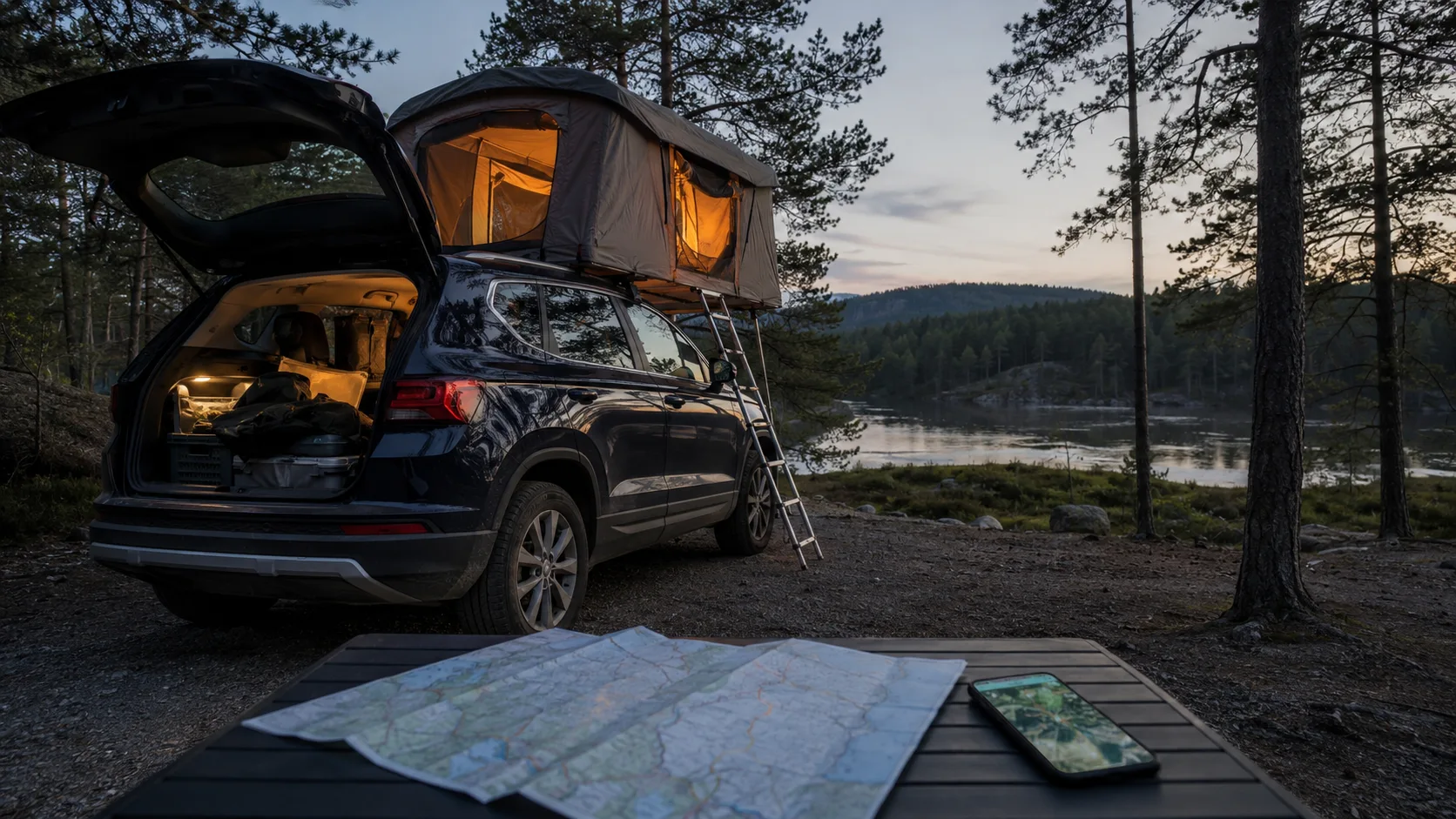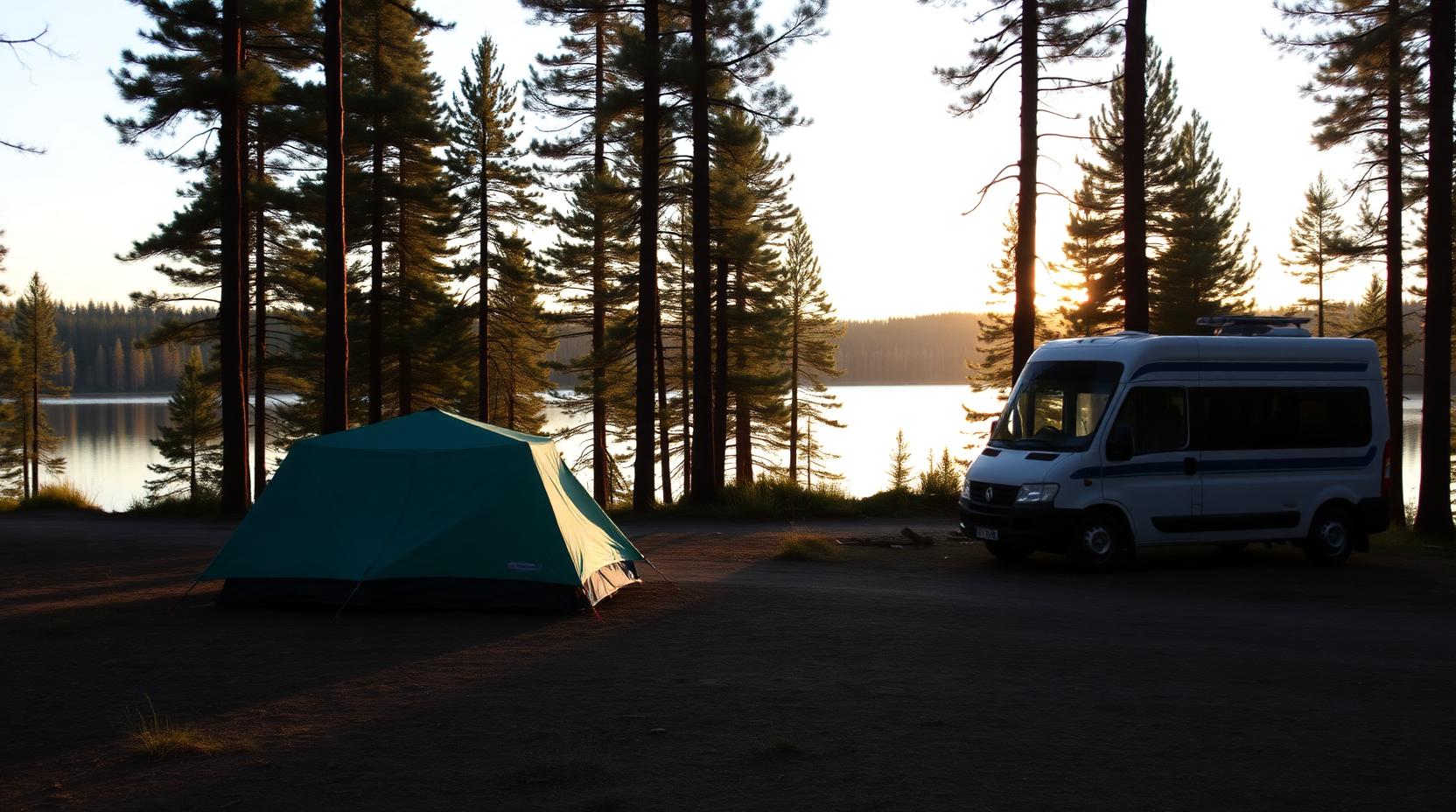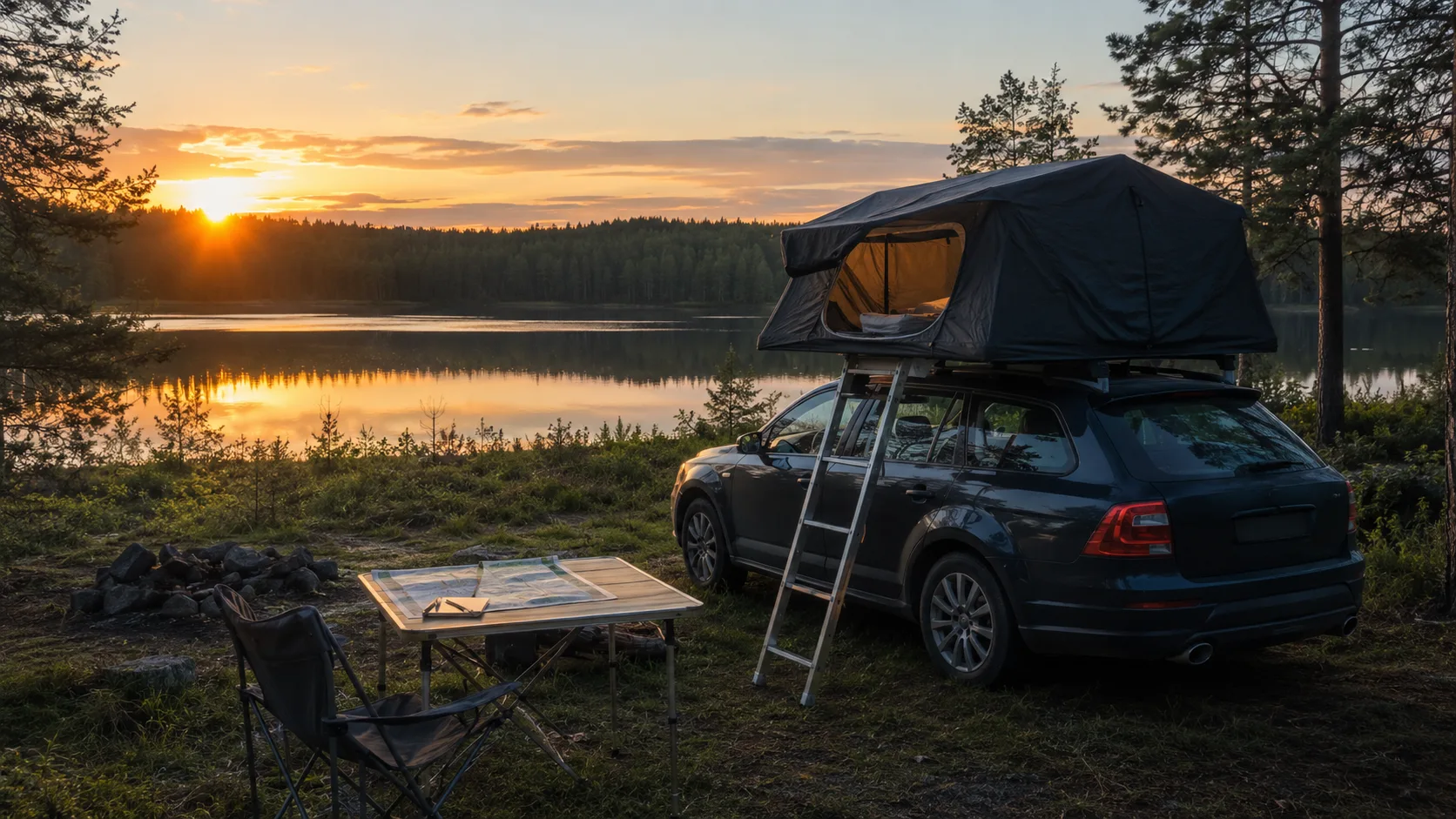
The sun has dropped behind the trees and a small forest lake is perfectly still. The car stands on a seemingly ideal patch of grass. By two in the morning, the wind has turned against the tent's broad side, the vehicle rocks and a barely visible slope sends all the blood towards your head. The head torch is at the bottom of a locked box in the boot.
This is a classic first rooftop-tent night. The mechanism is rarely the problem; site choice, wind, rain and the arrangement of the car matter more.
Make the first night a short test close to home. You will learn whether the ladder is adjusted correctly, how the mattress feels and what must be beside you once you climb up. If something genuinely fails, returning home is easy.
Choose four level wheels and a clear exit
A rooftop tent frees you from soft ground and tent pegs but makes you dependent on where four wheels can stand. A slope barely noticed in the driver's seat becomes obvious when lying down.
Carry simple levelling ramps. Get out and inspect the vehicle before opening the tent. Moving the car 30 centimetres now is far easier than closing the entire setup at night.
A coastal rock may photograph beautifully yet be exposed to wind, waves and uneven surfaces. An ordinary forest-road parking area may provide firm ground, shelter and a clear route out if the weather turns.
Assess sound, morning sun, turning space and how rain will affect the ground. Never block forestry access, barriers or private entrances.
The Right of Public Access does not permit off-road driving. Keep the vehicle on a road, car park or approved standing area, follow signs and local rules, and ask the landowner when appropriate. Leave no trace.
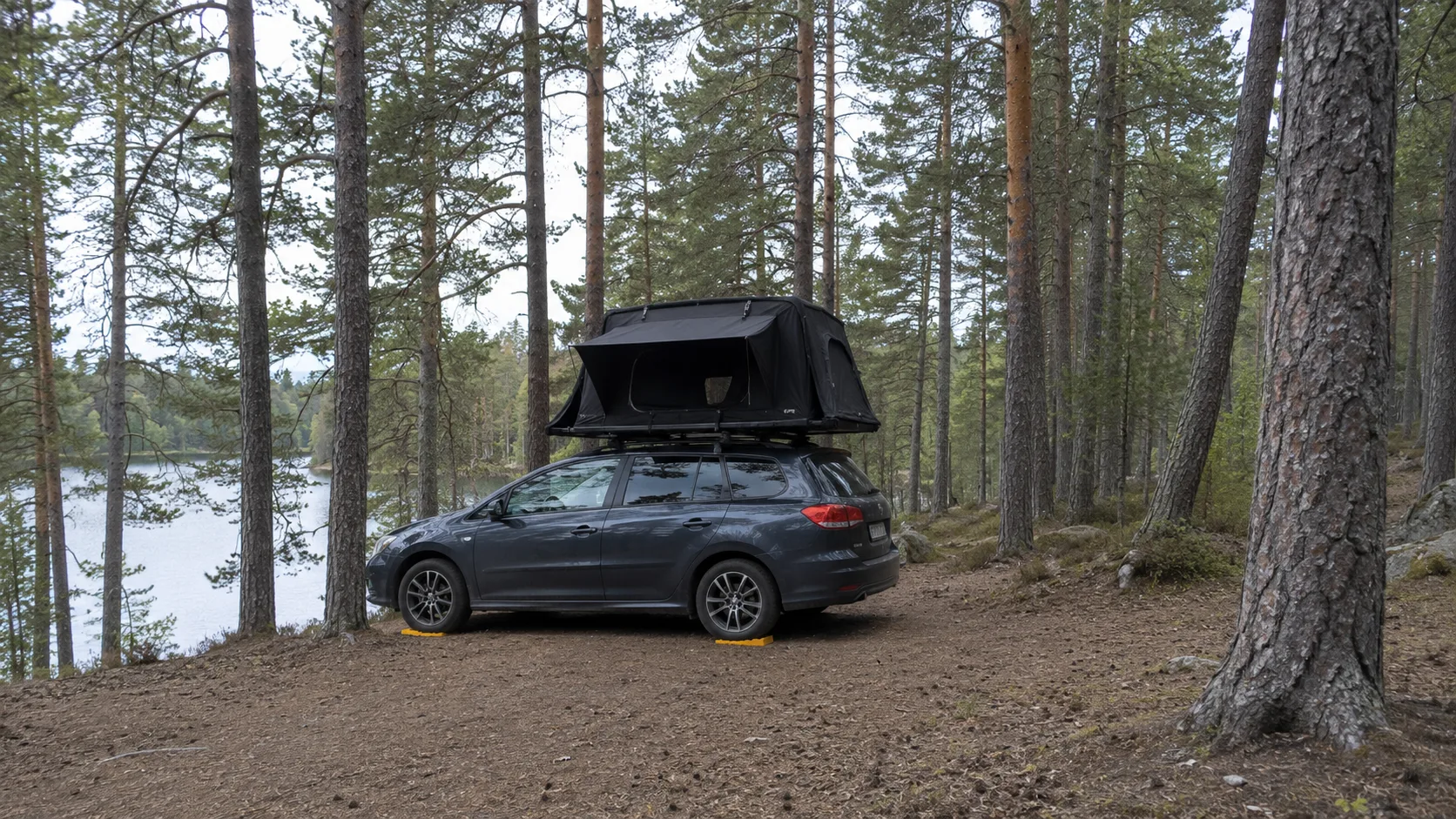
Expect weather to feel stronger above the roof
A rooftop tent presents a large surface to wind and can make the vehicle rock on its suspension. Where the tent design allows, orient the shorter or more aerodynamic end towards the wind and follow the manufacturer's wind limits.
Rain changes movement around the car even when the tent remains watertight. If breakfast, dry clothes and the stove are buried, repeated door opening quickly dampens the interior.
Ventilation matters in cold weather because two sleepers create considerable moisture. Keep the designed vents open rather than sealing the tent completely.
Use shoe bags or a waterproof bag hung by the ladder. Finish the evening by taking everything needed upstairs, then close and lock the vehicle.
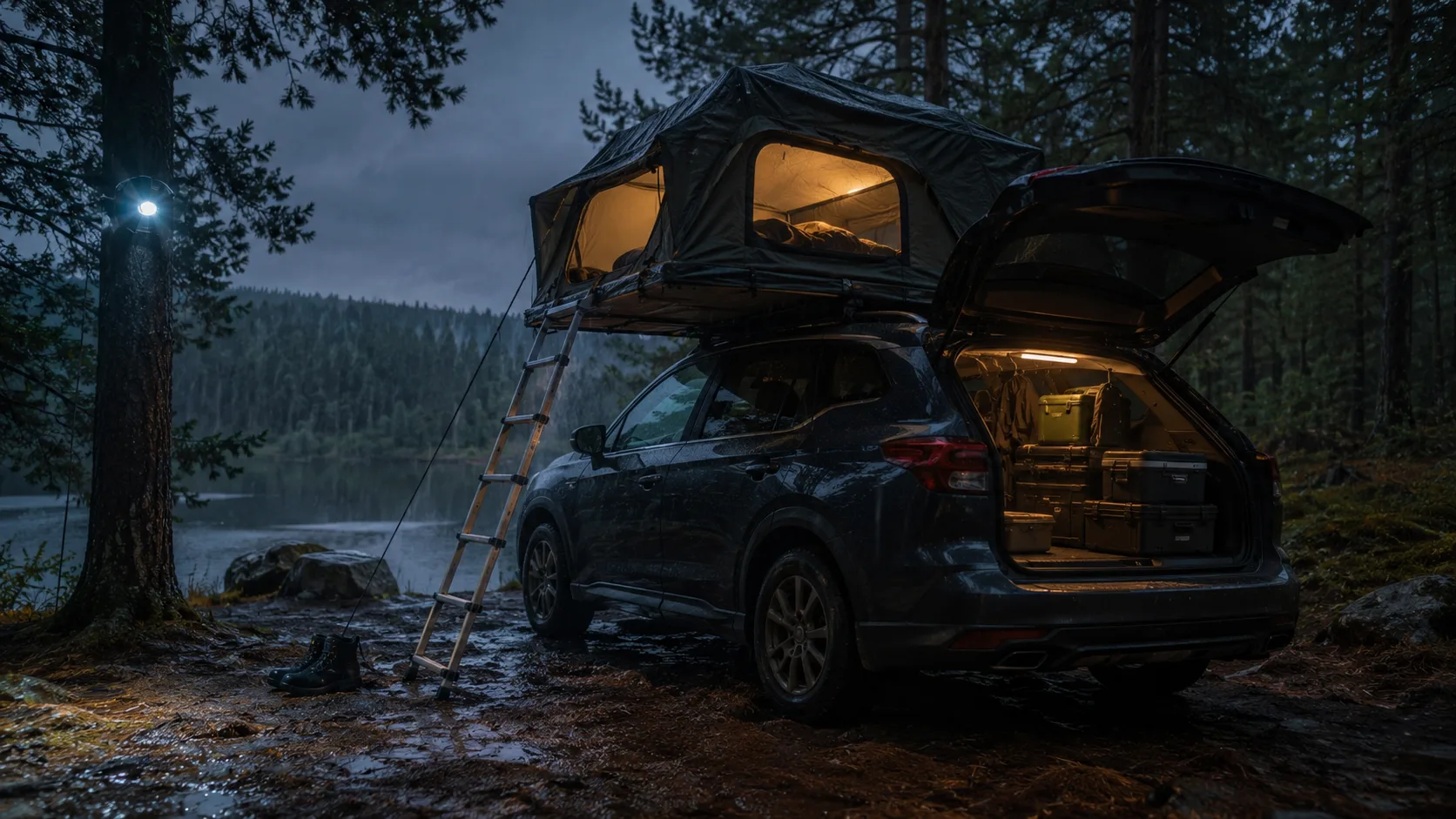
Pack for access instead of quantity
The roof is occupied, so the boot becomes the main store. Deep, unstructured layers hide the things needed first.
Put the head torch, first aid, waterproofs, setup tools, night clothes and a warm layer at the outside or top. Transparent boxes or clearly labelled bags often work better than attractive but anonymous luggage.
Take one night bag into the tent with a power bank, cables, toothbrush, warm socks and a change of clothes. It prevents repeated ladder trips after bedtime.
Longer rooftop-tent and overlanding trips require secured boxes, deliberate weight distribution and access that continues to work for several days.
Keep the first lessons
Every night teaches you something about the car, tent and your routine: how much levelling it needs, which forest roads feel comfortable after dark and which orientation reduces wind.
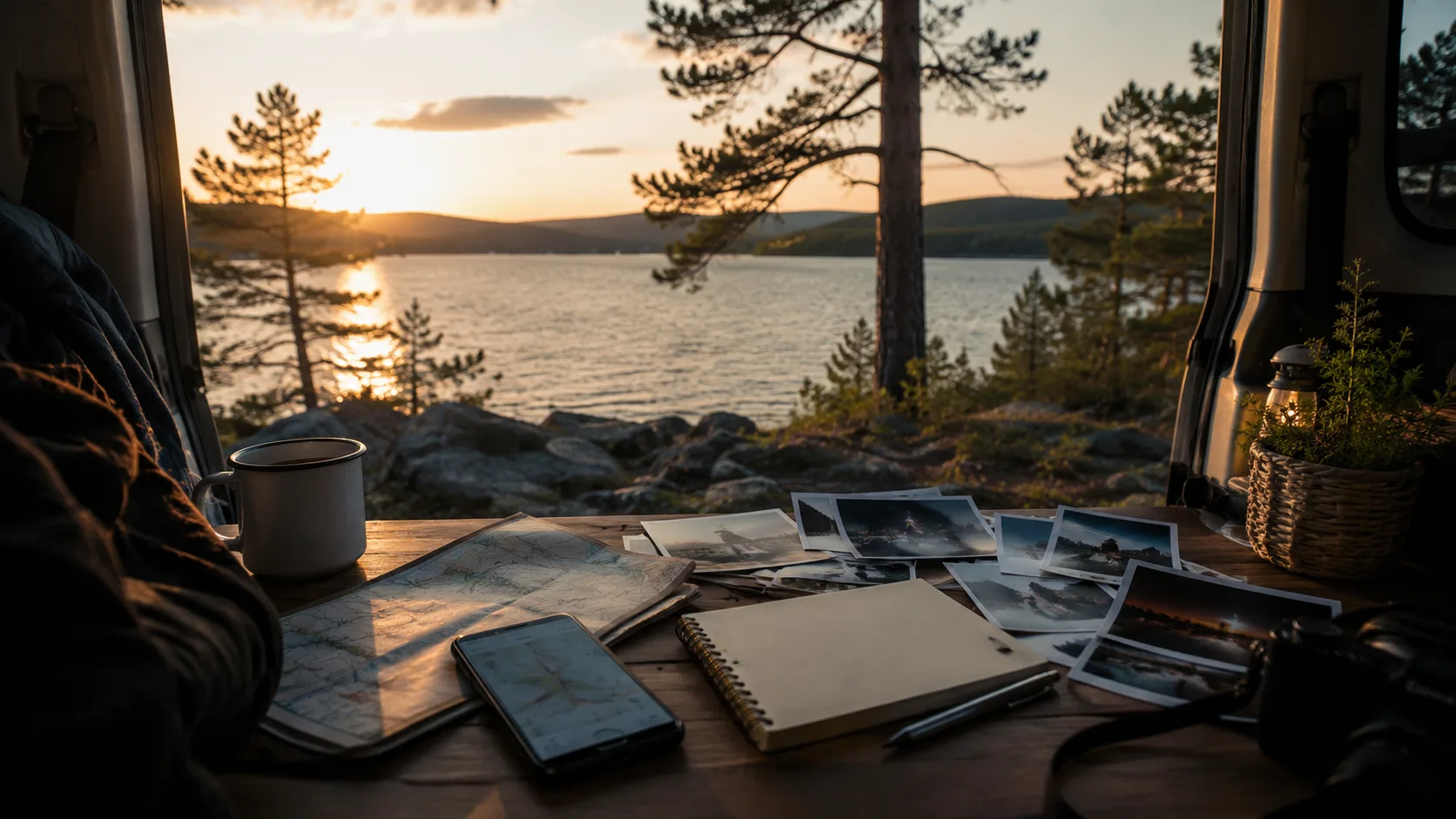
FARON for rooftop tents keeps those lessons private rather than publishing sensitive places. Save a position, photographs of the setup and notes about access, wind and slope.
Begin with your first trip in FARON, log each night, then use the trip map to see which places provided good sleep and which were too exposed.
FAQ
What matters most on a first rooftop-tent trip?
Keep it short and close to home, park level and test the setup, ladder, mattress, ventilation and packing before travelling farther.
How do I choose a good rooftop-tent place?
Choose firm, level ground with shelter and a clear exit. Never block a road, barrier, entrance or forestry turning area, and always follow signs and local rules.
How much should a beginner pack?
Pack simply. Prioritise immediate access to a head torch, warm and waterproof clothing, cooking equipment and one night bag.
How do I preserve lessons from the first nights?
Save the place, one photograph and short notes on wind, slope, access and packing while the experience is fresh.