Reviewed: 23 August 2026
Checked against: current guidance from the Swedish Environmental Protection Agency and the Swedish Transport Administration.
Short answer
Wild camping in Sweden becomes clearer when you separate the person, the tent and the vehicle. A person may normally pitch a small tent for one or two nights on durable ground, away from homes, without disturbing or damaging. A motorhome, campervan or car with a rooftop tent does not gain a right to enter or park on natural ground.
For vehicle-based nights, check parking rules, signs, the ban on off-road driving, local regulations and any rules for a nature reserve or national park. The answer to “may I sleep in a motorhome anywhere?” is no.
Know the difference between a tent and a vehicle
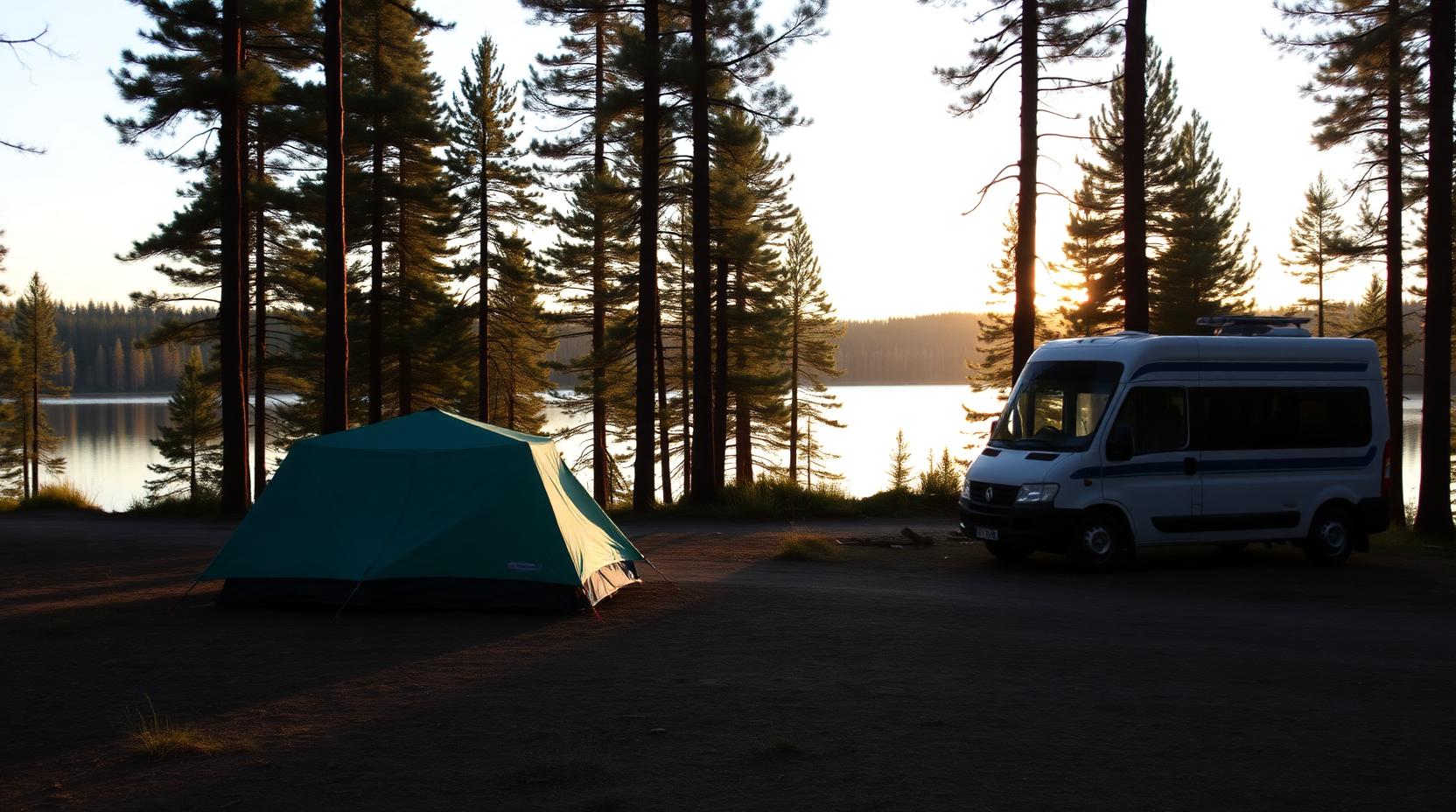
A tent carried into nature on foot sits close to the core of Sweden's Right of Public Access. Choose durable ground, remain outside the domestic privacy zone and stay briefly. A lawn beside a summer house, cultivated land, a grazing field or a beach with local restrictions is not available merely because the tent is small.
A motorhome or campervan is different because the sleeping place is attached to a vehicle. Sleeping inside does not automatically make the stay unlawful, but the vehicle must be parked where it is allowed: perhaps a normal car park, rest area, motorhome stop, campsite or suitable private area. The permission comes from parking rules and site regulations, not from the Right of Public Access.
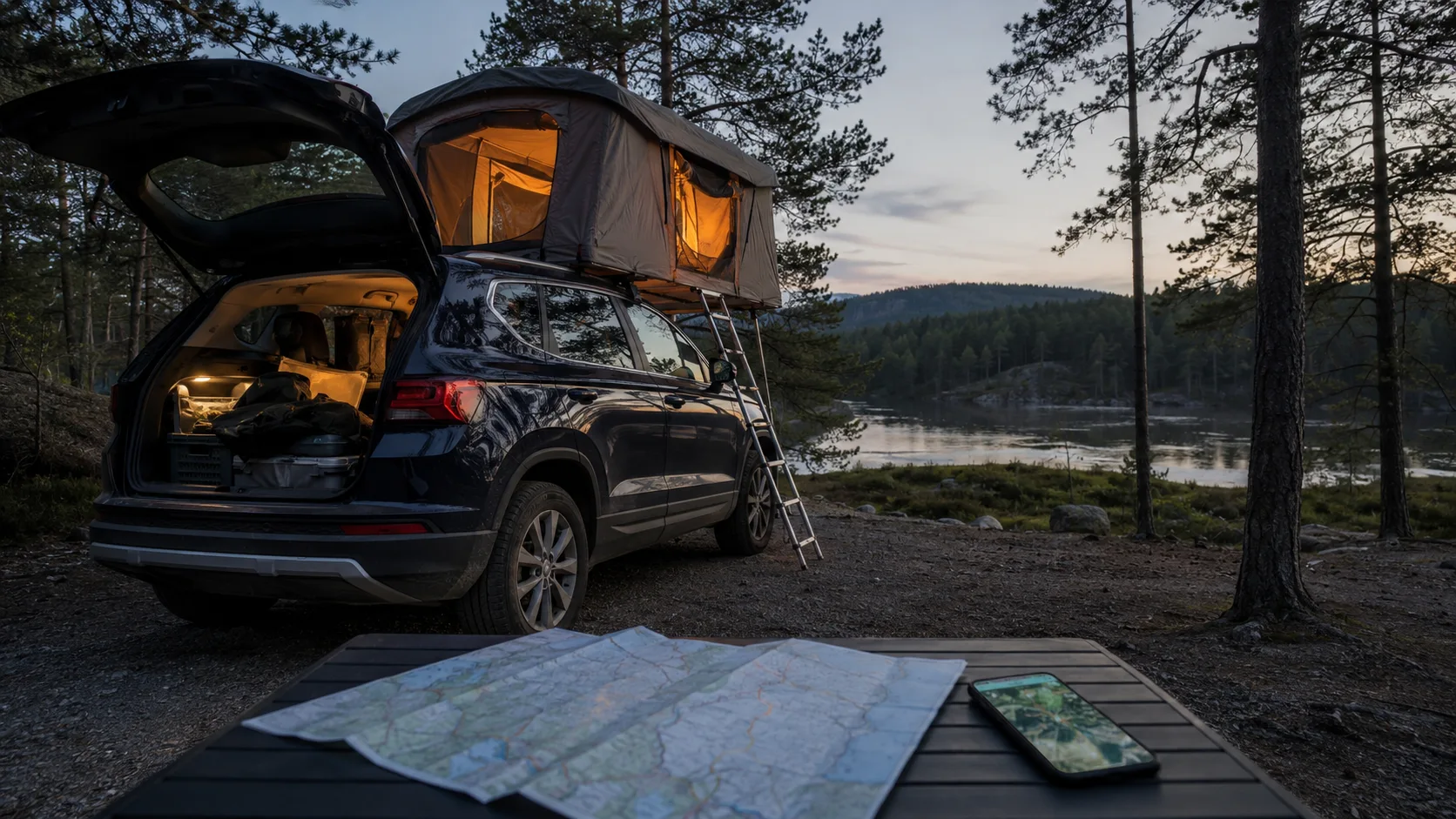
The same applies to a rooftop tent. The car remains a motor vehicle. It cannot be driven onto a beach, forest clearing or grass verge on the argument that the accommodation is a tent.
Off-road driving includes more ground than many visitors expect
Sweden's off-road-driving rules cover practically all natural ground outside proper roads and established parking areas. Forest, beaches, meadows, parks and lawns are examples. The rule applies even when the purpose is only to park or sleep.
Existing tyre tracks are not permission. A hard-looking gravel area may be a forestry turning point, private yard, material store or natural ground rather than a public car park. Never block a barrier, gate, access road or space needed by forestry or emergency vehicles.
A landowner can permit use of an otherwise suitable private parking area, but cannot cancel the statutory off-road-driving prohibition. The Swedish Environmental Protection Agency explains this distinction in its official vehicle-camping guidance.
Read every sign at rest areas and car parks
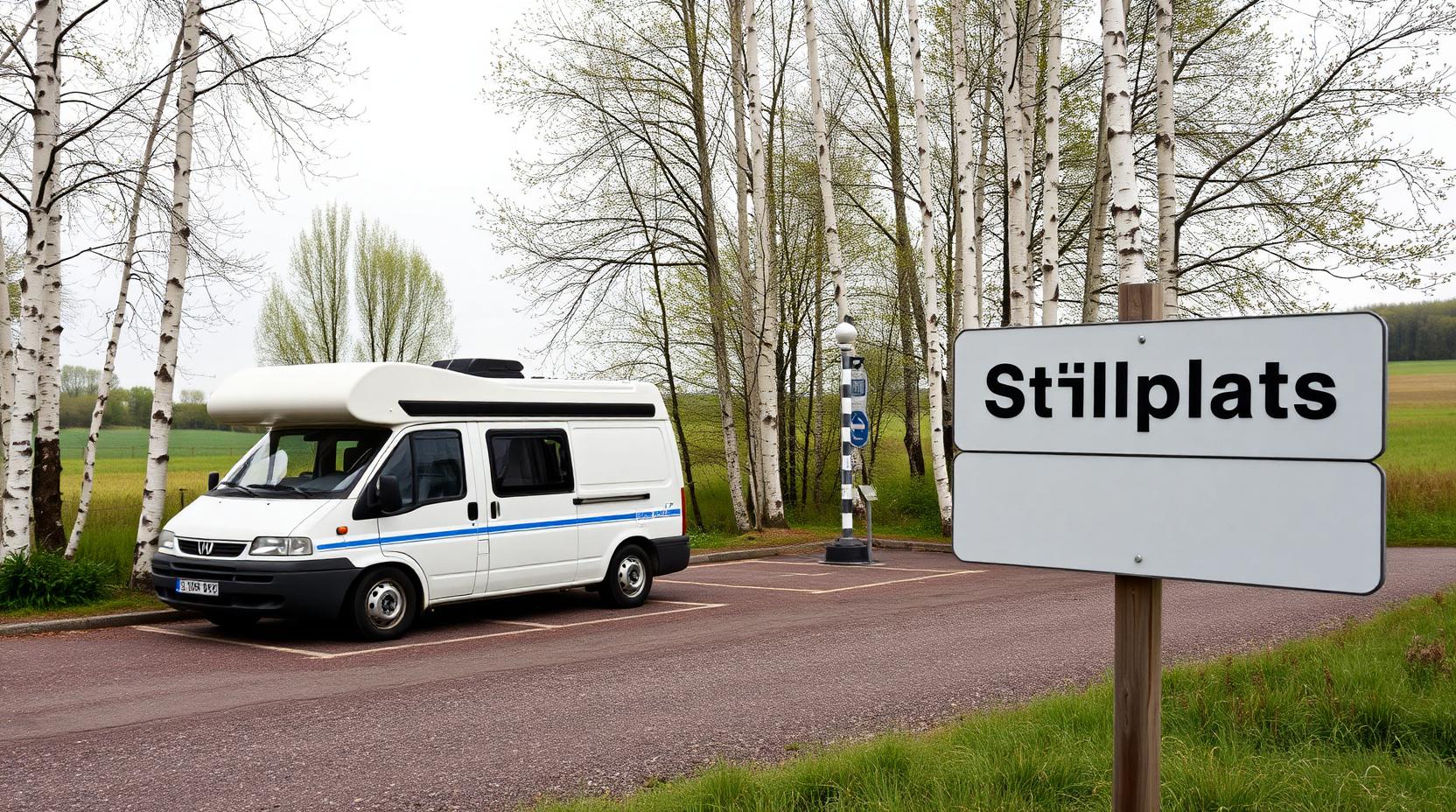
Roadside rest areas are intended for breaks and rest, not long-term camping. A short stay is often possible when signs do not say otherwise; the common baseline is up to 24 hours on weekdays and until the next weekday over weekends and public holidays. Local signs always take priority.
A blue parking sign means parking. It does not automatically permit awnings, tables, laundry, levelling equipment and a wide camping setup. The further the stay expands beyond the parked vehicle, the more likely it conflicts with site rules.
Use three practical levels: a campsite or motorhome stop when you need certainty and service; a signed rest area or normal car park for a limited rest when rules allow; or a suitable private parking area with permission. In all three cases, check time limits, vehicle restrictions and overnight prohibitions.
Protected areas set their own rules
Nature reserves and national parks can restrict tents, fires, parking, vehicle nights, dogs and other activities that may be allowed elsewhere. The rules differ by area, so neither “always allowed” nor “always forbidden” is accurate.
Read the entrance and parking signs before settling in. Follow any link to the relevant County Administrative Board regulations. A forest car park can still lie inside protected land where overnight vehicle stays are prohibited.
Run a nine-point check before staying
Keep the vehicle on a road or authorised parking surface. Read all parking, camping and overnight signs. Check whether the site is protected. Stay well away from homes and active businesses. Do not block gates or turning points. Test whether the surface can carry the vehicle after rain. Keep the setup inside the vehicle's footprint where required. Have proper plans for rubbish, toilet waste and grey water. Finally, ask whether the place would still feel appropriate if the landowner, police or another traveller arrived.
If several answers need excuses, leave. A clear alternative is better than spending the evening waiting for a knock on the window.
Record what you checked
A year later, the lake remains in memory while the entrance sign does not. Save whether the site was a formal car park, what the time limit said, whether it lay in a reserve, how the ground handled rain and whether the access suited your vehicle.
FARON keeps that note with the private overnight stay instead of publishing a sensitive place list. “Maximum 24 hours”, “day parking only”, “firm in rain” and “do not return in a southerly wind” are short entries with real value on the next trip.

Frequently asked questions
May I sleep in a motorhome anywhere in Sweden?
No. The motorhome must be parked where parking and any overnight stay are allowed; the Right of Public Access does not permit a vehicle to set up on natural ground.
Does the Right of Public Access cover rooftop tents?
It applies to you as a person, but the car remains a motor vehicle. You may not drive or park it off-road merely because you sleep in a rooftop tent.
May I stay overnight at a Swedish rest area?
Often for a limited period, commonly up to 24 hours when no sign says otherwise. Read all signs and local restrictions at the site.
May I camp in a Swedish nature reserve?
Sometimes, but each reserve has its own regulations. Camping or vehicle nights may be prohibited or limited to designated places.