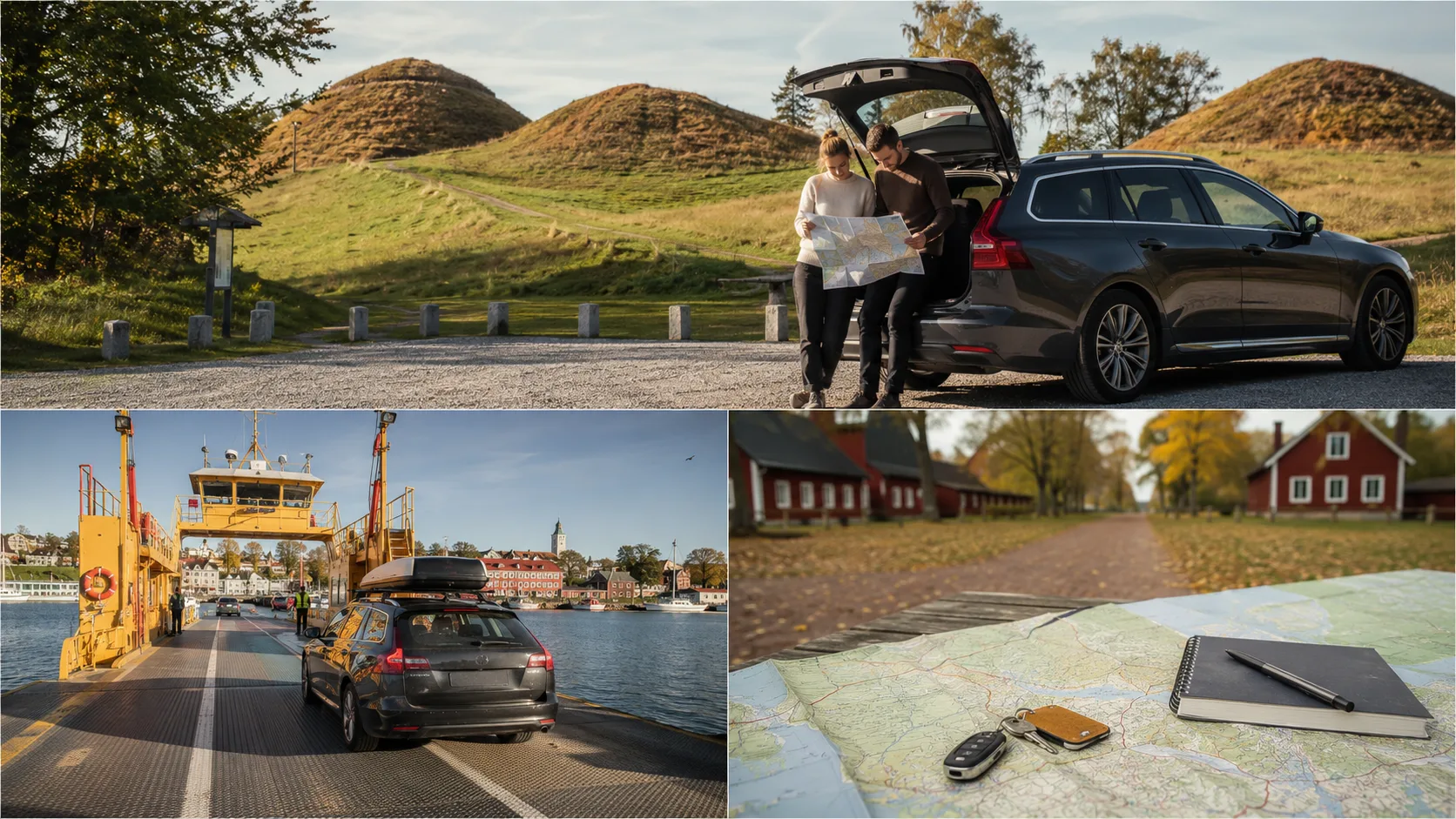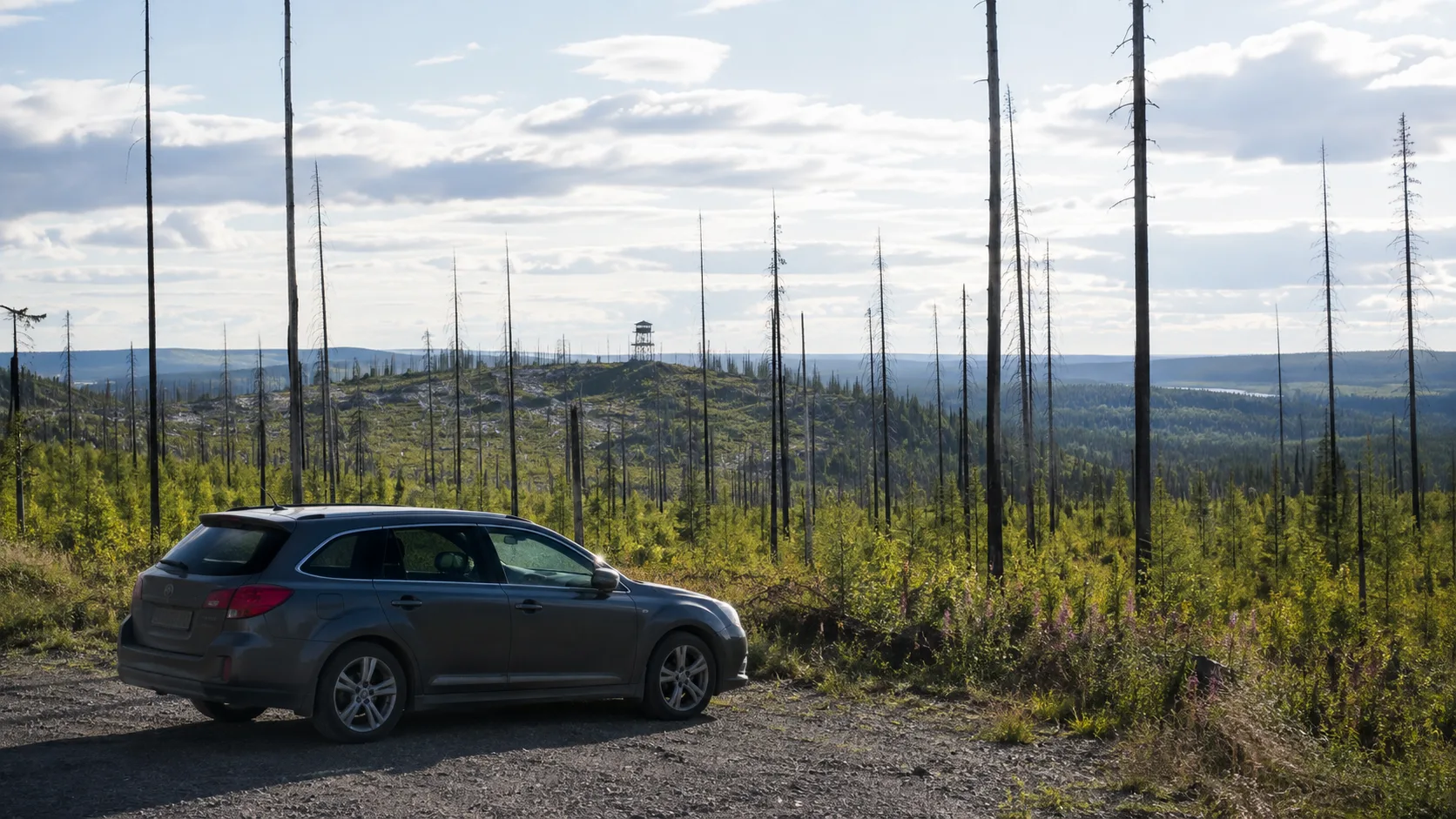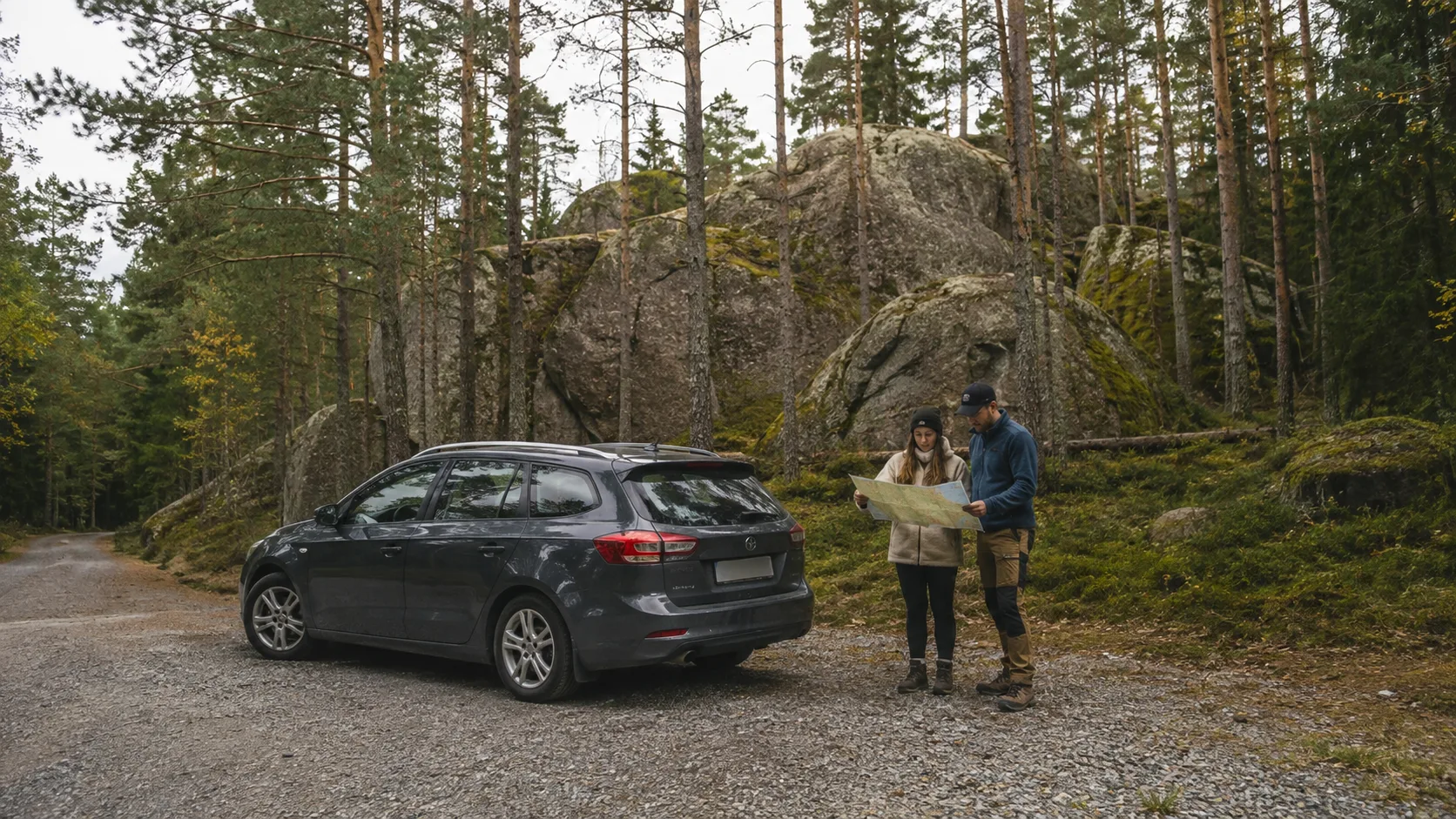
Stockholm County needs three travel rhythms, not one overloaded loop. Lake Mälaren rewards slower historic stops, Vaxholm and the islands make the timetable part of the day, while Stockholm traffic can make leaving the vehicle behind the most efficient decision you take.
1. Stockholm: Gamla stan to Djurgården
Treat central Stockholm as one city day rather than a sequence of places to reach by car. Start around Gamla stan, cross or travel onward towards the waterfront and Djurgården, and let walking, tram, bus or ferry carry the day once you are in the centre.
This stop earns its place because it changes the rhythm completely. There is no need to turn it into a museum checklist. Streets, quays, bridges, ferries and the transition from the medieval core to leafy Djurgården are enough to make a full day feel coherent.
Allow most of a day if this is your first visit. It suits travellers who enjoy walking and urban history, including families that would rather make two or three substantial stops than move the vehicle repeatedly. Before setting off, check current public transport and whatever parking or access arrangement you intend to use; do not build the day around finding space close to each attraction.
2. Drottningholm – choose the park or palace rooms
On Lovön, the same outing can mean a walk beside Lake Mälaren or a visit inside a royal palace. The palace park opens all year, around the clock; the palace rooms and Chinese Pavilion have separate opening hours and tickets.
With 2 hours, I would choose the park: the formal garden near the palace followed by part of the English park. With half a day, you could add an open palace or a guided tour. The Royal Palaces provide a park map and walking guide to help choose your route.
Suppose you arrive on an autumn day with 90 minutes until the next tour. If the interiors are your priority, take a short walk and return for the tour. If you mainly want time outdoors, the park can be the entire outing. Check the palace calendar for your date before booking the rest of the day.
3. Birka on Björkö
Birka is the stop that should never be squeezed into a spare two-hour gap. The Viking Age settlement lies on Björkö in Lake Mälaren and regular visitor access is boat-dependent, making the departure and return the frame around the entire excursion.
Use Birka’s current visitor and booking information to choose a date when the boat and your intended museum or guided visit can be combined. From central Stockholm, the journey is around two hours each way; the actual timetable determines your time on the island.
This is therefore a substantial day trip for archaeology and Viking history, not a roadside attraction on a Stockholm County road trip. Check the operating day, departure jetty, return time and booking availability before committing the rest of your day. A car, motorhome or caravan does not remove the boat dependency.
4. Sigtuna: Stora gatan, ruins and runestones
Sigtuna is where the pace drops. Walk Stora gatan, look for runestones, pass St. Olof and St. Lars church ruins, then move down towards the Lake Mälaren waterfront rather than rushing through on the way to somewhere else.
The town and municipality contain an unusually dense runic landscape; Destination Sigtuna's material documents more than 40 stones and fragments found in Sigtuna town and around 170 across the municipality.
A few unhurried hours are usually more useful than a full sightseeing day. Sigtuna works for families, history-minded visitors and anyone who wants a smaller Swedish town between Stockholm's urban scale and the larger landscape around Mälaren. Check current visitor and museum information if a particular interior matters, but the street, ruins, stones and waterfront make the stop less timetable-sensitive than Birka.
5. Vaxholm: harbour town, not the whole archipelago
Vaxholm is useful because it lets you meet the archipelago while still being in a proper town. Walk the harbour and quays, look at the wooden and historic buildings around the centre and Norrhamnen, then watch the boats moving through Vaxholmsfjärden.
The historic quay includes buildings and places tied to customs, pilots and the town's maritime history, while Norrhamnen still has fishermen's cottages, boathouses and waterfront character.
Give it several hours or a relaxed half day. Vaxholm suits travellers who want the archipelago without immediately committing to an island excursion, and it also works as a transport node for a later boat journey. Check current boat connections separately. Vaxholm is a destination in itself, not a synonym for every island beyond Stockholm.
6. Artipelag and Gustavsberg on Värmdö
Artipelag and Gustavsberg make sense together because the common thread is design and culture rather than another harbour day. At Artipelag, contemporary exhibitions sit beside short walks through forest and along the water. In Gustavsberg, porcelain history gives the stop an industrial and Swedish-design context.
At Gustavsberg Porcelain Museum, The joyful world of Stig Lindberg runs from 6 June 2026 to 2 May 2027. Choose the museum if porcelain and design are the focus of your outing, and check that day’s opening hours.
Half a day works for a clear choice; allow longer if both a substantial Artipelag exhibition and the Porcelain Museum matter. Artipelag also has an approximately 1 km boardwalk adapted for wheelchairs and pushchairs. Read Artipelag’s visitor information for exhibitions, tickets and exceptions: some closure dates also cover the outdoor grounds.
7. Grinda: let the return boat set the day
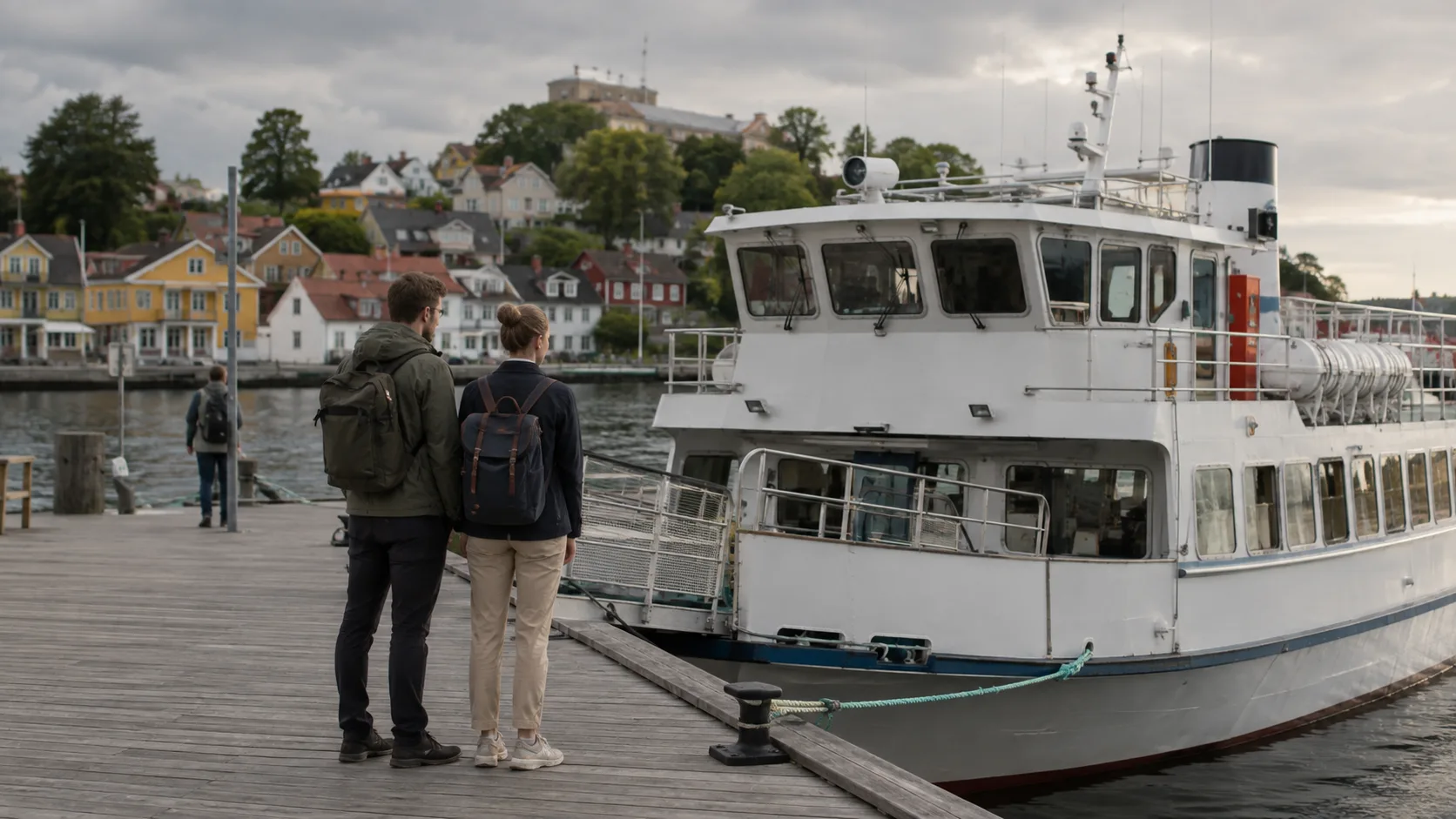
Grinda changes the logic again. You arrive without your vehicle, and the useful question becomes how much island time sits between the boat you take out and the boat you must catch home.
Visit Stockholm describes Grinda as just over an hour away by the fastest boat via Vaxholm, but actual journeys vary by service. Waxholmsbolaget also warns that Grinda is one of the islands with more than one jetty, so reading the correct journey and return information matters.
On Grinda, Stockholm Archipelago Trail gives the walk a route through woodland, meadows and rocky coastal scenery. Use the island map to choose a section that leaves time to return to the correct jetty. If you intend to eat on the island, the restaurant’s opening hours also need to fit the boat day.
A missed connection here is not equivalent to leaving Sigtuna thirty minutes later. It can remove the next planned stop entirely, which is why an archipelago itinerary needs slack rather than another attraction squeezed into the evening.
8. Tyresta National Park and Tyresta village
Tyresta is the forest day. The national park, established in 1993, protects old-growth pine and spruce woodland only about 20 km from central Stockholm, yet the useful way to visit is to choose one official trail rather than vaguely planning to “go hiking”.
Allow a few hours for the walk and village, longer for a slower day. Read the park rules and current fire-ban notices before planning to cook. A designated fire site does not override a temporary ban.
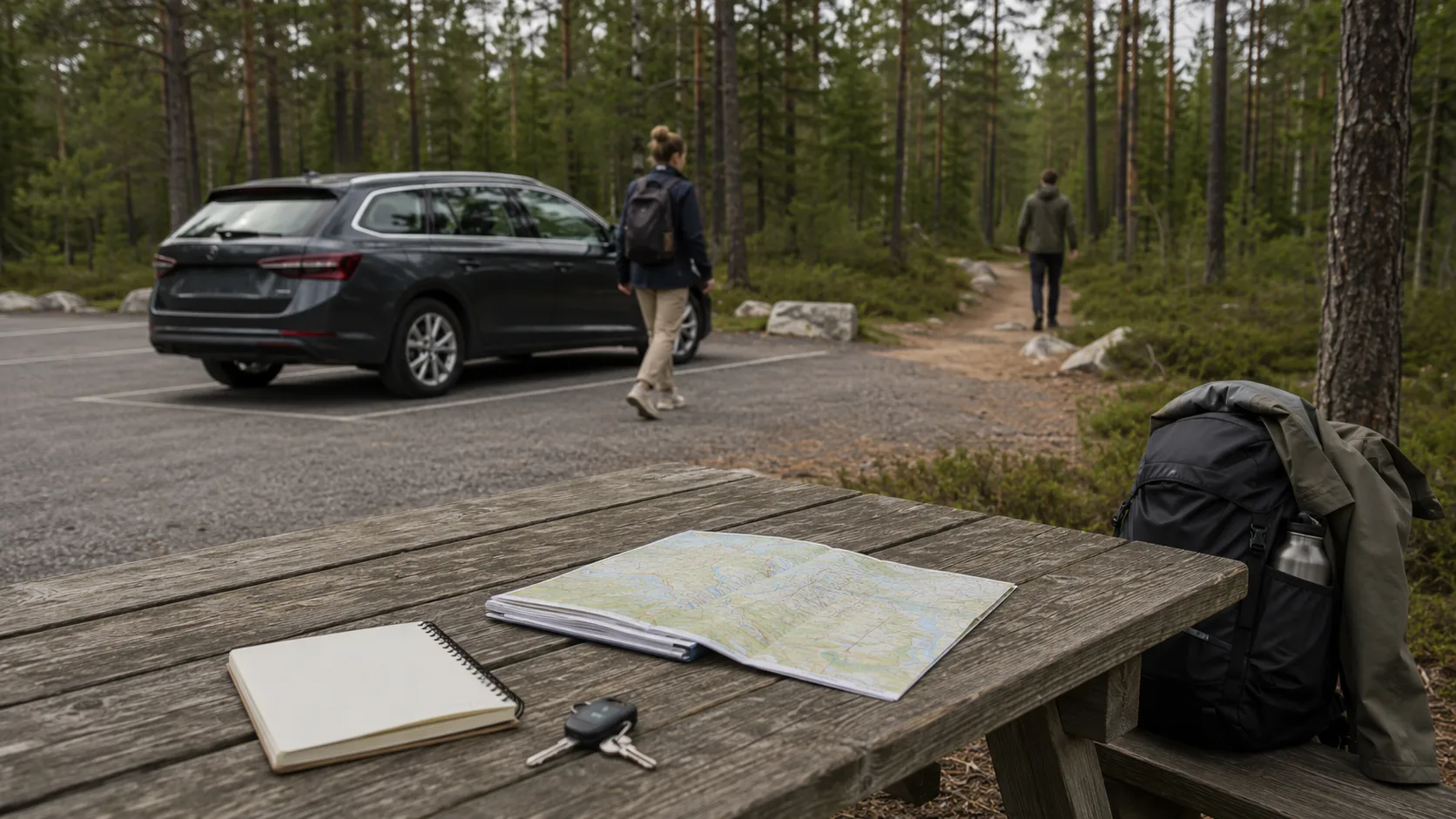
Two trails leave the main entrance in Tyresta by. The Urskogsstigen trail covers two hilly kilometres, with signs about the old-growth forest. With a pushchair, I’d choose the Bylsjöpromenaden lake walk. The five-kilometre loop is clear of roots and rocks, though there’s a steep climb at the start.
9. Nynäshamn and Strandvägen
Nynäshamn is the mainland Baltic-coast stop. It should not be reduced to the ferry terminal for Gotland.
Strandvägen, also called Ringvägen locally, follows the water in southern Nynäshamn and can be driven, cycled or walked. The coastal setting of rock, sea and small recreational areas gives it a different feel from both central Stockholm and the sheltered inner archipelago.
A half day leaves room for the town, harbour area and a section of the coast without turning the visit into another transport day. It works particularly well after Tyresta if your journey is shifting south. Check any current access or parking details you need, especially with a larger vehicle, rather than assuming that a waterfront road also provides a suitable place to stop or stay.
10. Landsort on Öja
Boats to Landsort leave from Ankarudden south of Nynäshamn. Search the correct travel date with Waxholmsbolaget and read notices about jetty arrangements. Boats can use different harbours on Öja depending on the wind, so ask the crew where the return boat will call.
Öja is a little over 4 km long, narrow and exposed, with the historic Landsort lighthouse at its southern end. The island is also an important migration site for birds and part of a protected natural area.
Give Landsort the better part of a day rather than treating the crossing as an accessory to Nynäshamn. It suits walkers, birdwatchers and travellers who specifically want the southern outer archipelago. Check the boat, weather, return arrangement and current protected-area or bird restrictions on the same day. Conditions here have more power to rewrite your plan than almost anywhere else in the county.
Three travel rhythms for 3–5 days
For three days, stay with the Lake Mälaren and city rhythm: one full Stockholm day, one Drottningholm half or full day and a slower Sigtuna day. Birka can replace one of those when the seasonal boat is the priority, but adding it on top turns a relaxed three days into timetable management.
For four days, build around the central archipelago instead. Use Vaxholm as the town day, Artipelag and Gustavsberg as the culture-and-short-walk day, and reserve a complete timetable-shaped day for Grinda. Stockholm can be your fourth day before or after the archipelago rather than another stop squeezed between ferries.
For five days, a southern version gives the clearest contrast: Stockholm or Drottningholm first, then Tyresta, Nynäshamn and a properly planned Landsort day. These are patterns, not an instruction to complete all ten places. If one ferry, traffic delay or wet-weather walk takes longer, remove something.
That distinction matters when you plan a trip privately in FARON. A booked Birka departure has a different weight from an unbooked walk through Sigtuna; Grinda's return boat is harder to move than an hour beside Lake Mälaren. You can place the stops in an upcoming trip, keep alternatives among places saved for a future visit, then record the actual time, photographs, stops and small lessons that survived the plan.
Afterwards, the useful record is rarely that ten places existed on a list. It is which six you actually reached, which ferry changed the afternoon and whether Tyresta needed two hours or half a day. FARON keeps that as a private travel archive, and you can see which stops actually happened on the map rather than turning the journey into a public place catalogue.
If Stockholm County is the start of a longer journey, you can continue north through Uppsala County or compare it with Lake Mälaren and Bergslagen in Västmanland.
To decide which of these rhythms fits your way of travelling, find the travel rhythm that suits you.
FAQ
How many days do you need for a trip through Stockholm County?
Three days are enough for one clear theme, while four or five days give you room to combine the city, forest or archipelago without rushing every transfer. Trying to complete all ten stops in five days would remove much of the flexibility this region needs.
Which places in Stockholm County work well with children?
Sigtuna, Vaxholm, Drottningholm, Artipelag and a suitably chosen Tyresta walk can all work well with children. Match the day to walking distance, weather and current access information rather than assuming every island excursion suits every age.
Do you need to book the boats to Birka, Grinda and Landsort?
Check the current operator information before every trip because booking, ticket and capacity rules differ between services. Birka, Grinda and Landsort also use different routes and departure points, so verify the correct jetty and return in the operator's current journey planner or timetable.
Can you stay overnight in nature reserves and national parks in Stockholm County?
Every protected area has its own regulations, so there is no single rule that covers all reserves and national parks in Stockholm County. Check signs on site and current information from the responsible authority before camping, lighting a fire, parking or planning an overnight stay.