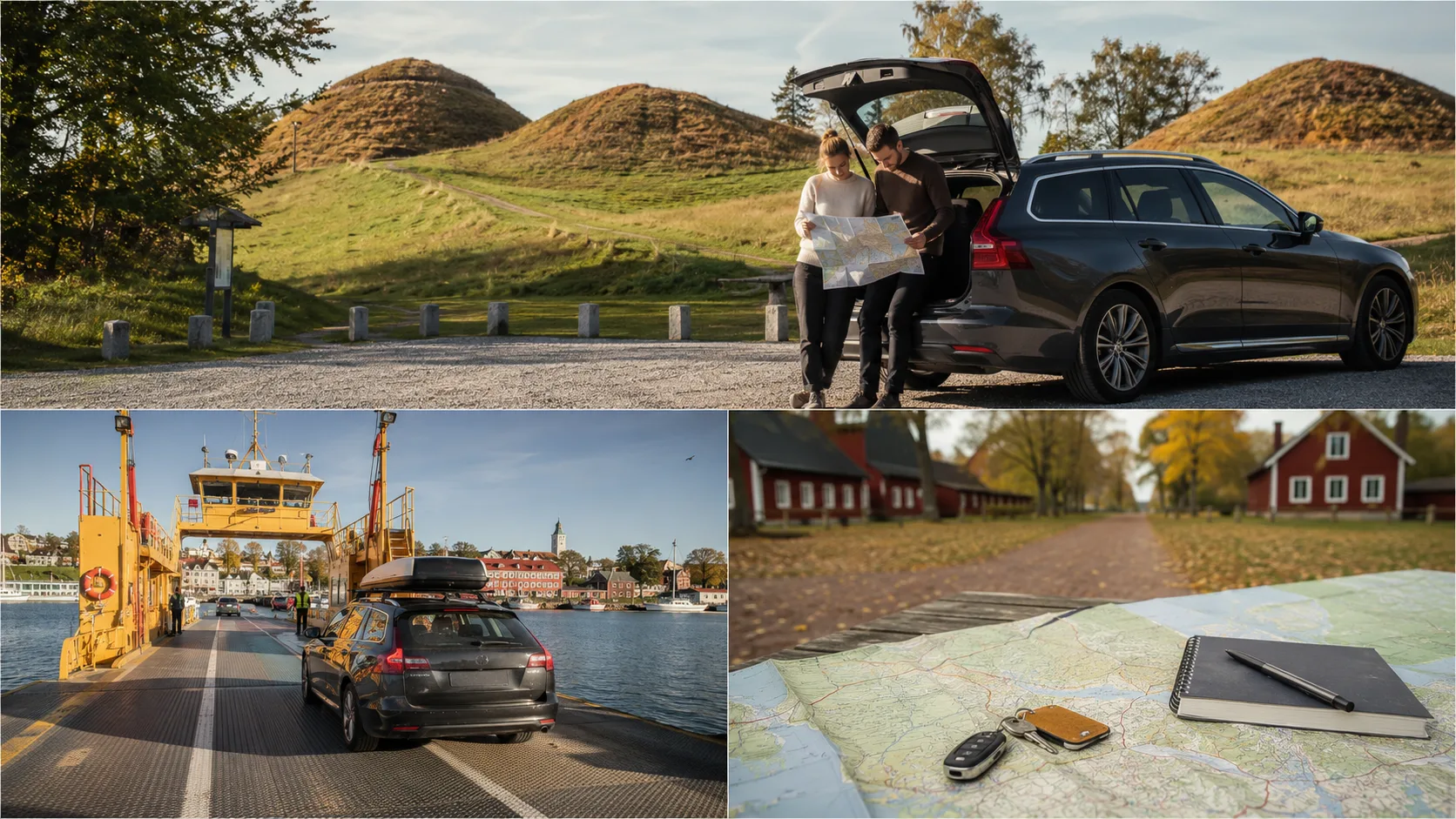
Royal mounds. Linnaean gardens. Ironworking villages. Sea cliffs. Uppsala County can move from a university city to the Baltic coast, Lake Mälaren or the wetlands of Florarna within a 2–4 day journey, provided you resist trying to fit every place into the same day.
1. Uppsala Cathedral and the historic quarter
Start in central Uppsala on foot rather than treating the city as a sequence of separate museum visits. Uppsala Cathedral gives the area its obvious landmark, while the Fyris river, Gustavianum and Carolina Rediviva put the cathedral into a university city that has developed around it for centuries.
Allow a few hours for a compact walk. Cross the river, pass the cathedral and university buildings, and decide on the day whether you actually want to enter Gustavianum or Carolina Rediviva. Their exhibitions and opening arrangements can change, whereas the streets and river make sense even when you stay outside.
This stop suits anyone who wants architecture and university history without spending a full day indoors. It also works well at the beginning of a road trip because you can leave the larger vehicle parked according to the rules and conditions that apply that day and explore the centre on foot. Check cathedral events and any museum you intend to enter before departure; services or concerts can restrict access inside the cathedral.
2. The Royal Mounds at Gamla Uppsala and Gamla Uppsala Museum
Gamla Uppsala changes the scale completely. A few kilometres from the modern centre, the important object is the landscape itself: the large burial mounds, the church and the open ground of a place that was a political and religious centre long before today’s Uppsala developed.
The museum adds the objects, models and archaeological interpretation that are difficult to read from a grassy mound alone. The principal Royal Mounds date to the Vendel period, roughly AD 550–800, while the site remained significant into the Viking Age.
Give the area around two hours if you want both the exhibition and an unhurried walk. It suits adults and children who respond better to a real landscape than to a long sequence of display cases. Check the museum’s current hours and language-specific tour programme before you travel.
3. Linnés Hammarby and the cultural reserve
Linnés Hammarby combines Carl Linnaeus's home with the surrounding agricultural landscape. Choose the visit around what you want to see: entering the house requires a guided tour, while the cultural reserve is open year-round with free admission.
In 2026, the museum estate's regular opening season ended on 20 September. An October visit is therefore mainly a landscape walk unless you have arranged something separately. Uppsala University publishes current Hammarby opening hours and tours; check the schedule for your date.
I would allow two or three hours on an open museum day and book the house tour first. For a shorter autumn outing, the cultural reserve can be the destination in its own right, with Uppsala city as the next stop.
4. Fjällnora recreation area east of Uppsala
Fjällnora is the easy nature counterweight to the first three history-heavy stops. It lies about 15 km east of Uppsala, around lakes, wooded slopes and trails, so you can exchange stone floors and exhibition rooms for a short walk, swim or picnic without committing to a remote hiking day.
Short stop. Short walk. Then decide whether the weather makes another hour outdoors worthwhile, rather than forcing a planned swim or paddle because it looked sensible the night before.
The area suits families, travellers with dogs and anyone who needs a low-effort outdoor break. Swimming areas, equipment rental and other services are listed for Fjällnora, but treat them as things to verify rather than guaranteed parts of your day. Check current bathing information, weather and seasonal service before setting off.
5. Skokloster Castle and Lake Mälaren
Skokloster suits a half-day devoted to history and collections. The castle holds art, arms, textiles and books, but walking outside and visiting the interior are two different plans.
The published autumn-break opening dates for 2026 are 24 October–1 November, 11:00–16:00. Do not assume normal daily access outside the listed dates. Check the castle calendar before choosing your travel day; private group tours can be booked year-round.
Choose the tour or exhibition first and give it room in the day. With only two days in the county, I would choose between a substantial castle visit beside Mälaren and an extra coastal outing, rather than turning both into hurried stops.
6. Öregrund harbour, wooden town and coastal walk
Öregrund is the moment when an Uppsala County road trip reaches the sea. Its job in this itinerary is simple: walk the harbour, old wooden streets and waterfront rather than treating it as a base for another long list of attractions.
A couple of hours is enough for a first visit, especially if Gräsö follows. Wind and summer crowds can change how quickly the harbour feels, and a motorhome or caravan requires more planning than a normal car in a small coastal town. Check current local traffic and parking information rather than assuming a space near the waterfront.
This is a useful lunch or late-afternoon stop on the way north. Leave enough margin that the ferry timetable, not an overfull sightseeing list, decides when you move on.
7. Gräsö by car ferry from Öregrund
Gräsö deserves its own stop because crossing the water changes the trip again. The Trafikverket road ferry runs the 1,000 metres from Öregrund to Gräsö in about 5 minutes and carries vehicles free of charge, but summer capacity varies and high demand can mean waiting.
Once across, choose one modest activity rather than trying to “do the island”: a signed walk in a current nature area, a cycle outing or a swim if conditions are suitable. Check the specific natural area, weather and bathing information that morning.
Picture the useful version of the ferry queue: you arrive with enough margin to switch off the engine, look at the map and drop one optional stop further north. The less useful version is arriving with three more places timed to the minute and treating the 5-minute crossing as if that were the entire ferry calculation.
8. Lövstabruk and Österbybruk
These two ironworking communities belong together historically, but they should not blur into one generic “old Swedish village”.
Lövstabruk developed into one of the major Walloon ironworking environments of Uppland, with the manor and planned settlement reflecting the scale and organisation of the works. Österbybruk is particularly useful for understanding the production side because its surviving Walloon forge connects the manor landscape with the work that made the community possible.
Check the current opening and tour programme for each site. A walk through the historic surroundings and a guided visit inside a building require different planning.
That makes the practical decision easy: walk the historic environments if they fit your route, but never construct the day around an assumed tour. If one current guided visit is especially important, check it first and consider dropping the other community.
9. Florarna Nature Reserve and Upplandsleden
Florarna is wetland walking, not simply another forest stop. The reserve contains Uppland’s largest continuous mire landscape, with old forest, open bog, water and long sections where boardwalks make otherwise wet ground passable.
For this itinerary, use the 10 km Florarna loop described by Upplandsstiftelsen as the reference rather than treating the entire reserve as one walk. It links Stormon, Vika and Risön over forest paths and boardwalks; the official information lists water at Risön from May to October.
Ten kilometres is still a real half-day commitment once wet timber, roots, stops and weather are included. If rain has made the surfaces slower than expected, shorten the plan rather than protecting an arbitrary kilometre target.
Every reserve has its own regulations. Florarna, for example, has specific rules for vehicles, fires and dogs, so check the reserve page, current trail information, water availability and weather before walking or making any overnight plan.
10. Laxön and Älvkarlebyfallen
Finish at Dalälven, where Laxön sits in the river environment at Älvkarlebyfallen. The island’s late-19th-century military buildings reflect more than a century of engineering exercises here, and the ordinary visit works as a walk around Laxön and the river rather than an event-dependent attraction.
This distinction matters. The dramatic water releases people associate with Älvkarlebyfallen happen on special occasions, not as a daily performance. In 2026, Fallens dag was held on 14 June with two programmed releases at 12:05 and 15:05. A visitor on 25 August should therefore plan for the river, bridges, island and walking environment, not expect those event conditions.
Allow one to three hours depending on how far you walk. It is a natural northern endpoint before you extend the journey north into Gävleborg.
Choose a museum day or an outdoor day
On an autumn weekend when Skokloster is open, let the castle be the day's main visit. Keep the second day around Uppsala and Gamla Uppsala so you have time to explore the city on foot. Check your preferred tour before making other bookings.
If the buildings are closed, I would choose Hammarby's cultural reserve and a short walk at Fjällnora instead. Two stops are enough. Leave time for lunch. The 10 km walk at Florarna can wait for a day with room to enjoy the trail.
Two ways to arrange 2–4 days
For 2 days, keep the geography tight. Spend the first day walking central Uppsala and Gamla Uppsala, then use the second for Linnés Hammarby and either Fjällnora or Skokloster. The latter is the larger detour and becomes the priority if you have booked a castle visit; Fjällnora is easier to shorten around weather, children or a late start. Do not add Öregrund simply because it fits on a map. The coast changes the rhythm enough to deserve more time.
With 4 days, continue east to Öregrund and Gräsö, then turn north through Lövstabruk and Österbybruk before choosing a sensible Florarna walk and finishing at Älvkarleby. Allow roughly half an hour to an hour of margin around rural transfers and considerably more around a ferry queue, a long museum visit or wet trails. This is a flexible northern Uppland road trip rather than an optimisation exercise.
Four days still require choices. A 45-minute castle tour at Skokloster, a ferry delay at Öregrund or a slow 10 km walk in Florarna can each remove another stop from the day. Before leaving, you can place the stops in an upcoming trip and remove the lower-priority ones rather than carrying ten obligations around the county.
That same distinction is useful afterwards. FARON works as a private travel archive and planning aid: save the places you selected, then record what actually happened — the time you spent, photographs, stops and the lesson that Österbybruk needed longer or Gräsö needed a different ferry margin. You can later see which stops actually happened on the map, rather than remembering the original plan as if you followed it exactly.
If the trip turns south or west instead, you can follow Lake Mälaren and the archipelago through Stockholm County or continue west through Västmanland.
For the main next step, find the travel rhythm that suits you.
FAQ
How many days do you need for a road trip in Uppsala County?
Two days are enough for Uppsala and a few nearby stops, while four days give the coast and northern Uppland room to work. Trying to cover all ten places in two days would turn much of the trip into transfers.
Which places in Uppsala County work well with children?
Gamla Uppsala, Fjällnora and the outdoor parts of Skokloster are among the easiest places to adapt for children. Match walks and museum time to age, weather and current opening information rather than expecting every activity to be available.
Do you need to book Skokloster Castle and Linnés Hammarby in advance?
Book your preferred guided tour in advance when advance booking is available. The house at Hammarby is visited with a guide; the daily programme at Skokloster determines which rooms you can enter.
Can you stay overnight in nature reserves in Uppsala County?
Every nature reserve has its own regulations, so an overnight stay cannot be assumed to be permitted. Read the signs on site and check the current reserve rules from Länsstyrelsen or the relevant authority before making any overnight plan.