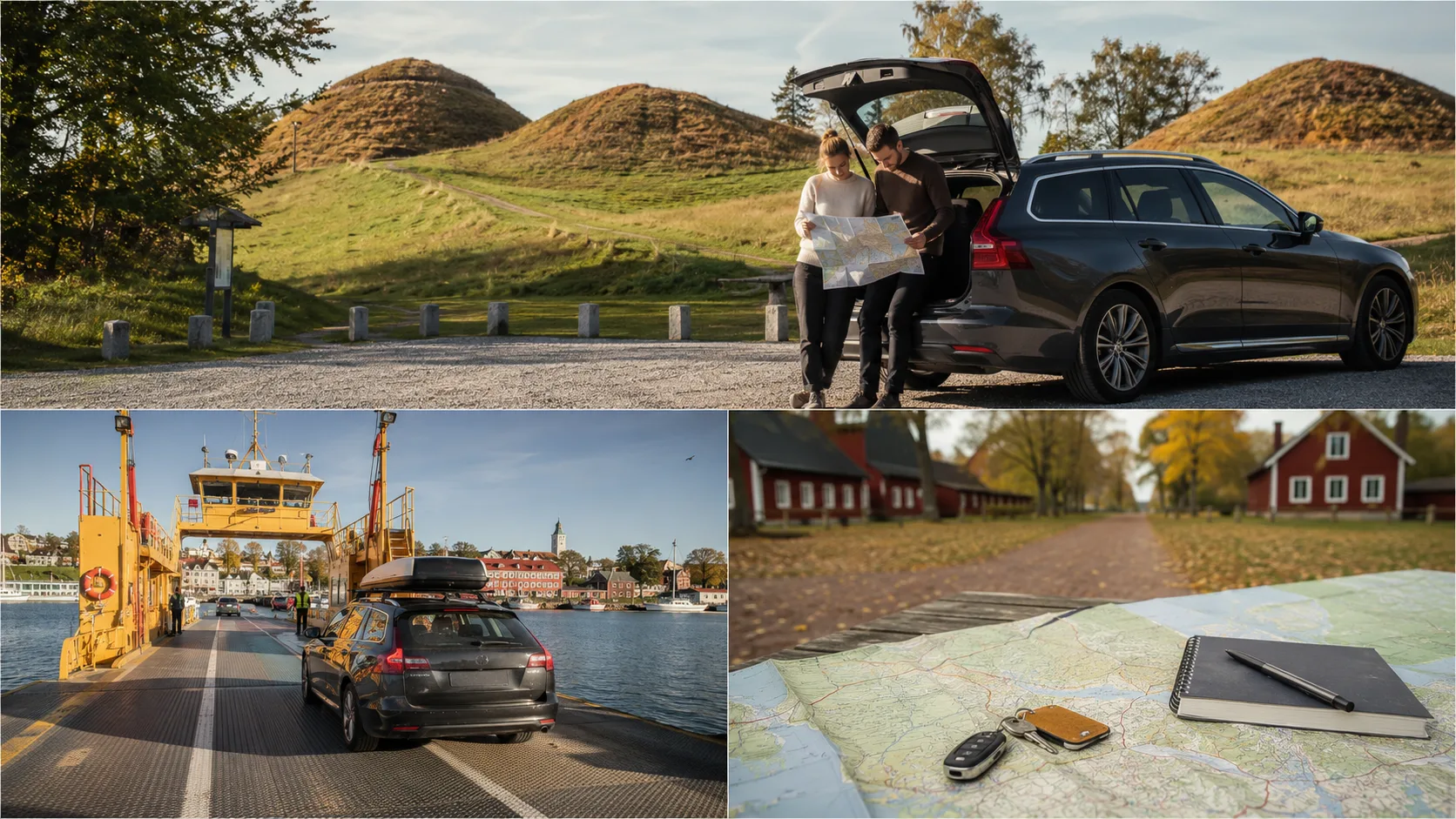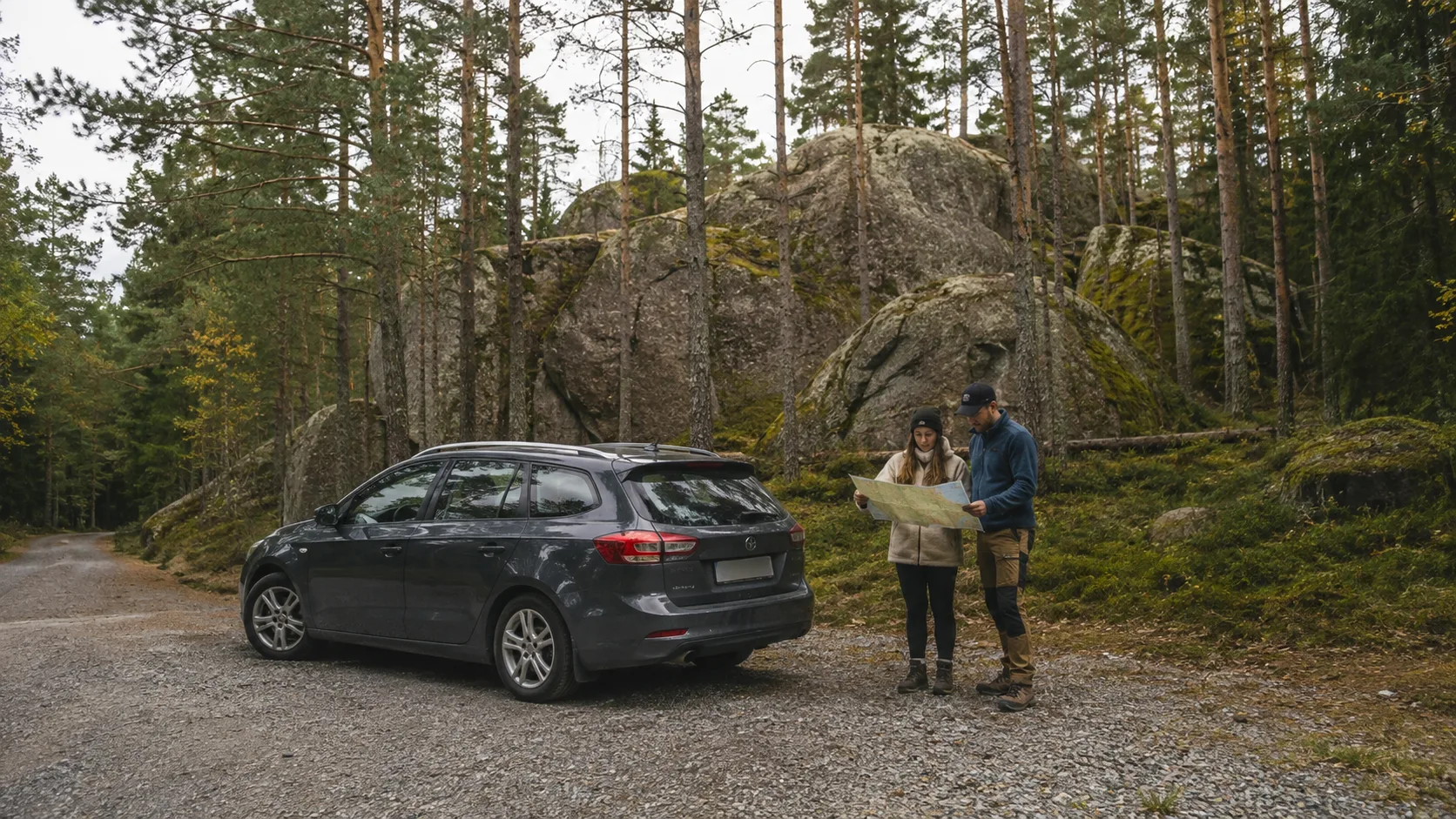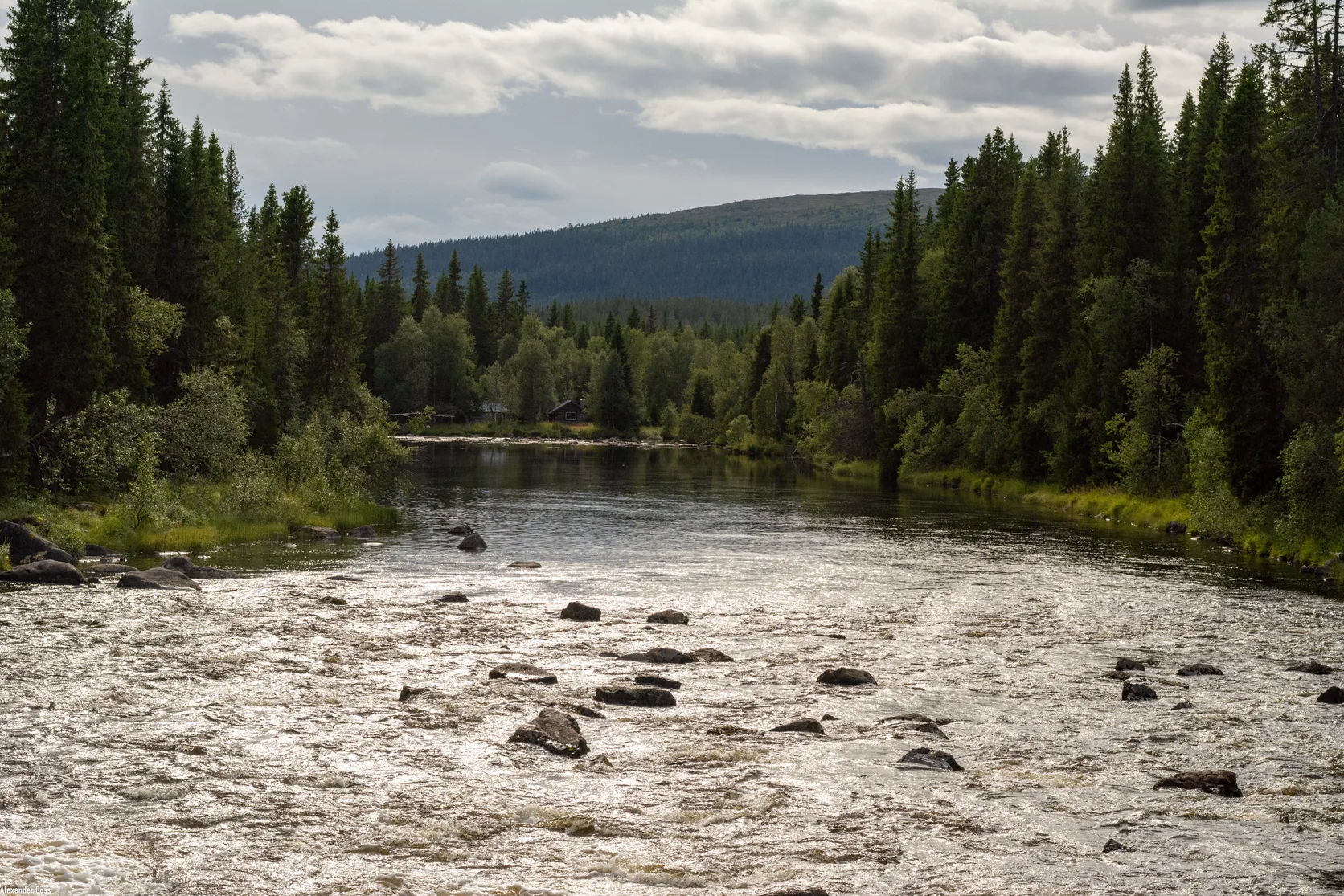
Västmanland makes most sense when the journey moves from the old cultural landscape around Lake Mälaren to the mines and ironworks of Bergslagen. With 2–4 days, you can combine Västerås and its surroundings with Sala or Norberg, but trying to fit all ten places into one short trip would leave too little time at each stop. Choose a direction, keep one or two places in reserve and let tour times and weather decide the final order.
1. Anundshög and Badelunda Ridge outside Västerås
Anundshög gives the journey its oldest historical layer. The site east of Västerås contains one of Sweden's largest burial mounds, ship settings, a runestone and a wider grave field, while the Badelunda Ridge continues through a landscape that was important long before Västmanland became known for mines and ironworks.
Allow roughly one to two hours if you want to walk around rather than simply stop beside the main mound. The central monument area is easy to explore independently and can be visited year-round, making it useful when your schedule does not fit a guided attraction. It works particularly well for travellers interested in archaeology, Viking Age Sweden or a short first walk after arriving in Västerås.
Check current guided tours, café hours and events before departure. The walking becomes less even once you move farther along the ridge, so footwear matters if you intend to continue beyond the main site.
2. Vallby Open-Air Museum in Västerås
Vallby tells a much more recent story of Västmanland. Around 50 historic buildings have been moved here from across the county, surrounded by fields, gardens and crops, while the animal enclosures include Swedish heritage breeds such as Jämtland goats, Gästrike sheep and Swedish Mountain cattle.
A normal visit can easily take a couple of hours, especially with children or if several buildings are open. This is less about one famous object and more about seeing how farms, workshops, cultivation and everyday life fitted together across Västmanland.
The grounds are open year-round, but activities, staffed buildings and food options vary. Check the museum's current programme before setting out, especially outside the main summer period.
3. Ängsö Nature Reserve and its cultural landscape
Ängsö moves the route out into Lake Mälaren. The reserve covers an entire parish with 23 islands and 222 smaller islets and skerries, but most road-trip visitors will focus on the main island, Ängsön, where old roads, pastures, farms, archaeological remains and woodland sit in a landscape still shaped by agriculture.
There are six marked trails ranging from about 1.5 to 8.5 kilometres, so this stop works best when you give it several hours and choose one walk rather than trying to cover the island. It suits travellers who want light walking, cultural history and Lake Mälaren scenery without committing to a long hike.
For motorhomes, caravans, campervans and rooftop-tent travellers, the reserve rules need to be read separately from Sweden's general right of public access. Tenting on Ängsön is prohibited except for approved organised camping in a designated area, and the regulations also prohibit leaving a motor vehicle, trailer or caravan set up for more than one day. That wording does not guarantee that a specific parking place may be used overnight; check signs and the current information from Länsstyrelsen when you arrive.
4. Strömsholm Palace, park and nature reserve
Strömsholm works as two separate stops sharing the same landscape. The palace is a seasonal attraction opened in connection with guided visits, while the surrounding park and Strömsholm Nature Reserve can form a quieter walk among old oaks, pasture and a landscape strongly associated with horses.
On 24 August 2026, the palace's published calendar still lists opening days from 25 to 30 August. If your journey falls outside the palace season, Strömsholm can still be worthwhile as a park and reserve stop rather than a reason to rearrange an entire day around a closed building.
An hour can be enough for a short walk. Two or three hours gives you more room if a palace visit is available as well.
Keep the rules separate: the nature reserve prohibits tenting and setting up a caravan, and motor vehicles are restricted to public roads within the reserve. Those regulations apply independently of whether the palace itself is open.
5. Skultuna Messingsbruk
Skultuna is a compact industrial-history stop rather than another mine. Brass production has been associated with the site beside the Svartån river since 1607, and the present visitor area includes a small museum as well as food and contemporary design businesses.
One to two hours is usually enough unless you are stopping for a meal. The useful reason to include Skultuna in a Västmanland road trip is the continuity: more than 400 years of industrial activity in the same place, presented on a scale that works between larger half-day attractions.
Check the current museum and restaurant opening hours before you drive there. It is an easy stop to move to another day if a fixed underground tour in Sala is controlling your schedule.
6. Sala Silver Mine
Sala Silver Mine gives Bergslagen a different scale because the visit can take you underground. The standard guided option currently goes to the 60-metre level, with the English visitor information listing a guided 60-metre tour of about 75 minutes; other seasonal tours can differ in length and content.
Allow at least a couple of hours around the booked tour rather than treating the published tour length as your entire stop. You need time to arrive, collect information and move around the site above ground.
This is also where a flexible road trip becomes less flexible. Tickets for guided visits are booked through Sala Silvergruva, departures start at the stated time and the operator explicitly warns that late arrivals cannot be held. The current FAQ also lists an age limit of 5 years for going underground, but booking conditions, age limits, available languages and safety requirements are dynamic information and should be checked again for your exact date.
A typical planning decision appears here. A morning tour in Sala may make Ängelsberg look like an obvious next stop on the map, but a late lunch or worsening weather can turn two further visits into an unnecessarily rushed afternoon. Pick one. Save the other.
7. Hälleskogsbrännan between Västerfärnebo, Ramnäs and Virsbo
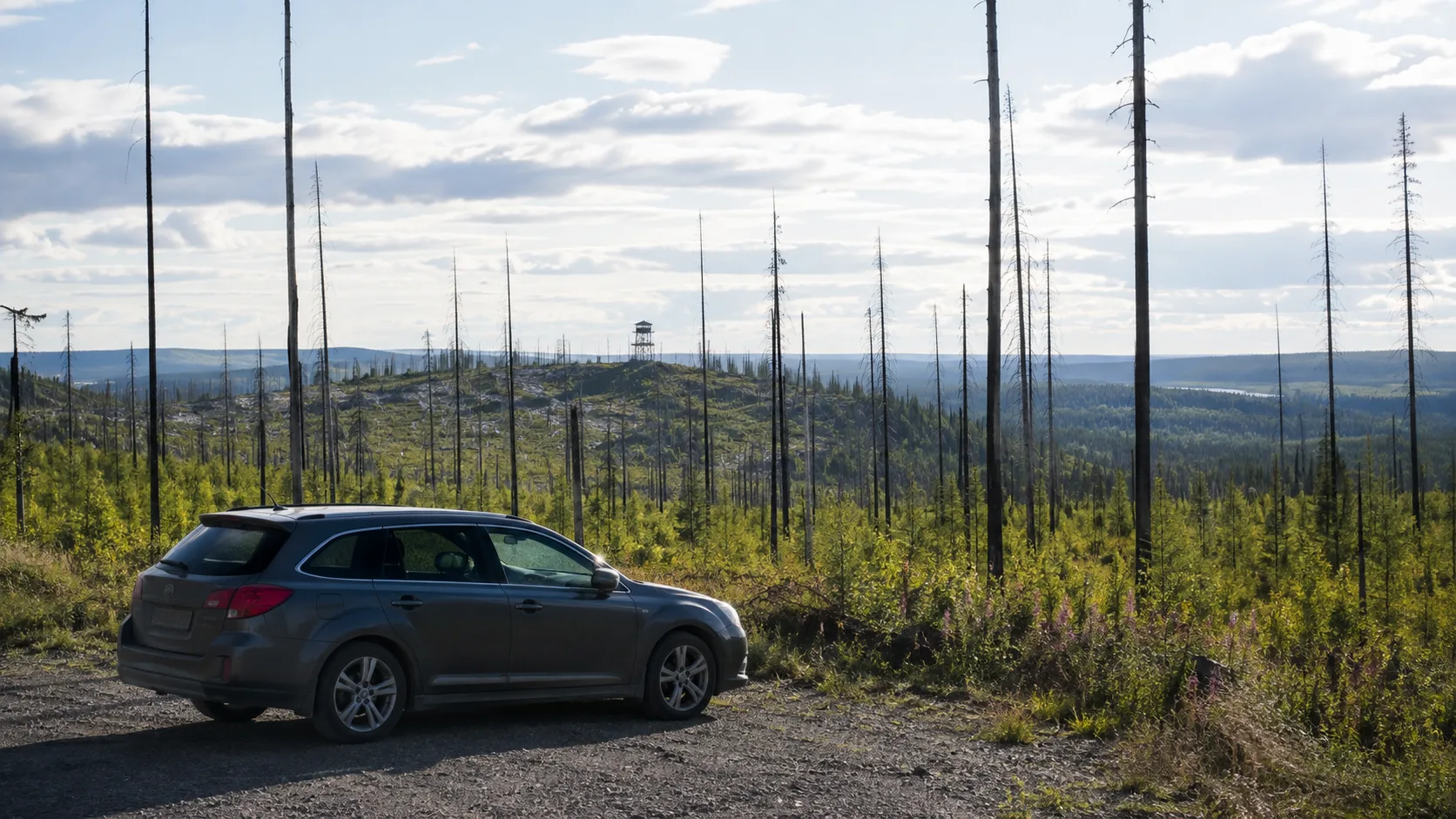
Hälleskogsbrännan is the clearest nature stop on this list and one of the strongest reminders that landscapes change. The reserve covers 6,420 hectares of the area affected by the major forest fire of 2014, with several visitor entrances and designated points such as Grävlingsberget, where there are paths and an observation tower.
Give it a couple of hours and choose one part of the reserve rather than trying to cross a large section of it. Grävlingsberget is the most straightforward place to understand the scale of the fire and the regrowth without turning the visit into a long hike.
The safety warning deserves to shape the plan. Burned roots give trees poorer anchorage, and Länsstyrelsen warns that trees and branches fall more easily here, especially in windy weather; many standing trees are still dead. Motor vehicles are also only allowed on roads identified in the reserve decision. Check the latest weather, warning information and local signs before walking away from the developed visitor areas.
8. UNESCO-listed Engelsberg Ironworks in Ängelsberg
Engelsberg shows Bergslagen through a preserved ironworks rather than a reconstructed site or an underground mine. The complex includes the blast-furnace environment, smithy and other buildings associated with historical iron production, and Engelsberg Ironworks has been on UNESCO's World Heritage List since 1993.
The seasonal limitation matters in late August 2026. The official site states that the regular guided season has ended for the year; private tours can still be requested for September and October, with regular tours due to return in May 2027. Outside guided visits, visitors may see the blast furnace from outside and walk in permitted parts of the grounds, but much of the estate is private and the smithy is accessible only on a guided tour.
Without a tour, allow roughly an hour and treat the stop as a look at the preserved setting. With a confirmed guided visit, give it longer. Check the current booking page before building the day around access to interiors.
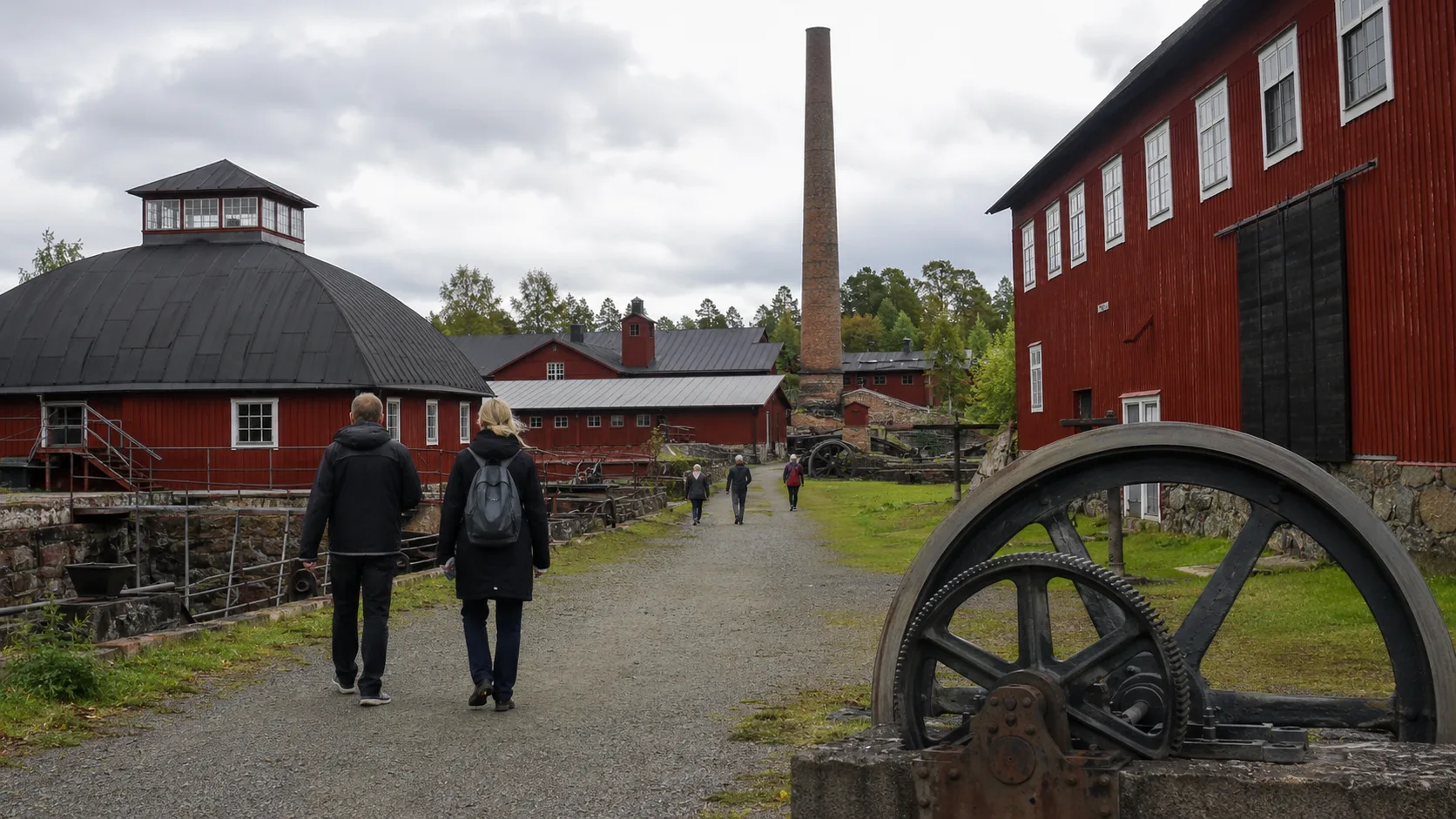
9. Nya Lapphyttan and Klackberg mining field in Norberg
Norberg works best when Nya Lapphyttan and Klackberg are treated as one Bergslagen stop. At Nya Lapphyttan, a medieval iron-production site discovered through archaeology has been reconstructed at full scale, giving a physical sense of how early ironmaking worked before the later industrial environments seen at Engelsberg. Visitors can walk through the reconstructed area independently, while demonstrations and organised activities are seasonal.
Klackberg adds the mining landscape. Paths, stairs, bridges, shafts and the Blå Grottan area show centuries of mining activity above ground, so the experience remains very different from the organised underground tour at Sala.
Allow several hours for the combination, especially if you want to walk rather than drive between brief viewpoints. This stop suits visitors interested in how iron production developed over time: reconstructed medieval smelting at Nya Lapphyttan, then the physical scars and structures of mining at Klackberg.
Check Visit Norberg's current information before departure for staffed buildings, demonstrations, events and any restricted parts of the sites.
10. Arboga's historic town centre
Arboga is a useful finish because the pace changes again. Once you have arrived, the main experience is on foot through an older town centre where medieval history is still visible in the street pattern and surviving buildings.
The town's records are unusually useful too. Sweden's oldest surviving municipal court records, the tänkeböcker, date from the 1450s and give detailed evidence of life in Arboga during the late Middle Ages.
Allow one to two hours for a walk, longer if you stop for lunch or coffee. After several days of mines, furnaces and nature reserves, Arboga works well because it requires very little logistics once you are there.
Check current events and local traffic information if your visit coincides with a major festival or busy weekend, particularly if you are driving a larger vehicle.
Two realistic ways to structure 2–4 days
For two days, keep the journey close to Västerås and Lake Mälaren. One day can combine Anundshög and Vallby Open-Air Museum with time in Västerås; the second can move through Ängsö and Strömsholm, with Skultuna kept as the optional shorter stop if the day is running well. A palace tour, a longer walk or poor weather is enough to remove one item from that plan.
Four days gives the county more room to change character. After the Västerås and Mälaren section, continue towards Sala, then use Hälleskogsbrännan, Ängelsberg and Norberg to build the Bergslagen part before finishing in Arboga. Treat that as a rhythm rather than an optimised route: tour times, roadworks, events, weather and seasonal opening can all justify changing the order.
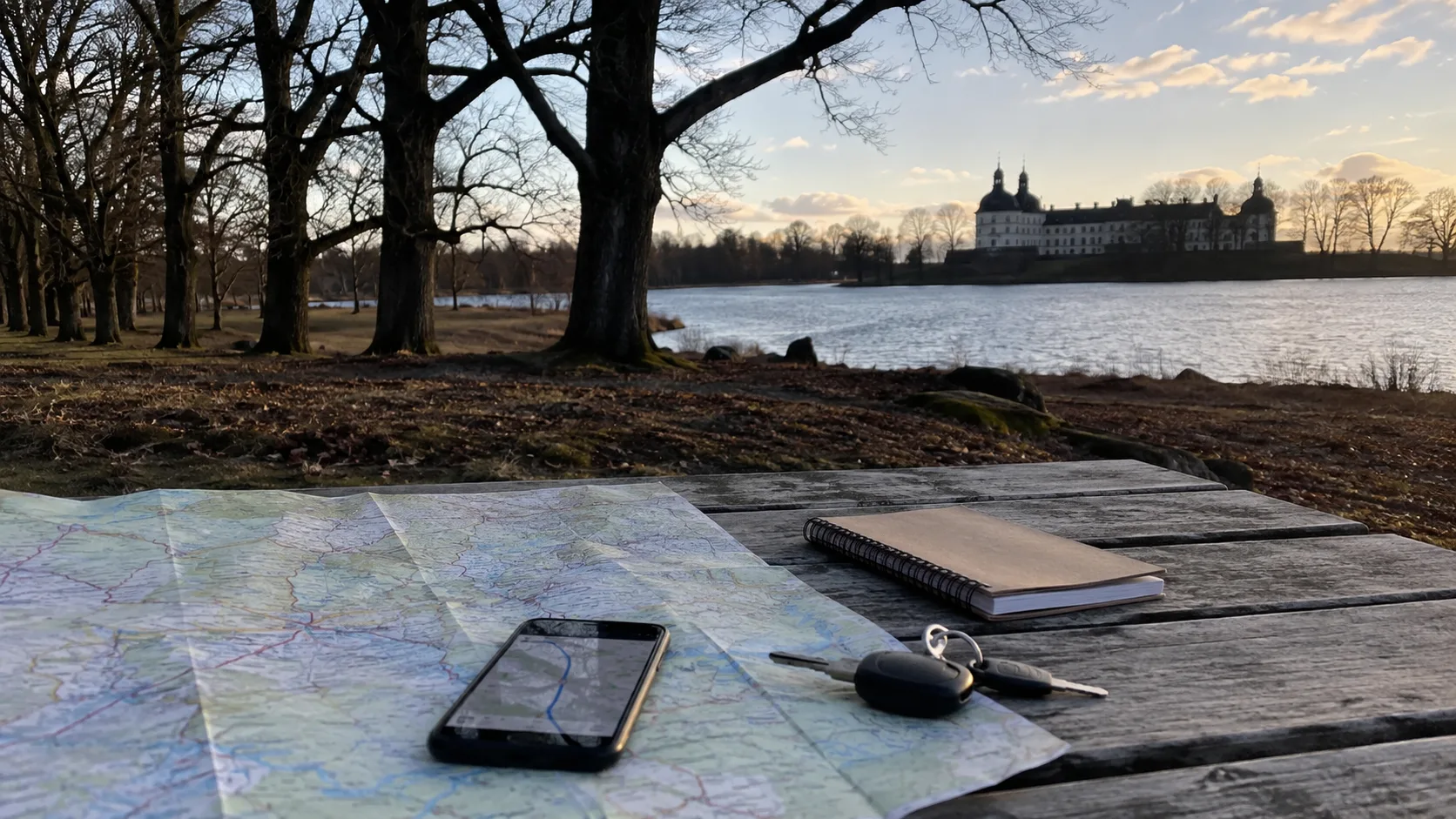
This is where it helps to decide what is fixed and what is movable. A booked underground visit at Sala Silver Mine has a departure time; a self-guided walk at Anundshög does not. Before the journey, FARON can be used as a private planning aid to keep the selected places together. Afterwards, the same private travel archive can hold the stops that actually happened, the time you really spent, photographs and notes about what was worth repeating next time.
Find the FARON use case that suits your travel
FAQ
How many days do you need for a road trip in Västmanland?
Two days are enough for a focused trip around Västerås, Lake Mälaren and a few nearby stops. Four days gives you much better room for Sala, Hälleskogsbrännan, Ängelsberg, Norberg and Arboga without making every day a transfer.
Which places in Västmanland work well with children?
Vallby Open-Air Museum, Anundshög and shorter walks around Strömsholm are straightforward choices with children. Sala Silver Mine and Hälleskogsbrännan require more careful checking of current age, safety and access information before you go.
Do you need to book Sala Silver Mine in advance?
You should book an underground tour in advance if you want a particular departure, because tours run at fixed times and availability can vary. Check Sala Silvergruva's current booking, age-limit and safety information for your chosen date rather than relying on an older price or requirement.
Can you stay overnight in Västmanland's nature reserves?
Every nature reserve has its own regulations, so there is no general promise that you may stay overnight at a particular reserve or parking area. Check signs and the responsible authority's current information for the exact reserve; Ängsö and Strömsholm, for example, have different specific restrictions.