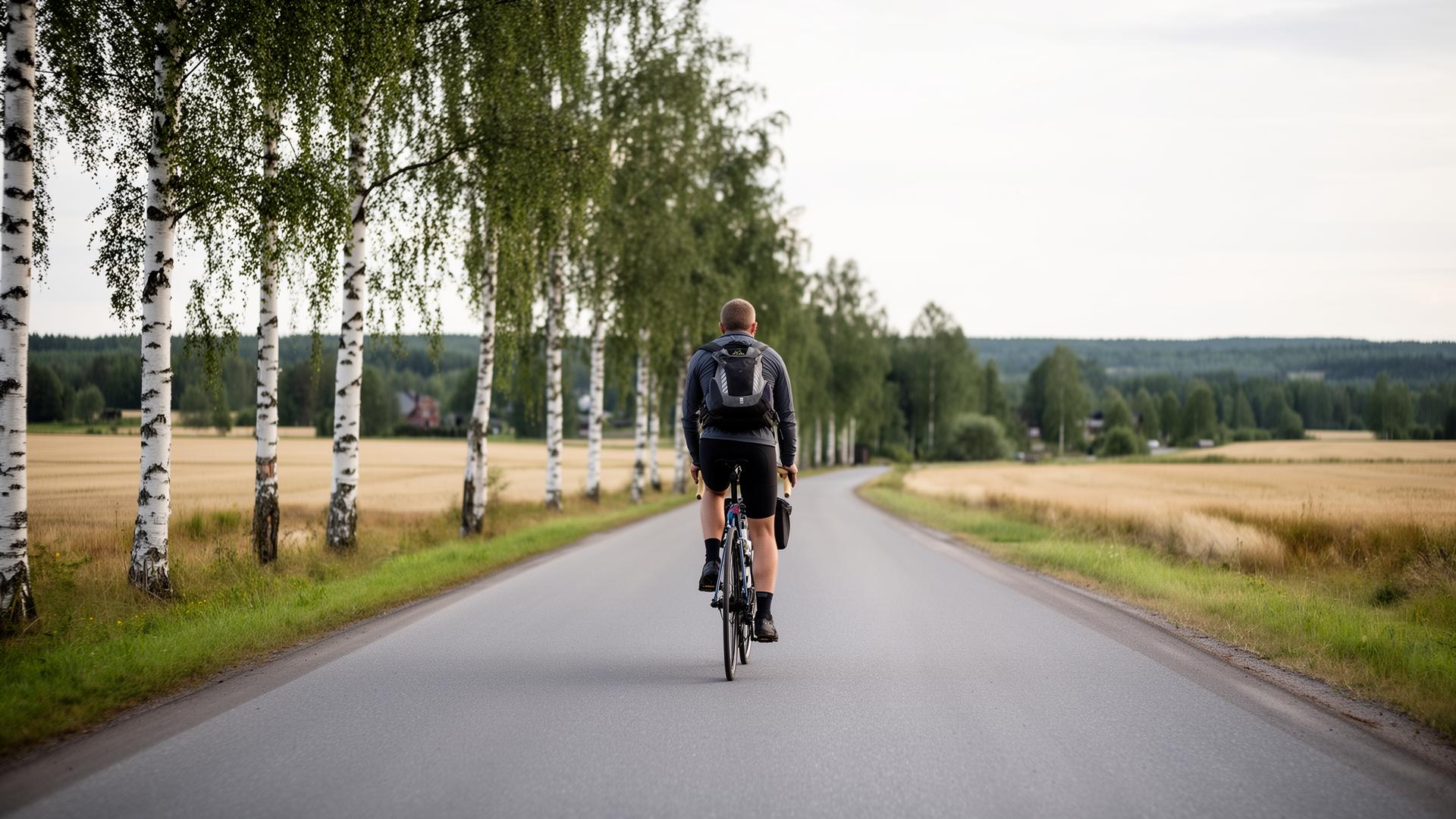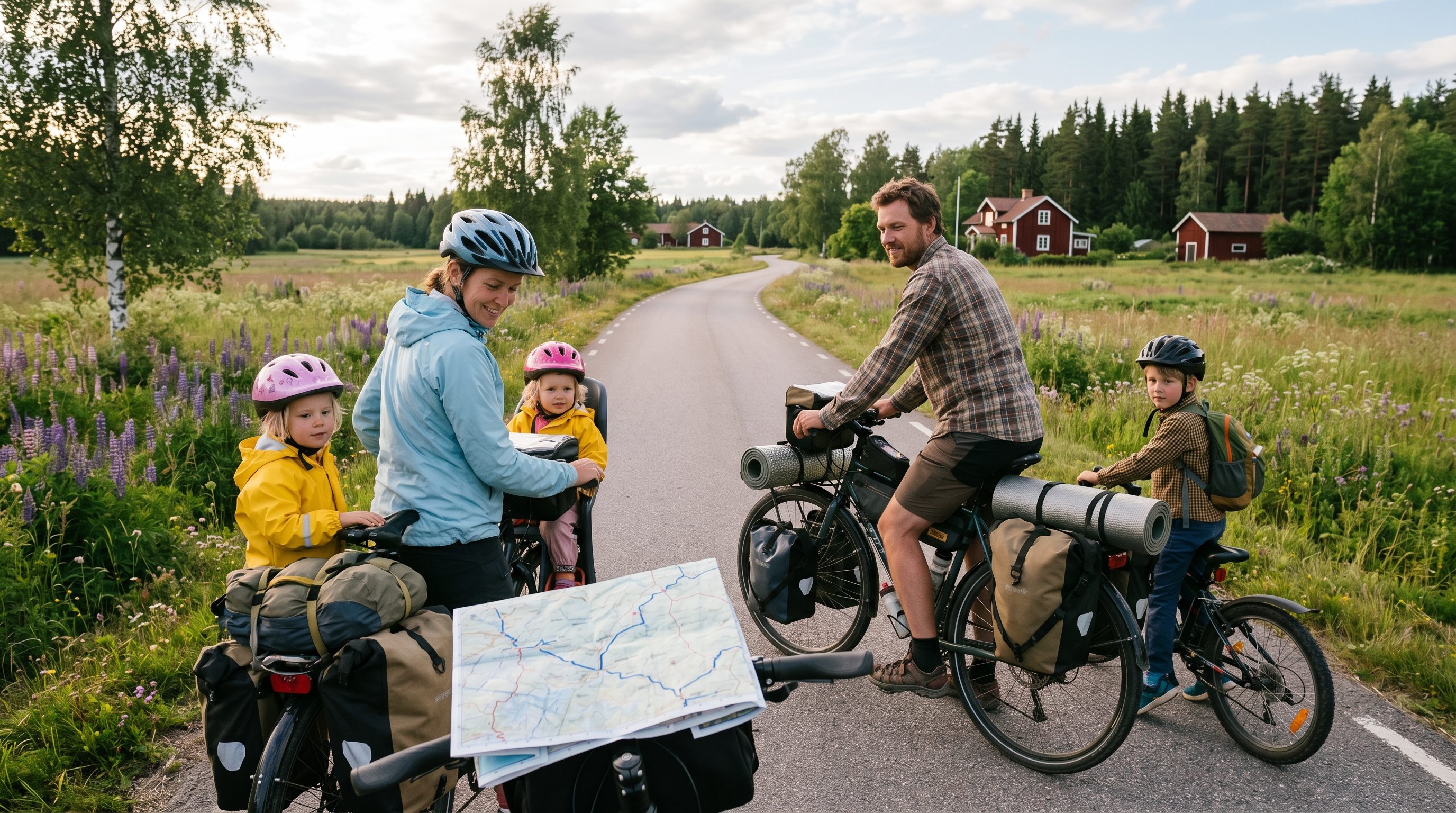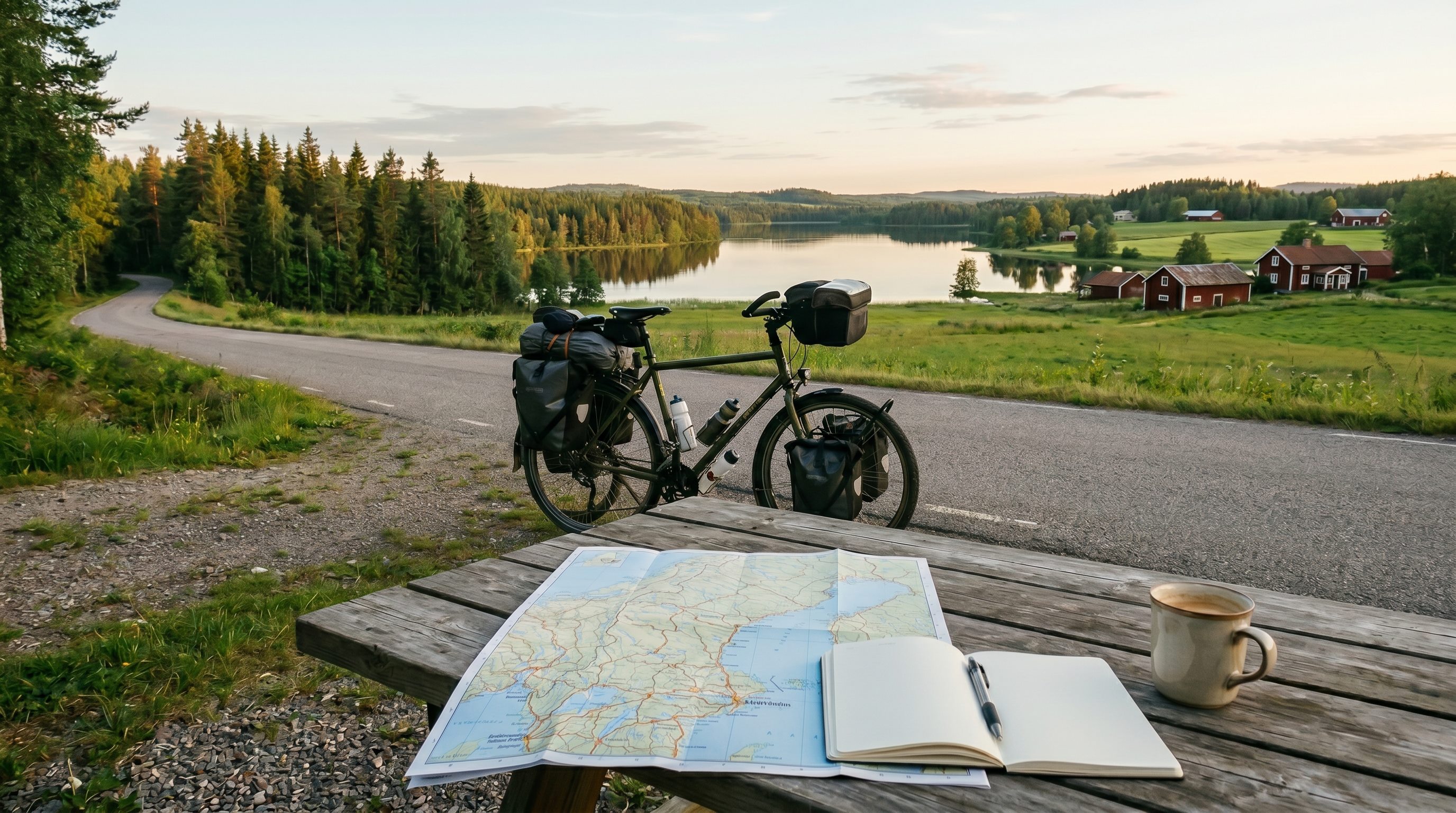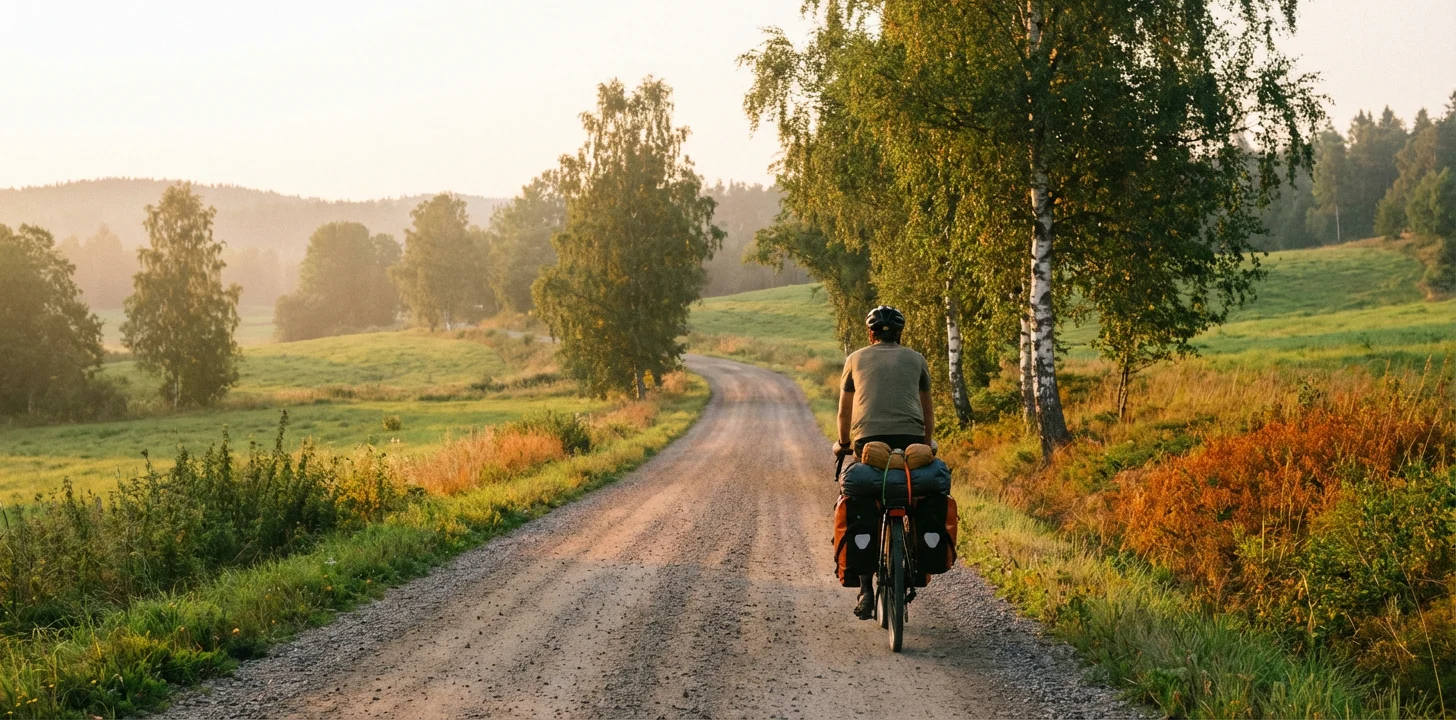
Leave room in your cycle-touring plan for headwinds, late starts and a change of overnight stop. I would choose stages with several accommodation options along the way, so a tiring afternoon can be shortened.
A loaded bicycle on coarse gravel takes more effort than a Sunday ride without luggage. Try a ride with your touring bags before booking long stages. Record both riding time and the time between leaving and getting home.
Work backwards from your overnight stop
Use the time you need to arrive for check-in, food and pitching your tent. Subtract breaks and time for delays. The remainder is your available riding time.
For example, leaving at 10am and arriving by 4pm gives six hours. Allowing one hour for lunch and other stops and another hour for delays leaves four hours riding. If your loaded trial averaged 12 kilometres per hour on similar surfaces, that suggests 48 kilometres. This is a planning example; hills, wind and how you feel may call for a shorter stage.
Write down the arrival deadline. Choose a shorter option. After lunch, compare the remaining distance with the time until check-in and decide without first having to find accommodation.
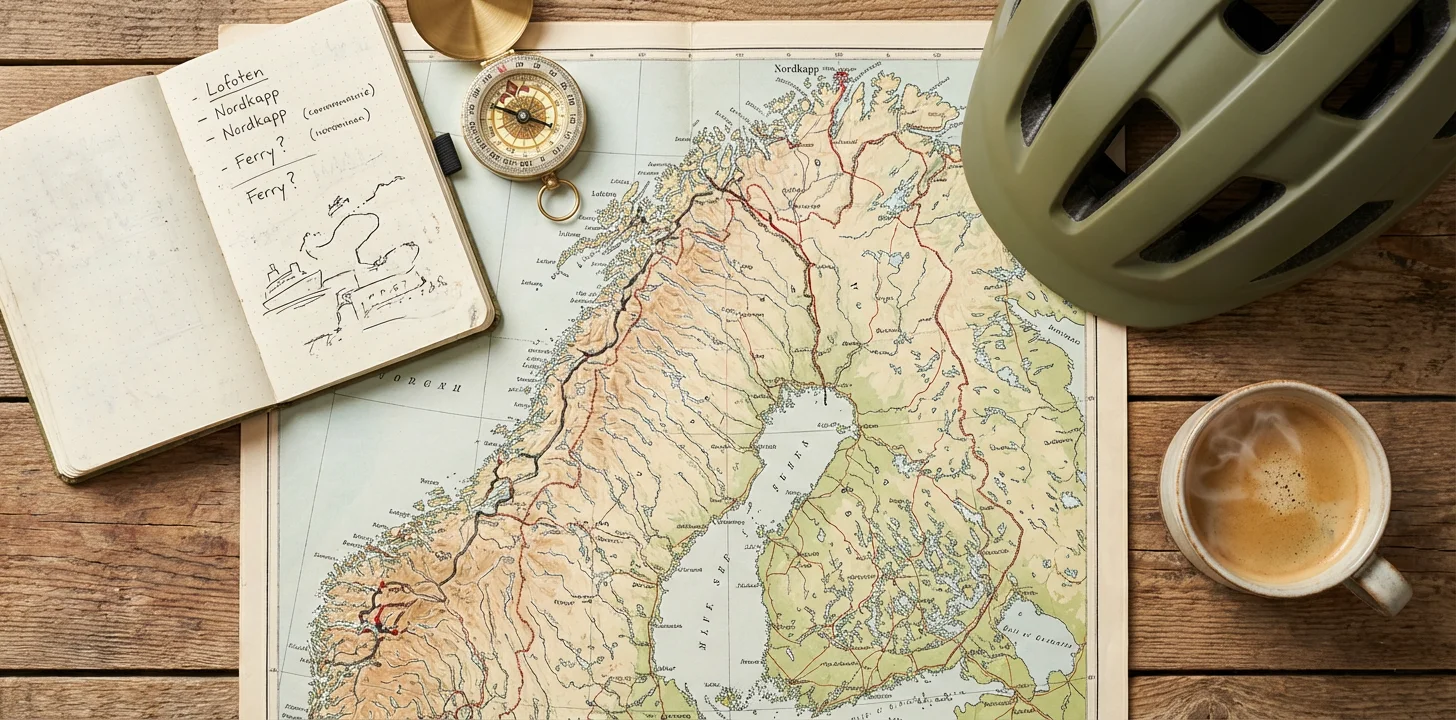
Read the route between stops
Check surfaces, elevation and road types between each overnight stop. A good cycle path for most of the day does not solve a final approach along a road you do not want to ride.
Mark where the shorter stage leaves the main route and where you can buy food. Save the overnight stop's address and phone number. Check shop opening hours for your travel day, especially if you intend to buy dinner after arriving.
Ask about bicycles and wet clothes
Ask where a loaded bicycle can stay overnight, whether bags must be removed and whether there is somewhere to dry rainwear. A room does not automatically include bicycle storage or a drying room. Check how late arrival works too.
When camping, allow for pitching, cooking and packing the next morning. Choose permitted tent pitches and check local rules; carrying a tent does not make every rest stop an overnight option. Include a night in your loaded trial if you are unsure how long the morning routine takes.
Make an early journey home possible
If a train or bus is your backup, confirm that the particular service accepts your bicycle type and how to reserve a bicycle space. Check connections too. A station on the map is not, by itself, a workable journey home with a loaded bicycle.
Without that option, loops from one base may be easier than a long one-way tour. Keep rainwear, food, map and repair equipment accessible without unloading everything. The first cycle tour guide covers the trial ride in more detail.
Use this tour's timings for the next one
Afterwards, the difference between riding time and the full day can explain a late arrival. Note, for example, that a gravel stretch took longer with full bags, or that packing the tent delayed departure. In FARON you can save your notes, stops and overnight places with the trip and view them on the trip map when planning the next tour.
Frequently asked questions
How long should my daily stages be?
Use a loaded trial ride on similar surfaces as your starting point. Include breaks and spare time within the hours available before your overnight arrival deadline.
Must I book every night?
You need to know your possible overnight stops and their conditions. If a particular accommodation is essential to a stage, confirm availability before relying on it.
Can the train be my backup?
Yes, if the operator confirms that your bicycle is accepted on the relevant services and any required bicycle spaces are booked. Check the whole journey, including connections.
What should I save after the tour?
Save actual departure and arrival times, route choices and what changed the day. Your next plan can then draw on your own timings and experience.