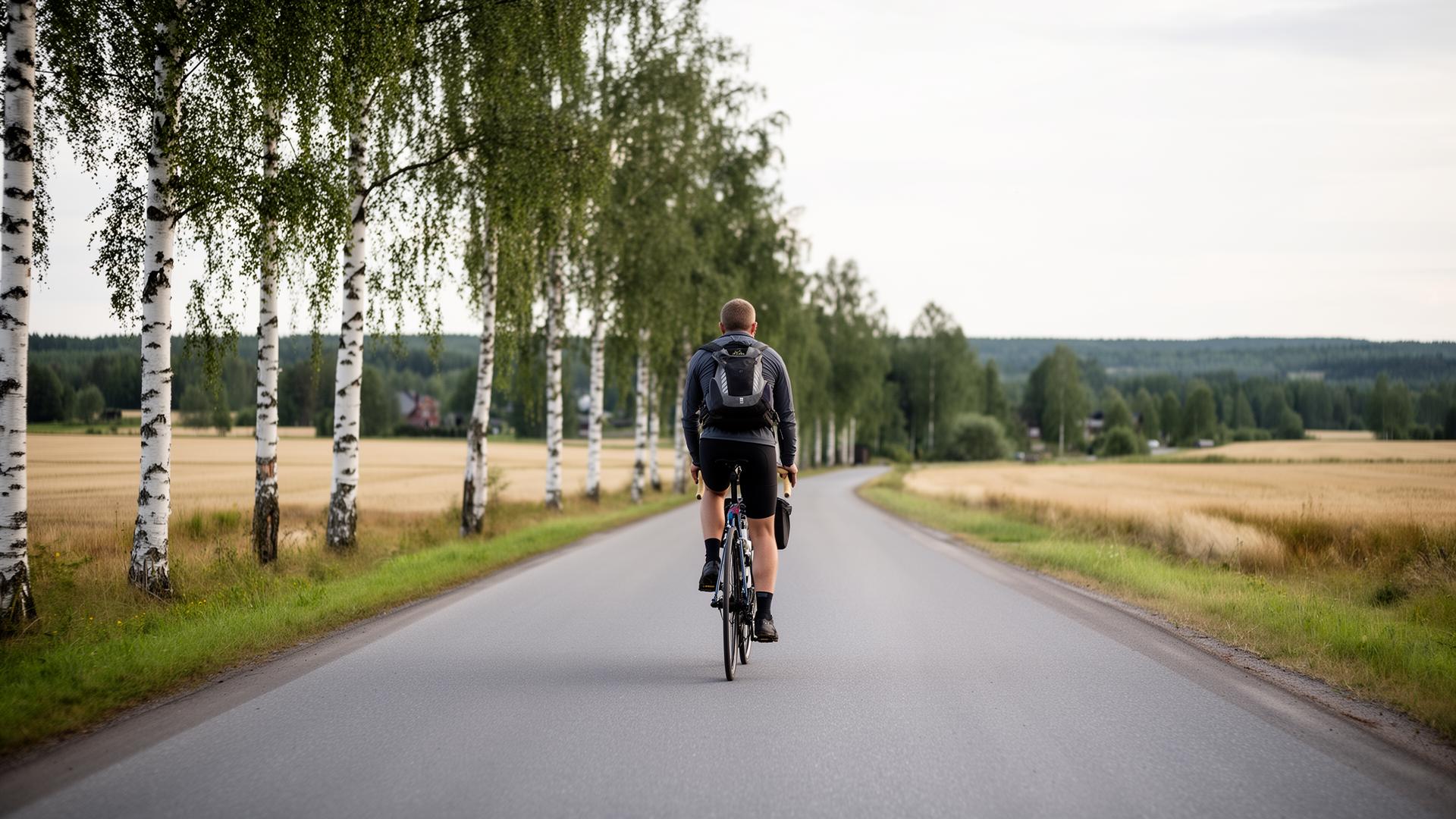
A first proper cycle tour rarely matches the plan made at the kitchen table. The stages feel longer in a headwind. Carefully arranged luggage sits awkwardly after 20 kilometres. Evenings imagined as quiet and beautiful sometimes begin with an urgent search for water, food and somewhere to sleep without riding another metre.
That is not failure. It is how many first multi-day rides feel. Riders who return for another trip are not necessarily fitter or better equipped; they have often left enough margin for uneven days without treating them as wrong.
This is not another exhaustive checklist. It is a way to think about the decisions that matter once you spend day after day on the bicycle.
Keep the first trip short enough to learn
There is a strong urge to make the first tour impressive: three weeks along a coast, an entire island or a famous trail. A trip that is too long does not automatically produce more experience. It can produce more friction, fatigue and doubt.
Three to five days are enough to find a rhythm, meet both easy and slow days, and return with a clear idea of what to repeat and change. That knowledge is more valuable than forcing yourself through a route that felt too long before the halfway point.
A short tour still needs thought around luggage, nights and a broad route, but it provides room to stay an extra night or shorten a stage when your body asks. The journey can become what it is, not what you declared three months before departure.
Pack for balance and access
Equipment lists easily become arguments about the exact bag, sleeping bag and weight of each item. In practice, balance and access matter more than brands.
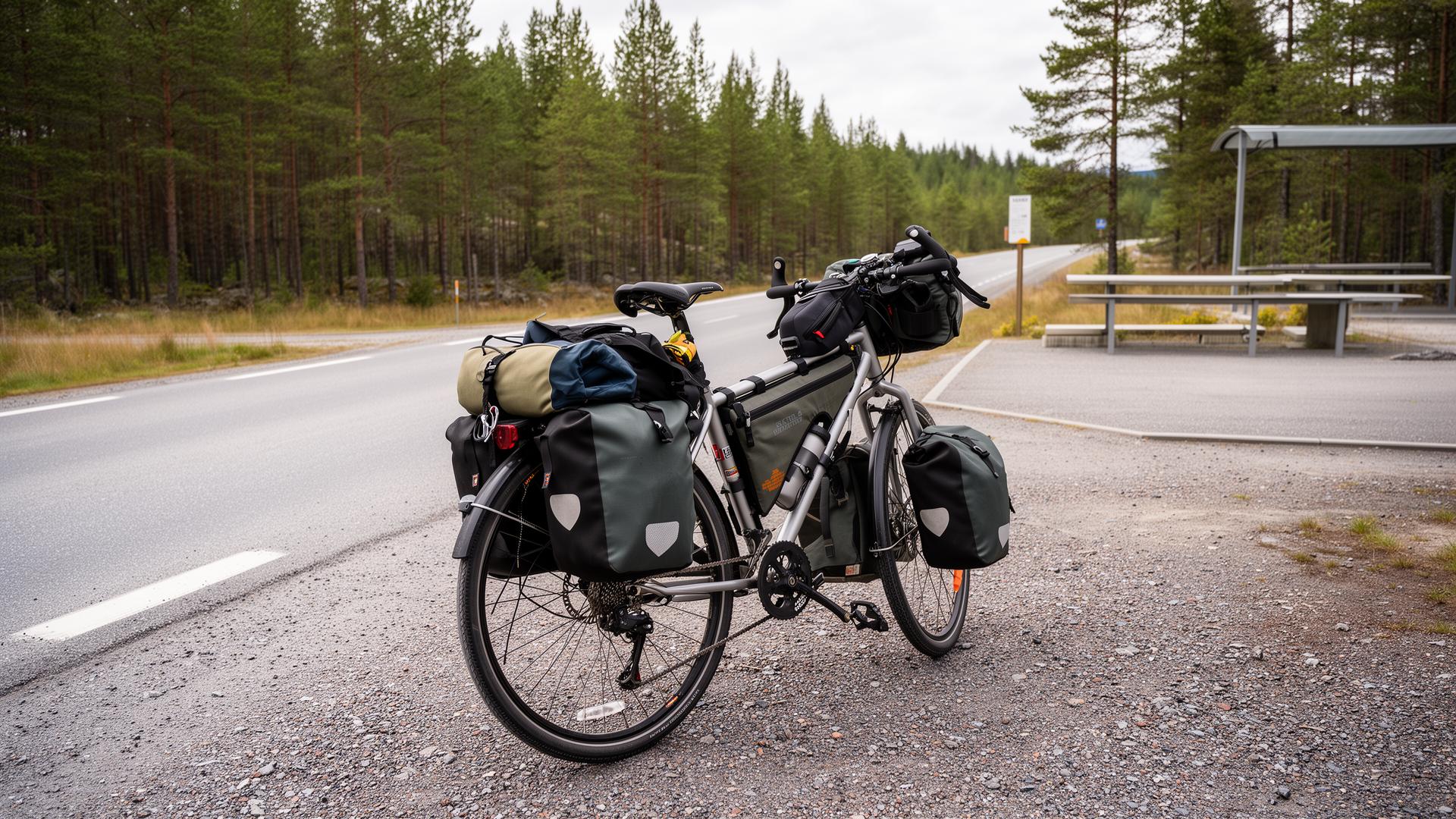
Keep heavy items low and close to the bicycle's centre. Water, food and waterproofs should be reachable without unpacking. Everything else can remain undisturbed until evening.
Most first-time cycle tourists bring too many clothes, too much food and too many backup solutions. It feels reassuring at home and heavy on the road. Lay out what you think you need, then remove a third. Most missing items can be solved along the route.
Plan for the pace you want
A common mistake is to plan stages around the distance you can ride, not the kind of day you want. Eighty kilometres may work on days one and two; by day three, your body and mood may disagree.
Fifty to sixty kilometres is a useful starting point for many riders carrying luggage on unfamiliar roads. It leaves time to stop, swim, shop and sit without feeling behind schedule.
It also absorbs punctures, headwinds, unexpected hills and a beautiful place that deserves another hour. These interruptions are often the best part of touring, but only if the day contains space for them.
Choose nights for the tired version of you
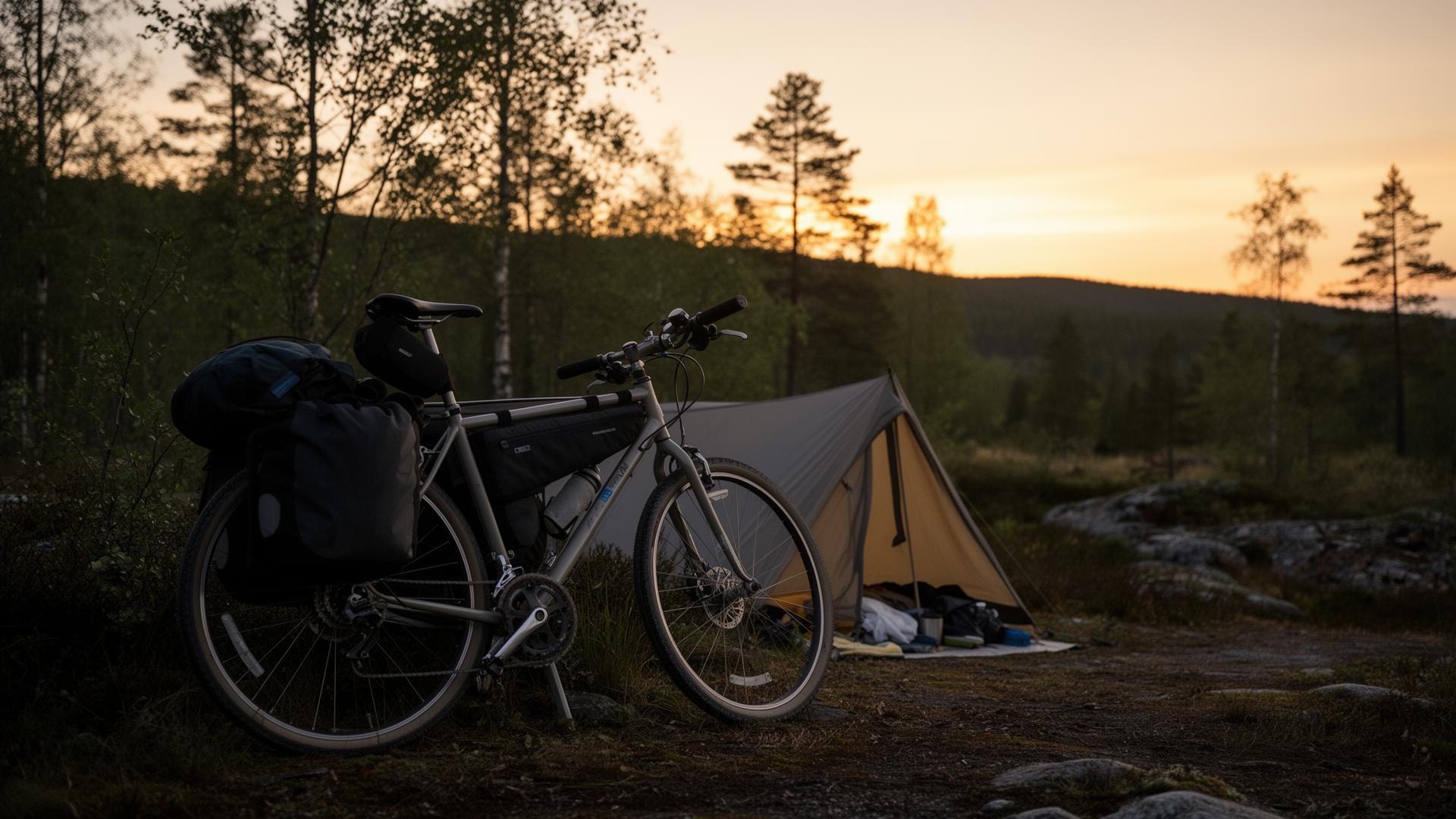
Cycle-tour accommodation ranges from a tent in the forest to campsites, cabins and hostels. There is no correct choice beyond your own comfort and budget. Remember that an evening after a full day in the saddle does not feel like an evening at home.
You may chiefly want food, a seat and sleep. A campsite with nearby water and a shower can be more valuable than a beautiful wild pitch requiring a 200-metre water carry.
Avoid booking every night if the route allows it. The freedom to extend a good day or shorten a poor one is part of the value of travelling by bicycle.
Keep the details for the next tour
Details fade surprisingly quickly: where you slept on night three, which road was best or where the good coffee came with a view. The feeling remains while days merge together.
Save nights, stops and places as you travel. One brief evening note, a map position and perhaps a photograph are enough to make the next route easier.
That honest record preserves the first tour better than a polished story: the hard days, unexpected places and changes you want next time. The next journey becomes better, not merely longer.
Leave before everything is perfect
It is easy to wait for the right bicycle, bags, route and week. Your first cycle tour does not need perfection. It needs to happen. What you learn on the road is worth more than endless preparation at home.
Go. Keep it simple. Leave margins. Save what deserves remembering so the next tour can begin where this one ended.
FAQ
How long should a first cycle tour be?
Three to five days are enough to test your rhythm, luggage and overnight choices without committing to a route that becomes too long.
How far should I ride each day?
For many riders with luggage, 50–60 kilometres is a comfortable starting point. Shorter stages leave room for headwinds, swims and unplanned stops.
What is most important to pack?
Keep water, waterproofs and food easy to reach. Put heavy items low and near the bicycle's centre; most other things can wait until evening.
Which accommodation suits a first tour?
Choose somewhere with water, food and an easy backup nearby. A campsite, cabin or hostel can make the first evening calmer than a pitch requiring extra logistics.