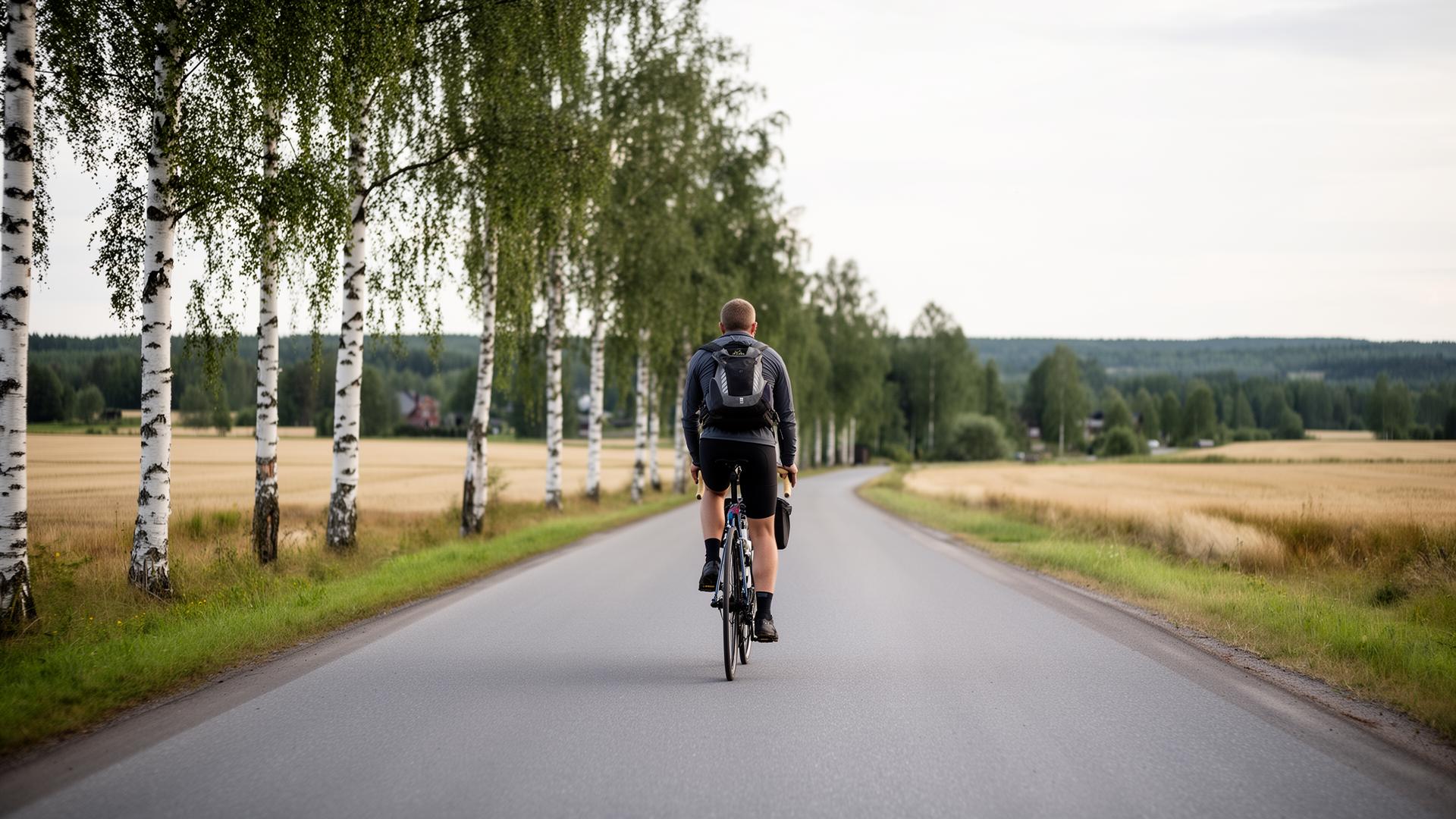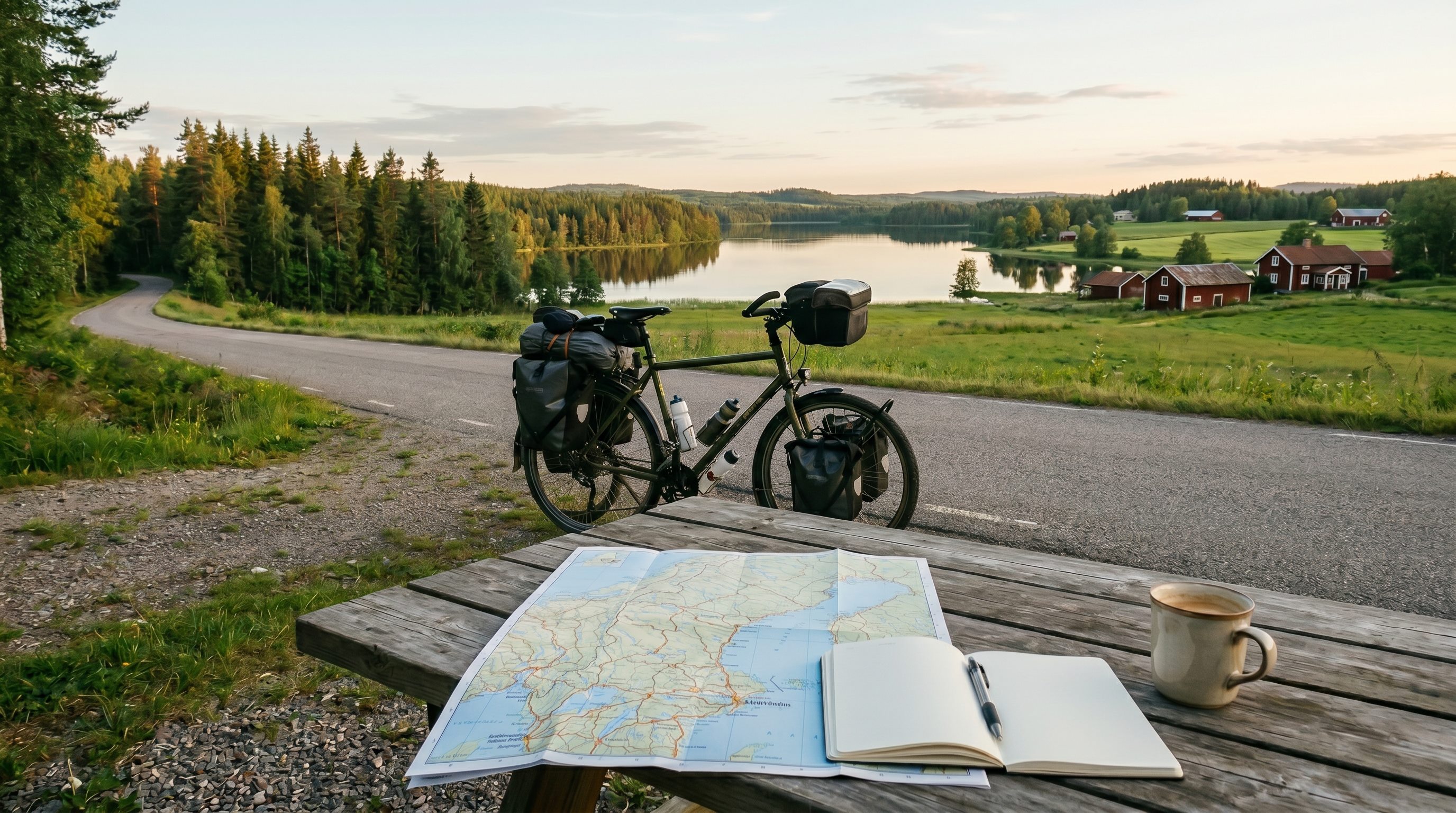
Planning a cycle tour in Sweden often begins with lines connecting towns, lakes and coasts. Once the wheels turn, the map's flat simplicity gives way to headwind across a Skåne field, loose gravel on an inland forest road and the discovery that ten hilly kilometres feel much longer than the number suggests.
Cycle touring here is an exercise in realism as well as a nature experience. The landscape offers space and quiet, but services can sit far apart. A good Swedish rhythm balances physical effort with the small details that keep the day working.
Choose part of Kattegattleden and calculate a riding day
Kattegattleden runs for 390 kilometres between Helsingborg and Gothenburg. It gives a Swedish cycle tour a concrete starting point: choose a stretch that fits your travel days and overnight stops. Your first trip can cover just part of the route.
Calculate one day. Add the breaks. As a planning example, 45 kilometres at 15 kilometres per hour means 3 hours in the saddle, before lunch, swimming and photo stops. Headwinds, luggage and hills can reduce your speed; the calculation is a planning aid, not a promise about your arrival time.
Read Kattegattleden's practical questions and answers when choosing your stretch. Surfaces vary and the route is not entirely car-free. Arrange the journey home too: if you plan to take your bicycle on a train, check that operator's bicycle rules and capacity before booking accommodation.
Let small places rescue the day
After hours of headwind and coarse gravel, a modest swimming place or country shop can matter enormously. A seasonal kiosk represents water, a pause and brief contact with other people before the road continues.
These small nodes often save entire days. A jetty beside a forest lake can turn a heavy afternoon into the trip's best memory. Successful tours leave enough margin to stop when the opportunity appears rather than only when the schedule permits.
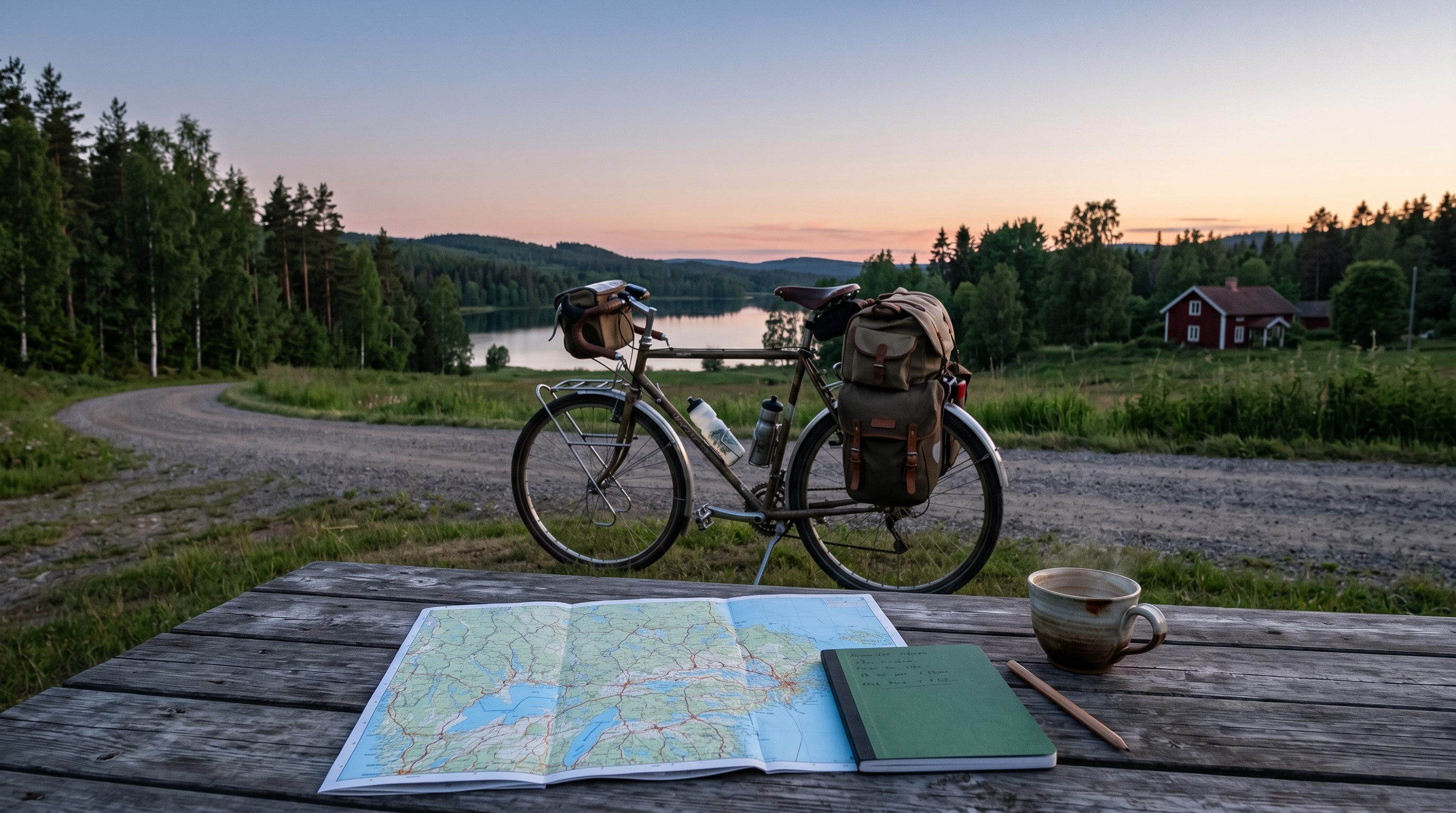
Plan evening riding around the date and location
A light summer evening can leave time for a swim after the ride. Daylight varies with both the date and your location in Sweden. Check sunset at your destination, bring lights and plan your arrival around the accommodation's check-in time.
Choose your overnight stop while you still have energy. An extra evening stretch can be tempting while it is light, but the next morning's ride starts with the same legs.
Use logistics to create mental space
Freedom rests on practical foundations. Away from popular routes, long service gaps make reliable accommodation, secure bicycle storage, a shower and somewhere to dry wet clothing valuable.
When the key is where promised and the food shop is genuinely open, you can spend your attention on the landscape. Swedish cycle touring combines careful knowledge of the next supply point with the freedom of open roads. Rain can still produce a good day when warmth and a roof wait at the end.
Build a personal archive of Swedish roads
After several seasons, you know that not every road deserves repeating. Some carry too much traffic or rough gravel. Others — the old railway path, the swimming place beyond a slow climb, the narrow tarmac through farmland — deserve to be found again.
Save stages in FARON with the details that help next time: worthwhile stops, road surfaces and a water point absent from ordinary maps. Photographs and a note about the small shop with good bread gradually become your own guide to Sweden.
Keep your cycle tour in FARON, compare it with the lessons from your first cycle tour, or preserve a trip with somebody else as a shared journey.
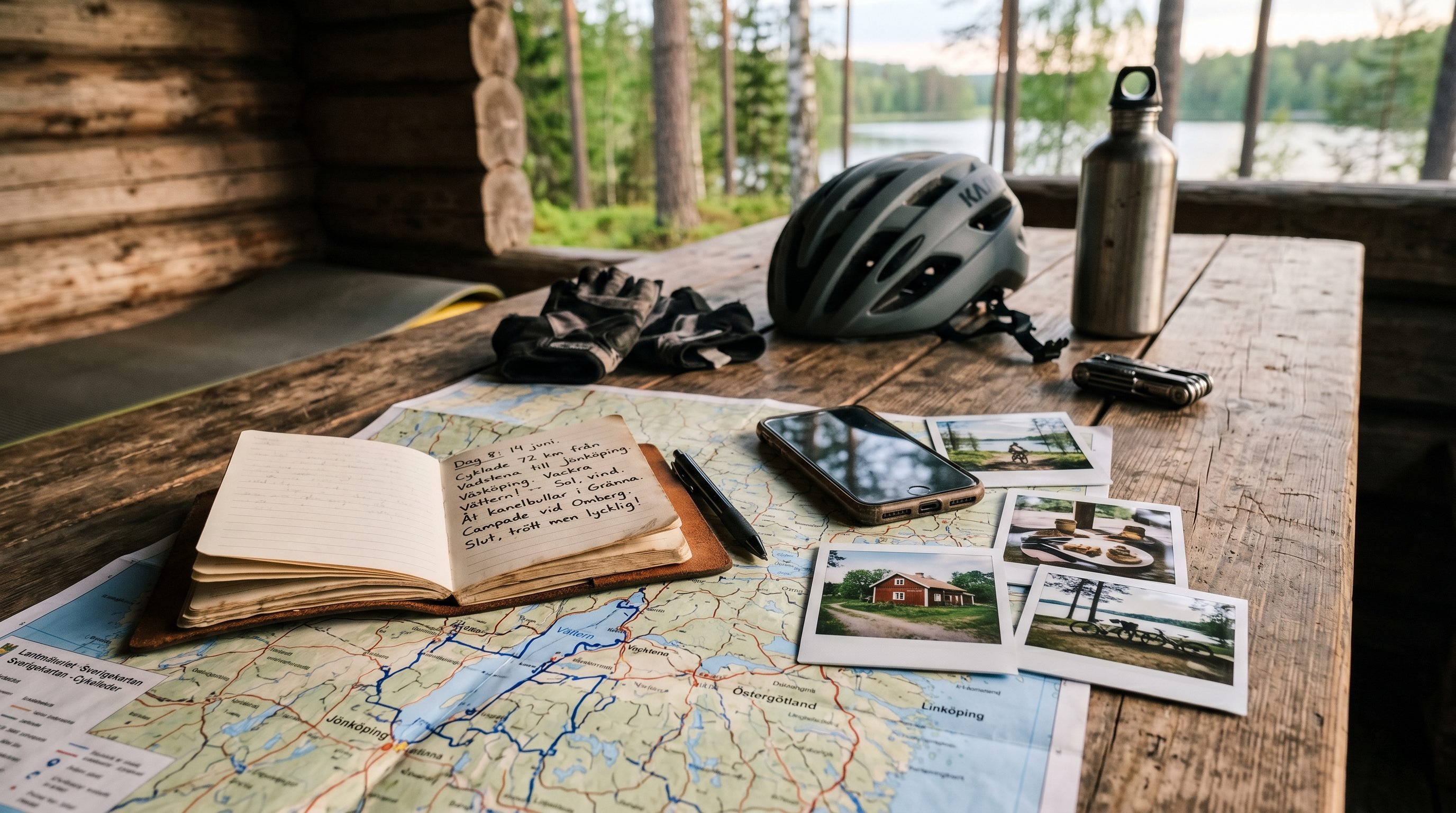
Remember the Swedish rhythm
Sweden by bicycle requires patience, attention and respect for distance. Once the pace fits, the largest attraction matters less than the right swimming break, cool evening air and an overnight stop that worked.
Log trips and revisit your trip map. The next Swedish cycling summer can then begin with roads, nights and lessons you already know.
FAQ
What makes cycle touring in Sweden distinctive?
Large connected natural areas, long summer days and the Right of Public Access create unusual freedom, while sparse services require self-reliance and planning.
How do I avoid overestimating each day?
Assume wind, surfaces and hills will lower your average speed. Leave empty hours for swims and supply stops, and treat a gravel kilometre as more demanding than a tarmac one.
What is easiest to underestimate?
Wind and the distance between services. A headwind can transform an open stage, and forest routes may run many kilometres without food or water.
How do I save my best Swedish cycling days?
Keep the route, road quality, useful stops, nights, photographs and lessons together in a private journal such as FARON.