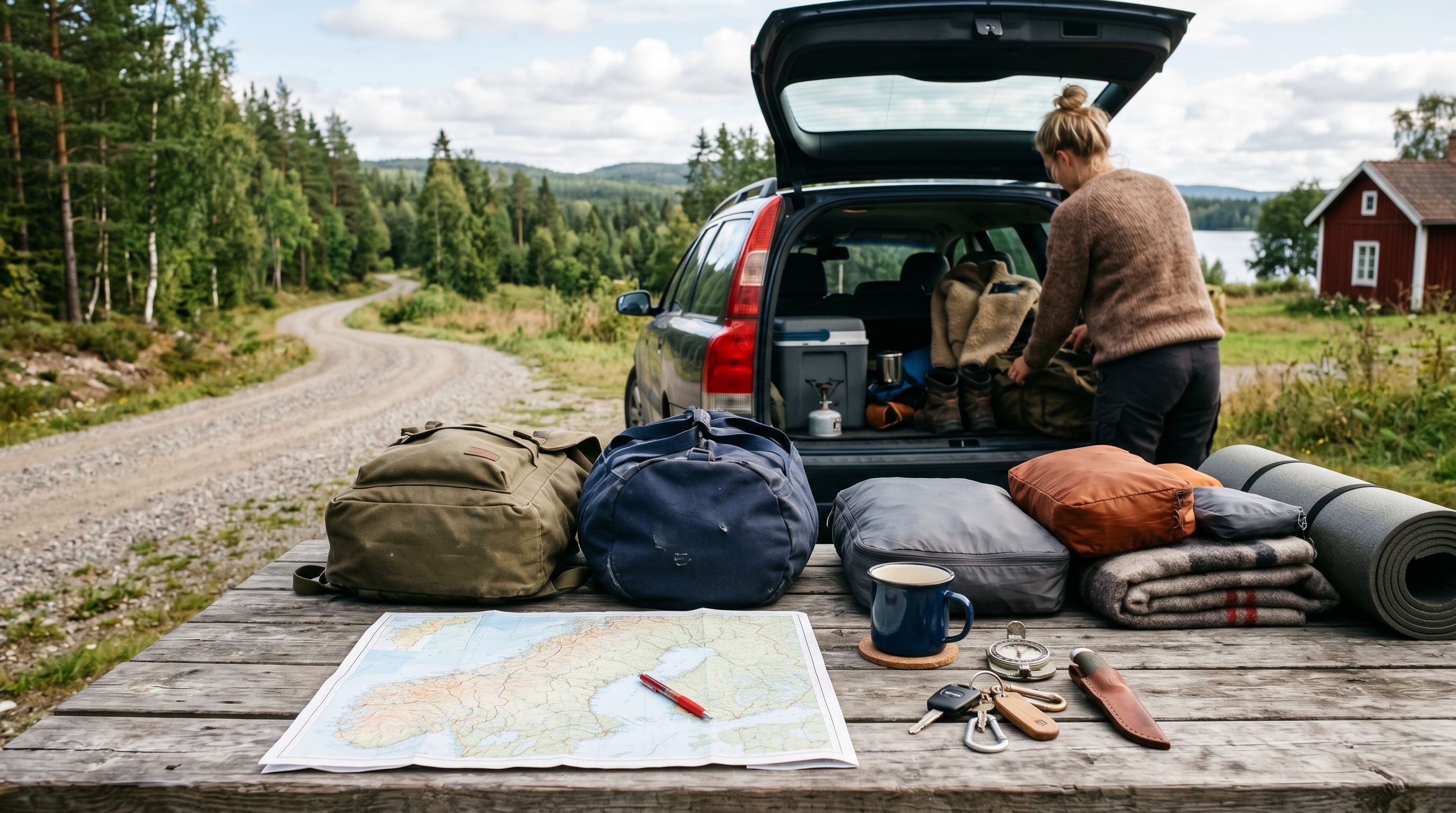
Most packing lists begin by asking what to bring. Sensible, but incomplete. Packing becomes real when somebody needs a rain jacket immediately, the charging cable is at the bottom of a bag or a child's dry socks are trapped behind three suitcases.
Order matters almost as much as content. Frequently used things belong close at hand. Equipment needed only at the evening stop can sit farther in. The aim is not to fill the vehicle as tightly as possible. It is to avoid dismantling everything at each break.
Pack for access, not only volume
It is tempting to pack a vehicle like a puzzle. Everything fits, the boot closes and departure looks organised. The problem appears at the first stop. If a cable, tissue or spare jumper is buried at the back, that careful arrangement quickly becomes a repacking exercise in a car park.
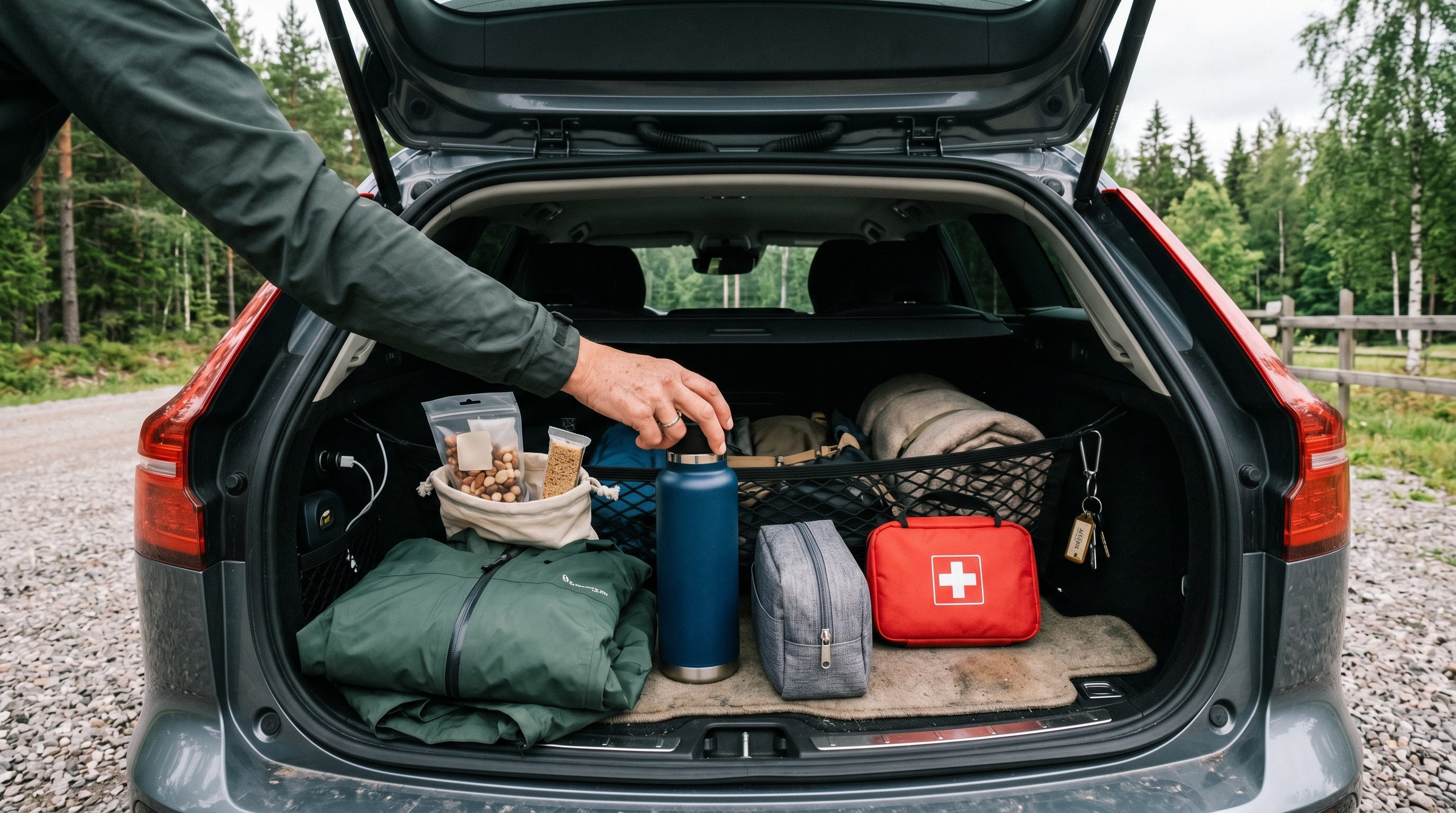
Divide luggage by frequency of use. Spares, extra shoes and heavy jackets can sit farther away. Snacks, water, wipes, waterproofs and chargers should be reachable without moving half the load.
This matters when the weather changes quickly. Waterproofs beneath three bags leave you waiting in the vehicle or getting needlessly wet. Waterproofs by the door make the stop simpler and everybody less irritable.
Pack for the journey there
People naturally pack for the destination. On a drive, rail journey or caravan tour, however, many things are used before arrival. Breaks, ferries, service areas and late check-ins need their own small system.
Create a clear daytime zone: water, chargers, wipes, a warm layer, food and whatever children or companions regularly request. Keep the evening change of clothes and bedding together without blocking the things needed in transit.
For a quick overnight stop, a small night bag is often better than carrying in all the luggage. A toothbrush, sleepwear, charger and tomorrow's first clothes are enough. The stop is shorter. The morning is calmer. The main luggage remains intact.
Count the hidden cost of too much
The main obstacle to an easy travel routine is rarely too little equipment. It is too much. Every object becomes a logistical responsibility: move it, protect it, organise it and find it again. Packing for every imaginable “just in case” scenario can remove the freedom the equipment was meant to support.
When every centimetre is full, the journey loses flexibility. You may want to buy something local or rearrange clothes when the weather changes. If there is no free space, every adjustment becomes a project. Looser packing is easier to carry and easier to live with because the system has room to change.
There is also the fatigue of constant searching. A journey where keys, chargers and waterproofs have fixed homes feels calmer than one where every break begins with the wrong bag. The best improvement is often to remove a few things and give everything else a clearer place.
Record what actually worked
At the end of a trip, the irritations are still obvious. The coffee maker was in the wrong place. Three jumpers were never worn. The first-aid kit, on the other hand, was exactly where you needed it when somebody grazed a knee.
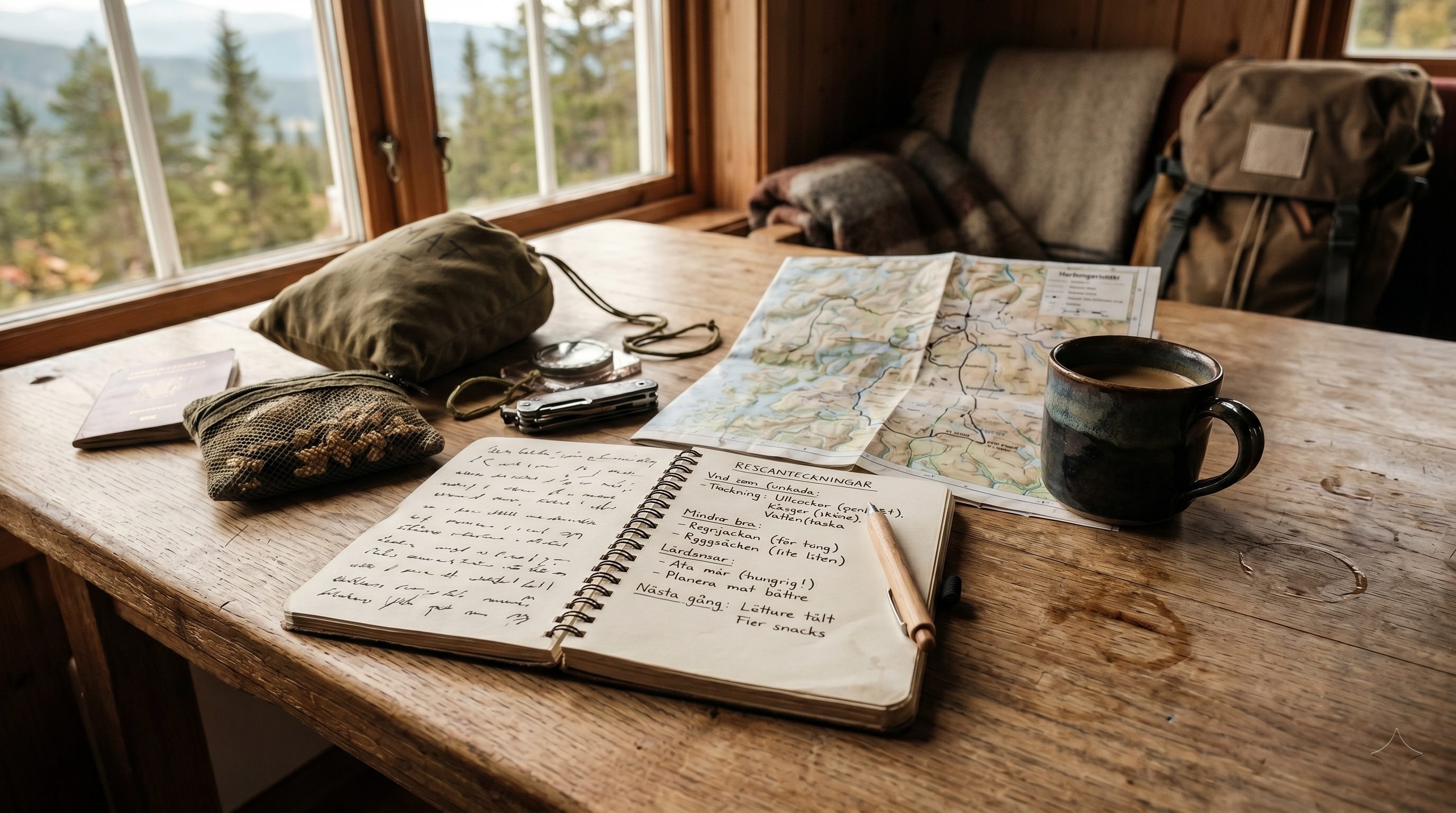
These lessons fade before next season. In FARON, add a short note to the journey or a stop: what was in the wrong place, what should be closer to the door and what can stay at home. Your next packing plan then begins with your own travels, not a generic checklist.
Keep the notes simple: “waterproofs in the side pocket”, “too much kitchen equipment”, “night bag worked well”. After several journeys, the patterns become clear.
Make luggage help when plans change
A delay, closed road or full campsite exposes the quality of the packing. Knowing where the jackets, chargers, food and important documents are lets you change plans without first untangling the entire load.
This is not about travelling with almost nothing or buying expensive equipment. It is about making the next stop easier than the last. Each journey should leave behind a few concrete lessons.
The best luggage system is the one you barely notice. It is available when needed and does not take over the breaks, evenings or following morning.
Learn from journeys that actually happened
The broad principle is simple: what works on the road is more valuable than what looks efficient at the kitchen table. A driving holiday or longer road trip quickly develops its own patterns, and exact details are hard to recall unless you save them while fresh.
When you log trips and see them grow across your trip map, it becomes easier to understand which stops, bags, routines and small decisions genuinely helped. Start with your first trip in FARON, or create your archive when you are ready.
FAQ
What does it mean to pack smart for a trip?
It means organising belongings by when and how often you need them, not simply fitting in as much as possible. The aim is to reduce searching and unnecessary repacking.
How do I stop luggage becoming chaotic after the first break?
Create clear zones and keep them consistent. Separate things needed in transit from those used only at the destination, so the main luggage stays undisturbed.
What should remain within easy reach?
Keep chargers, hygiene items, waterproofs, snacks, first aid and documents close. If you might need it within 30 seconds beside the road or on a platform, it belongs in the outer zone.
How do I remember what to pack differently next time?
Make a private note during or immediately after the trip. Record what caused friction, what you never used and what was in the wrong place; those specific lessons beat a standard checklist.