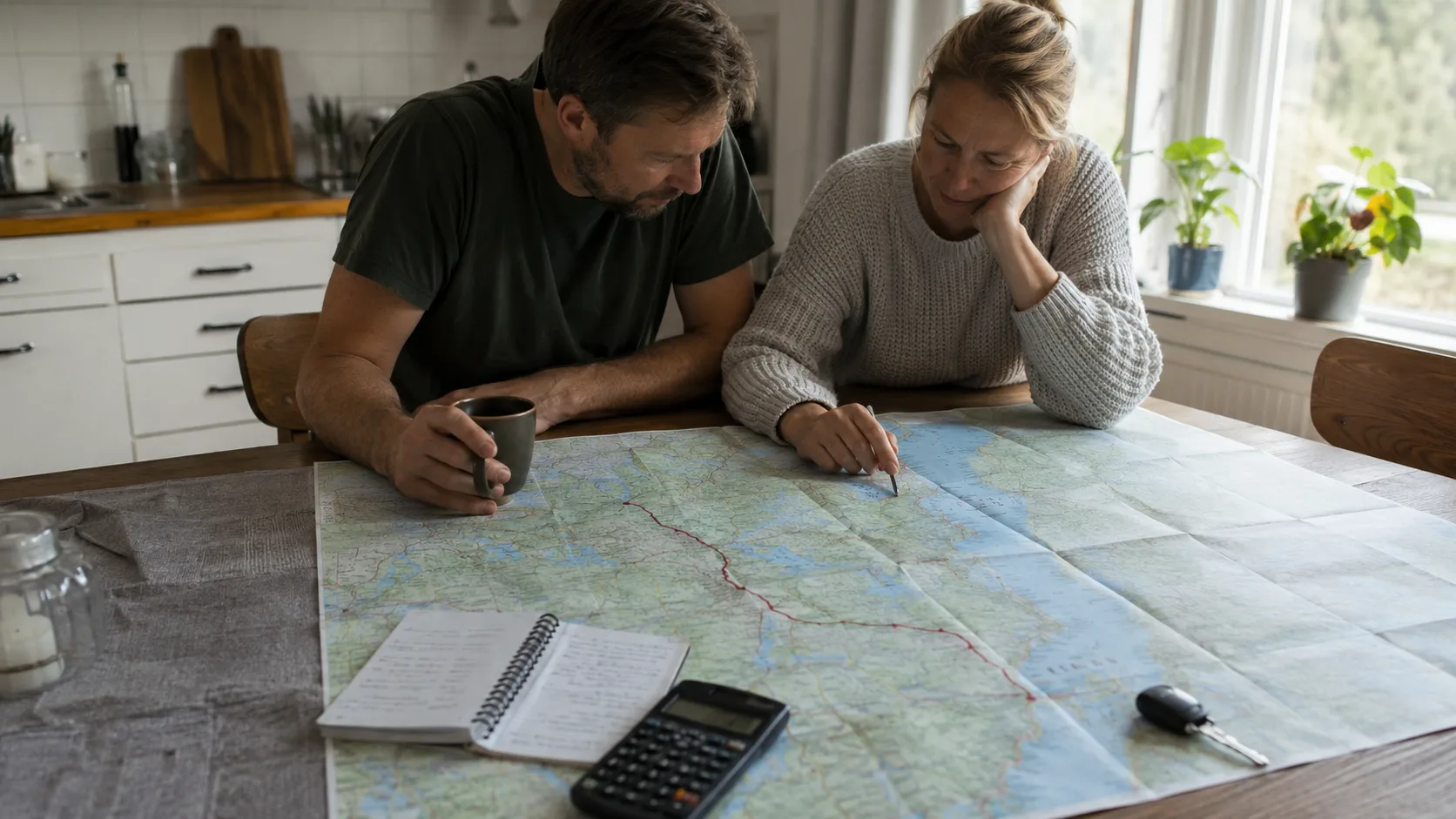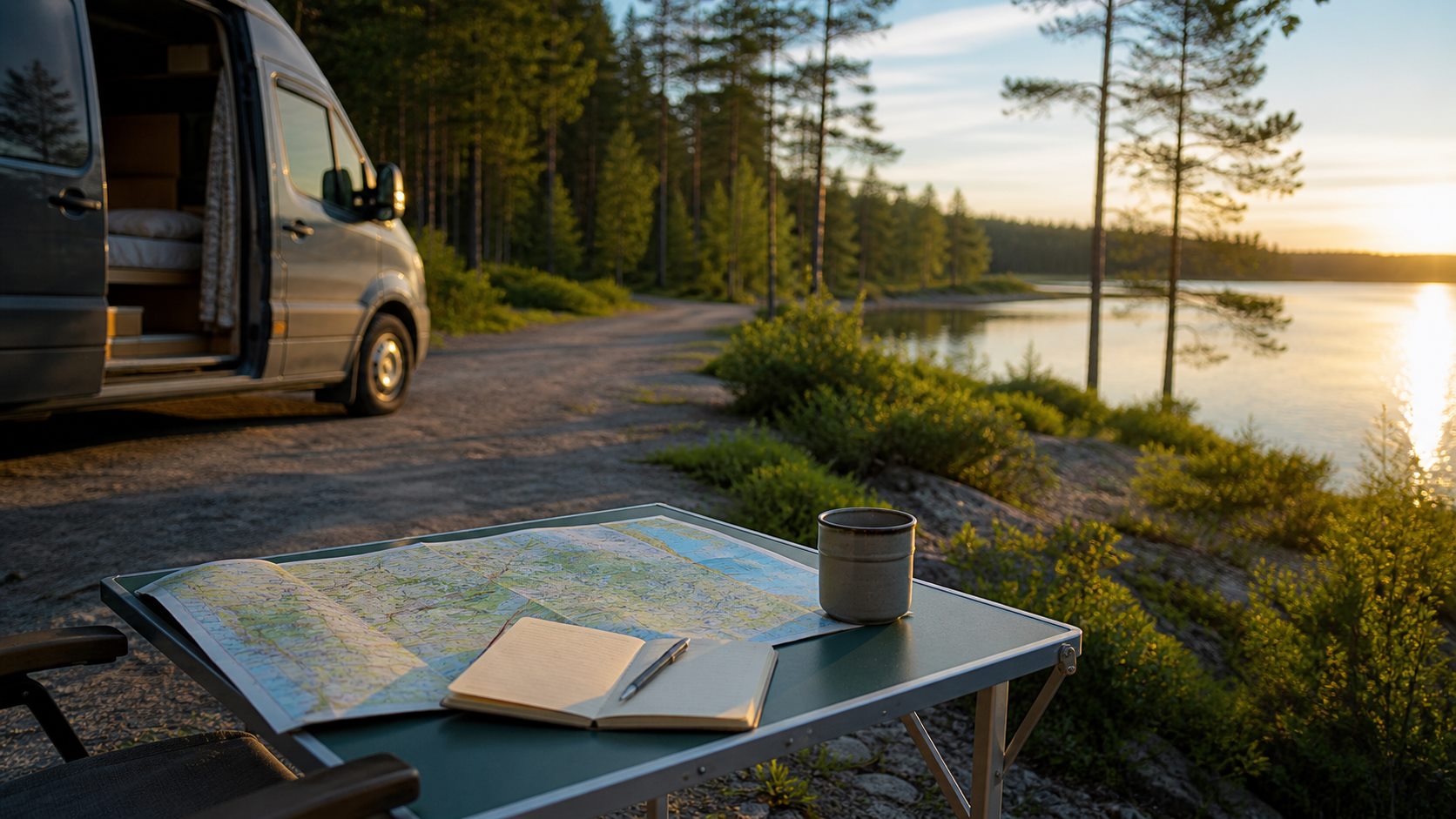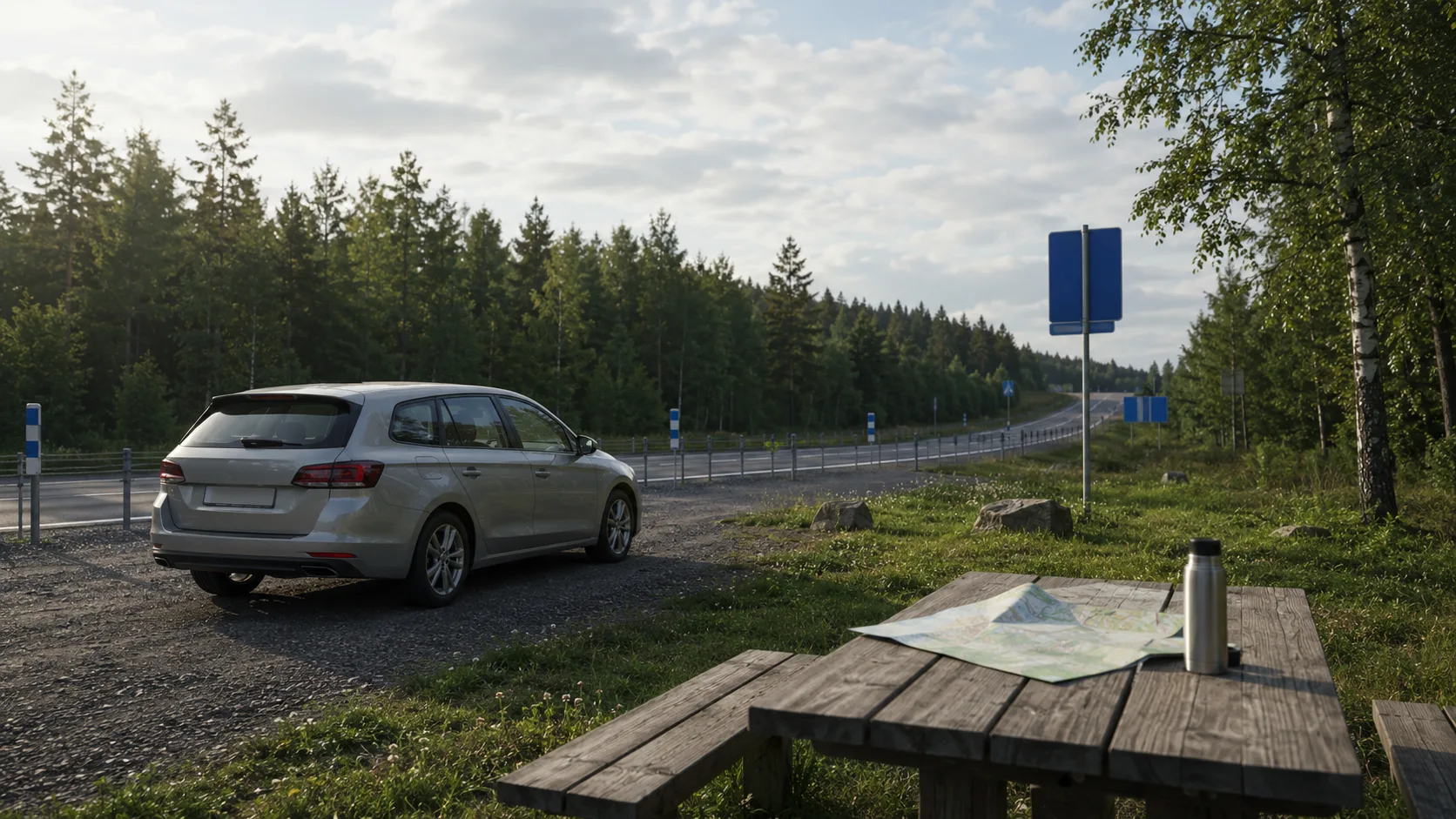
A closed bridge can change more than its few kilometres suggest. A diversion, slow final road and occupied entrance show why a realistic driving day cannot be calculated from distance alone.
There is no universal daily road-trip limit. Start with the kind of day you want, the desired arrival time and everything that happens between departure and parking.
Measure the whole day, not the kilometres
Three hundred kilometres can be an easy motorway transfer in a car or nearly a full day on minor Norwegian roads in a motorhome. Ask how many hours may pass from leaving one overnight place to parking at the next.
The map time is only one part. Add breaks, food, fuel or charging, ferries, parking, walking to attractions and a margin for traffic and weather. Then use the result in the road-trip budget.
Work backwards from arrival
If the vehicle should be parked by 17:30, begin there. Subtract driving time, known stops and a reserve. A route can be perfectly sensible while the schedule around it remains unrealistic.
The Swedish Transport Administration recommends allowing time, taking breaks and never driving tired. Its current traffic map also shows roadworks, restrictions, road weather, ferries and formal rest areas; check it close to departure.
Use three different day types
Transport day
Driving is the main task. A fictional five hours and ten minutes on the map becomes six hours and 55 minutes after two 25-minute breaks, a 40-minute lunch and 15 minutes for fuel — before any delay. A museum, swim and scenic detour would make it another kind of day.
Normal road-trip day
One main stop belongs in the schedule. Three hours and 20 minutes of driving plus breaks, a two-hour visit, food and a reserve can become seven hours and 25 minutes from start to overnight place. Use the method in choosing sights along the route.
Short recovery day
After two long stages, plan one hour and 40 minutes of driving, a break, a modest stop and an early arrival. Short road. Early parking. The remaining afternoon can handle groceries, laundry, the dog or children who need movement.
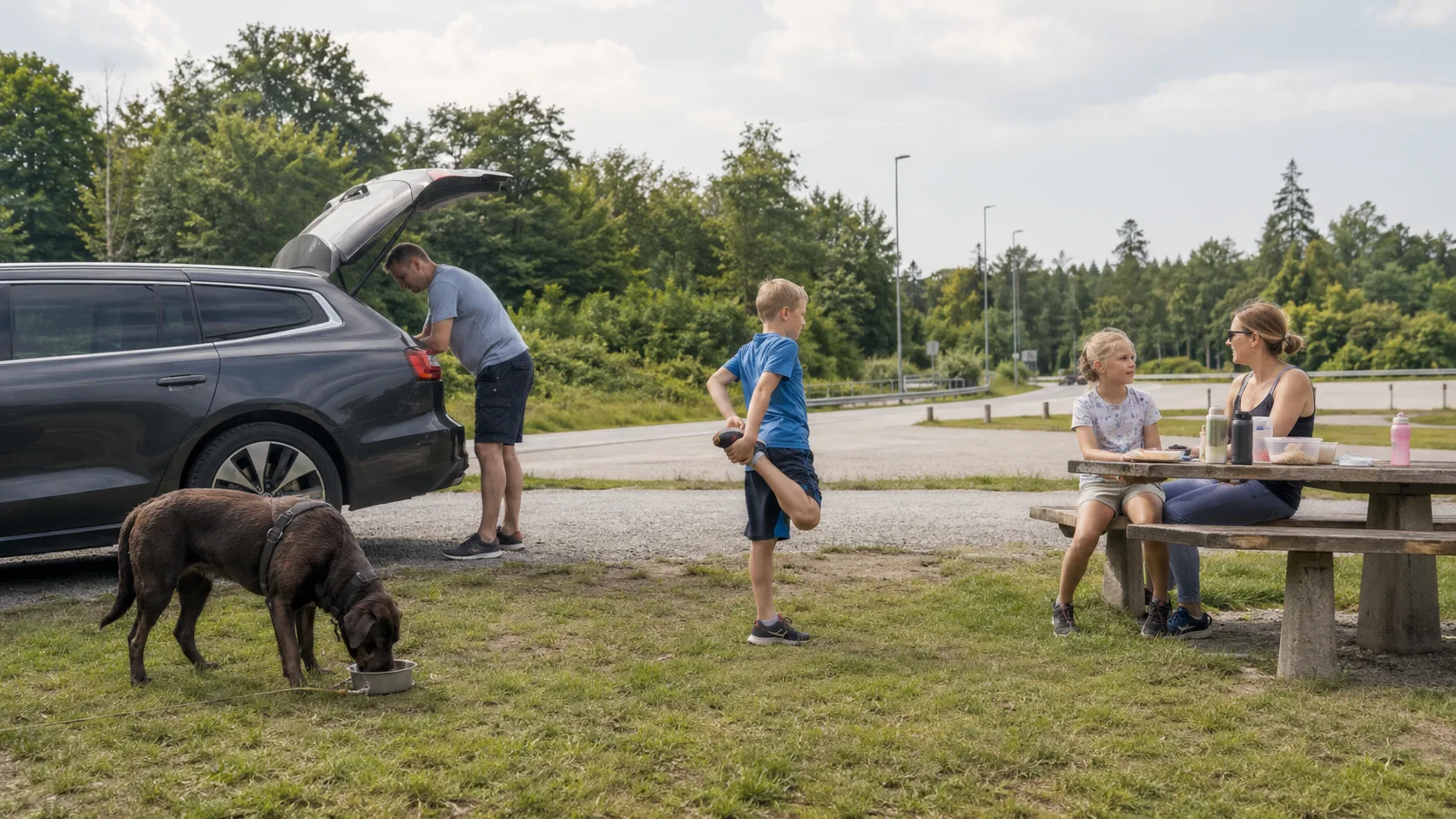
Adjust for children, dogs and drivers
Plan for the children actually in the vehicle, not a generic family. Their ages, sleep and tolerance create different breaks. With a dog, Swedish transport rules require exercise and water at least every six hours; practical stops may need to be more frequent.
Two drivers can share the wheel but cannot shorten an overloaded day. If alertness, illness or medicine makes safe driving uncertain, end or shorten the stage.
Add ferries, charging and roadworks explicitly
A ferry includes check-in and waiting, not just time afloat. Charging includes leaving the route, finding the charger and the actual pause, not an ideal laboratory figure. Rental agreements may add conditions for borders and ferries.
Recheck current road information on the same day. A temporary diversion can invalidate the timing that looked comfortable a week earlier.
Protect the final hour
The last hour contains the unfamiliar entrance, groceries, check-in and positioning a large vehicle. Rain and darkness make all of them harder. Keep an earlier campsite, stopover or other lawful overnight option ready.
A route that can be shortened is more useful than one where every night depends on the original plan holding perfectly.
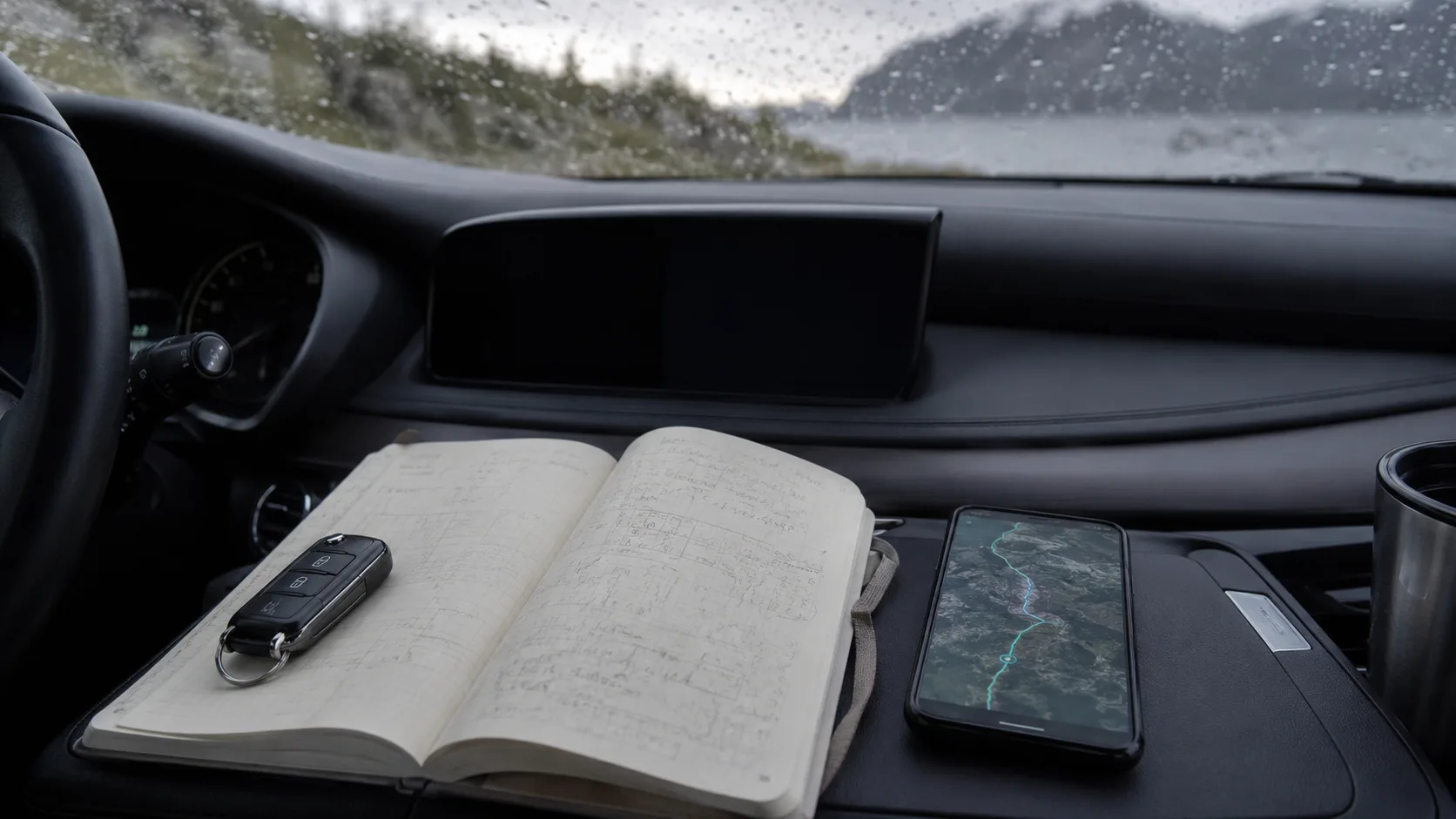
Save how long the day really took
A map may show four hours while the vehicle actually travels from 10:00 to 16:20. Record the breaks, lunch, slow road and stop that overran. That difference becomes your reference.
Place the intended days in an upcoming trip, then save the actual route and lesson on the trip map. After several days you may learn that four map hours reliably become six for your group — more useful than any universal kilometre rule.
Frequently asked questions
How many kilometres are reasonable in one road-trip day?
There is no universal distance. Use road type, driving time, planned stops and desired arrival instead.
How do I turn map time into a complete travel day?
Add breaks, meals, fuel or charging, ferries, visits and a reserve, then calculate backwards from arrival.
How do children or a dog change the stage?
They require individual margins and often more frequent or longer breaks. Plan around the actual group rather than a fixed driving target.
When should I shorten the day?
Shorten it when the margin disappears, weather or roads slow the route, or the driver cannot continue safely.