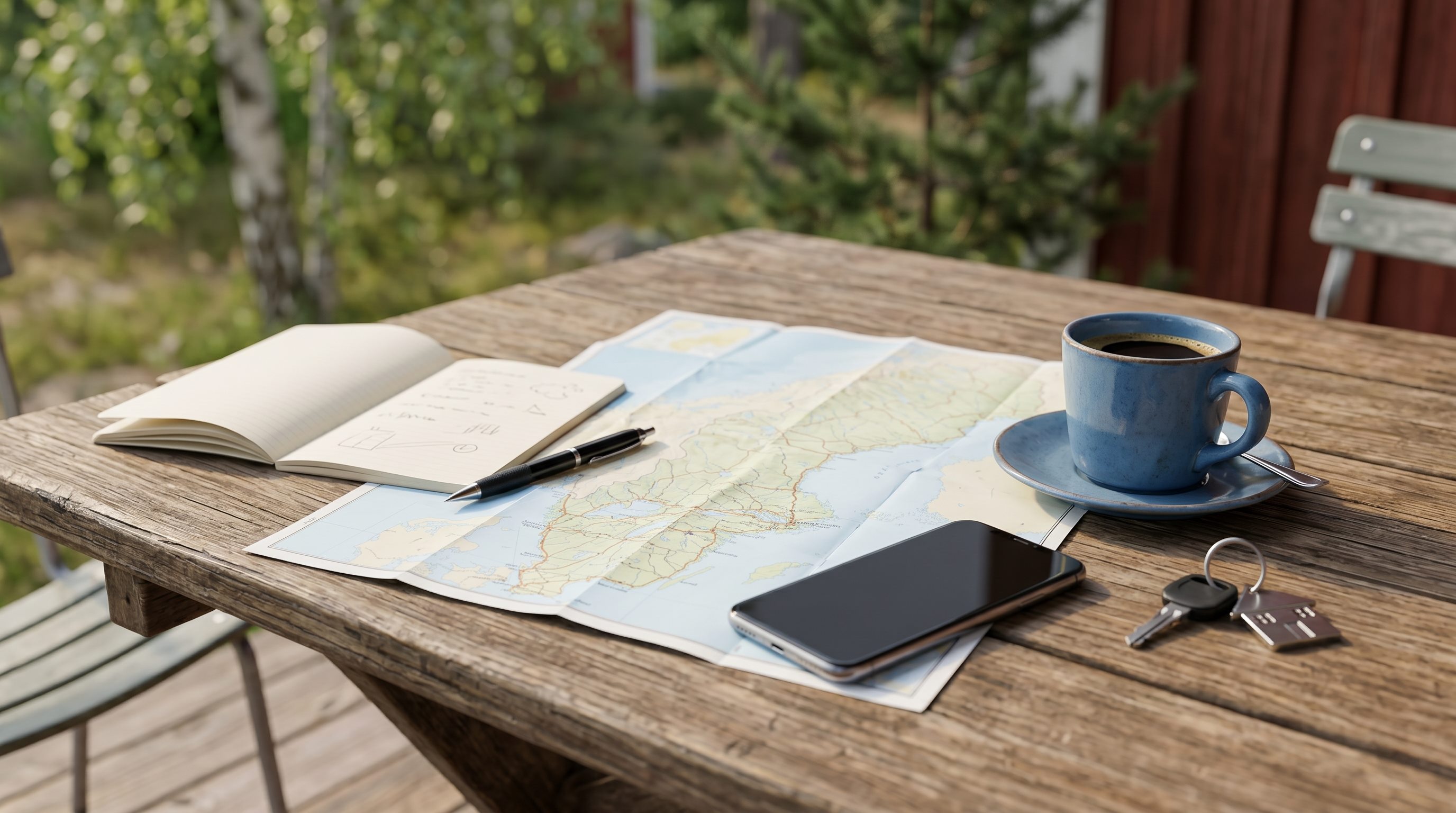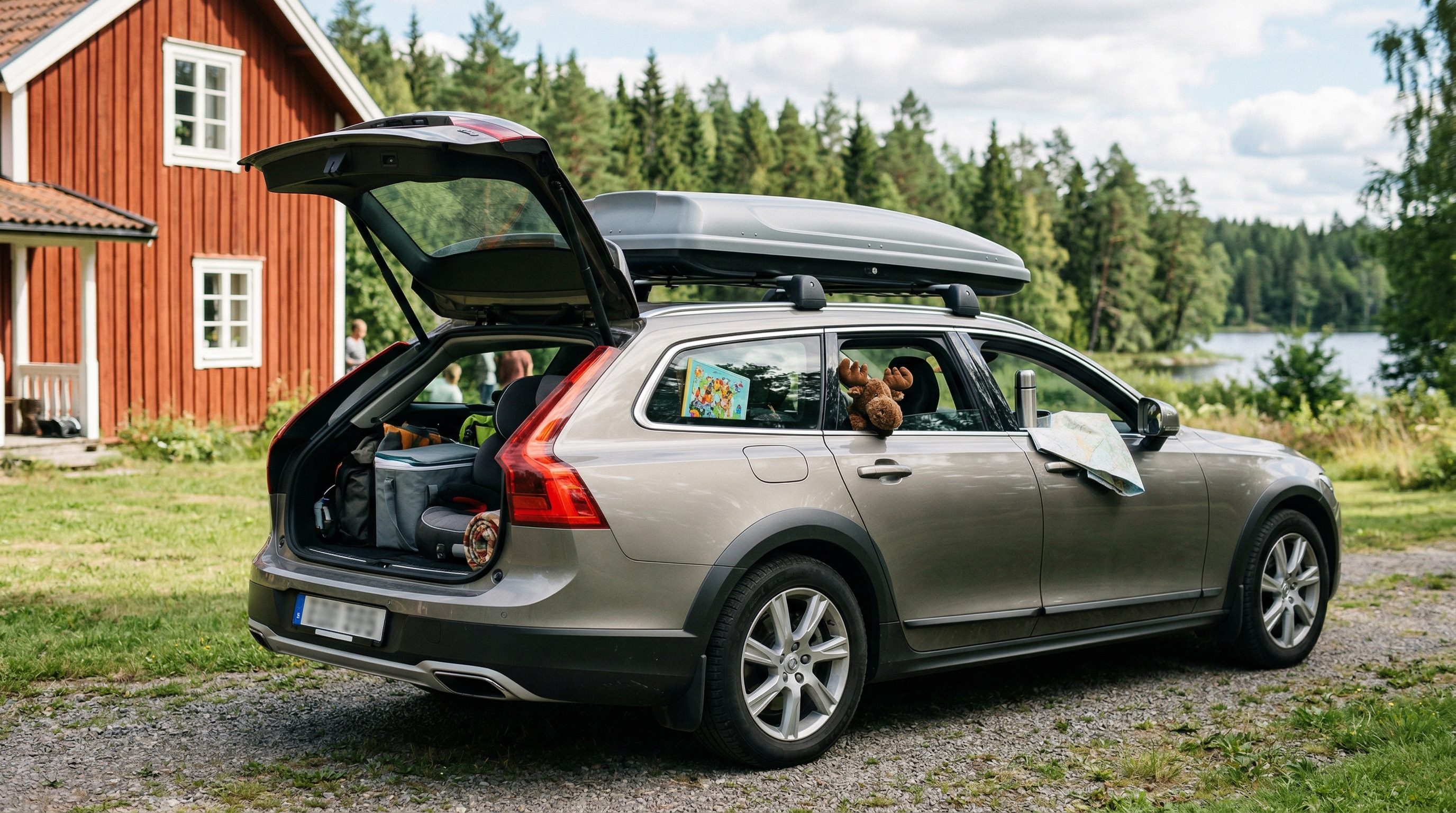
For one quiet second on the driveway, the luggage fits, the coffee is hot and the road-trip estimate looks believable. It is an adult vision built from maps and arrival times. Once the back seat fills with movement, questions and biscuit crumbs, the plan becomes physical.
A road trip with children depends on pauses, food, sleep and energy along the way. Children do not make the journey worse. They make its real requirements impossible to ignore.
Plan energy instead of mileage
A child experiences the temperature, the sun through one window and another hour of forest, not the satisfaction of an efficient route. Rising voices, restless feet and sudden silence often signal the limit before an adult timetable does.
A shorter driving day with good stops can produce a better holiday than a long day that empties everyone before arrival. Waiting twenty more minutes for a supposedly better rest area can cost the entire evening.
Use the navigation time as a base, then add substantial room for movement, food and surprises. Plan to arrive while children still have energy to understand the new place.
Make the cabin work as a living space
For many hours, the car becomes a place to eat, sleep, play and negotiate. Water, snacks, wipes, spare clothes, chargers and a comfort object must be reachable without dismantling the boot.
Pack for access rather than a perfect departure photograph. Keep items used on the road in the cabin, arrival essentials together near the top and heavy long-term luggage secured farther in.
Accept some crumbs and disorder. Maintaining a clinical cabin on a family journey spends attention that is better used on comfort and safety.
Use ordinary stops strategically
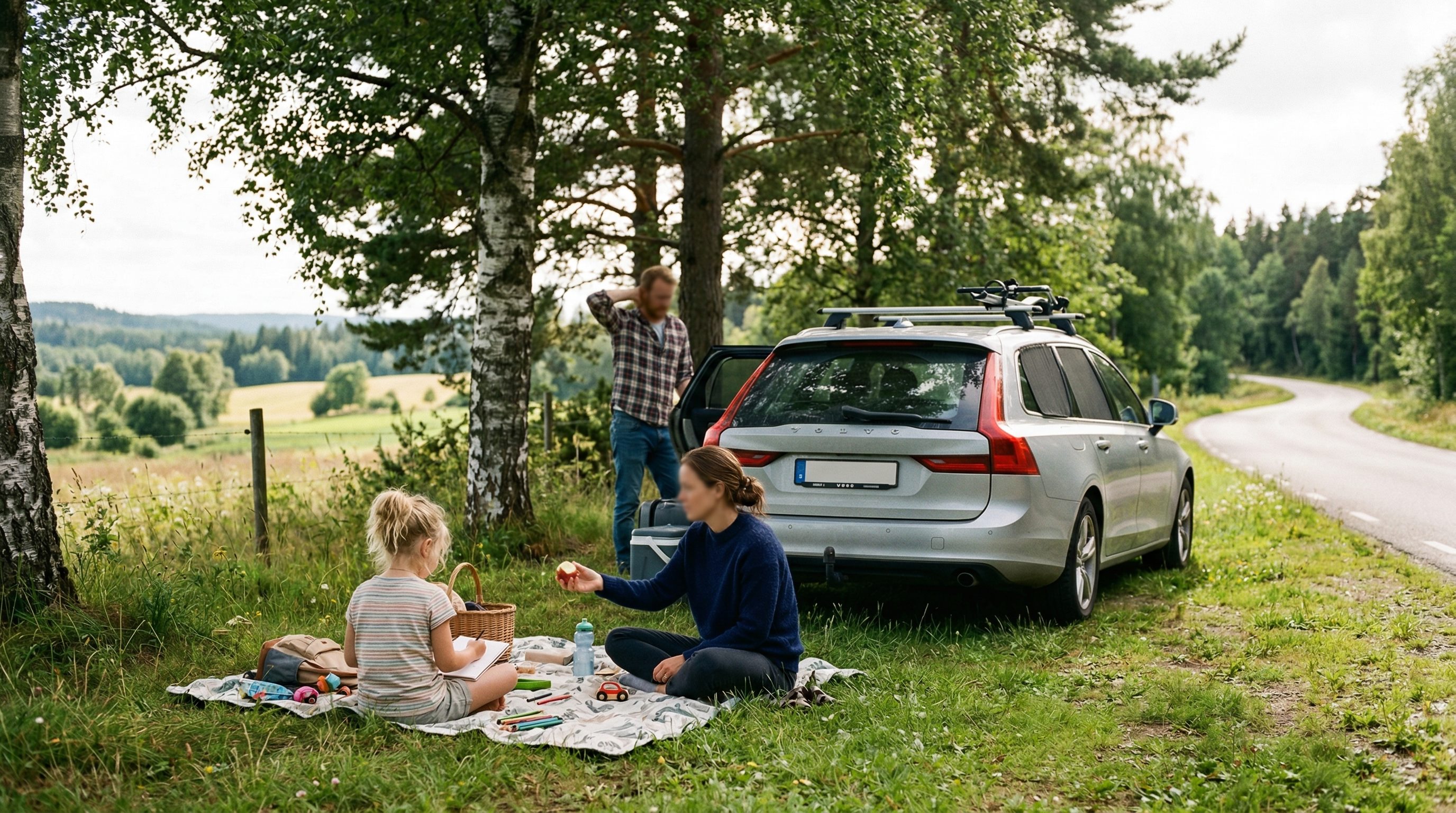
The heroes of a family road trip are often unnamed: a shaded rest area, a quiet swimming place, a playground near the road or enough grass beside a fuel stop to run.
Stop before the atmosphere breaks. The first suitable place can be more useful than the perfect facility another thirty kilometres away. Twenty minutes with pine cones in a quiet clearing may reset the car better than an hour in a crowded attraction.
Protect the evening at arrival
“We only need to get there” ignores that arrival brings new impressions and practical work. Low blood sugar and exhausted patience can turn even excellent accommodation into conflict.
Choose an easy first night or stop the driving day early enough for children to explore before dinner and bedtime. Keep food simple and the first-night bag immediately available.
Short. Early. A calm arrival often contributes more to the holiday than squeezing another attraction into the route.
Listen to what children remember
Adults may retain the museum; a child may remember a dog at an unnamed fuel station. Their comments reveal which stops, rhythms and small places actually suited the family.
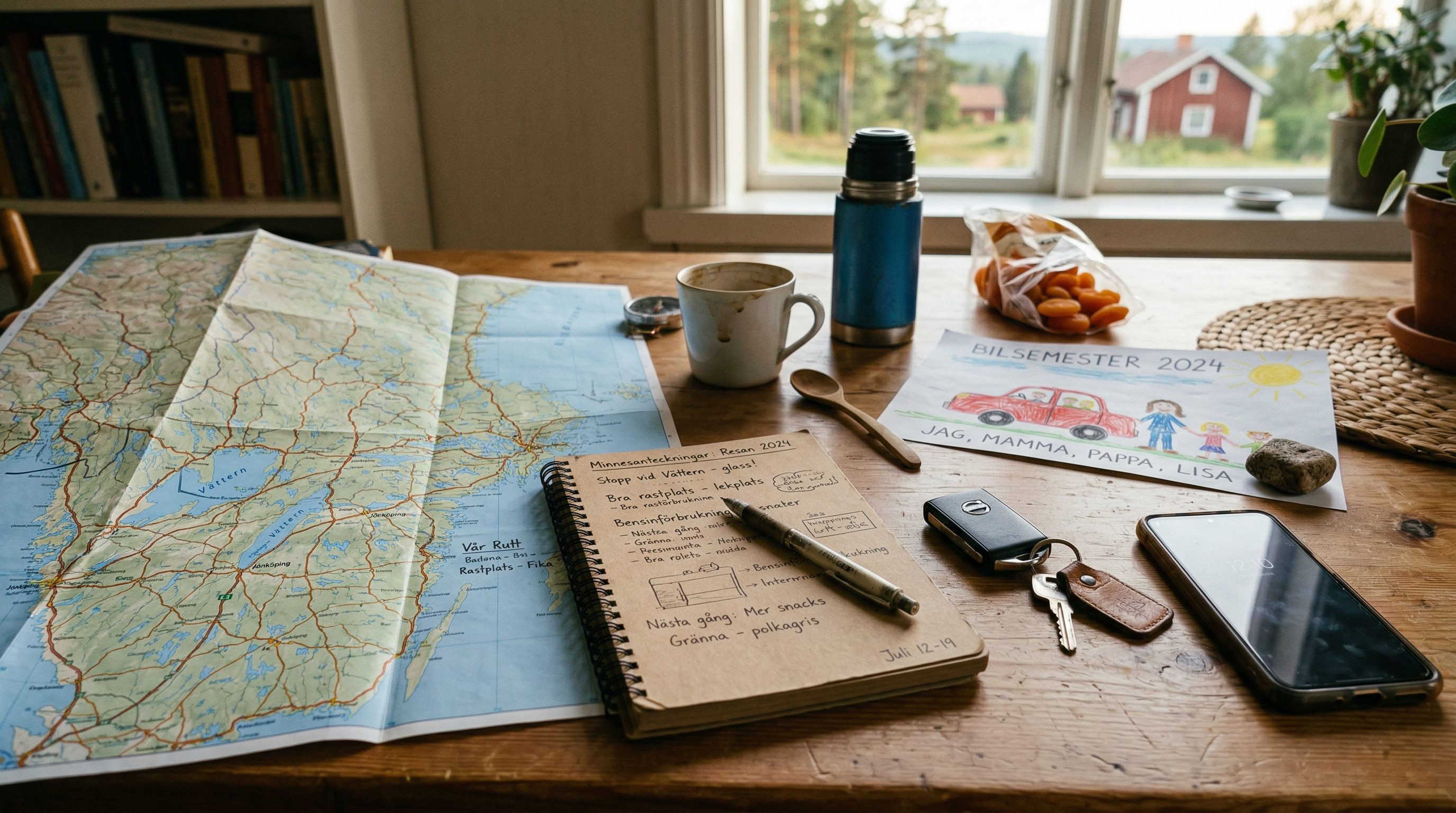
After the trip, note which driving days were too long, which food was accessible and which pauses restored the mood. The logistical mistake is useful evidence when it is recorded without polishing.
Create a private family travel archive
Use FARON for car holidays to save successful driving days, stressful stretches, useful pauses, overnight places and children's comments. The record explains why a place worked instead of leaving another unexplained photograph.
Several adults can collect the family's experience in a shared trip. When you log the journey, the private trip map makes the stops worth repeating visible for the next plan.
The aim is not a flawless family story. It is a practical memory of the shaded break, the road without rest areas and the accommodation that was too far from the route.
Frequently asked questions
How do I stop family road-trip days becoming too long?
Plan around children's energy rather than maximum mileage, add generous stop margins and aim to reach the overnight place early.
What matters most during driving days with children?
Watch the atmosphere, keep food and water available and stop for movement before tiredness becomes a crisis.
How should I pack a car when children are travelling?
Keep road essentials within reach, group first-night items near the top and secure heavy luggage that is not needed until later.
How can we preserve lessons from a family road trip?
Save stops, nights, children's comments and practical successes and failures in a private archive such as FARON.