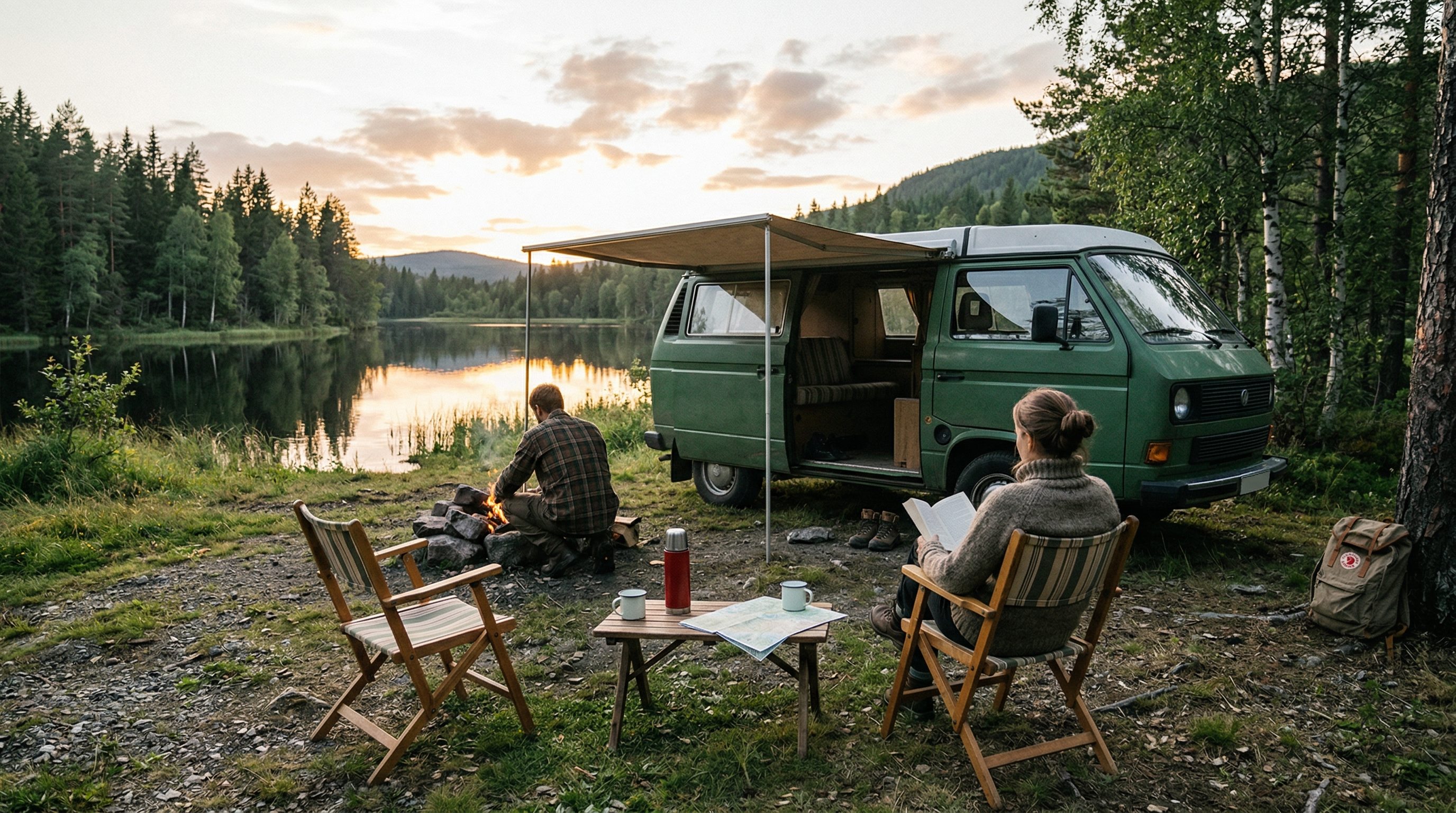
On a dark November evening, you find a photograph of sunset over a still lake. You remember the warm water and next morning's coffee. What you cannot remember is whether this was the place with the difficult reverse or the ground where the corner steadies sank. The view remains; the logistics have gone.
A coordinate shows where you were. It does not say whether the place was quiet, level, accessible or worth choosing again. Frequent campers need to remember why they stopped and whether the decision worked.
Ask more of the map than a saved pin
Dozens of saved places become anonymous digital footprints. A pin outside a Småland village cannot tell you whether it was the friendly farm stop or the place you rejected because access was too tight.
Connect the place to the actual night. A name, date, photograph and note about the early-morning noise make the location useful. Without observations made while fresh, beautiful but impractical places remain indistinguishable from genuine favourites.
Memory is weaker than it feels. After ten further nights, the clean service building, distant electric point and hard-to-reach pitch merge. Searchable notes transform a map into personal decision support.
Record the reality behind attractive photographs
A motorhome against a sunset does not show three attempts on a steep gravel climb, the distance to fresh water or overflowing bins in the heat.
Treating documentation as an archive changes what you save: the sheltered pitch in a westerly wind, the noisy area near a playground, unexpectedly helpful staff or the path to a dog-friendly beach.
Everyday details matter. A note that spacious showers were included in the fee may be more useful next year than another photograph of the view. Your knowledge base should reflect your own standards, not a generic rating.
Let experience refine the notes
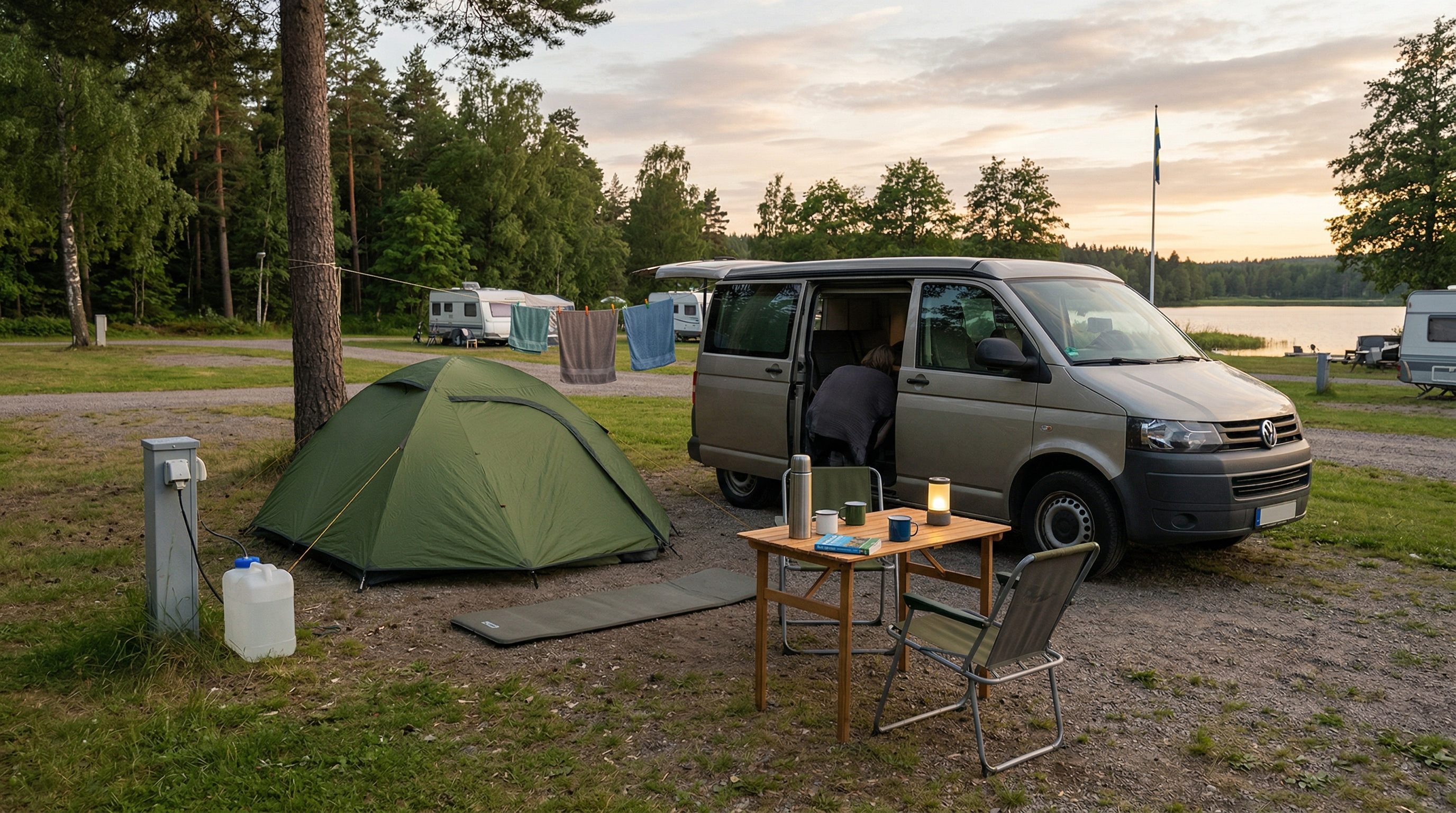
After several seasons, you learn that the campsite coordinate matters less than the section and pitch that worked. A pleasant harbour stop in June may be crowded in August, so include season and date.
Your history also reveals priorities. You may think the view matters most, while the places where you stayed longest consistently offered quiet, level ground and easy services. Documentation replaces assumptions with your actual choices.
Use FARON as a personal camping archive
FARON brings together camping memories otherwise divided between a camera roll, map pins and notes. It is not primarily a catalogue of other people's ratings; it is your own history.
Each campsite or nature stop can have a date, photograph and private note: level ground, traffic, good waste disposal, poor shade or a calm evening.
Your observations stay central. After several trips, you can see which places deserve a return and which worked only on paper. Explore FARON as a camping app, learn how to remember where you camped, log trips and see them on your trip map.
Build a journal for later decisions
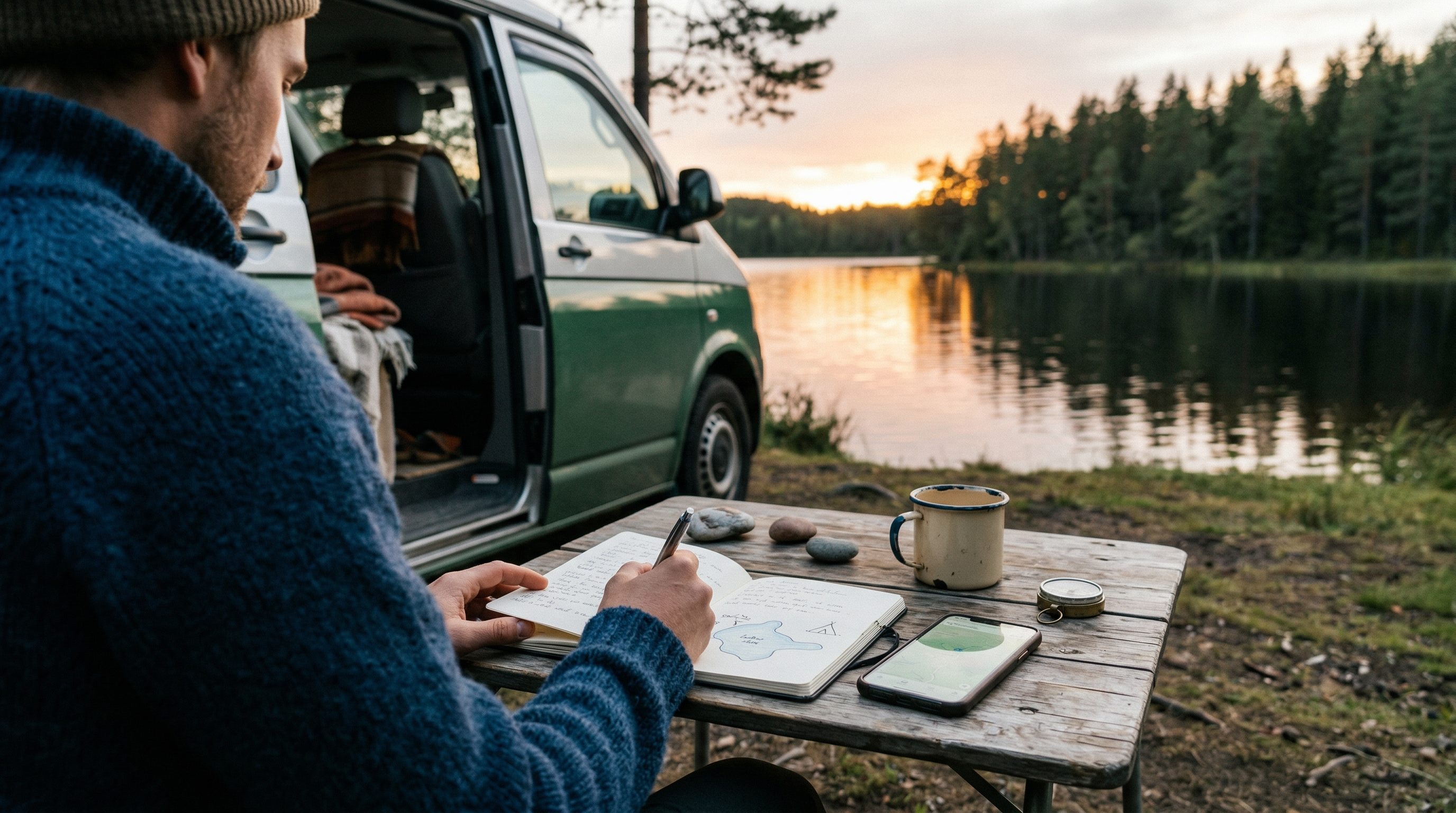
Old places become easier to evaluate when the date, photograph and note survive together. You can find the campsite that worked for the children, the pitch with morning sun and the attractive stop that failed in practice.
A useful camping app therefore saves more than coordinates. Start with your first trip in FARON or sign in when you are ready.
FAQ
What should a camping app actually do?
It should connect a map location with the practical details, photographs and notes that help you decide whether to return.
Is saving the place on a map enough?
A pin is a useful start but lacks context about slope, noise, access and facilities. Personal notes stop the map becoming a collection of anonymous dots.
What makes a campsite work in practice?
Level ground, shelter, water, sensible electrical access, night-time quiet and a routine that suits your party usually matter more than the promotional photograph.
How should I save a campsite for later?
While still there, save its coordinate, date, one photograph and two lines about what worked and what did not.