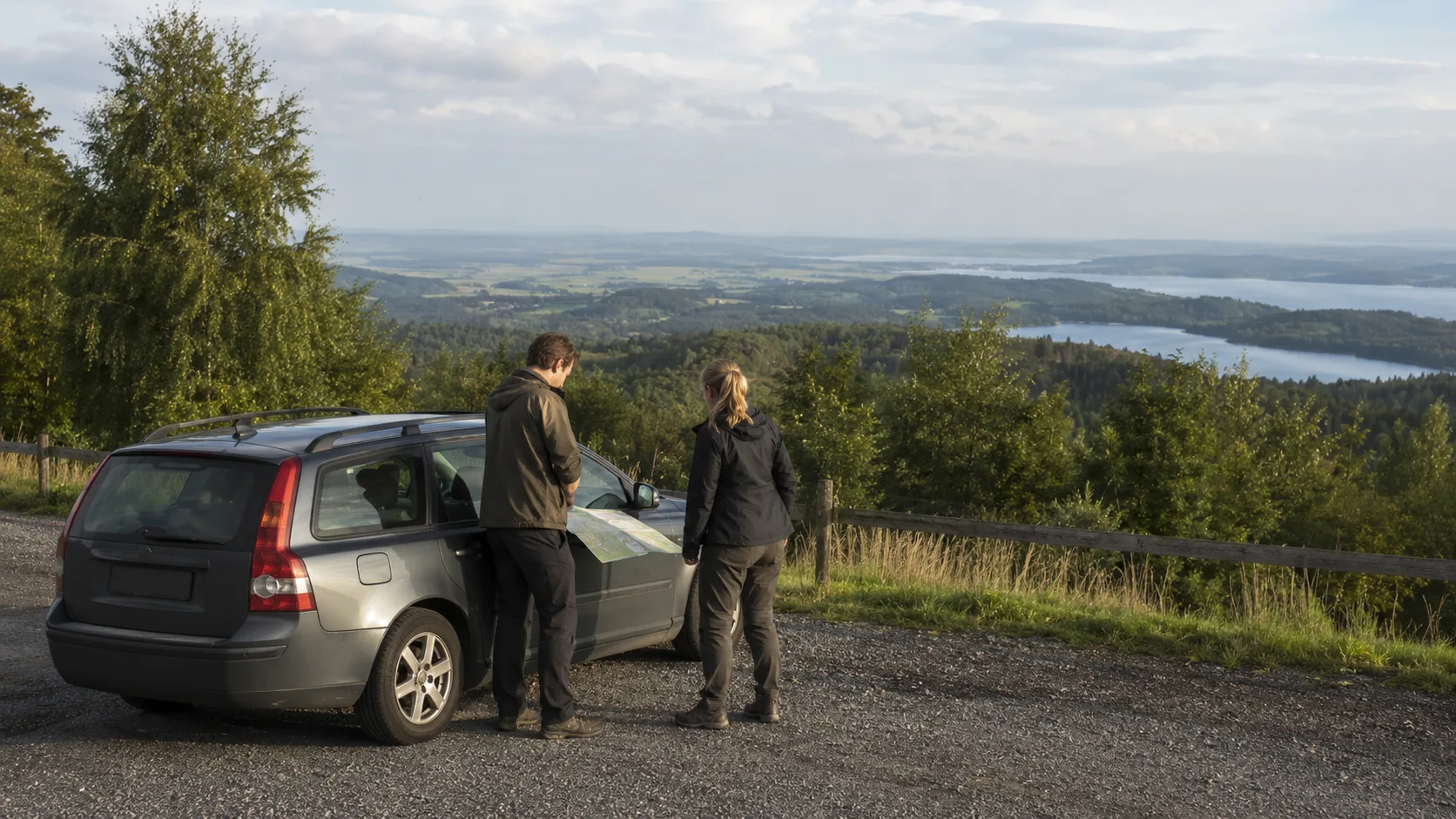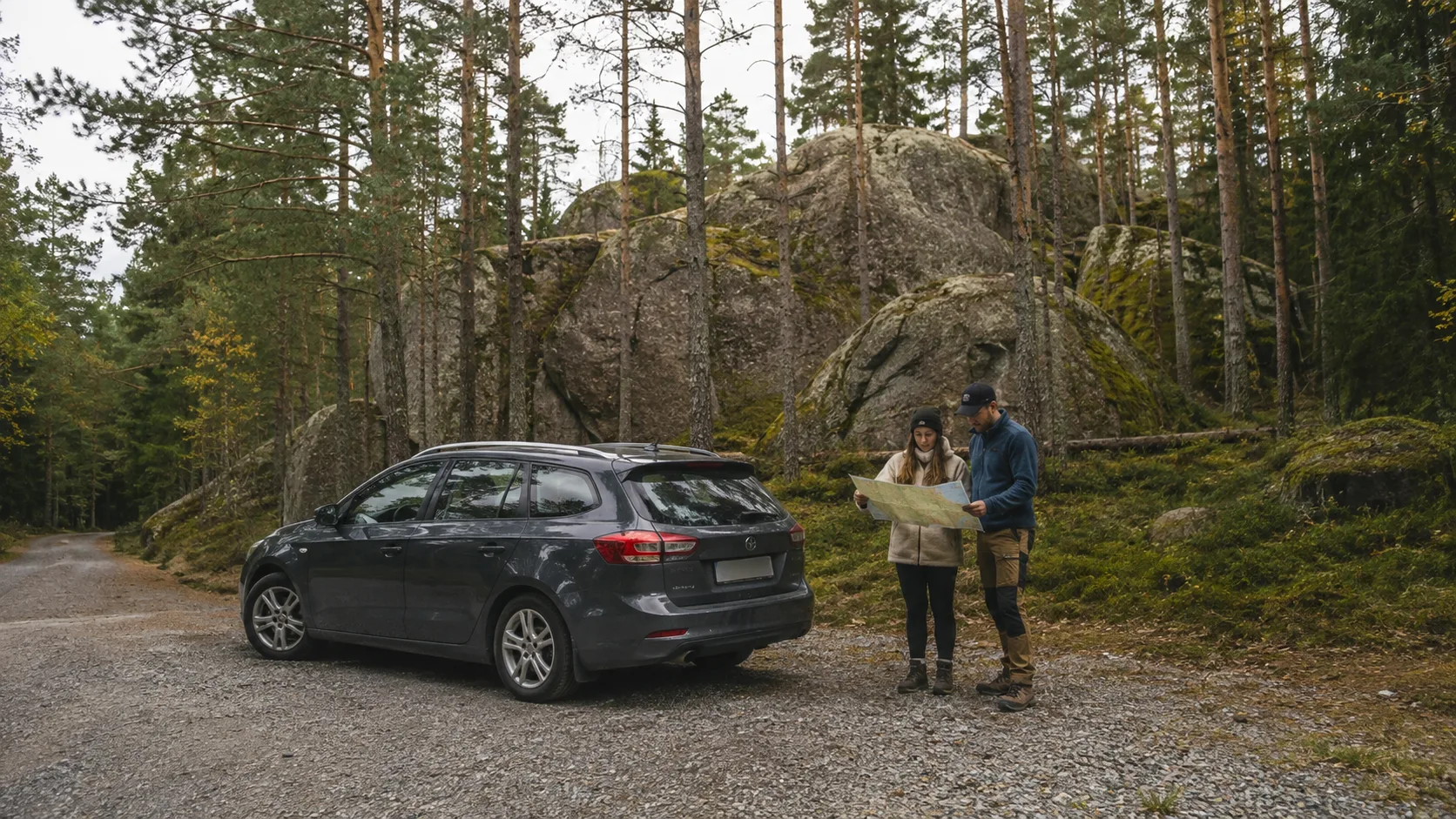
West Sweden is three journeys sharing one map: Gothenburg and its islands, the granite coast of Bohuslän, and the lakes and canals inland. All ten stops below lie within Västra Götaland County, but trying to fit them all into four days would turn a good trip into a sequence of departures.
1. Gothenburg — give the city one coherent day
Gothenburg works best here as a beginning, not a catalogue of attractions. Spend a day moving between Haga, Stora Saluhallen, the river and harbour corridor, then Slottsskogen if you want green space before heading towards the coast. Haga gives you the older wooden-city scale; Slottsskogen is a large city park with walking paths and free access to its park zoo.
Allow most of a day rather than squeezing Gothenburg between two driving legs. It suits travellers who want food, street life and a first piece of Swedish urban context before the route becomes increasingly coastal. Check opening hours for anything specific you want to enter and current traffic or public-transport information before leaving the vehicle behind for the day.
2. Southern Gothenburg archipelago — leave the vehicle behind
Choose Styrsö or Vrångö rather than trying to collect several islands. The important difference is structural: the southern Gothenburg archipelago is car-free, with ferries from Saltholmen and some services from Stenpiren, while much of the northern archipelago can be reached by car ferry from Lilla Varholmen.
Vrångö is the farther, quieter choice if walking and open coast matter most; Styrsö is easier to combine with a shorter island day. Ferries are part of Västtrafik's network, but departures from Stenpiren are more limited than those from Saltholmen, so check the journey planner rather than building the day around an assumed boat.
A half day can work. A relaxed day is better. This is the stop for travellers who want an archipelago experience where the ferry crossing genuinely changes the pace of the journey.
3. Marstrand — ferry, fortress and one island walk
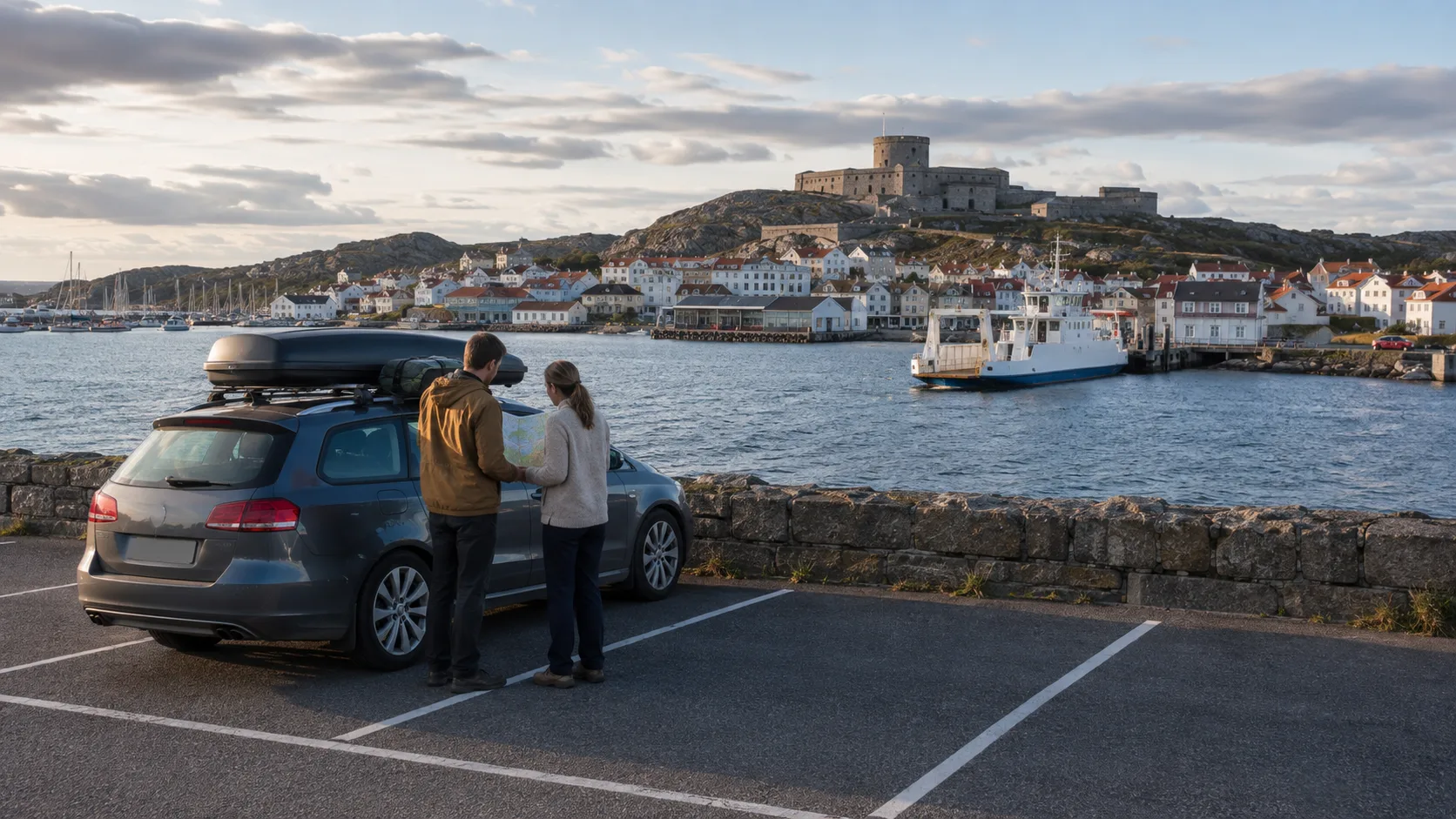
Marstrand is a different kind of island stop. You drive as far as Koön, then cross the narrow sound to Marstrandsön on a passenger ferry that takes about two minutes. The island brings together a wooden coastal town, Carlsten Fortress and a walk where open sea gradually replaces the sheltered harbour.
Half a day is possible, but allow longer if you want to enter Carlsten and walk around Marstrandsön. On 30 August 2026 the fortress was still operating its late-August season, with opening arrangements changing again in September; guided visits also vary through the year. Treat that as a reason to check, not a timetable to save for next summer.
Marstrand suits history, walking and a first proper taste of Bohuslän. Check the ferry, fortress opening hours and wind forecast before setting the day's pace.
4. Smögen and Hållö — choose harbour life or exposed coast
Smögen and Hållö should be one decision, not two compulsory boxes. Smögenbryggan runs for about a kilometre through the harbour and is at its busiest in summer; Hållö sits offshore with bare granite, a lighthouse and a nature reserve. The crossing from Smögen is described locally as roughly ten minutes when boats are operating.
In peak season, Smögen gives you the concentrated harbour scene. Outside peak season, Hållö can be the more interesting reason to stop — but only if a suitable boat actually runs that day. Current visitor information lists several boat trips from Smögen, yet that should never be read as a guarantee of a particular departure. Check the operator and weather before committing.
Give the area half a day or longer. Walk. Look around. Then decide whether another harbour really improves the trip, because northern Bohuslän is about to become much less urban.
5. Rock Carvings in Tanum — read the Bronze Age in the landscape
Start at Vitlycke Museum rather than approaching the Rock Carvings in Tanum as isolated roadside sights. The UNESCO World Heritage landscape records people, ships, animals, weapons and ritual imagery from the Nordic Bronze Age, broadly around 1700–500 BC.
Vitlycke gives the carvings context before you walk to the nearby panels. The museum's 2026 visitor information says the accessible carving sites themselves can be visited year-round, while the museum follows seasonal opening hours. Never walk on the carvings: use the established paths and follow signs at each site.
Two or three hours is enough for a focused visit; longer makes sense if archaeology is one of the main reasons for your Bohuslän road trip. Check museum hours, weather and any current site instructions before arrival.
6. Kosterhavet National Park and South Koster — make the sea the destination
From Strömstad, the Koster boats run to the islands throughout the year, with the trip to the national park's main entrance at Ekenäs on Sydkoster taking about 45 minutes. Naturum Kosterhavet stands roughly 200 metres from the jetty and is the useful starting point for understanding Sweden's first marine national park.
Choose one activity after naturum: a walk, a cycle ride if logistics allow, or the roughly 200-metre snorkel trail at Rörvik when season, water and your own ability make that sensible. Bikes are carried on Koster boats only when space permits.
Do not plan to take your normal road-trip vehicle to South Koster. Access to naturum is by boat, and local road use on Sydkoster is restricted rather than functioning like an ordinary drive-on island.
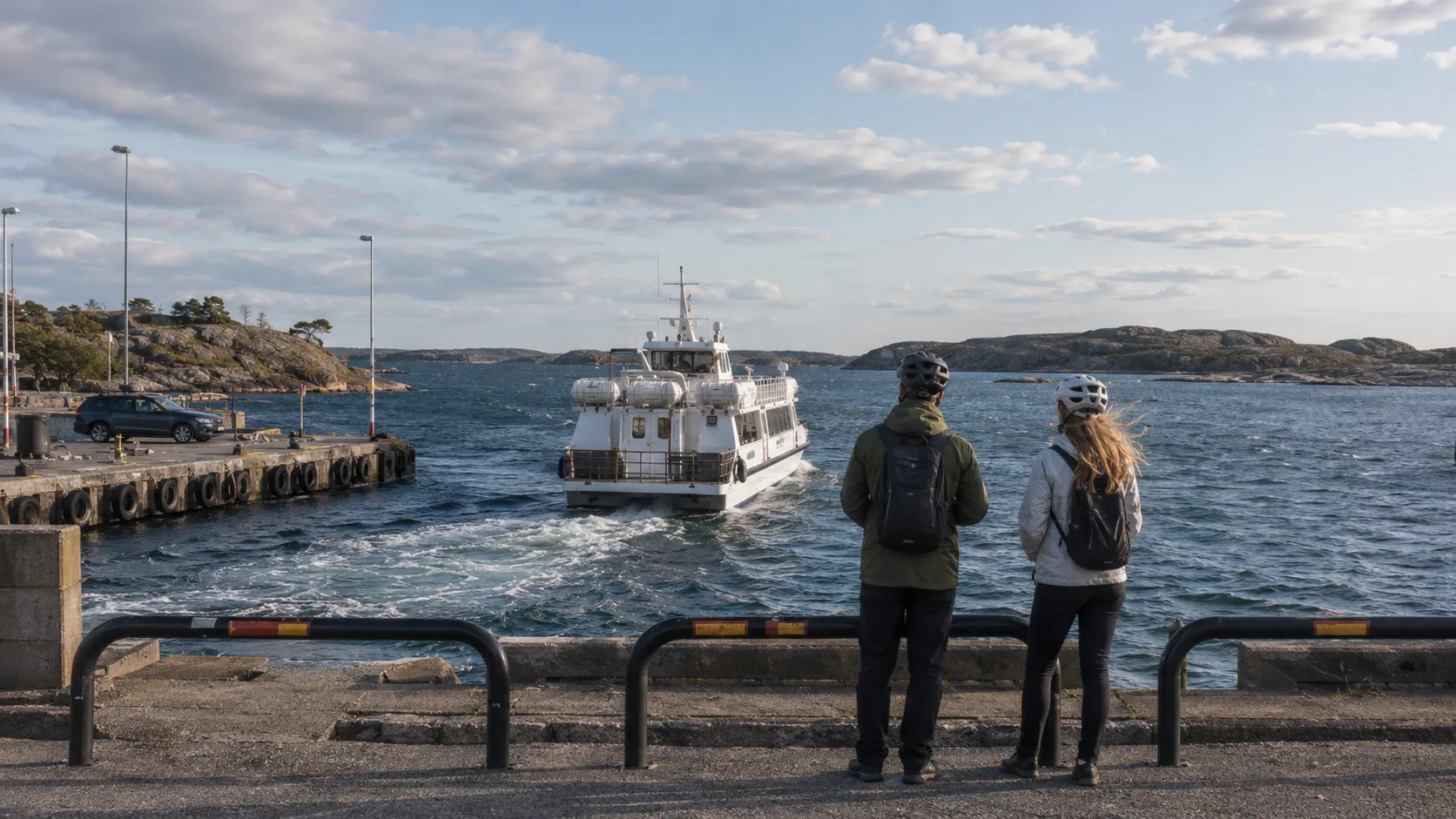
Waiting in Strömstad is one of those moments when a route changes character. A missed boat can remove half a day; good weather can make you drop an inland stop and stay on Koster longer. Keep that flexibility.
7. Håverud and Dalsland Canal — understand the engineering before booking a boat
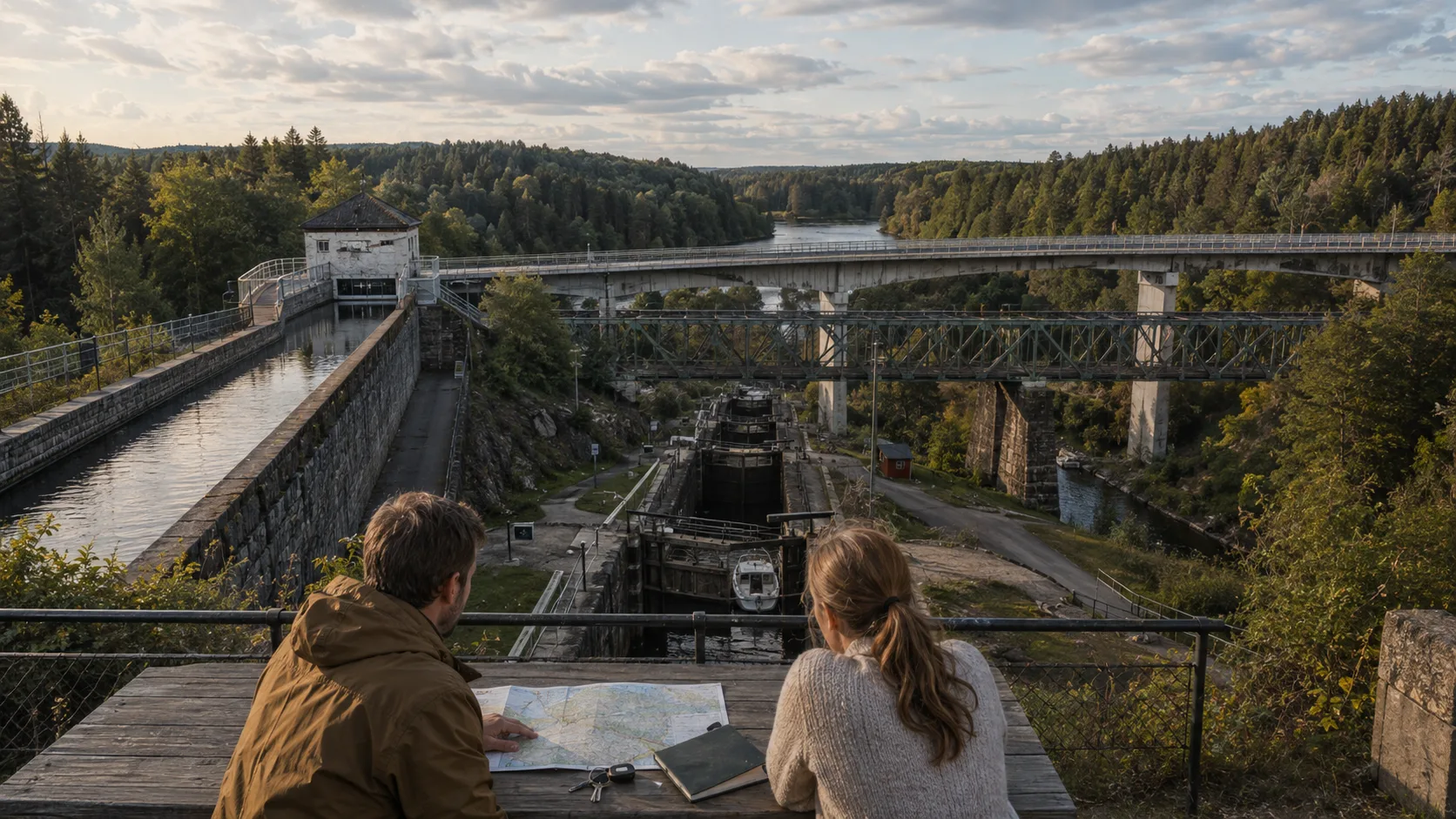
Håverud is worth stopping at even if you never travel along the canal. The aqueduct carries water through a 33.5-metre sheet-metal channel above the rapids, while road, railway and canal cross the same compact site. Beside it, the lock staircase makes the level change visible rather than abstract.
An hour or two works as an engineering stop. A canal journey is a different commitment involving current boat traffic, timetables and considerably more time. Do not confuse seeing the aqueduct with having experienced the whole Dalsland Canal.
This is particularly good for travellers who have had enough fishing villages and want to see how inland West Sweden was connected by water and industry. Check current canal traffic and visitor services if seeing boats pass through the locks matters to you.
8. Trollhättan — locks first, waterfalls only when they actually run
Trollhättan takes the engineering theme to a larger scale. Three generations of lock systems remain visible, from 1800, 1844 and 1916; the four locks in current use overcome about 32 metres of level difference. Walk the lock area and river landscape rather than arriving only for a photograph of the falls.
The waterfall is dynamic. In 2026, scheduled releases were limited to the Fallens Dagar festival on 17–19 July, when up to 300,000 litres per second were released at set times. Outside that event, releases may occur for regulation of Lake Vänern but cannot be predicted or guaranteed.
Allow two or three hours for the locks, river and a walk. Check current event and water-release information before departure rather than building the visit around last year's schedule.
9. Läckö Castle and Kållandsö — put history beside Lake Vänern
Läckö gives the inland route a different scale again: a pale castle on Kållandsö with Lake Vänern immediately beyond it. Treat the exterior, shoreline and wider landscape separately from anything requiring admission. Naturum Vänerskärgården adds a nature component beside the cultural site rather than simply extending the castle visit.
On 30 August 2026, Läckö Castle was in its daily summer opening period, but both castle and naturum change hours as the season moves into September and autumn. Current tickets, tours and visitor rules therefore need to be checked for the actual date of travel.
Half a day gives Läckö room to work. Families, history-focused visitors and people who have spent several days on exposed coastline may all appreciate the slower landscape around Kållandsö.
This is also where a seven-day plan starts forcing choices. A booked Läckö visit has a fixed place in the day; a Koster day depends much more on weather and boats. When both will not fit, remove one rather than compressing every stop.
10. Kinnekulle — finish with geology and a short walk
Kinnekulle works as the final contrast: an inland table mountain beside Vänern where geology, woodland, farmland and old cultural landscapes sit unusually close together. Start with Stora Stenbrottet, the Grand Quarry, a former limestone quarry around 40 metres deep whose lower layers date back roughly 400 million years.
Then choose one short walking section according to trail conditions and weather. The Biosphere Trail between Läckö and Mariestad is 140 kilometres long and divided into nine stages; it is a multi-day route, not an instruction to spend your final afternoon walking the whole thing. Shorter Kinnekulle options exist, including a promoted 7-kilometre section.
Kinnekulle lies within a protected and ecologically varied landscape, so check the relevant reserve rules and trail conditions rather than treating every path or piece of ground alike. The County Administrative Board describes the protected Kinnekulle area as about 5,510 hectares.
Two useful rhythms for a West Sweden road trip
For four days, stay with the coast. Give Gothenburg and the southern archipelago your first day, move to Marstrand on the second, use the third for Smögen and Tanum, then make Strömstad and Koster the final destination. That still requires choices: a long Hållö detour can make Tanum hurried, and poor boat weather may make a mainland day in Bohuslän more sensible.
With seven days, continue inland instead of racing south immediately. After Koster or Tanum, move towards Håverud, then Trollhättan, followed by Läckö and Kinnekulle. The sequence forms a broad loop through Västra Götaland rather than an exactly optimised itinerary, and normal roadworks, ferry connections, city traffic and weather deserve margin.
If your trip continues south afterwards, you can continue through Halland. If it continues north, you can continue through Värmland rather than forcing another region into the same week.
A 4–7 day journey also means deleting places. That is part of planning well. A booked Läckö visit might stay while a weather-dependent Koster day moves; on another trip, good coastal weather may justify dropping Håverud instead.
FARON can be used as a private travel archive and planning aid for that process. You can place the stops in an upcoming trip, save places for a later West Sweden journey, then record the stops that actually happened together with photographs, nights and notes. Afterwards, you can see which stops actually happened on the map instead of keeping the original plan as if nothing changed.
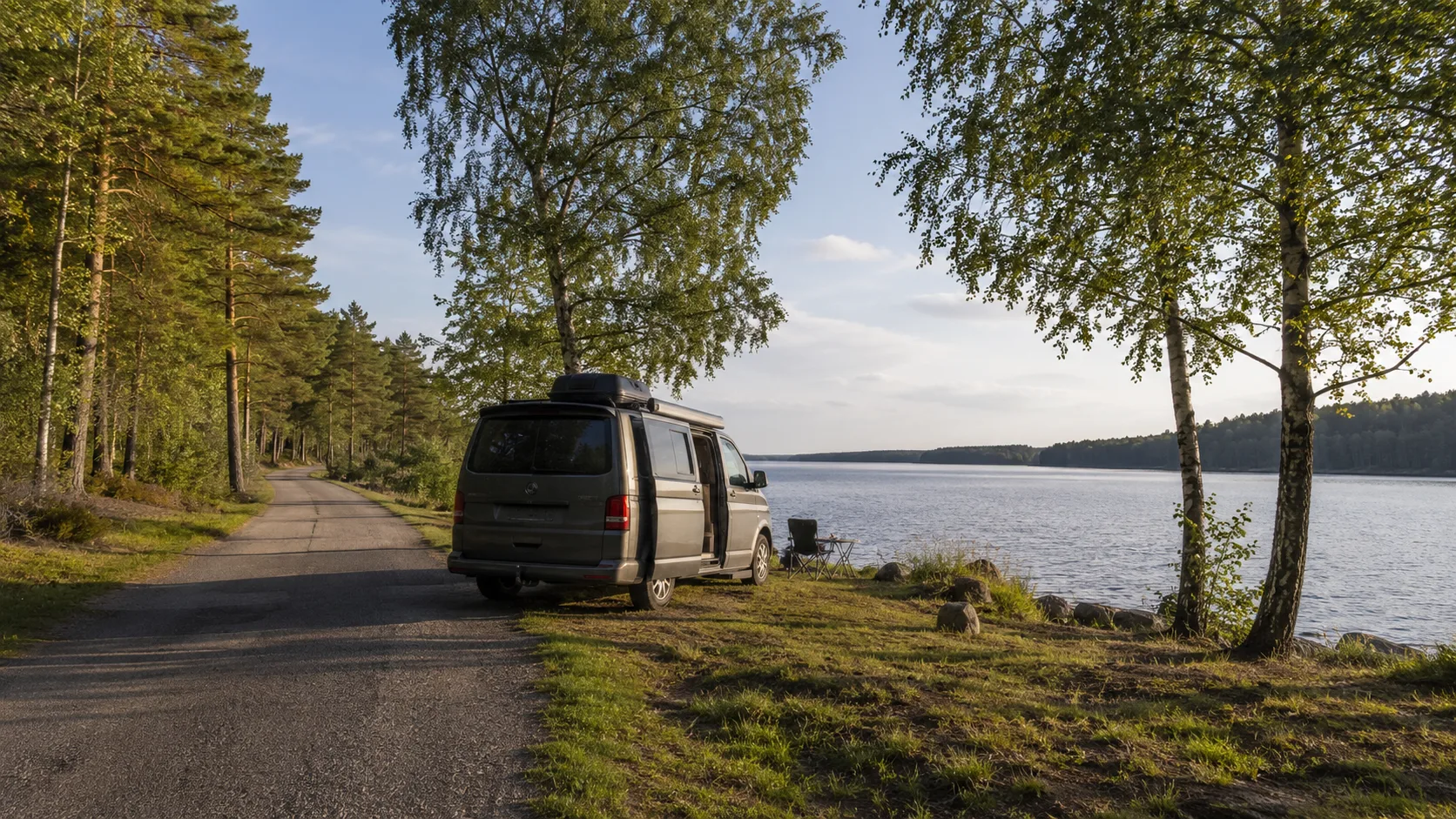
For vehicles, the boundary is straightforward: Sweden's Right of Public Access does not create a right to drive or park off-road. National parks and nature reserves can also have their own stricter regulations, so signs and current authority information matter at each protected area.
If you are still deciding whether your ideal West Sweden journey is a fast coastal loop or a slower archive of walks, islands and inland detours, find the travel rhythm that suits you.
FAQ
How many days do you need for a West Sweden road trip?
Four days is enough for a selective coastal route, while seven days gives you realistic room to add Dalsland, Trollhättan, Läckö and Kinnekulle. Trying to cover all ten stops in four days would leave too little margin for ferries, weather and actual time on foot.
Which places in West Sweden work well with children?
Gothenburg, the southern archipelago, Marstrand, Vitlycke Museum, Håverud, Trollhättan and Läckö can all work well with children when the day's walking distance and opening hours suit them. Koster and Hållö require more attention to boat logistics, weather and conditions near the water.
Do ferries and visits to Läckö or Carlsten need advance booking?
Booking requirements vary by service, season and activity, so check current operator and visitor information before travelling. Use Västtrafik or the responsible ferry operator for boats and the official Läckö Castle and Carlsten Fortress pages for current admission, tours and opening arrangements.
Can you stay overnight in nature reserves and national parks in West Sweden?
Every protected area has its own regulations, and you must check signs and current information from the responsible authority before staying overnight. The Right of Public Access does not give motorhomes, caravans, campervans or cars with rooftop tents a right to drive or park off-road.