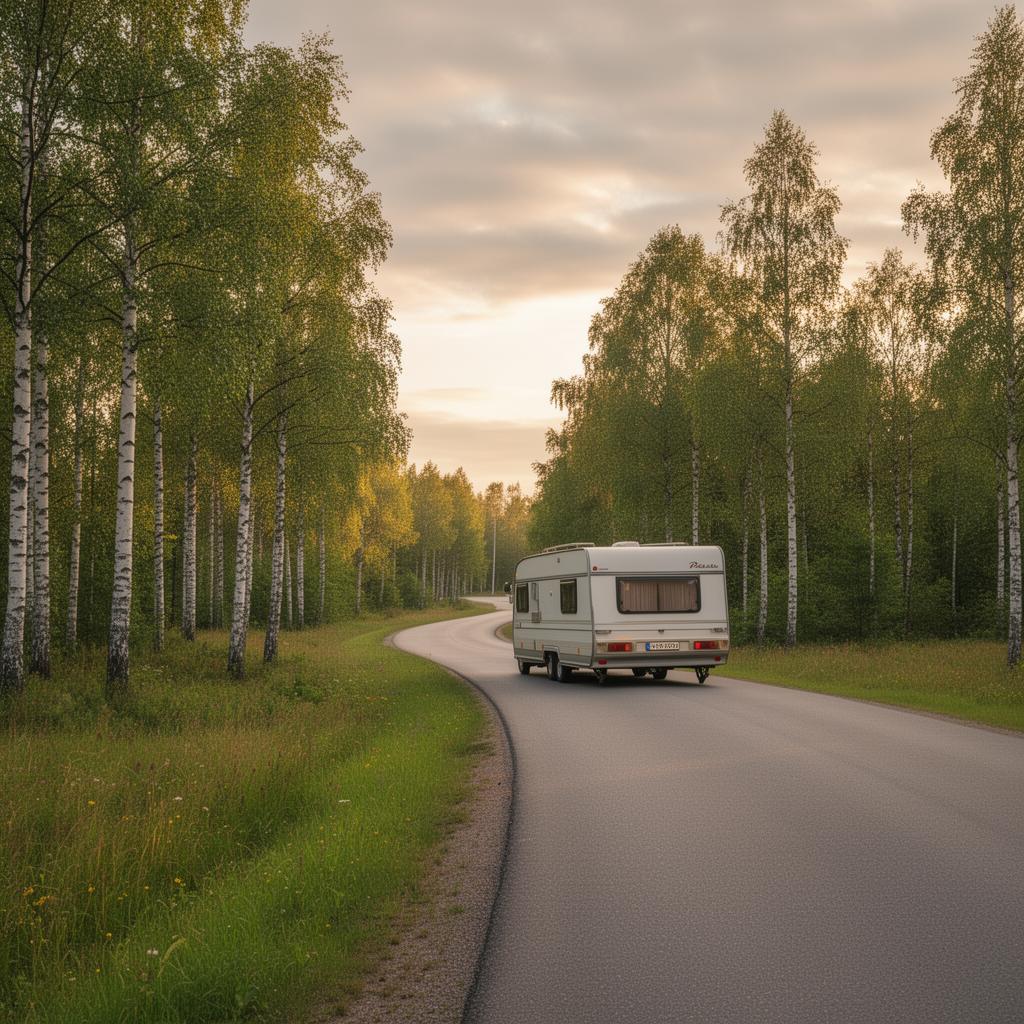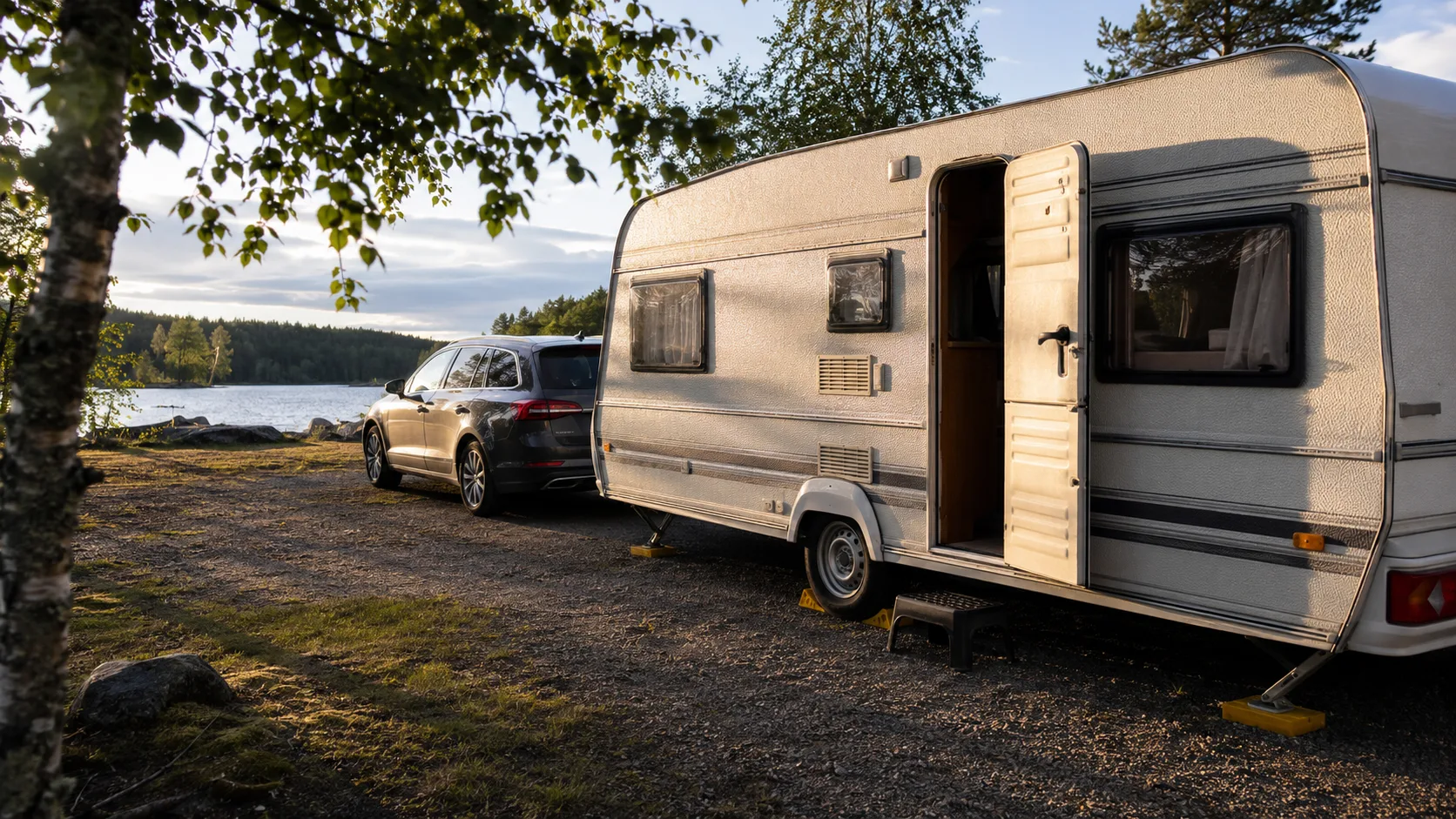
You have reversed three times, yet the caravan still turns the wrong way. The children have lost interest in their screens, and a small audience outside neighbouring awnings watches as you try to land on the levelling ramps. This is the moment when the peaceful camping vision meets reality.
Caravan travel has its own rhythm, and a first trip is rarely perfect. The real task is to handle practical friction without losing your temper. Understand what matters on the road, and the early strain becomes useful experience.
Make the first journey short
It is easy to dream big while the caravan sits on the driveway. A two-week continental tour is still a poor first project. Choose somewhere one or two hours from home: short, simple and forgiving.
The first outing is an equipment test and an introduction to the outfit, not an attempt to maximise experiences. If the hook-up cable is too short, the water pump fails or half the bedding is missing, home remains close. A shorter drive also gives you time to arrive and pitch in daylight.
Tow and reverse without rushing
A caravan changes acceleration, braking distance and the space you occupy. Proper towing mirrors are essential. Set them so you can see the caravan's rear corners and the road behind.
Keep the speed down and accept being the slower vehicle. Let traffic pass safely when an opportunity appears. On your first caravan holiday, favour larger roads over narrow gravel routes with tight bends and oncoming forestry traffic.
When reversing, take your time and use a spotter. Agree on hand signals before starting because voices are hard to hear inside the car. If the angle goes wrong, pull forward, straighten the outfit and try again. Three attempts are ordinary; most people watching have done the same.
Use the same pitching order every time
A fixed sequence saves time and irritation once you reach the pitch.
- Level the caravan. Correct the side-to-side level with ramps beneath the wheels before unhitching, then use the jockey wheel for front-to-back adjustment.
- Secure it. Apply the handbrake firmly and place wheel chocks.
- Lower the corner steadies. They stabilise the caravan; they are not jacks. Put pads beneath them on soft ground.
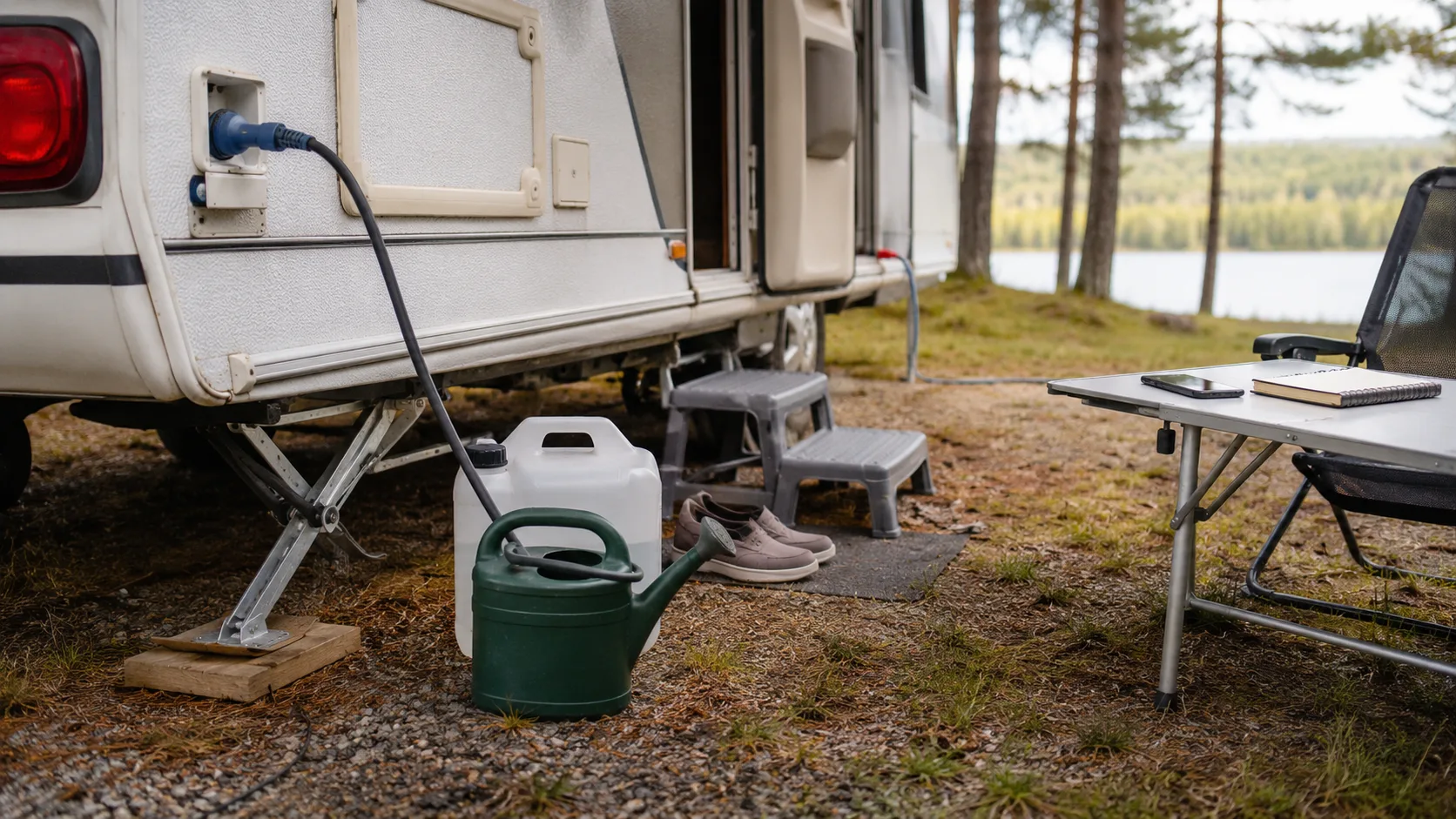
- Connect electricity and gas. Fully uncoil the electric cable so it does not overheat, and check that the gas bottle is open and secured.
- Arrange water and waste. Fill the fresh-water container and place the waste-water tank beneath the outlet.
Set the refrigerator to the correct energy source and deal with the awning before sitting down. A consistent routine prevents a rocking caravan or empty water supply from waking you later.
Pack correctly instead of packing more
Caravan cupboards create a false sense of limitless storage. Weight and distribution still decide how safely the outfit behaves. Put heavy awning parts, tools and food low and close to the axle. Lighter clothes and towels can use upper cupboards. Excess weight at the rear can make a caravan unstable and encourage snaking.
Keep waterproofs, hook-up cables, adapters, a spirit level and ramps in an outside locker or close to the door. Emptying seat boxes in heavy rain to find the electric cable is an avoidable first-night lesson.
Evaluate the campsite in practical terms
After the first trip, brochures look different. The attractive pitch may have a tight entrance or hook-up points requiring 30 metres of cable.
Record what worked for your party. Was there room for both car and caravan? Was the service building close enough for children at night but far enough to avoid noise? Did the pitch offer afternoon shade or face the wind? Learning your own preferences is a large part of becoming comfortable with caravan travel.
Keep the lessons for the next trip
The first journeys contain the most important discoveries: equipment you never used, something you genuinely missed and the places that provided the calm you wanted. Those details are easy to lose before next season.
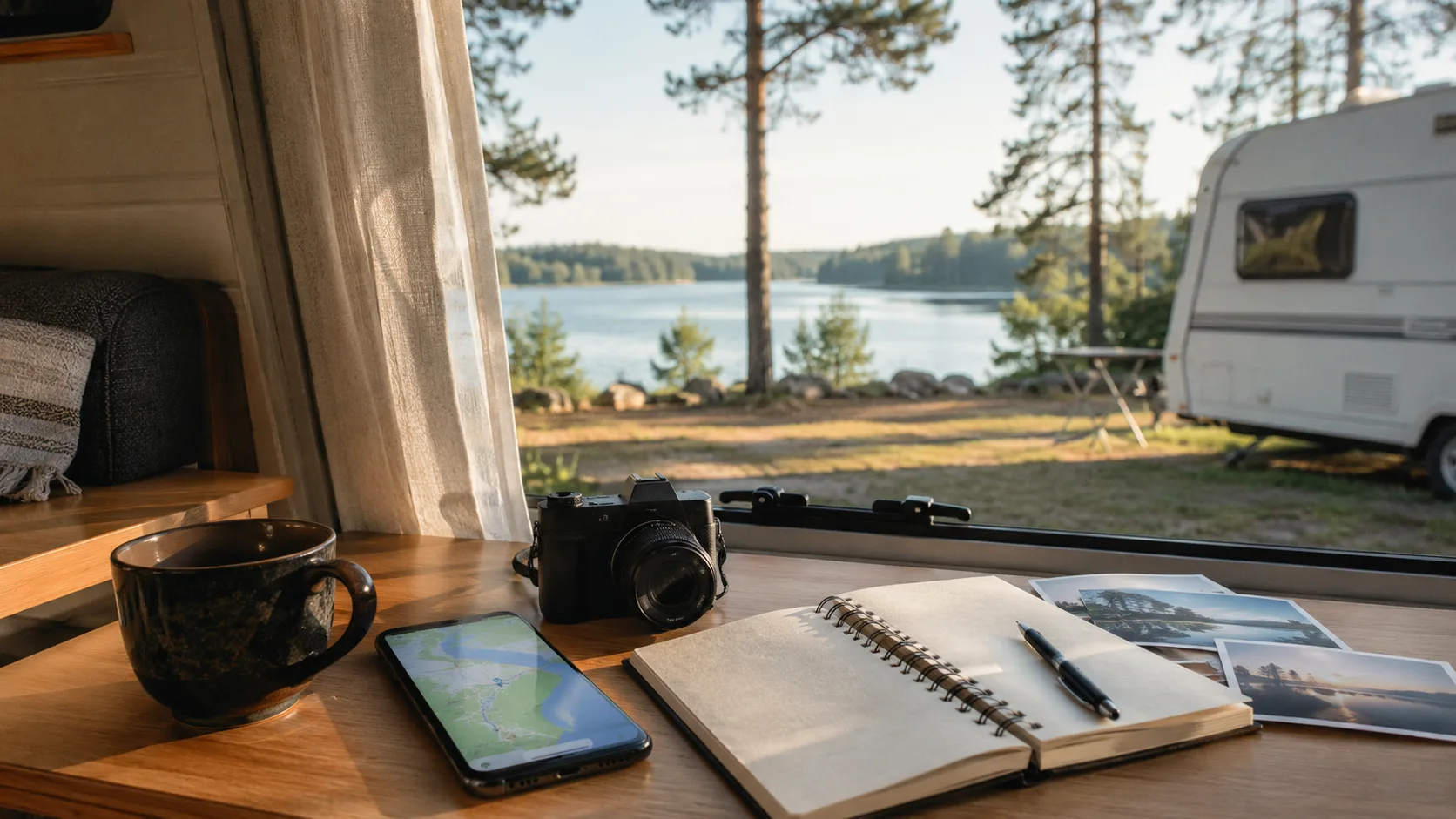
With FARON for caravans, you can log nights in a private archive. It is not a public review. It is your record of your own discoveries.
On your first trip in FARON, add photographs of the setup, record the dimensions of a shaded pitch or note an unusually good service building. Save the trip on a map and remember where you camped when next season begins.
Save the mistakes and the excellent places. Short. Honest. Useful. The slightly awkward first holiday then becomes a practical foundation for every journey that follows.
FAQ
How long should my first caravan trip be?
Choose a destination within one or two hours of home. You reduce road pressure, can pitch in daylight and have an easy fallback if essential equipment fails.
What is the most important pitching check?
Level and secure the caravan before unhitching. Apply the handbrake and use wheel chocks; a poor level affects comfort and can affect appliances.
What do beginners often forget to record?
Record the pitch number, cable length, access and missing equipment. Those small details are the hardest to reconstruct before the next journey.
How can FARON help after the first caravan holiday?
FARON keeps your photographs, notes and visited places in a private travel journal, helping you repeat good choices and pack differently next time.