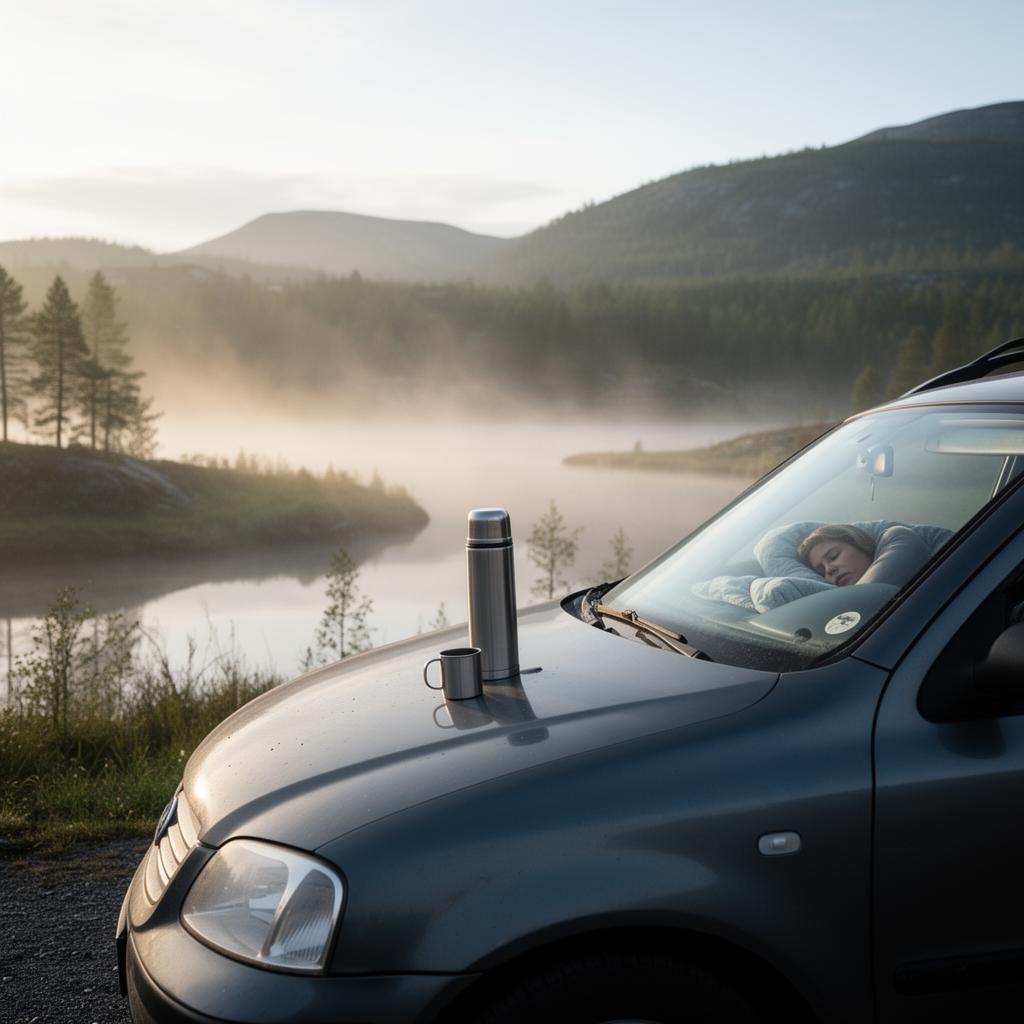
Sleeping in the car promises a movable journey: stop when the day feels complete and wake without returning from a hotel. The same car that looked spacious at home shrinks when shoes, water, cables, cold air and bedtime share it.
The idea works when the evening, legal place and morning form one manageable routine — not merely when a mattress fits.
Try the sleeping setup before leaving
Before a first overnight stop near Gävle, I would test the car at home with the actual luggage inside. Fold the seats, lay out the bedding and lie down: can you stretch your legs, turn over and get out without moving bags? Measure the usable sleeping length with the front seats in the position you will use at night.
Give shoes and the day's bags a place away from the bed. Keep water, a torch and the car key within reach, and try opening the door from your sleeping position. Check the vehicle manual for how locking and the alarm work when someone remains inside.
Set up. Pack away. If either task means unloading everything onto the ground, rearrange the luggage before leaving rather than discovering the problem in rain at 22:30.
Manage temperature, moisture, slope and sound
A car neither retains heat like a room nor ventilates like an open tent. Use safe ventilation appropriate to the conditions, prepare for falling temperature and never run an engine or unsafe heater for sleeping.
A small slope becomes obvious for eight hours. Light, lorries and early commuters also matter. Check where your head will lie and listen before fully setting up.
Plan water, toilet needs and departure before bed. Calm. Simple. A good night includes the first ten minutes of morning.
Choose the place before optimising the car
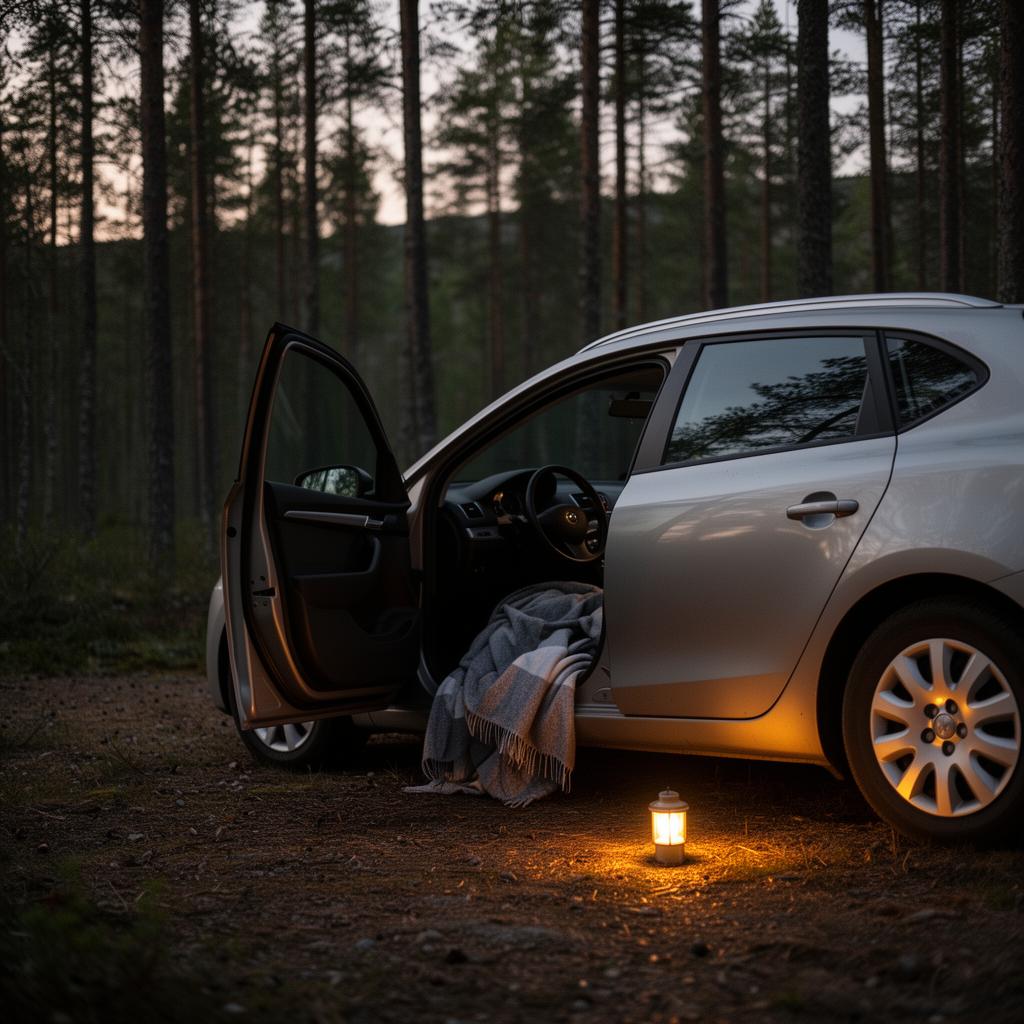
An ordinary car can work well on a suitable level, quiet place; an elaborate setup cannot rescue exposed, sloping or disruptive surroundings.
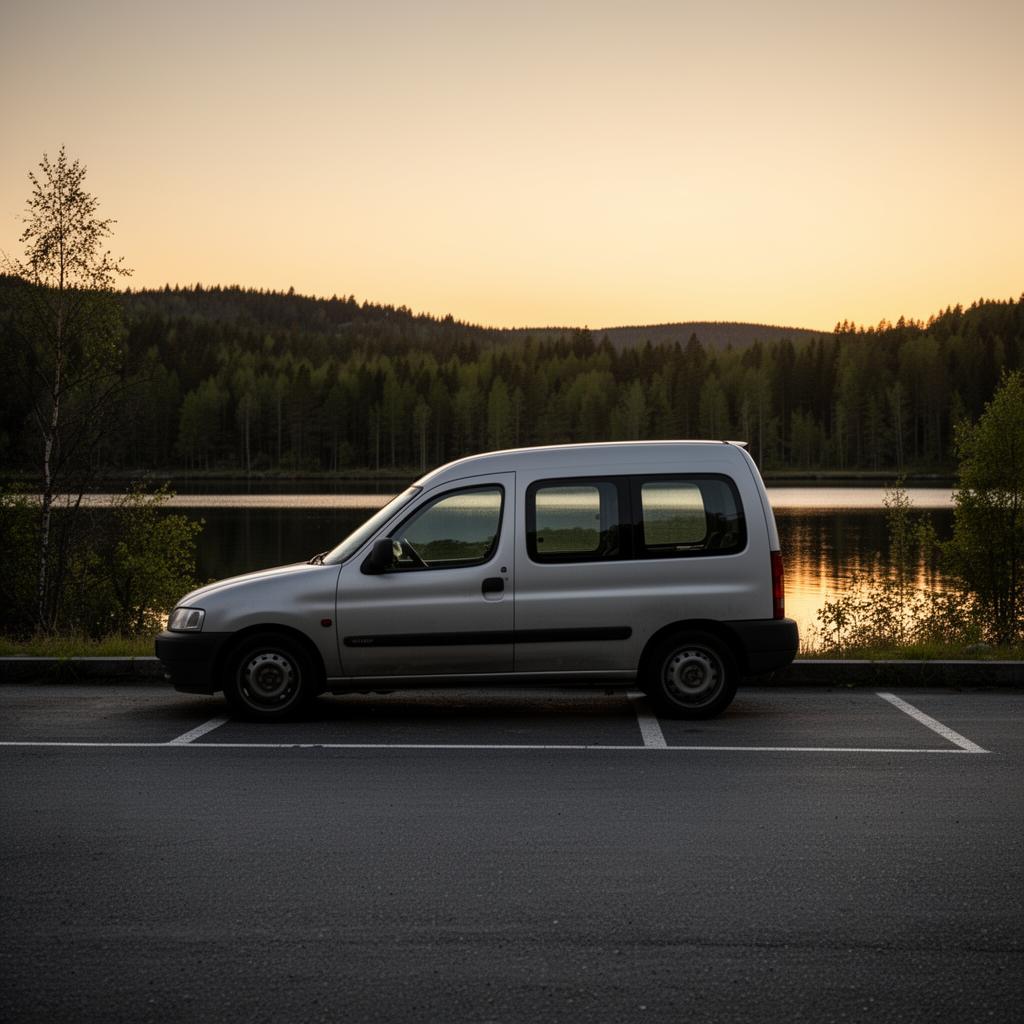
A few hours between drives need different facilities from several slow days living from the vehicle. Decide whether the place only supports sleep or also dinner, changing and a relaxed morning.
Check parking time and overnight rules separately
Sleeping inside the car does not make unlawful parking lawful. Sweden's Right of Public Access does not give motor vehicles permission to drive or park on natural ground. Start with an established parking area and read its signs.
The Swedish Environmental Protection Agency's guidance describes a usual 24-hour weekday limit at rest areas, with longer stays possible over weekends unless signs say otherwise. This is not a promise that every car park permits an overnight stay: local rules and any camping restrictions still matter.
Use Trafikverket's rest-area information to find a stop along the road, then check the current signs on arrival. If the permitted time does not cover your planned departure, choose another place before unpacking.
Save why a night worked
The view is easy to remember; level ground, correct wind, nearby facilities and an uncomplicated departure are not. Add one short reason to the night while travelling.
FARON connects possible stops, actual nights and photographs in the same private structure. Use the driving-holiday archive to retain what happened and the trip map to find it again.
Frequently asked questions
May I sleep in my car in Sweden?
Yes, where parking is lawful and local rules and signs permit an overnight stay. Observe the parking time limit; the Right of Public Access does not give cars permission to park on natural ground.
Where does sleeping in a car work best?
Prioritise a lawful, level and quiet place with low exposure, manageable road noise and simple morning logistics.
How can I stop the car feeling cramped at night?
Pack for the evening and morning, give loose items fixed places and keep bedding, water and frequent equipment accessible.
How can I remember which overnight places worked?
Save the night with one short reason — such as level, quiet, easy departure or good shelter — while the experience is fresh.