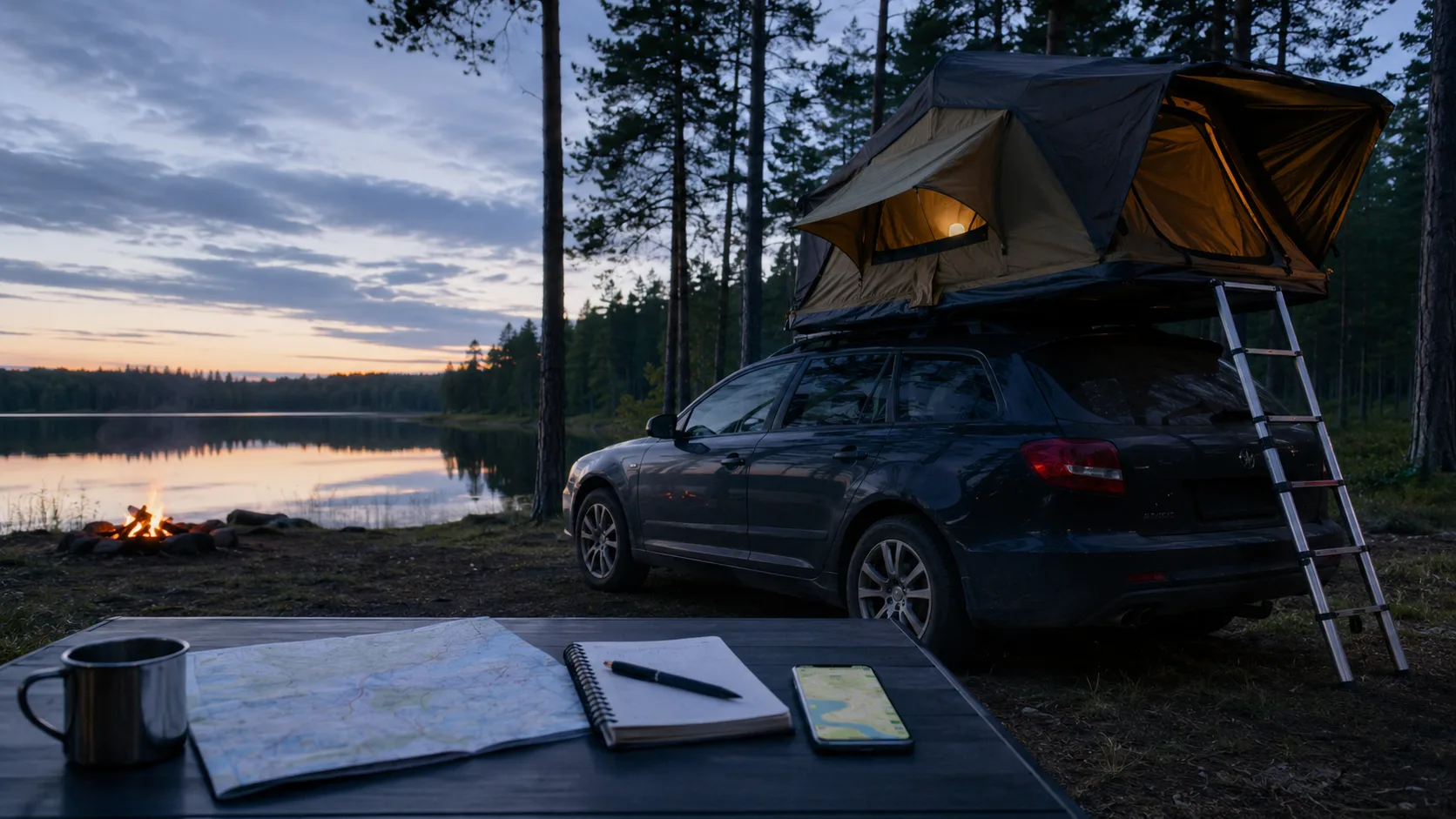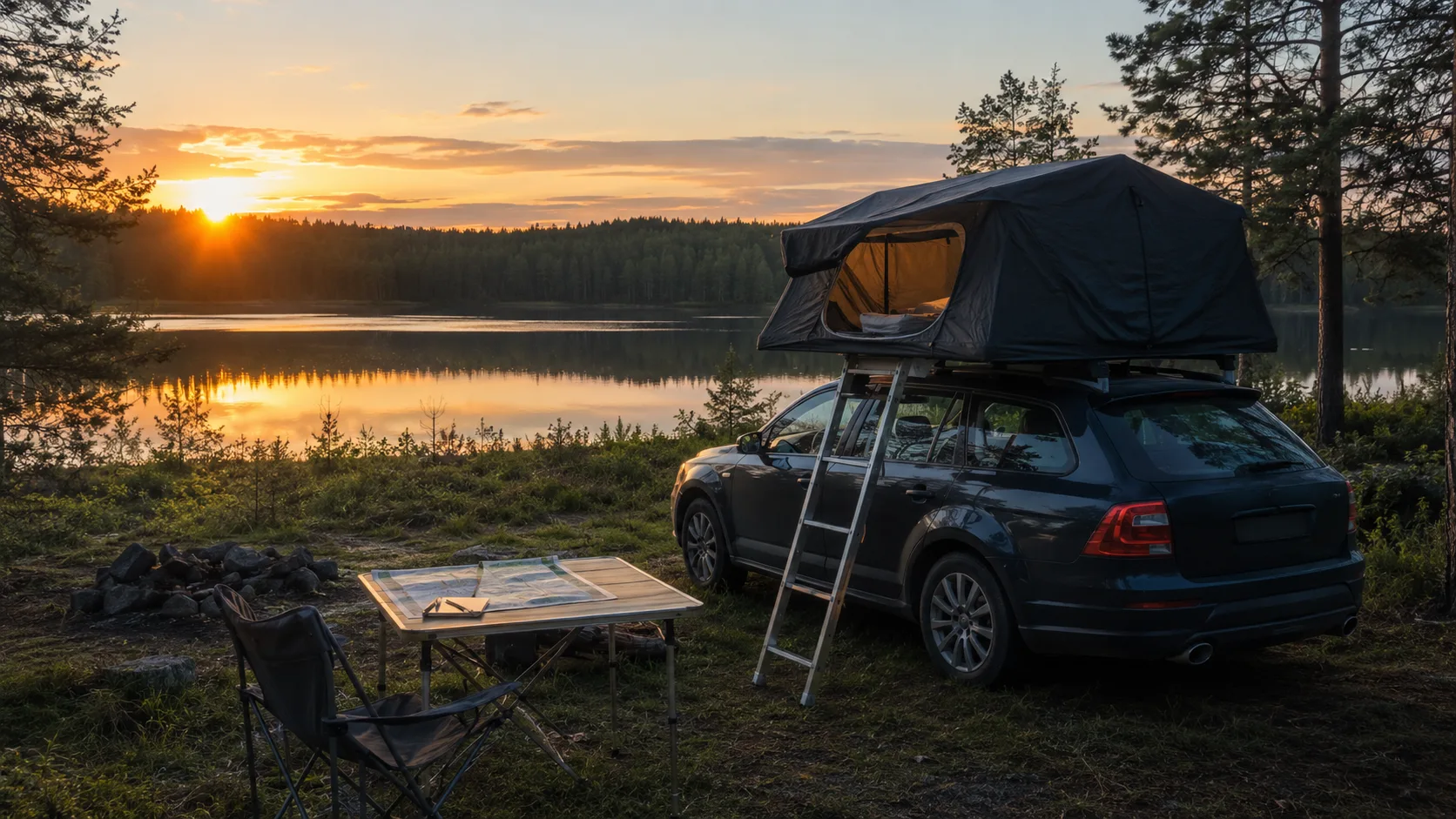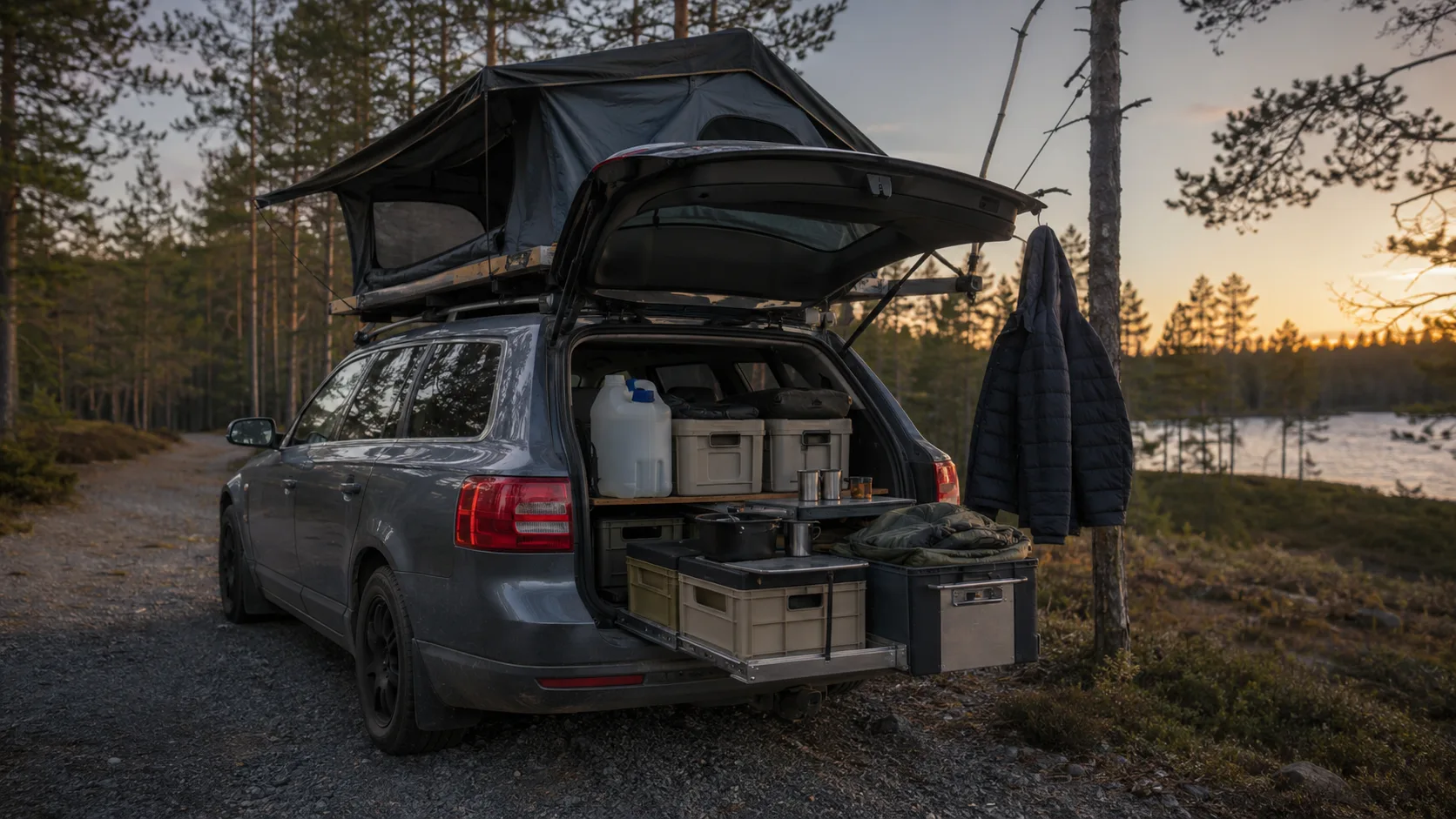
A rooftop-tent car can look perfectly packed on the driveway and become awkward after two nights. Wet shoes have no home, the jacket is buried and every coffee stop requires moving three boxes.
Pack by frequency of use. The car is simultaneously storage, hallway, kitchen and wardrobe, so access matters more than fitting the maximum amount.
1. Keep water and daily tools at the edge
Fresh water, gloves, a knife and small frequently used items need a fixed, unobstructed zone.
2. Build a three-minute coffee kit
Keep burner, lighter, coffee and basic food together so a short stop does not empty the boot.
3. Put warm evening layers on top
A hat, dry socks and fleece must remain reachable when a warm Swedish day turns into a cold evening.
4. Give rainwear a permanent quick-access place
Find shell clothing before rain, especially when the tent needs opening or closing.
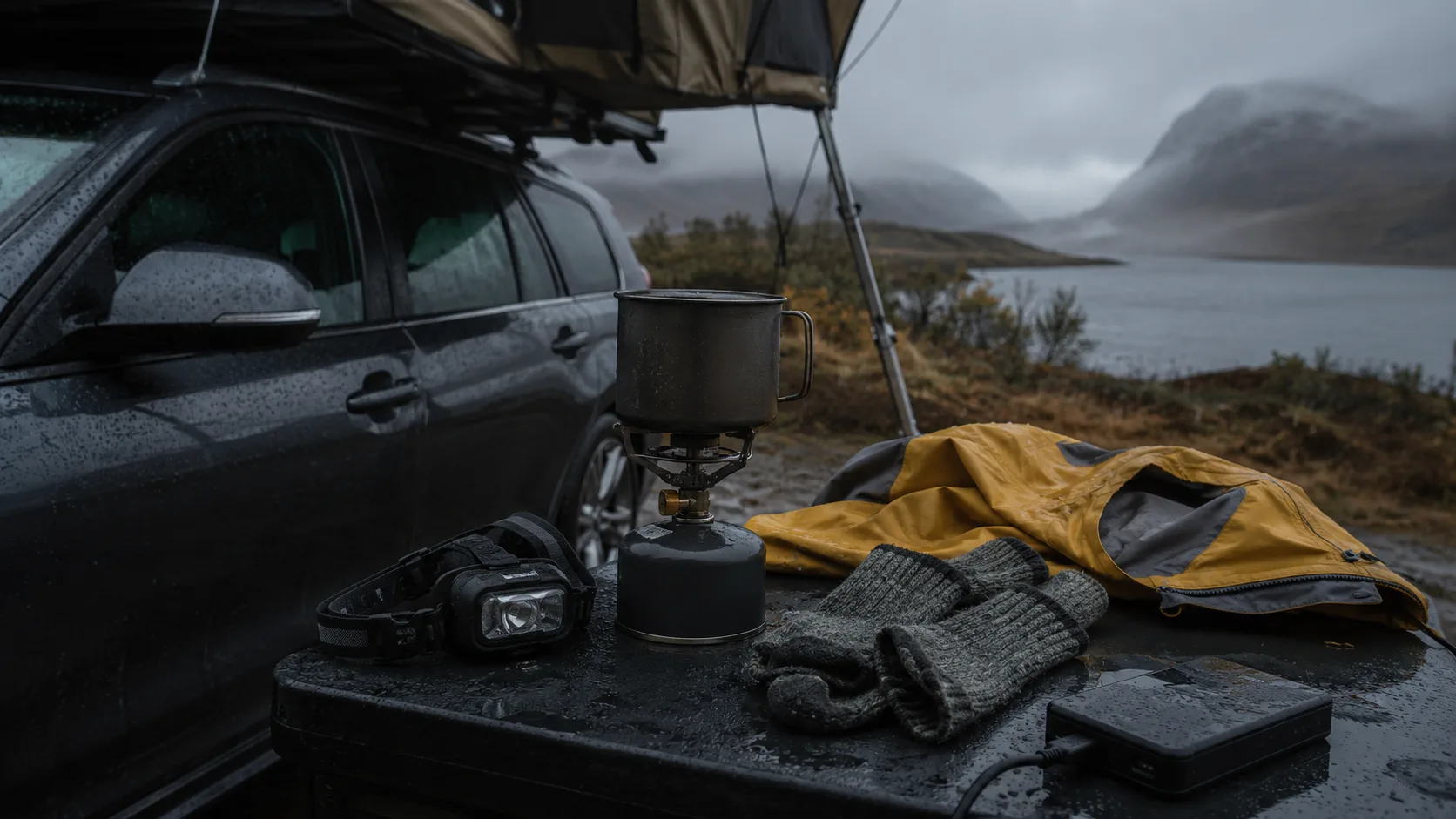
5. Keep the headtorch in the cabin
You need both hands for ladders, straps and the setup after dark.
6. Separate charging from the starter battery
Keep correct cables and a charged power bank accessible; do not drain the vehicle's starting battery overnight.
7. Isolate wet shoes and clothing
Use a waterproof box or bag so mud and moisture never spread into bedding and clean clothes.
8. Store the complete kitchen together
Use one lidded box for stove, windscreen, utensils and washing equipment. Cook only where current fire rules and conditions allow.
9. Make safety equipment reachable
Everyone should know the fixed location of first aid, personal medicine, fire blanket and suitable extinguisher.
10. Check fire risk locally
Never light fires on rock or where they can damage ground. Check current municipal or county restrictions; bans can also affect grills and some stoves.
11. Plan zones before departure
Divide equipment into daily, evening, rare and emergency zones. Add critical items to the checklist for a planned trip.
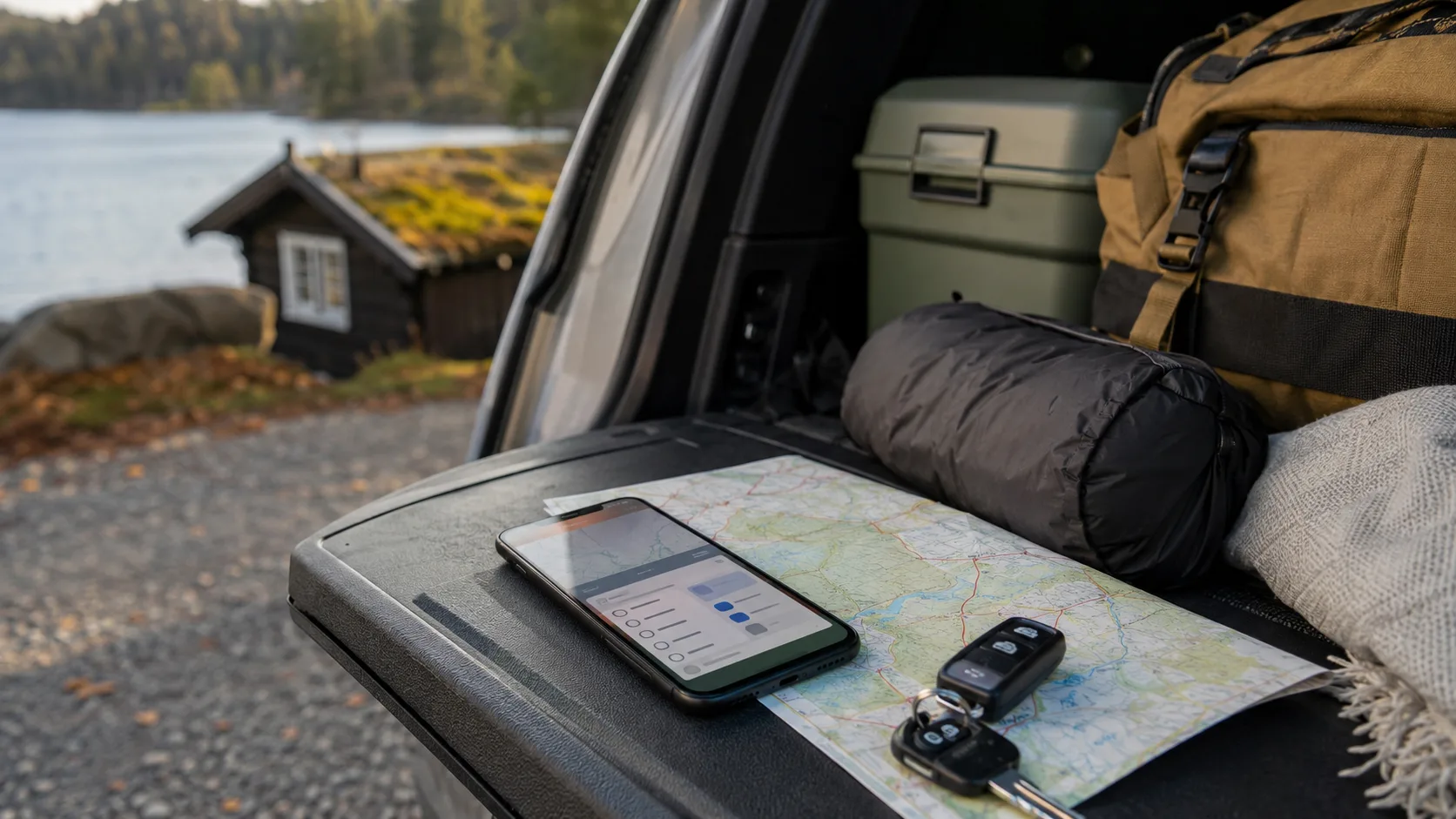
12. Save the packing system that worked
After the week, record what blocked access, what was missing and which box kept the car usable. Connect the lesson to nights on the trip map or your private rooftop-tent archive.
Frequently asked questions
How should I divide equipment in the car?
Use daily, evening, rare-use and emergency zones, keeping daily and safety items easiest to reach.
What should I do with wet clothing and shoes?
Keep them in a dedicated waterproof box or strong bag away from bedding, food and clean clothing.
How can I remember which packing choices worked?
Write a short note during each night about blocked items, missing equipment and useful zones.
Do I need many tools for one week?
Carry the vehicle- and tent-specific basics, plus a multitool, tape, cable ties and tools needed to check roof-rack and tent fasteners.