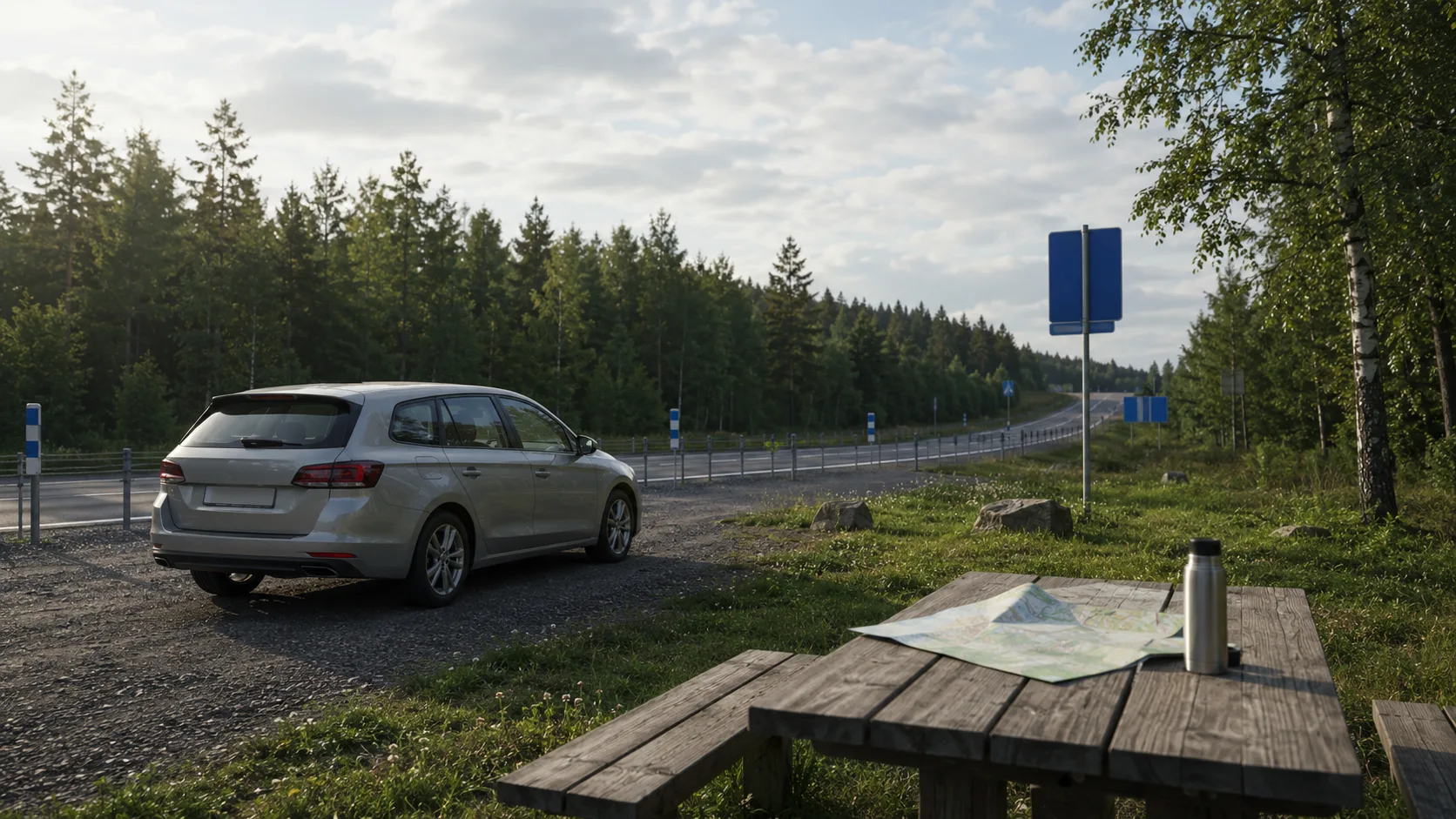
Rain. Spare bulb. Twelve per cent phone battery. Closed road. On the E45 between Sveg and Östersund, that combination is enough to replace a simple driving day with a new plan.
Road-trip preparedness means being able to stop safely, find verified information, contact the correct help and choose the next step without improvising in the carriageway.
Prepare the vehicle you will actually use
Check fuel or charge against the stage and possible diversions. Use the vehicle's own specification for tyres and pressure. Check lights, washer fluid, trailer and secured luggage.
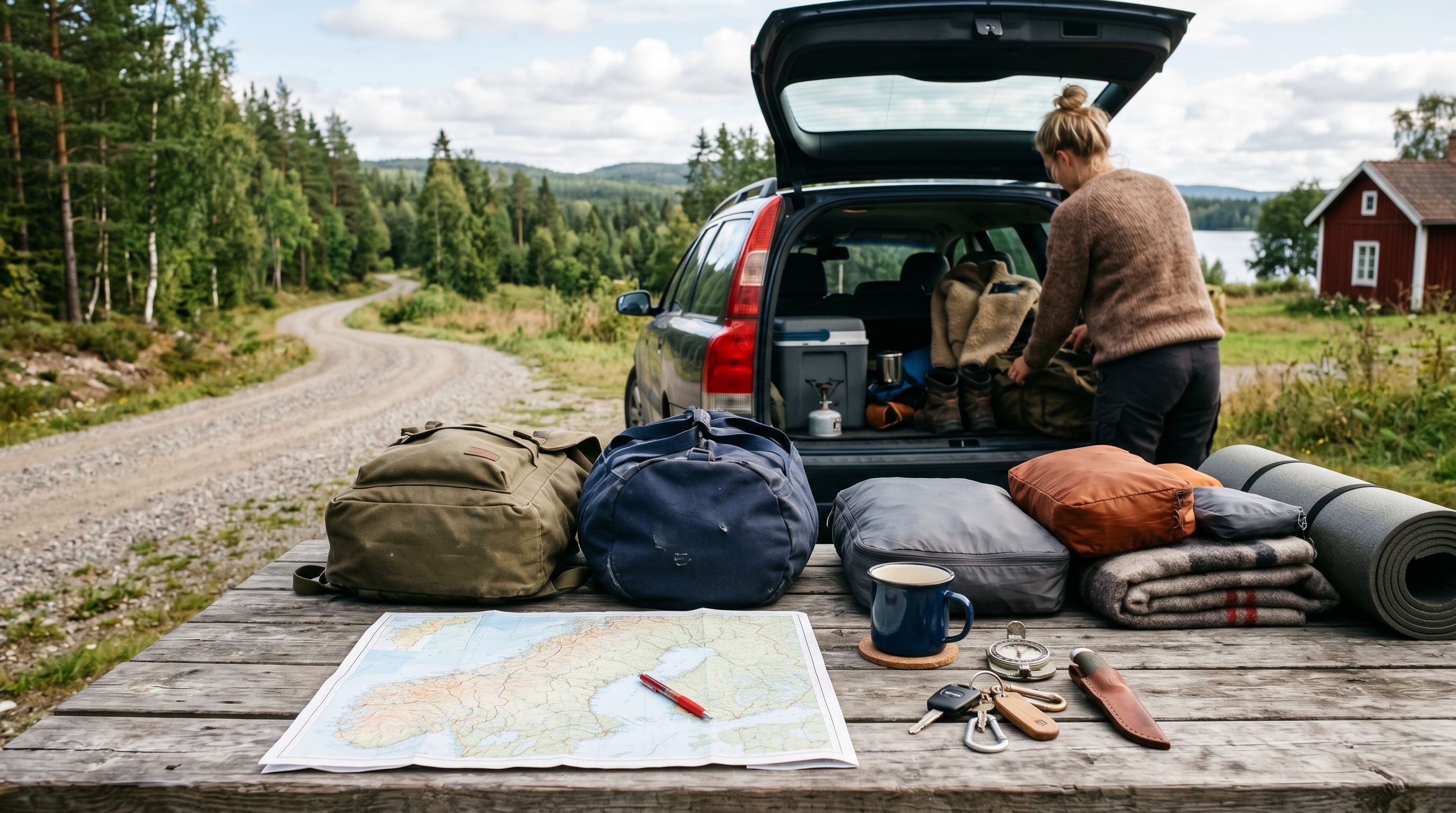
Cars covered by Sweden's applicable vehicle rules must carry an approved warning triangle. Its position matters: a triangle beneath a camping table, dog crate and three bags is not readily available when traffic is passing.
Charge the phone and keep the insurer, roadside-assistance contact and relevant vehicle details accessible offline or on paper. Confirm whether recovery is included in the insurance before departure.
Separate requirements, official advice and personal choices
A warning triangle is a vehicle requirement for the relevant cars. A charged phone, water and — in winter — warm clothing and blankets are official practical recommendations. A first-aid kit, reflective vest and power bank may be sensible choices without being described as universal Swedish legal requirements.
Short road. Small kit. A long journey through sparsely populated country justifies larger margins because waiting and detours can take much longer.
Read both road and weather information
SMHI's yellow, orange and red warnings describe increasing expected consequences, but the text, location and weather type matter more than the colour alone. Forecasts and warning areas can change.
Combine the warning with the Swedish Transport Administration's current road map for incidents, restrictions, road conditions and cameras. A driving day with a reserve is easier to shorten than one dependent on every kilometre following schedule.
When the vehicle stops
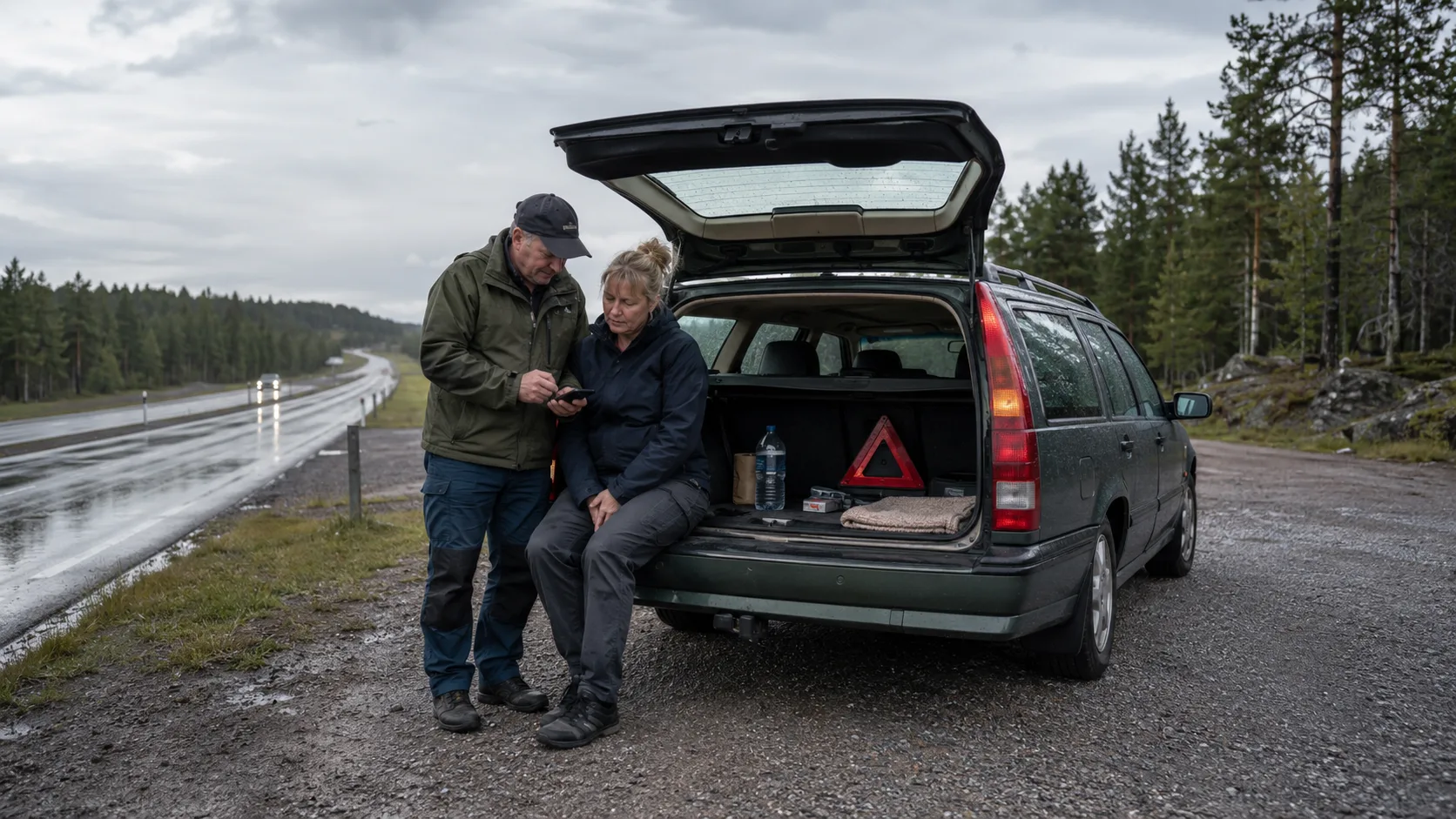
The first task is not diagnosing the engine from the driver's seat. Try to reach the safest available location, warn other road users and leave the vehicle and road when the situation requires it. Use professional recovery and call 112 when life is in danger.
Swedish Transport Administration guidance states that the warning triangle should be at least 100 metres away and must be used where the speed limit exceeds 50 km/h. Place it with great care, walking beside the road and outside a barrier where possible.
| Situation | First safe decision | Primary source |
|---|---|---|
| Breakdown or puncture | Seek a safe position and warn traffic | Swedish Transport Administration |
| Severe weather or road closure | Pause and verify conditions | SMHI and road information |
| Wildlife collision | Secure the situation and follow police instructions | Swedish Police |
| Danger to life | Call emergency services | 112 |
Give a wildlife collision an exact position
Current Swedish Police instructions require certain wildlife collisions to be reported immediately through 112 and the location to be marked. Check the official page for the species and legal details.
Your safety comes first. Provide road number, nearby place, landmarks and GPS position when possible. Do not follow an injured animal; trained search teams handle that work.
Let weather and closures change the route
A backup plan does not require another complete holiday. Decide what happens first: pause, verify official information and then continue later, take a reasonable diversion or end the stage early.
Keep one earlier lawful overnight option. A full, closed or unsuitable planned site should not create time pressure behind the wheel.
Back up the phone
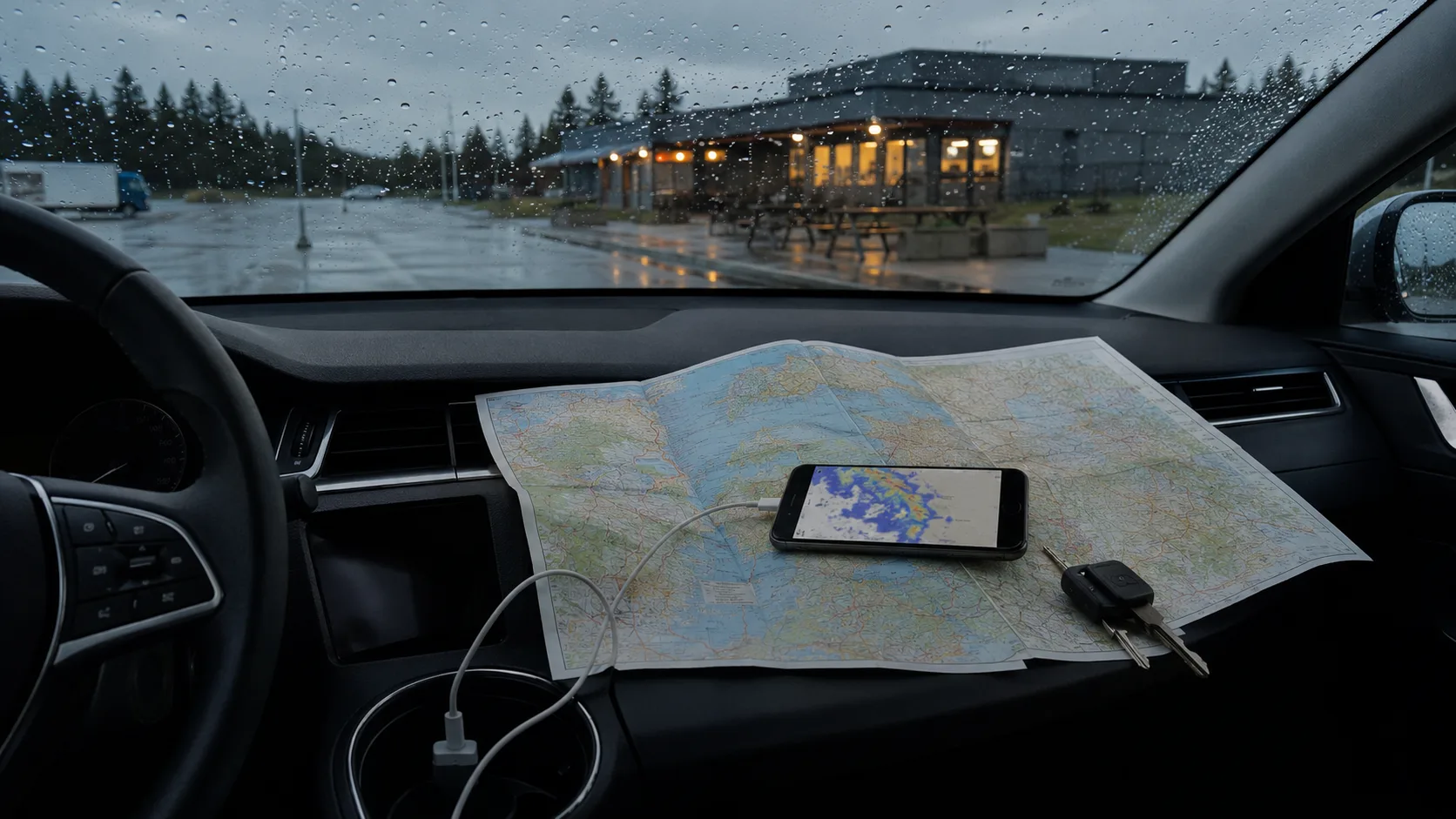
Modern travel depends on one device for maps, payment, booking, weather and insurance. Carry charging options and write down essential contacts. Download maps and booking details where the service genuinely supports offline use.
Save the incident as a future improvement
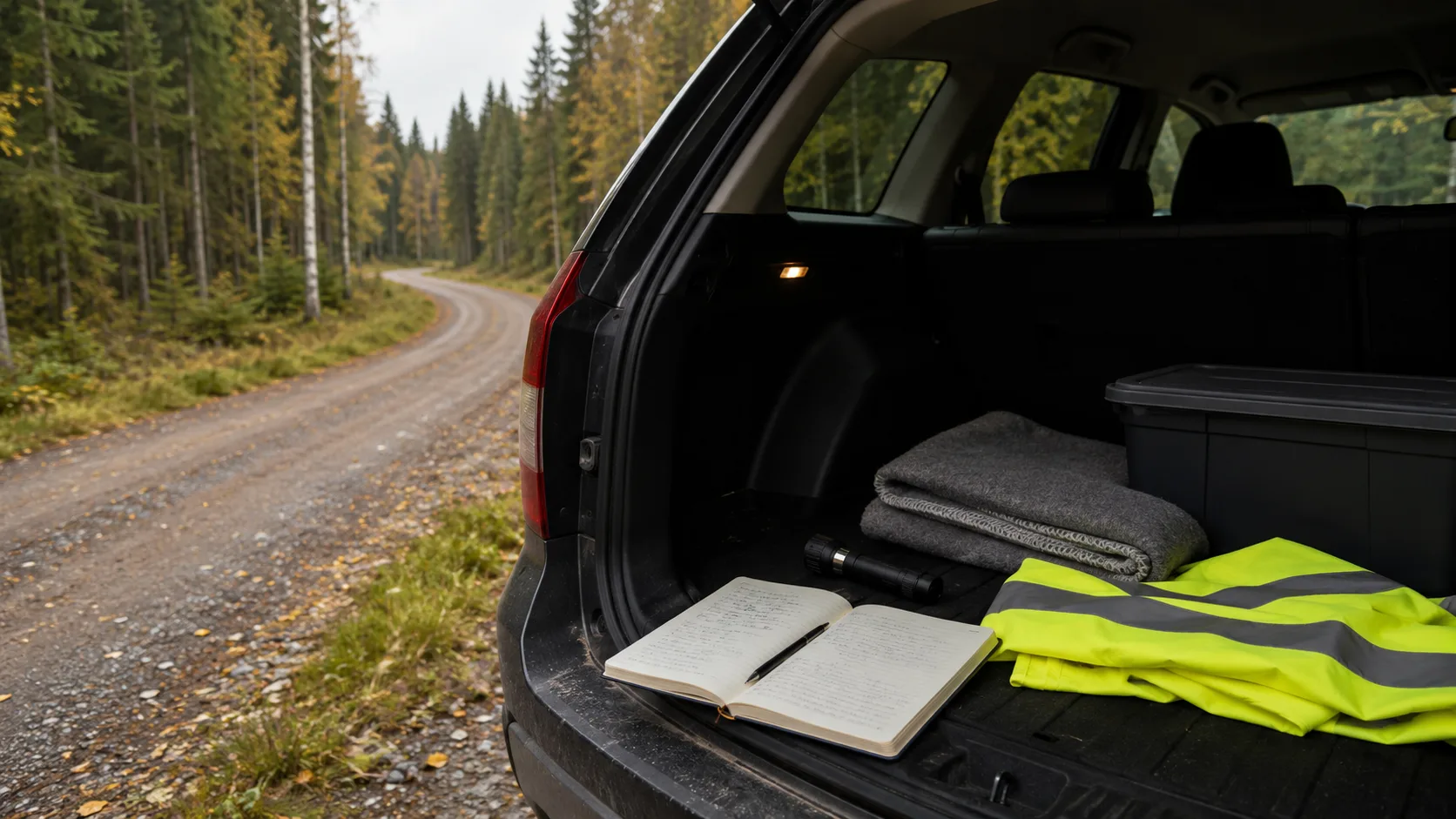
Record the road number, verified source, warning, waiting time, diversion, overnight alternative and equipment that proved inaccessible. Put the short lesson beside the private trip instead of remembering only “somewhere after Sveg went wrong”.
FARON does not replace SMHI, road authorities, police, 112, insurers or recovery services. It preserves what your next departure can improve after the real decision has been made.
Sources and checking
Safety details were checked on 13 August 2026 against the Swedish Transport Administration's breakdown guidance, SMHI warning information and the Swedish Police wildlife-collision page. Recheck current guidance.
Frequently asked questions
What should remain easy to reach during a car trip?
The warning triangle and likely interruption equipment should be accessible without unloading the vehicle; keep phone power, contacts and water readily available too.
What should I do if the car stops?
Seek the safest available position, warn traffic, leave the dangerous area when necessary and use professional recovery; call 112 when life is at risk.
How should I replan during an SMHI warning?
Read the local consequences, check current road conditions and change departure, route or stage when the original plan is no longer suitable.
What is worth recording afterwards?
Save the road, weather, delay, diversion, backup night and inaccessible equipment that can improve the next trip.