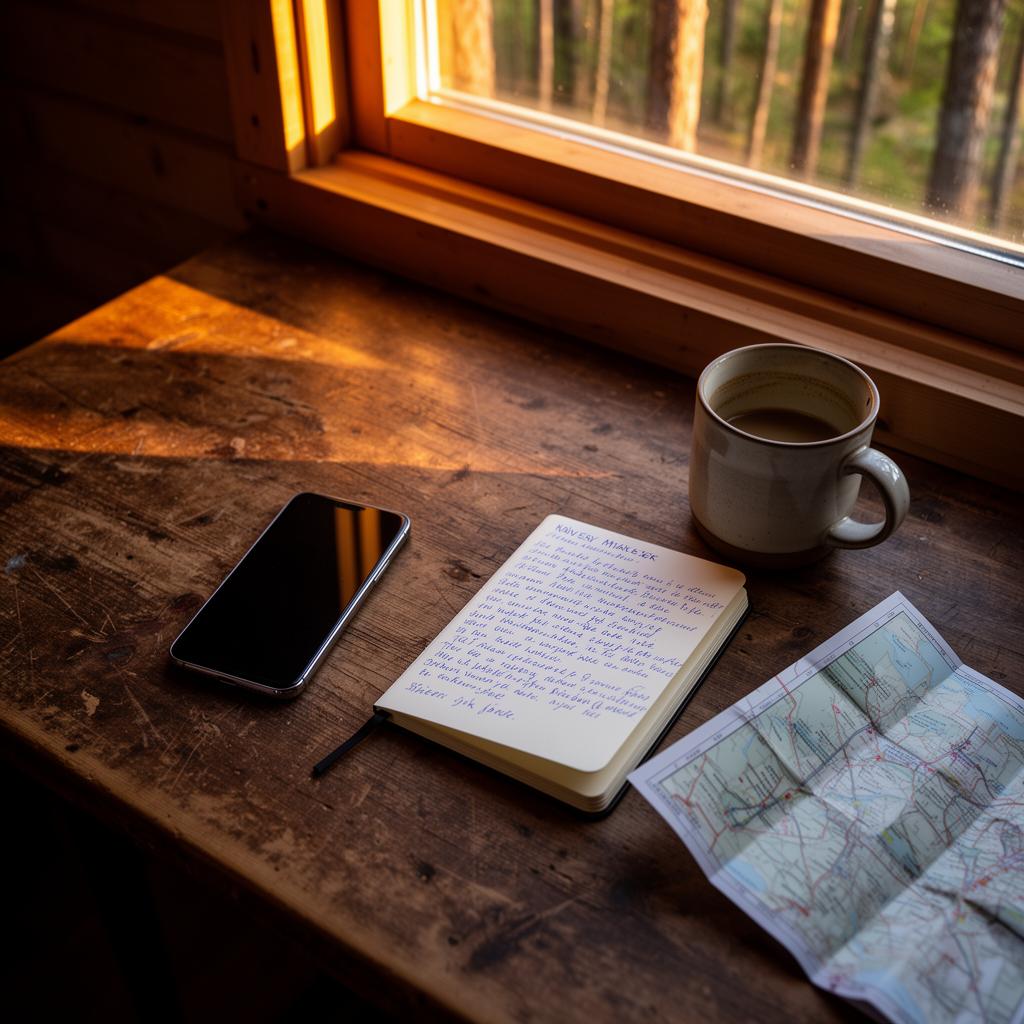
A digital travel journal is a promise to your future self: the evening beside the fjord, the turn-off north of Sundsvall and the little motorhome stop behind a bakery in Skåne will not disappear into camera rolls and forgotten notes. A good travel-journal app does not make the journey more digital. It makes the journey easier to return to.
This guide is for travellers who want to document a road trip with structure without posting it publicly. The aim is a sustainable rhythm: one overnight log, meaningful stops and a map that grows as the journey unfolds.
Define the job of a digital travel journal
Most people already document trips through photographs, saved map places and phone notes. The material exists, but it sits in three places without a timeline. A digital journal should do three things:
- Connect time and place to the memory. A sunset photograph is attractive. Add coordinates, a date and a note that mosquitoes peaked at ten, and it becomes useful for the next route.
- Separate nights from stops. The place where you slept is rarely the café or roadside puncture stop. Structured entries keep the difference clear.
- Build a long-term whole. One trip matters. A map showing every night across three years tells a larger story.
Start with the information you will want to look up later.
Choose what you want to find again
Start with one trip. Choose one place. Save the date and a photograph that helps you recognise the stop when you open it later. A note can explain what the photograph leaves out, such as why you stopped or what you would like to do next time.
Imagine a weekend in Sundsvall with 2 overnight stays and 3 sightseeing stops. If the swimming photograph and that evening’s overnight place share one entry, the photograph’s location becomes unclear. Attach it to the swimming stop and record the night where you slept. Back home, you can find both places on the map.
Private records and sharing can coexist in the same app. Choose according to what you want to save and who should see it. For a comparison of services, read the separate guide to travel-journal apps.
Build a routine that lasts for the whole trip
Travel journals tend to fail when they ask too much at the end of a tiring day. A routine that lasts can be extremely small:
- On arrival: log the night with position, date and one line explaining the choice.
- When something meaningful happens: log a stop — the bakery, the worthwhile viewpoint or the workshop that repaired a bicycle wheel.
- Once a week: over morning coffee, add photographs or a few extra lines to the nights that deserve them.
Documentation then sits at the edge of the journey instead of competing with it.
Before filling an entire trip, reopen your first entry. Check that you can find the place, date and photograph together. If the note needs more context, add one sentence now and use the same simple structure for the next stop.
Make the map the centre
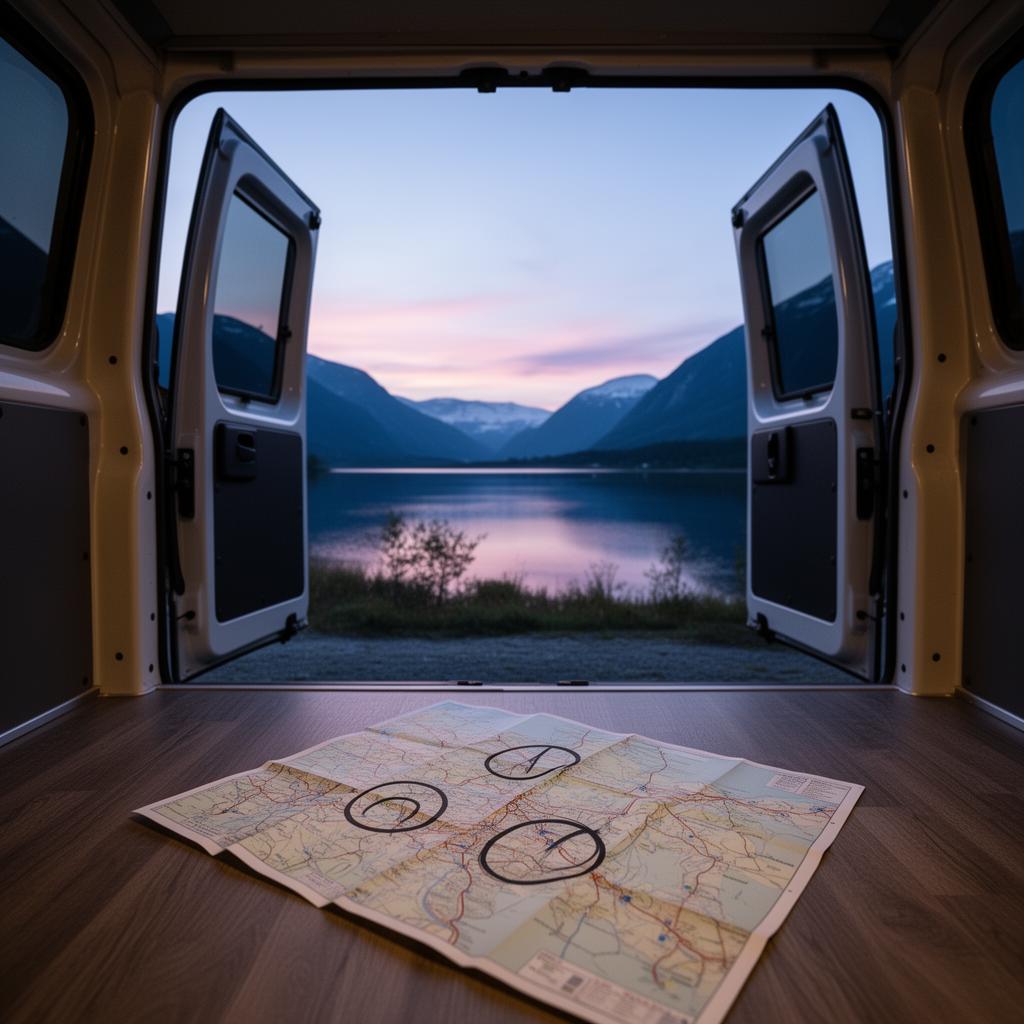
A journal without a map records days. A journal with a map becomes an archive. When nights and stops accumulate over years, you see patterns in your own travel, rediscover a half-remembered overnight place and show a friend which Lofoten turn-offs were worth taking.
Every night and stop you save in FARON appears on your personal trip map. Automatically generated statistics add nights, distance, countries and northernmost or southernmost points, keeping the feeling and the numbers together.
Keep it private by default
A digital travel journal should belong to you. In a private archive, journeys stay private unless you deliberately share a specific one. This lets you write honestly: an overrated campsite, a noisy neighbour or the lonely evening at North Cape. Such details rarely enter a public feed, yet can become the lines you value most five years later.
Save what disappears first
After a driving day, the name, date and photograph of the overnight place can be hardest to reconstruct. Saving them while fresh removes the guesswork next time.
In FARON, log your first night with a place, date and personal note. The longer digital travel journal guide explains the format, while map-based journal versus notes compares the two approaches.
If finding the words is the difficult part, try these road trip journal prompts and short examples, from a daytime stop to an entry written after returning home.
FAQ
How is a travel-journal app different from a social feed?
A travel-journal app collects the places, photographs and notes from a trip, while a social feed presents posts to an audience. One service can offer both, so check how private entries and sharing work.
Do I need to write every day?
No. Record where you slept and the stops where something meaningful happened. You can add detail later; the position and date are the difficult parts to reconstruct.
Can I use a digital travel journal with poor mobile coverage?
FARON's night logging is designed to cope with poor coverage and synchronise once the connection returns, so a remote night can still enter the archive.
What happens to my journeys if I stop using the app?
You own your material. You can export the archive as CSV rather than leaving it locked in the service; see your data and export options.