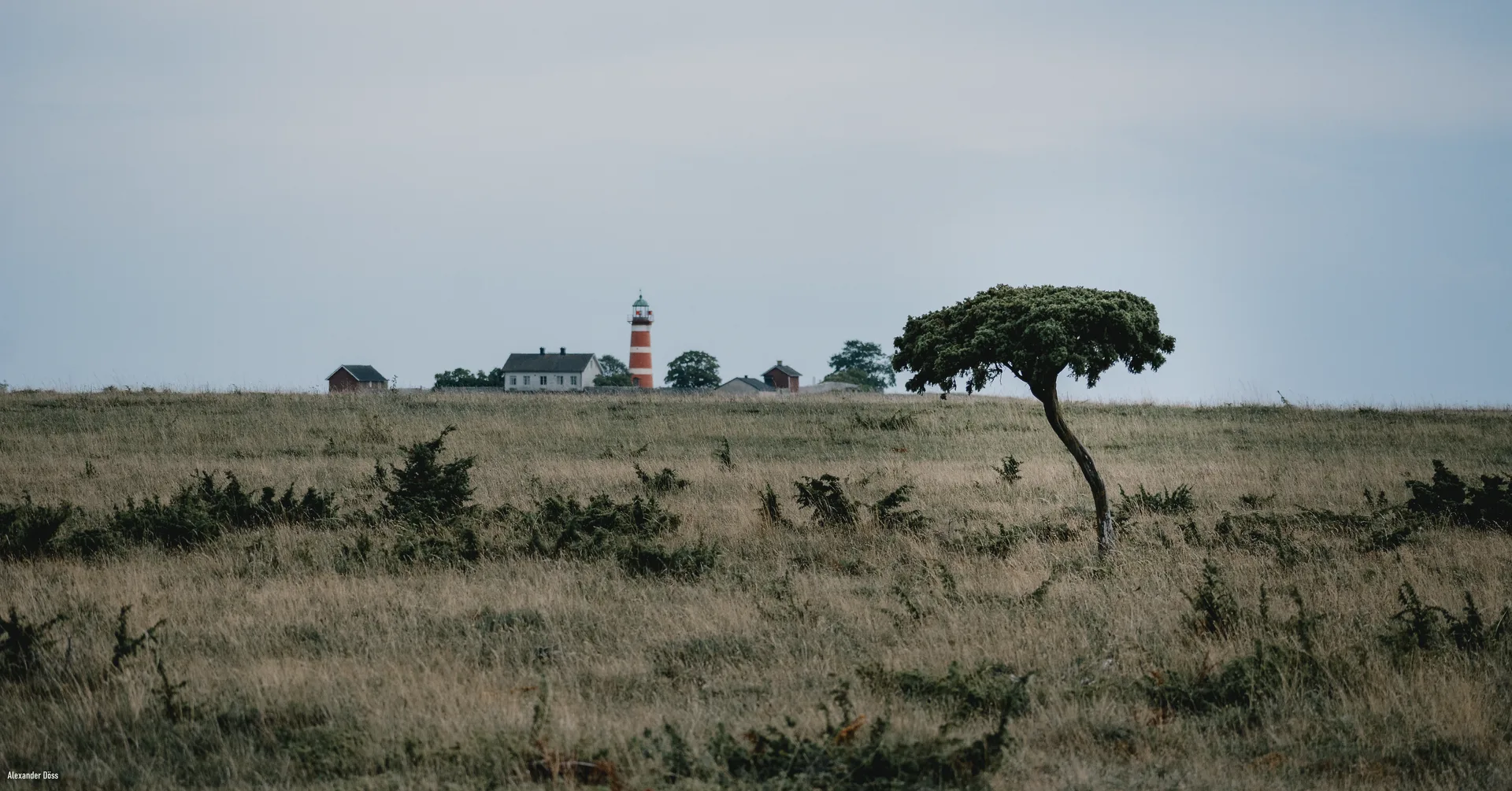
A travel journal entry can be shorter than the caption you were planning to write. At Farnavik on Fårö, my note says “Ovanligt kallt i vattnet!” — “Unusually cold in the water!” That is a line I want to keep, because the beach photograph cannot tell me that part.
Start with the detail outside the photograph
During my Gotland trip on 20–27 July 2026, I recorded both larger destinations and small stops along the way. Farnavik appears on 24 July, with a five-out-of-five rating despite my comment about the water. Fårö is the island just north of Gotland in Sweden; the place, date and short note distinguish that visit from other beach stops.
For road trip journal prompts, I would start with what I remember that the photograph leaves out. It need not be the highlight of the day. Perhaps lunch happened later than planned, a short visit became a long one, or something was funny for a reason nobody else can see.
Here is an invented example. You photograph a harbour and begin with “Nice harbour”. You might instead write “Stayed until the coffee went cold”. The second version adds an event. Use it only if that happened, though; a plain description is more useful than a polished story that is not true.
One line can be enough. A place name. The photograph and date can carry the rest, leaving you free to write the part that would otherwise be missing.
Write about the stop, not the entire day
A daytime stop often sits in the middle of something else. You are heading towards a town, notice a sign and turn off. An entry about that visit does not have to begin with breakfast or continue until you arrive at your accommodation.
I would choose the detail that made the stop worth recording. An example from an imagined drive might read: “Stopped to stretch our legs. Found a little bakery and had lunch here instead.” That explains why the pause grew longer without accounting for every hour of the day.
Compare it with “We drove on, stopped for food and then continued”. The sequence is clear, but there is little to distinguish this break from the next one. The word “instead” adds something useful: it shows that the plan changed. A small word can give a short entry its direction.
If there is a name you want to remember, write it down. “The little place beside the square” may become difficult to identify after several trips. If you do not have the name, you need not interrupt an enjoyable break to complete the record. A photograph or a rough note can give you somewhere to start later.
Let an overnight entry describe the stay
An overnight stay and a daytime visit can happen in the same place yet leave you with different things to write. On a brief stop, the view might be the entire reason you pulled over. After a night there, it might be the following morning that you want to remember.
A constructed example could read: “Had breakfast outside before packing up. Glad we did not need to drive straight away.” It records what the time there gave you. You do not have to assess every part of the accommodation for the entry to be useful.
When there is a practical detail to save, use the words you will recognise later. “Get the waterproof jacket out before bed next time” does a different job from “Lovely evening”. Both can belong in the entry. One is a reminder to yourself; the other describes how you experienced the evening.
I would avoid treating every overnight stay as a review. It is easy to begin writing for an imaginary audience and lose the detail you wanted for yourself. An unfinished sentence or a phrase that means something only to you can be exactly right in a personal journal.
Keep the reason a plan changed
The unexpected part need not be dramatic. Perhaps a walk was shorter than planned, or you decided to skip a stop. The reason may be more useful to record than every turn in the road that preceded the decision.
Imagine you have two days around Siljan, a lake in Dalarna in central Sweden, and are considering one more visit after lunch. Everyone would rather stay where they are. Your entry could be: “Skipped the last stop and gave the afternoon to the lake.” This is an imagined situation, but it shows how a place you did not visit can still tell part of the story.
That line might help when the same discussion comes up before another trip. It does not establish that shorter itineraries are always better. It records why this particular afternoon took a different shape.
A drawback can stay in the story too. “Wanted to linger, but had already booked the next night” is another possible entry. There is no need to turn every note into advice or end it with a lesson. Sometimes that was simply how the day worked out.
Choose words you would actually use
The exclamation mark in the Farnavik note can stay. It belongs to the voice of that entry, including in translation. I would be careful about polishing it away simply to make the words feel more like formal writing.
If you usually write briefly, keep that approach. If you want to describe a conversation or a whole afternoon, give it room. Entries can differ in length. Two sentences for one visit and several paragraphs for another do not need to be made equal.
Try reading the line aloud. Replace words you would not use when talking to someone who was there. The ordinary word you first had in mind may be clearer. “We stayed a little longer” may say everything you need where a grander description only gets in the way.
You can also write about the difference between expectation and experience. An invented example is “Thought we would move on straight away, but sat on the jetty instead”. It contains a small change without asking you to explain what the afternoon meant in the wider story of your life.
Write afterwards without inventing the missing parts
If you are already home, choose one photograph that you want to say something about. Begin with that visit, rather than trying to reconstruct the entire holiday. Write what you remember before attempting to put everything else in order.
“We had lunch here” and “I think this was where we had lunch” are different statements. Keep the uncertainty when it exists. A missing detail does not make an entry less personal, and you will not later have to wonder whether it came from memory or a guess.
Photograph dates and older notes can help, but they need not settle the question if they appear wrong. When a detail cannot be resolved, I would leave it open. In the text, “one of our days on Fårö” is more honest than an exact date you cannot establish.

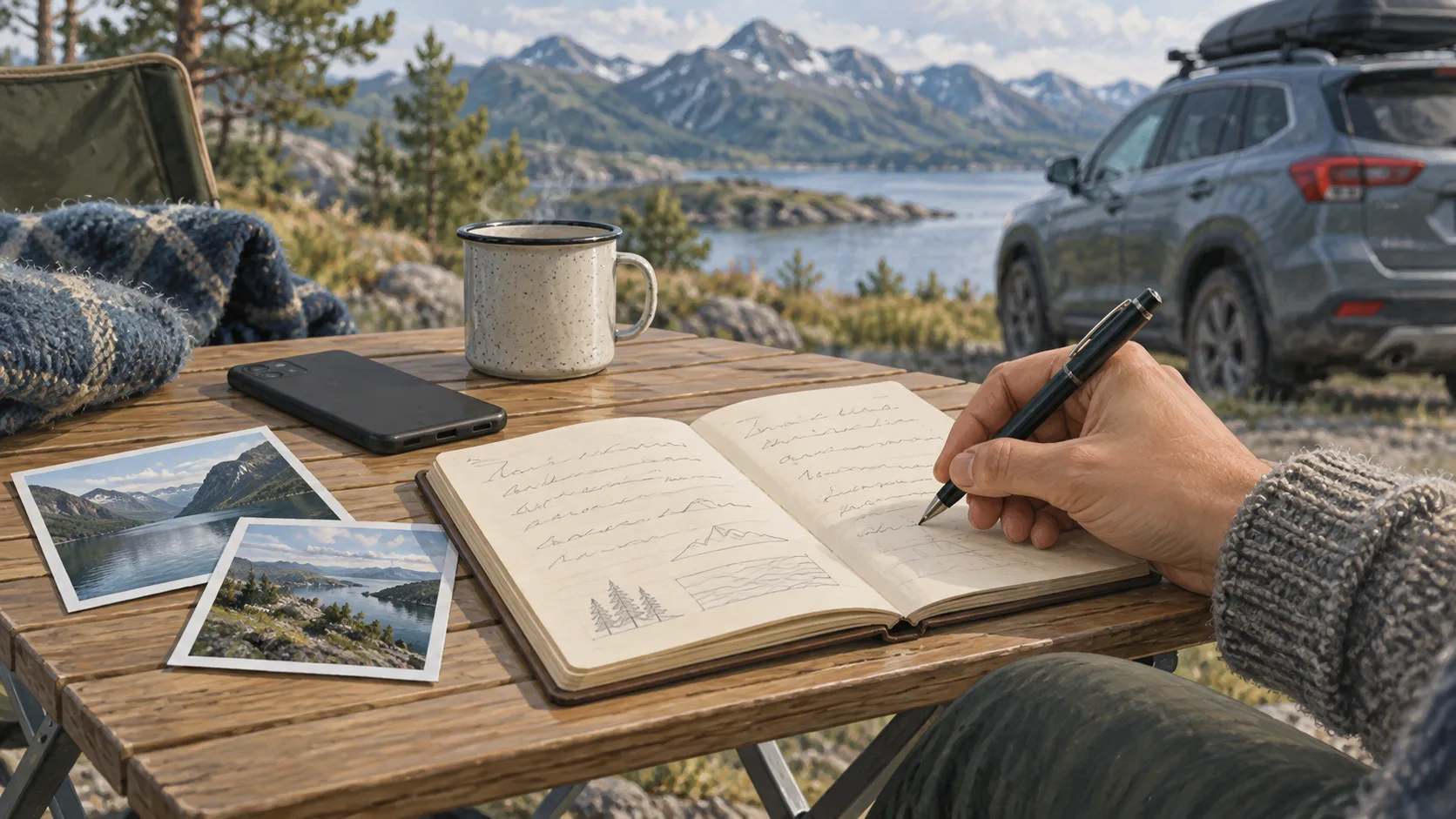
Illustration: bringing photographs and notes together after a trip.
A later entry can include what you think now. Make the timing clear: “Seeing this photograph at home makes me want to return” is a thought after the trip. It does not need to become something you felt while standing there.
Give the note a visit to belong to
A note is easier to understand later when it sits beside the right visit. In my travel notes from Gotland, the Farnavik line belongs to a named stop, while other parts of the trip have longer descriptions. There is no requirement to document every visit equally.
To try this with an overnight stay, I would begin with one short note and two photographs worth keeping. In FARON, you can save an overnight stay with your own notes, choose its place and date, and add photographs. The stay then appears on the map, giving you a way back to the words through the place.
You decide what to save. The record is made from your own overnight stays and stops, rather than your journey being tracked in the background. For the wider structure, read how to organise overnight stays and stops in a digital journal.
You can log your first overnight stay using what you already have. Begin with a line you would like to find again. The next entry can be a different length.
FAQ
What should I write in a road trip journal?
Write a detail you want to remember from the visit: something that happened, surprised you or changed the plan. The place and date give that line its context.
How short can a travel journal entry be?
A sentence or a few words can be enough. Write more when you have more to tell, rather than making every entry the same length.
Can I write my travel journal after the trip?
Yes. Start with one visit and the photographs or notes you still have, marking uncertain details and separating what you remember from what you think now.
How do I connect a note to the right stop or overnight stay?
Keep it with the place and date of that visit. In FARON, you can add the note to a stop or overnight stay and attach photographs from the same visit.