Närsholmen. All photographs in this article were taken by me, Alexander Döss.
I have returned to Gotland many times. My latest trip was on 20–27 July 2026, with a rooftop tent, a camera and plenty of detours. Looking through my notes, I find Hoburgen, Närsholmen and Fårö alongside flea markets, a sock factory and one rather brief observation: “Unusually cold in the water!”
That is how I like to explore this Swedish island in the Baltic Sea. A few main destinations. Plenty of small stops. These are ten places and areas to choose from, combining my photographs and travel notes with practical suggestions for your own visit.
1. Visby – leave the car and walk
We visited the city wall on 26 July, towards the end of our trip. I like exploring Visby on foot with a camera: a tower above the roofs, a narrow lane, limestone walls in a ruined church.
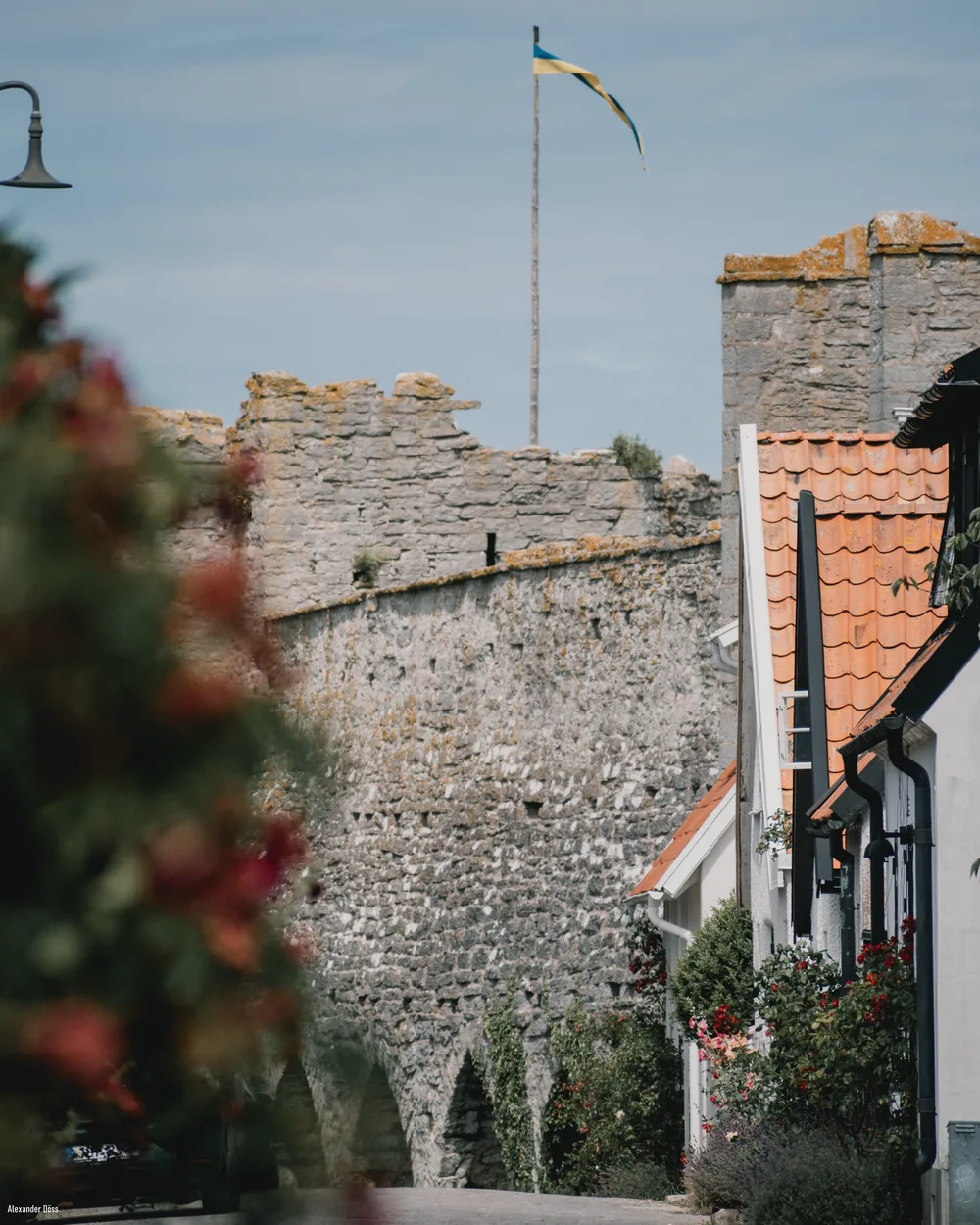
Visby’s city wall above the rooftops. Photo: Alexander Döss.
For a first visit, I would start at the wall and then walk into the old town, allowing time for lunch or coffee. Fornsalen at Gotland Museum is an option for learning about the island’s history, including on a day when rain makes a long coastal walk less appealing.
2. Lummelundagrottan – plan around a guided cave visit
Lummelundagrottan, north of Visby, offers a change from the coastal stops. Visitors enter the cave with a guide. I would build this outing around a booked tour, then choose other stops to fit the time around it.
Check the different guided visits and current opening schedule before travelling. A standard tour and a longer cave excursion are different experiences; confirm the language and suitability for your group when booking.
3. Fårö – sea stacks, cold water and a flea market
Fårö had plenty of space in our trip. On 24 July, my log included Farnavik, Nordbergs Loppis, Holmudden, Fårö Krukmakeri, Langhammars, Digerhuvud and Gamla hamn. It is easy to see why I would allow a full day here.
At Farnavik, I wrote “Unusually cold in the water!” and still gave the stop five out of five. That short note tells me more about my visit than a flawless beach photograph would.
If limestone sea stacks are your main interest, I would make Langhammars the main destination, then see how much else fits. The Swedish word for these freestanding rock formations is raukar; you will see it on signs and maps.
Fårö is a separate island just north of Gotland. The local ferry from Fårösund is free and takes about six minutes, plus any queueing time. This is a different crossing from the ferry between mainland Sweden and Visby. I would save southern Gotland for another day.
4. Högklint – a coastal view close to Visby
Högklint was one of our first stops after arriving on the island. The viewpoint appears in my notes for 21 July, before we continued south. It is a useful way to get out to the coast without starting with a long drive from Visby.
Högklint rises to around 48 metres above the sea. Choose between a short visit to the view and a longer walk through the reserve. Keep away from the cliff edge, especially with children or a dog.
5. Furilden – the limestone industry beside the sea
I have included Furilden for a different side of Gotland. My photographs show the crane on the pier and wagons in the quarry. These traces of the limestone industry offer something quite different from the city wall and sea stacks.
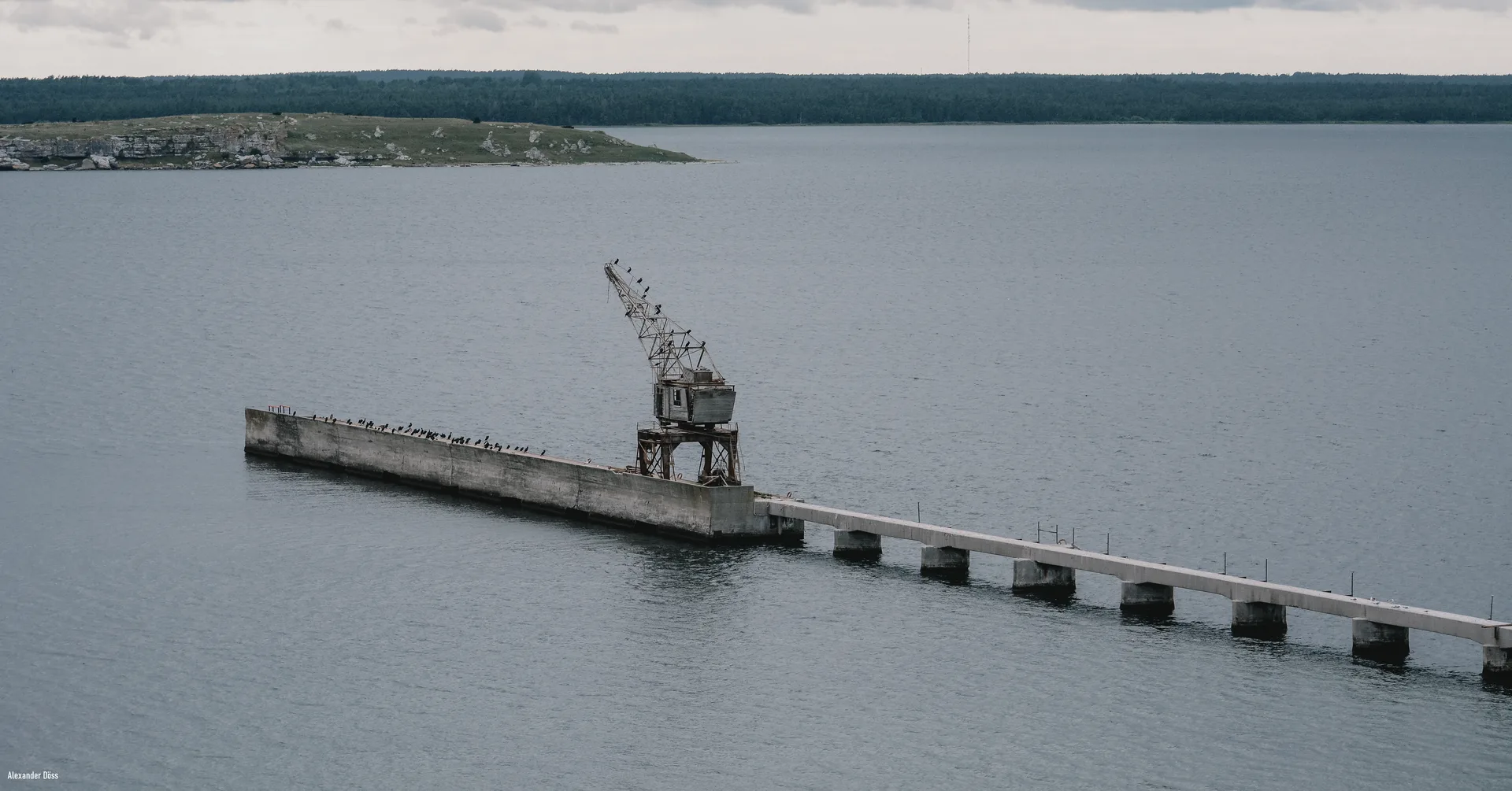
The pier and crane on Furilden. Photo: Alexander Döss.
Furilden appears in our travel log on 23 July. The island lies off Gotland’s northeast coast and is connected by road. The official Gotland page about Furilden describes its former limestone industry and coastal walks. You may also see the name written as Furillen.
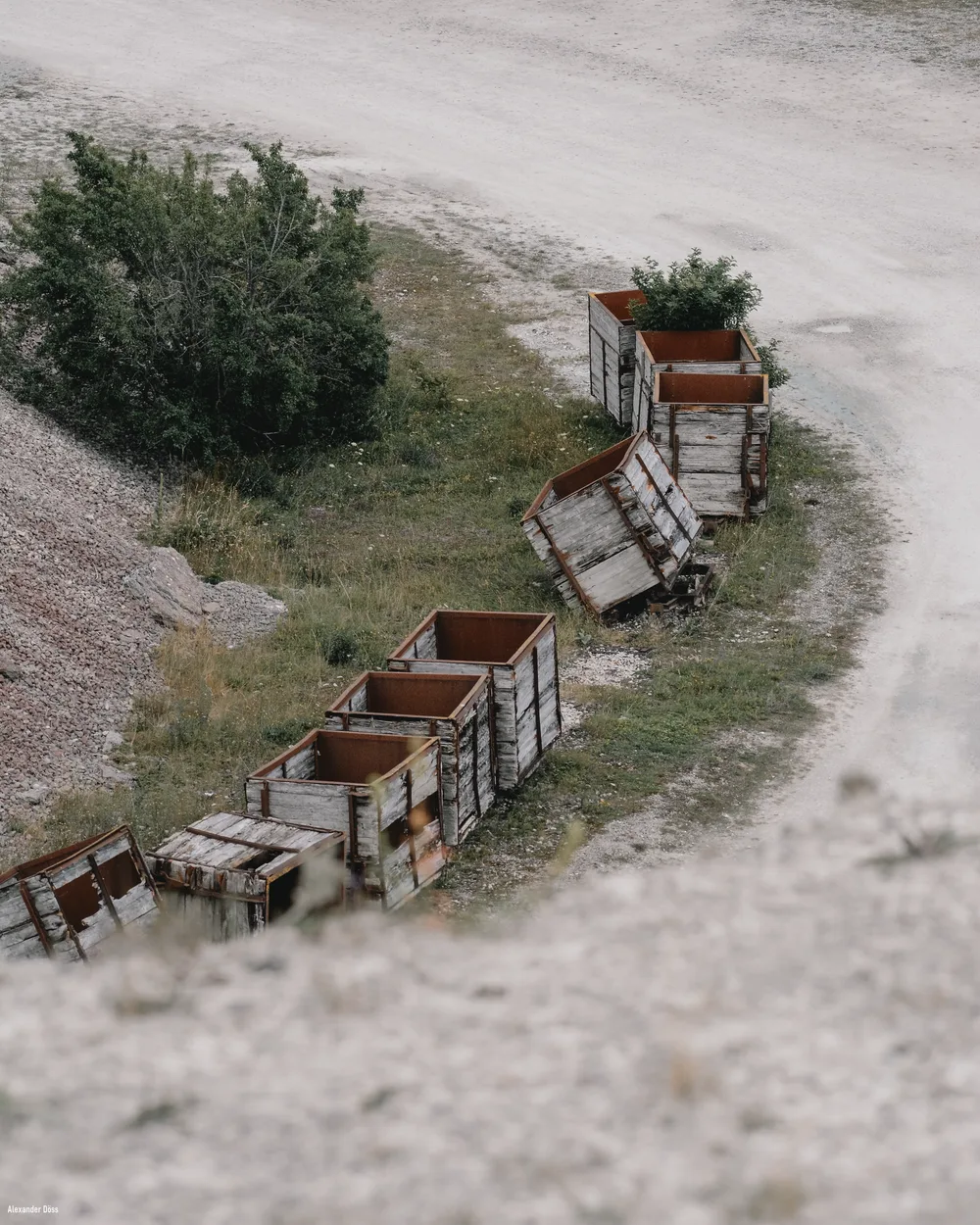
Wagons in the quarry on Furilden. Photo: Alexander Döss.
6. Ljugarn and Folhammar – spend a day on the east coast
Ardre strand appears among our stops on 23 July. For a day in this part of the island, I would consider Ljugarn and Folhammar together: a village to start from and a sea-stack field to explore on foot.
The rock formations at Folhammar extend over roughly 500 metres, with stacks reaching about six metres high. This is an option for seeing raukar during an east-coast day without also crossing to Fårö.
7. Närsholmen – the lighthouse and open grassland
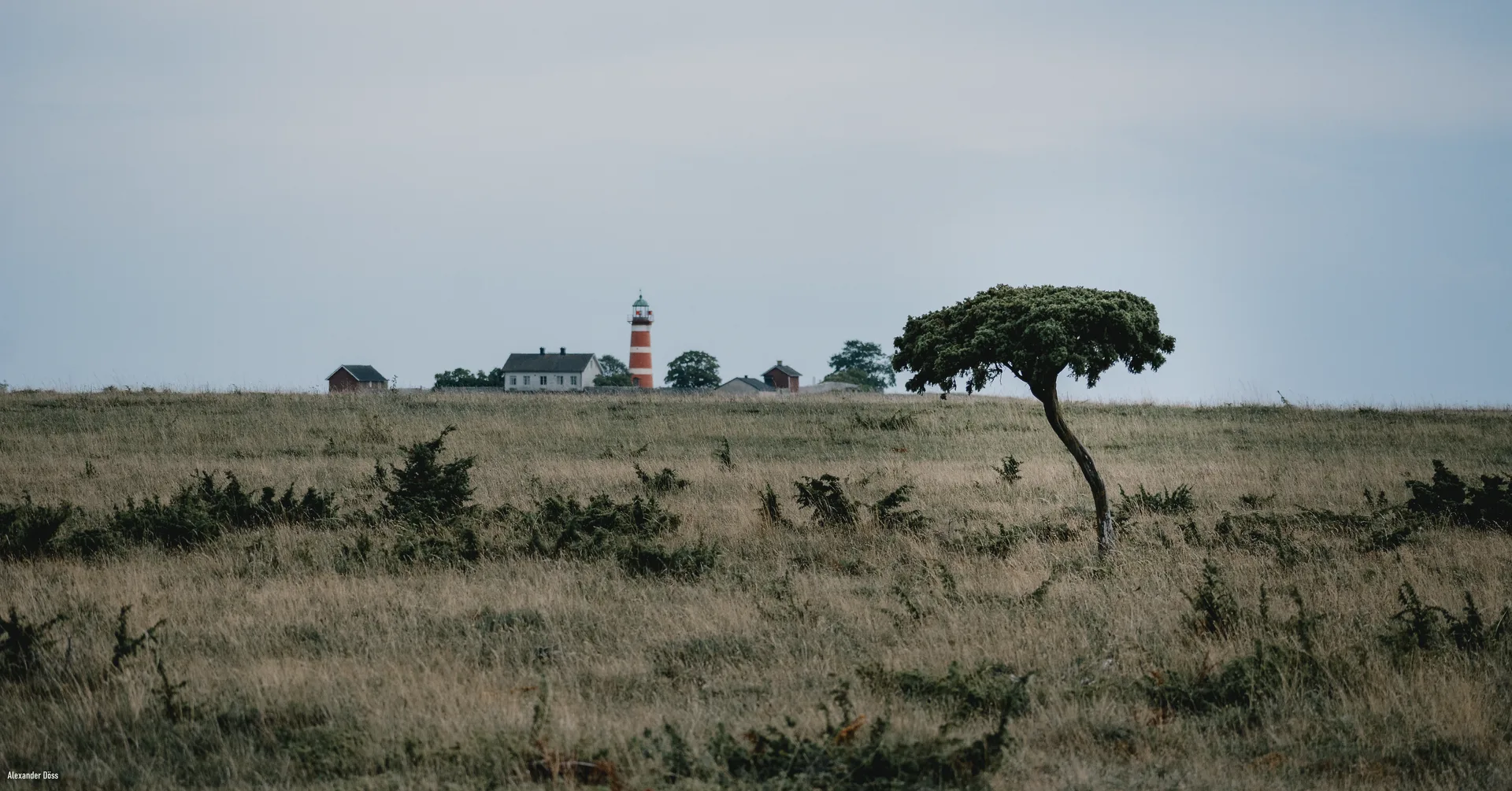
Närsholmen lighthouse was one of our stops on 22 July. In my photograph at the top of this article, the red-and-white tower sits in the distance, beyond open grassland and a solitary tree. I think that view explains its place on this list.
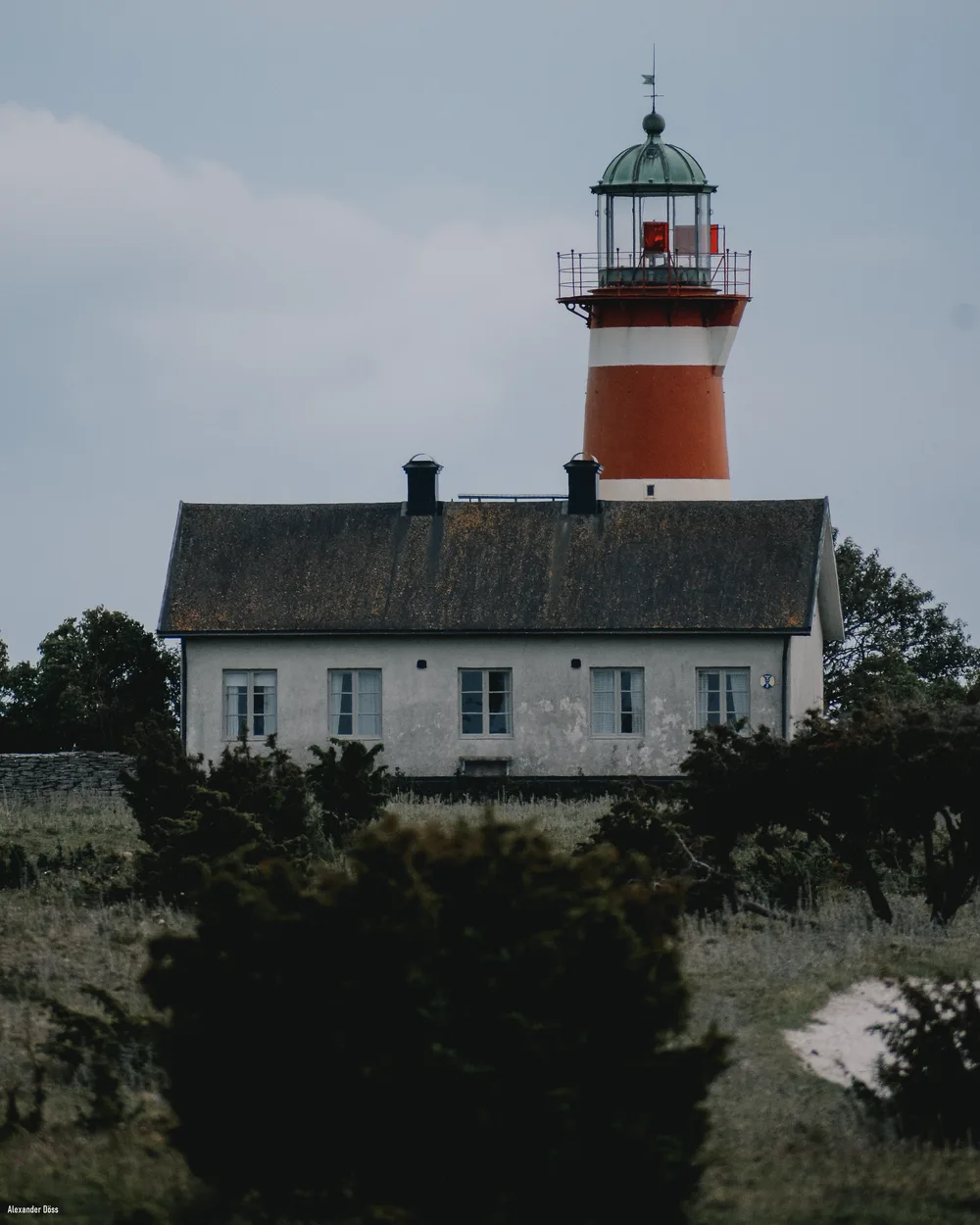
A closer view of Närsholmen lighthouse. Photo: Alexander Döss.
Allow time for a walk and follow the reserve’s signs and visitor guidance. Some areas close during the bird-nesting season. Check the map for your visit date and keep vehicles on permitted roads and parking areas.
8. Flea markets around Burs and Stånga
I think Gotland’s flea markets deserve a place alongside its better-known sights. Look out for the word loppis: it means a flea market or second-hand sale, sometimes in a barn rather than a conventional shop.
On 25 July, I saved two consecutive stops as “Loppis Stånga Tällungs 345” and “Loppis ladan”. The second stop is in the Burs area; my notes only say “Loppis ladan”, meaning “the flea-market barn”.
Nordbergs Loppis on Fårö appears in the previous day’s log too. I would give these stops time in the plan, just as I would a beach or museum. Confirm opening days before making a special journey and confirm payment options with the seller. For options in town, the official Gotland website has a guide to second-hand shops and antiques in Visby.
9. Hoburgen – down to Gotland’s southern tip
We reached Hoburgen on 21 July and then continued to Hoburg lighthouse. My photograph of Hoburgsgubben comes from here: the limestone makes a face-like profile that you can look for when standing beside the rock.
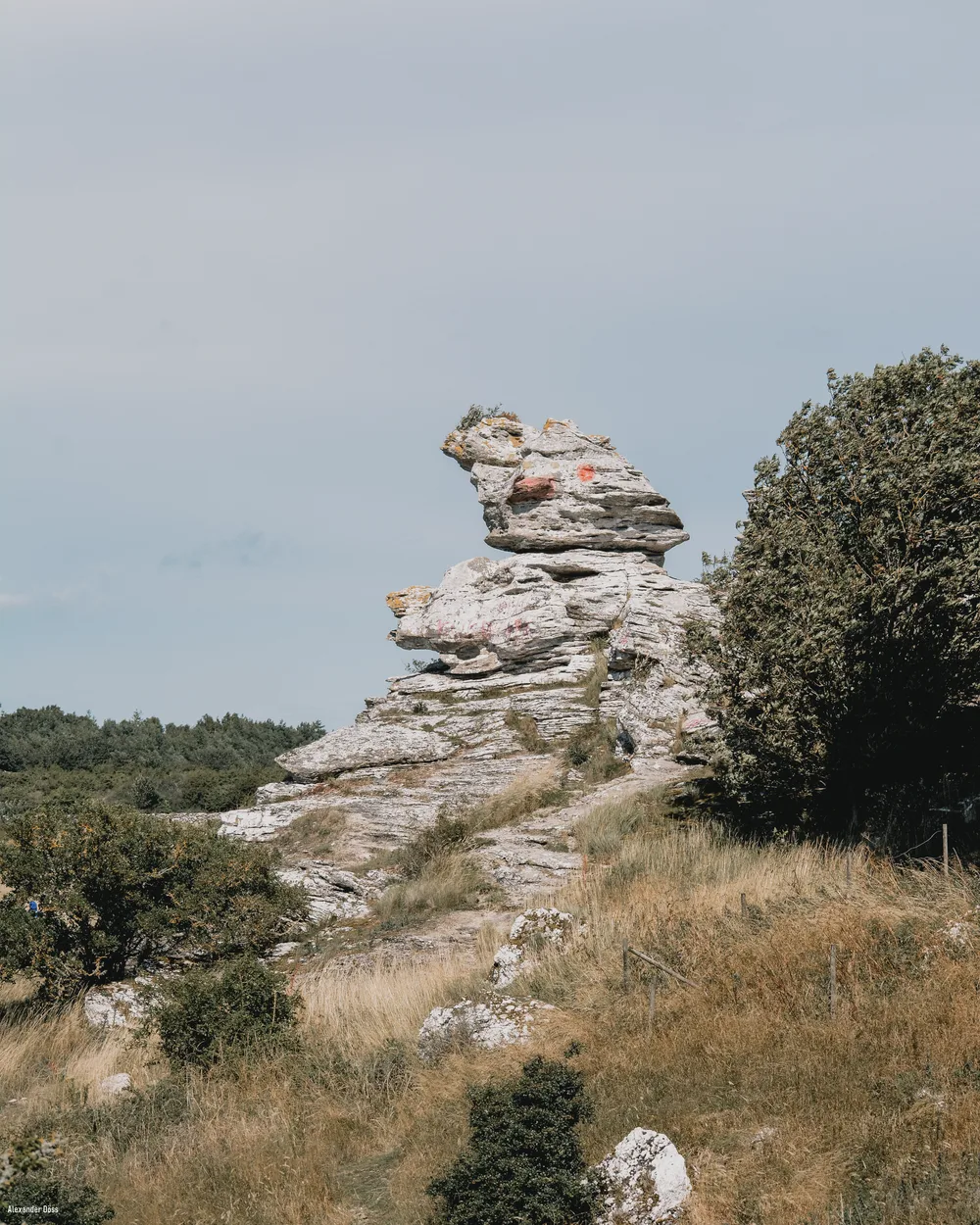
Hoburgsgubben at Hoburgen. Photo: Alexander Döss.
Hoburgen and Husrygg lie at the southern tip of Gotland. I would allow a separate day for this part of the island and choose other stops around Burgsvik to suit your interests. Hammarshage hällar and Faludden fishing village are also in our log, from the following day.
10. Ekstakusten – the coast facing the Karlsö islands
Ekstakusten is my suggestion for a day along Gotland’s western side. The stretch between Djupvik and Hammarudden looks out towards Stora Karlsö and Lilla Karlsö. I would combine it with other stops south of Visby.
Read the reserve’s visitor information and choose where to begin your walk. The fishing villages of Djupvik and Kronvall give you two points to look for on the map; you need not walk the entire coastline to enjoy time beside the sea.
How I would choose between these stops
Our journey covered seven nights from leaving home to returning. We saw a lot and drove a fair amount too. For a first visit, I would start with Visby, a day on Fårö and either southern or eastern Gotland, then add stops according to the weather and your interests.
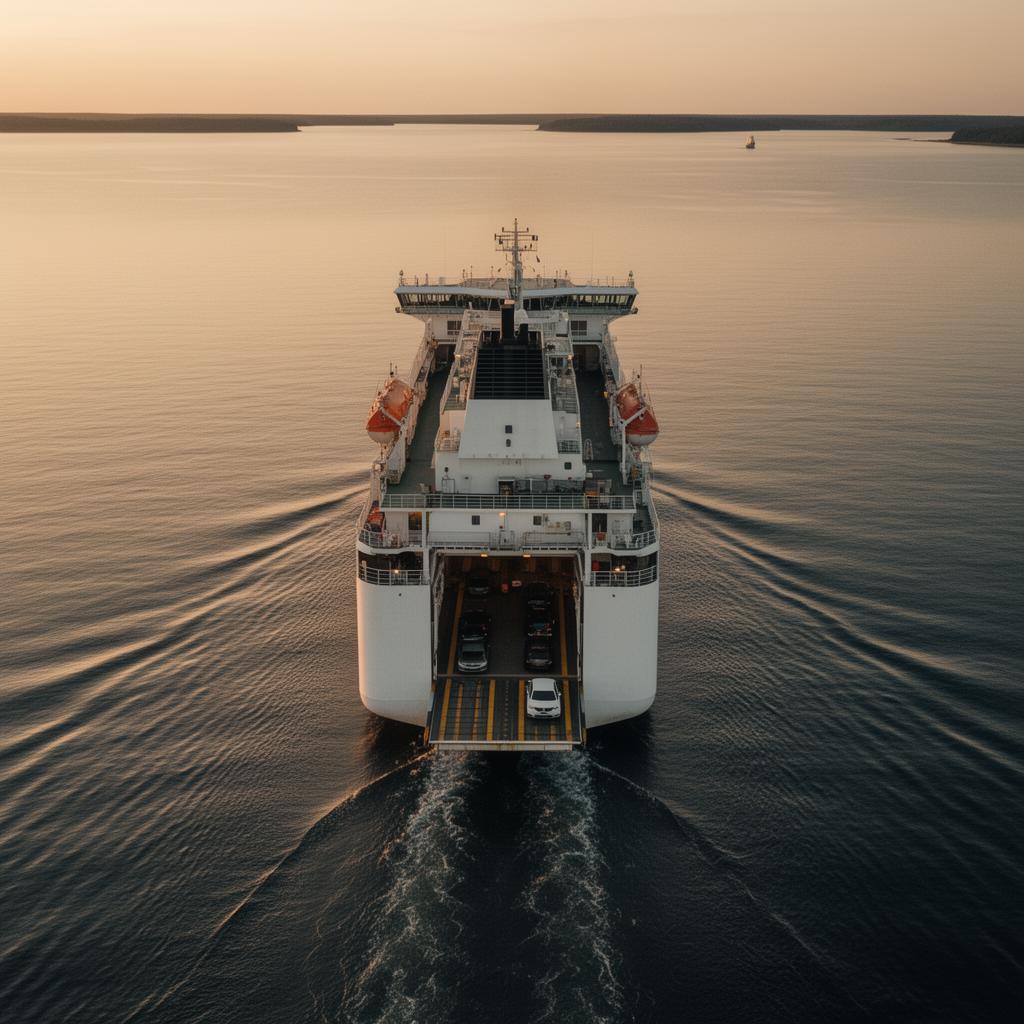
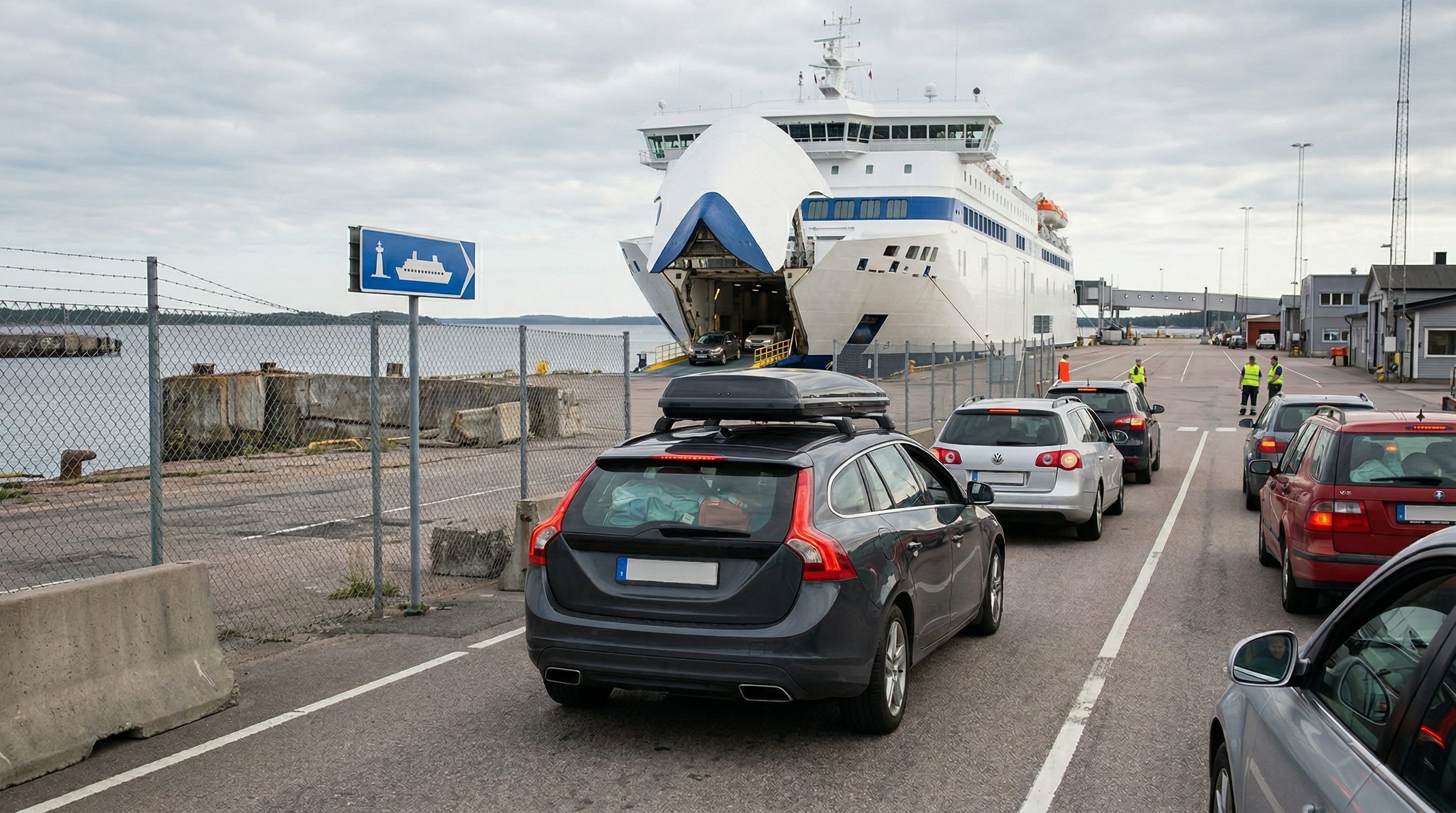
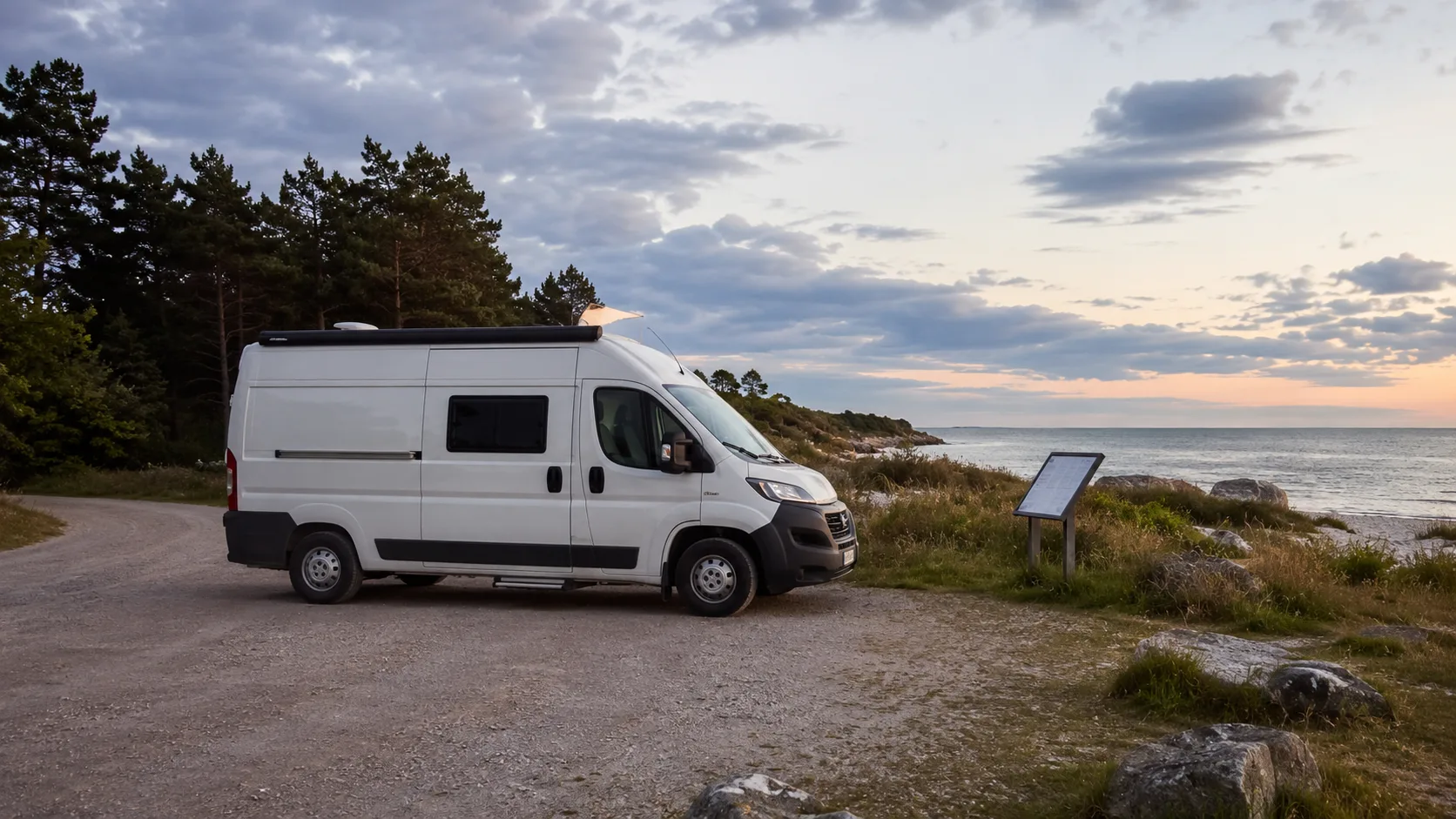
Allow separate time for the mainland ferry journey. The guide to reaching Gotland by ferry with a car covers the travel day, while the ferry cost guide deals with prices. If you plan to sleep outdoors, read about wild camping on Gotland; inclusion in this sightseeing list does not make a location a recommended overnight spot.
After the trip, I want to connect the photographs with the right stops. Närsholmen lighthouse is recognisable; a flea market’s name can be harder to recall. In FARON, I keep the trip’s stops and notes in a timeline and can add photographs to the places. Read about keeping your own travel diary or collect ideas for your next trip.
FAQ
How many days would you spend on Gotland?
I would allow roughly a week to explore several parts of the island. For a weekend, I would choose Visby and one nearby outing.
Can you visit Fårö and southern Gotland in one day?
You can drive between them, but I would visit them on separate days. Ferry queues, walks and smaller stops also need time.
Which flea markets did you visit on Gotland?
My log includes Nordbergs Loppis on Fårö, “Loppis Stånga Tällungs 345” and “Loppis ladan” in the Burs area. Confirm current names and opening days before visiting.
What can you do on Gotland when it rains?
Fornsalen in Visby or a booked visit to Lummelundagrottan are two options. Check opening hours, tour availability and language for your chosen day.