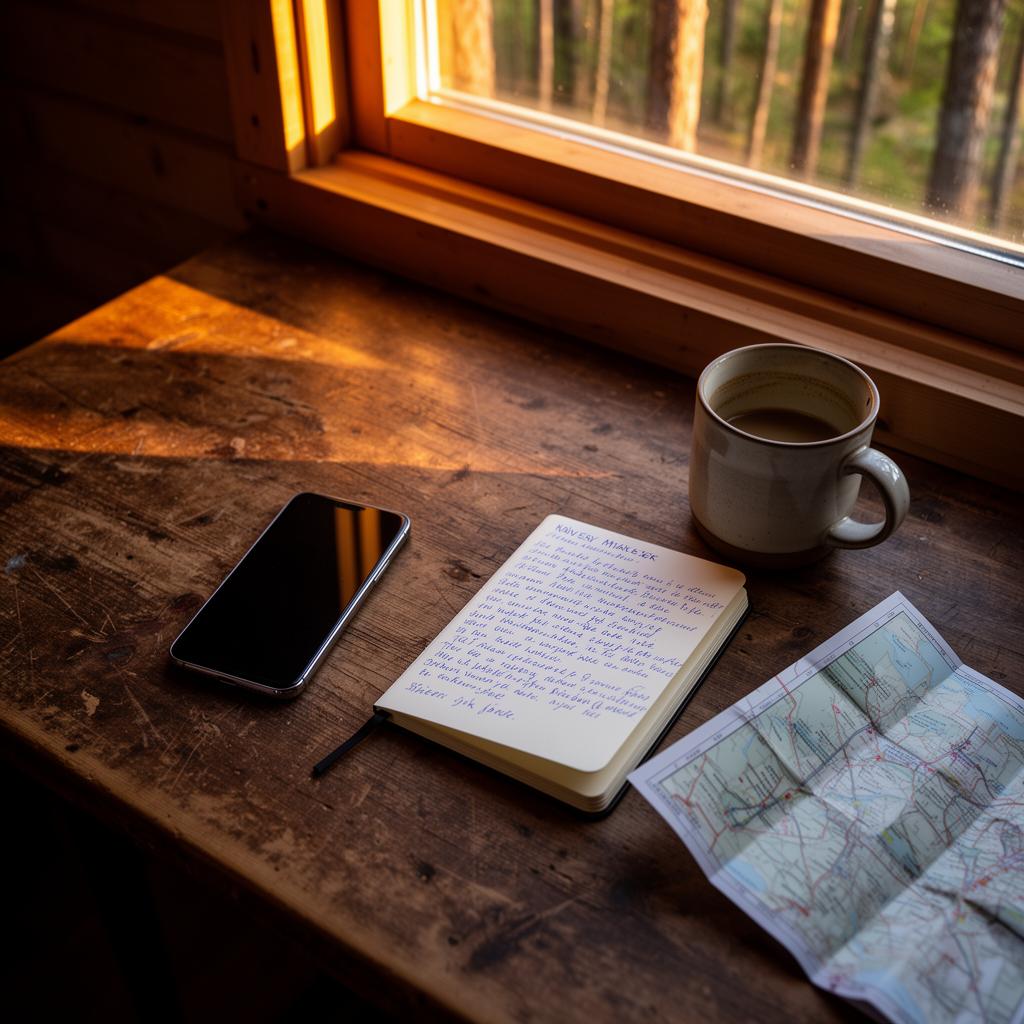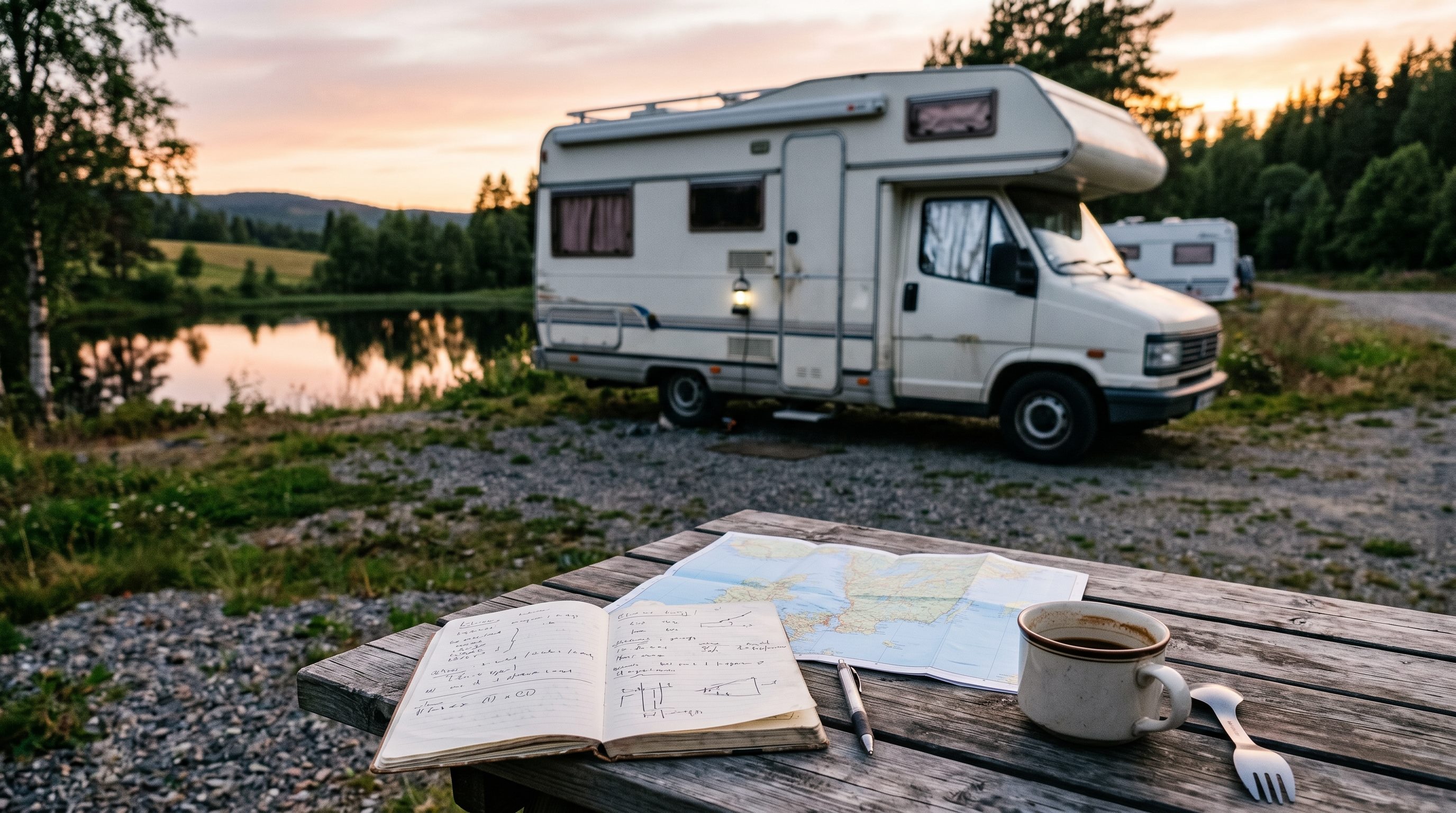
The motorhome is back in winter storage. Try to reconstruct one Tuesday in July: the small riverside stop, fresh bread in the morning and an entrance so narrow that you promised not to return with a larger vehicle. Was that one place or three?
A motorhome trip produces more impressions than memory can file. Campsites, stopovers, service detours and unplanned sights merge into a long sequence of roads and gravel pitches unless each useful detail is attached to its place.
Catch the nights before they merge
A motorhome night is more than a map pin. Level ground, afternoon shade, road noise and the actual condition of the facilities decide whether a place worked. Those details feel obvious at breakfast and disappear first after ten more nights.
The journal does not need sunset prose. It needs the context that prevents a repeated mistake and identifies the plain-looking place worth revisiting: “flat without ramps”, “quiet after 22:00” or “service building did not justify the price”.
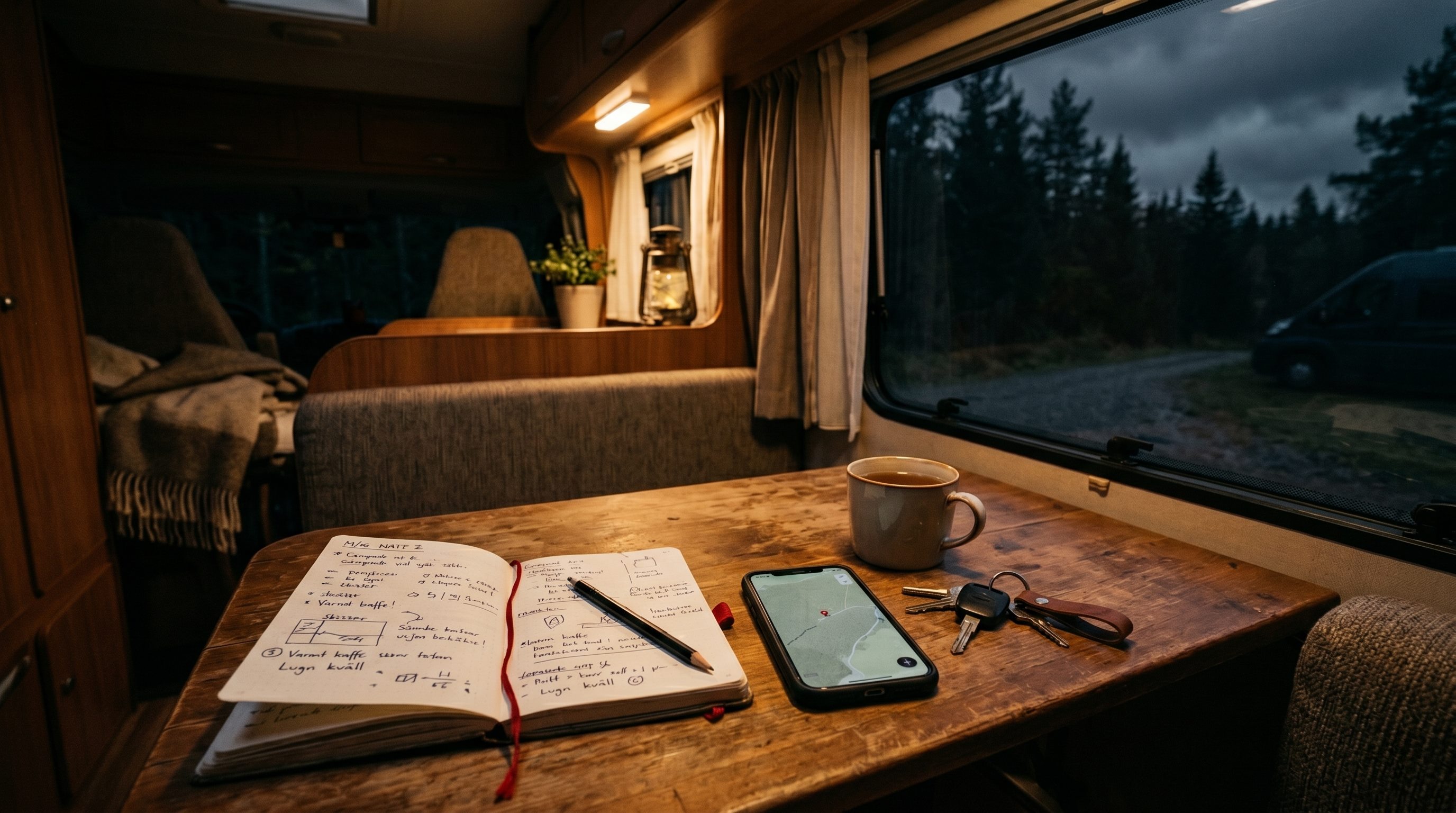
Keep photographs, positions and notes together
Most motorhome travellers already document the trip. Photographs stay in the camera roll, places become favourites in a navigation app and practical details land in a message or a note. Each method works until you need to know which photograph belongs to which warning.
A picture may show the stopover but not the distant electricity point. A saved pin may survive without the reason you wanted to return. A useful journal connects the image, exact place and your own comment.
Record functional places as carefully as scenic ones
An asphalt area behind a sports hall may have produced the best night of the week: quiet, a good dog walk and an unexpectedly good pizzeria nearby. It will never look like a guidebook highlight, yet it is valuable in a private archive.
The reverse matters too. A beautiful seaside campsite may have had late party noise and poorly arranged pitches. Without the practical note, your own photograph can persuade you to repeat the booking. “Noisy at night”, “easy waste disposal” and “bring a long power cable” separate the visual memory from the experience you actually had.
Use the map as the centre of the journal
Motorhome travellers think geographically: along the Moselle, north of Bohuslän or between two ferry crossings. A list removes that context. A map shows how the route developed, where the spontaneous detour happened and which place kept you for three nights instead of one.
Seeing the overnight point often brings back details that a date cannot. The route becomes the frame for the photographs and notes, while every season remains connected to the next one.
Lower the threshold for every entry
Long reflective entries sound appealing before the trip. After a long drive, awkward check-in and dinner outside the vehicle, they feel like homework. A photograph, position and a few useful words are enough.
Save the failed service stop as well as the highlight. “Do not use this waste point again” is unglamorous and extremely useful. A private archive should preserve the road as it happened, not turn it into a polished public feed.
Build a private motorhome memory in FARON
FARON keeps stops, nights, photographs and notes on one private map. It does not ask you to review a place for strangers; it helps you remember what that place meant for your vehicle, family and way of travelling.
Log the concrete overnight stay through Log overnight stays, add the short practical note and find it later on the trip map. The reader next spring saves the search through old photos and disconnected favourites because the experience is already attached to its location.
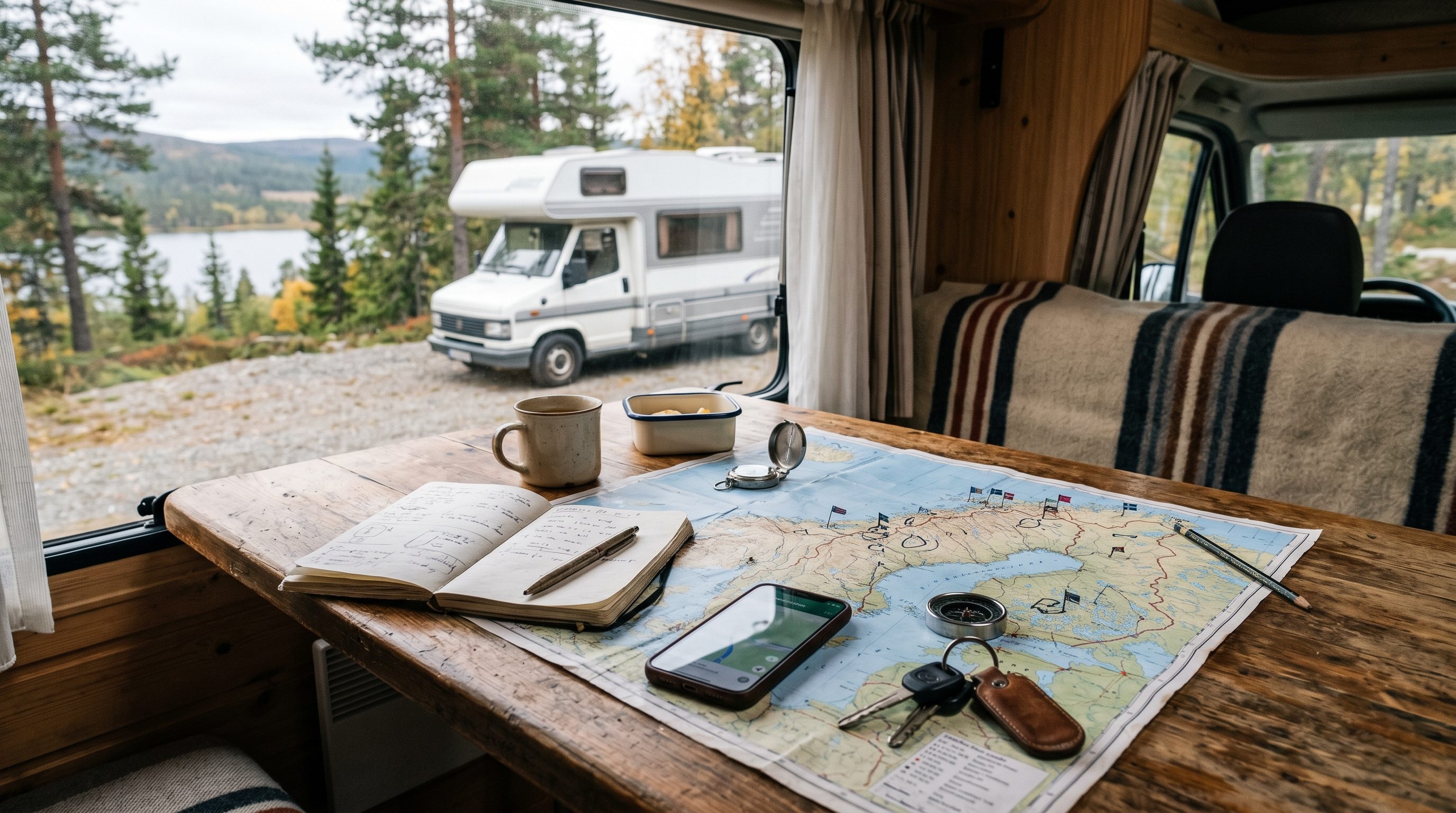
Start next season with your own evidence
When a new route is taking shape, return to the previous season. See which place deserved a detour, where the access was difficult and which driving day was too long. Your archive becomes a personal reference instead of a generic recommendation list.
New roads still matter. So does refinement. Every short entry makes the next journey a little easier without turning the present one into a documentation project.
Frequently asked questions
What should a motorhome travel journal app help with?
It should connect the place, date, photographs and practical experience so you can understand why an overnight stop worked or failed.
How can I log motorhome nights without making it complicated?
Save the position at arrival or the next morning, add one photograph and write a few words about the detail that will matter later.
Why is a map important in a motorhome journal?
A map preserves the geographical context of the trip, making routes, overnight stops and detours easier to recall and reuse.
How does FARON help before the next season?
FARON keeps your previous trips in a private archive so you can revisit the places, route choices and notes that came from your own experience.