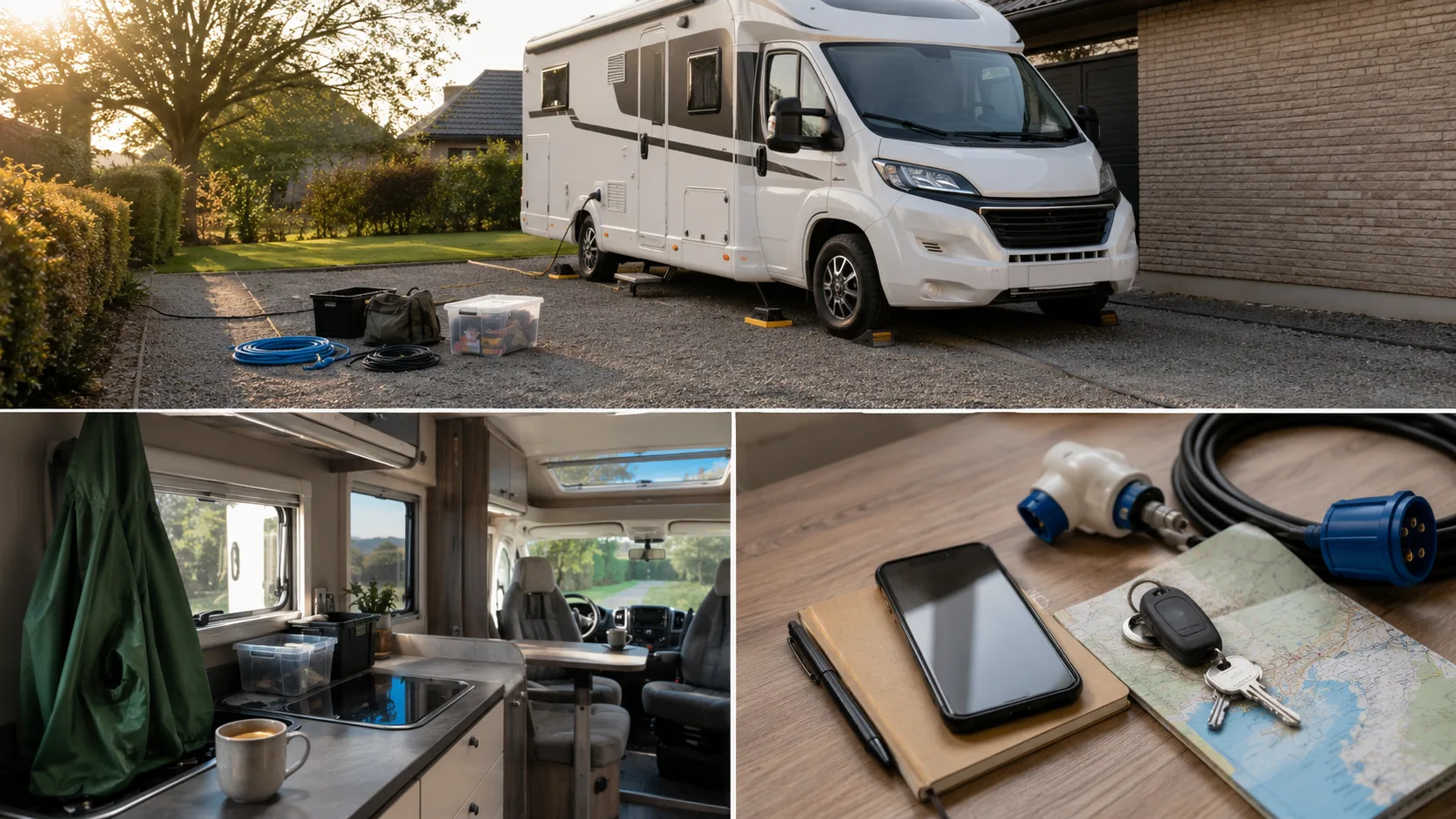
Fresh food, dry towels and a full water container make day one easy. By day four, the cool box is warmer, a towel has never dried and the promised shower is closed. Road-trip daily life works when the next day's needs are checked before they become emergencies.
Start with what must work tomorrow
Each evening, inspect food, water, wet clothing, toilet needs and whether a shower or laundry stop can wait another day. Solve only the next 24 hours in detail.
| Need | Verify | Possible stop |
|---|---|---|
| Toilet | Actual access and opening | Formal rest area or service facility |
| Shower | Hours, price, season, visitor access | Campsite, swimming pool, hostel or marina |
| Laundry | Machines, payment and cycle time | Campsite, laundrette or hostel |
| Water | Permission and whether it is potable | Verified service point |
| Toilet waste | Accepted waste type | Designated disposal point |
A toilet symbol does not promise a shower. A campsite pin does not promise access for day visitors.
Measure chilled food instead of guessing
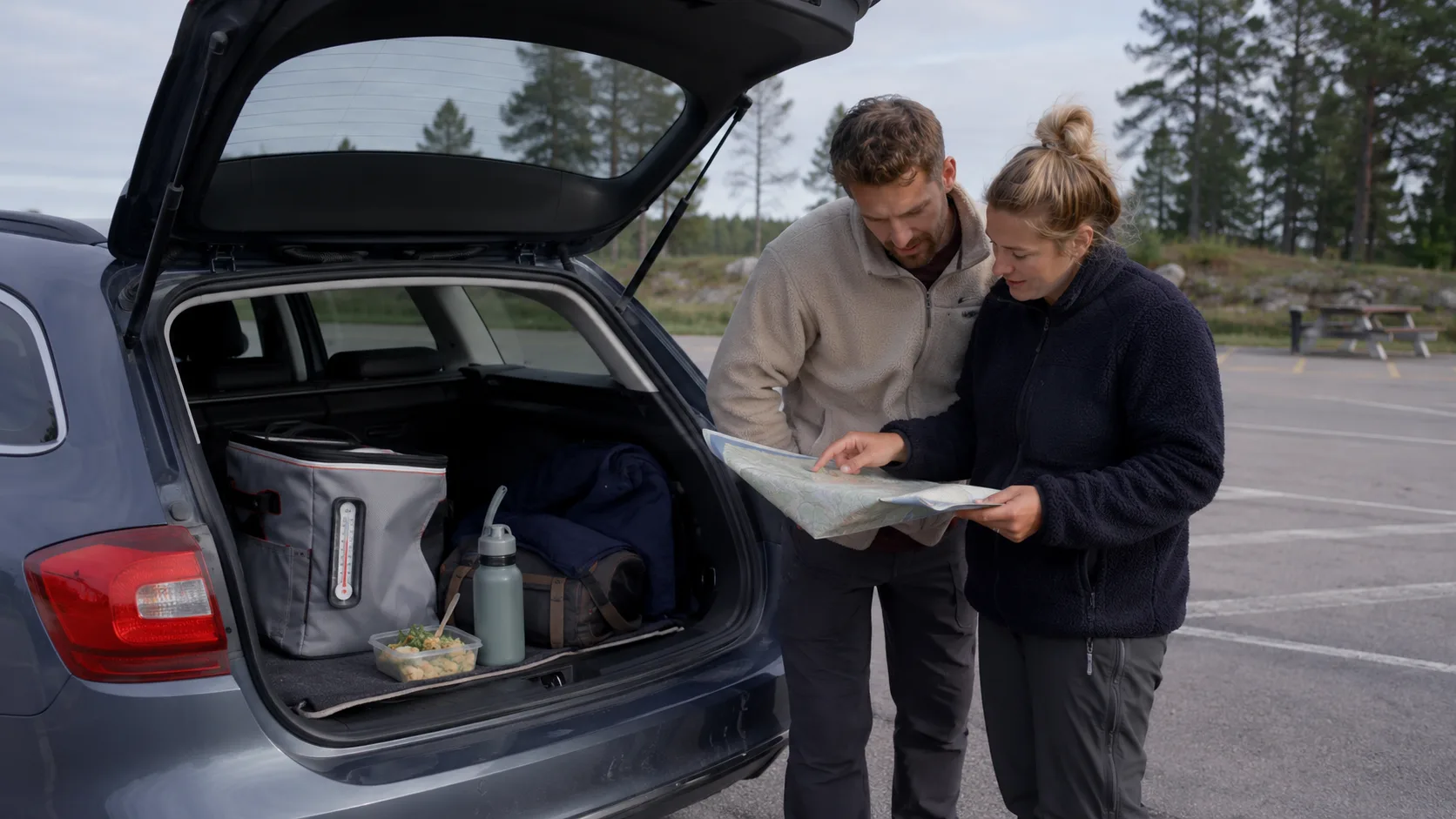
A cool box that feels cool is not necessarily at refrigerator temperature. The Swedish Food Agency recommends approximately 4°C for a refrigerator and using a thermometer. Pack food already cold, freeze ice packs completely and open the box as little as practical.
In a hot parked vehicle, time matters as much as temperature. When storage history is uncertain, no general claim can guarantee that a sensitive food remains safe.
Cook ingredients in storage order
Use the most temperature-sensitive ingredients first, then move towards shelf-stable food. Choose meals requiring one pot or pan when water and washing space are limited.
Buy smaller amounts of chilled food more often when refrigeration is weak. Opened packaging and leftovers follow their own storage instructions, not a hopeful “usually lasts a few days”.
Expect a rest area to provide a rest
Formal Swedish Transport Administration rest areas provide toilets, information, tables and bins. They do not automatically provide showers, laundry, potable water or grey-water disposal.
Use designated equipment for the waste it accepts. Grey water must not enter storm drains or toilet-waste facilities. When several needs have accumulated, compare a serviced campsite with a simpler stopover.
Verify the shower before turning off the route
Campsites, hostels, swimming pools and marinas may sell shower access, but a map result does not prove that non-guests are admitted. Check current hours, price, season and visitor access with the operator.
Combine several needs at one larger service stop: shower, laundry and water together. Daily small stops plus one verified reset is a more sustainable weekly rhythm than three separate detours.
Plan toilets before urgency
Use rest areas, petrol stations and visitor facilities while there is still a choice. If no toilet exists, follow current official outdoor guidance: remain well away from water, paths, buildings and livestock, bury human waste appropriately and carry out wipes and other rubbish.
That is emergency management, not a plan to make nature the toilet.
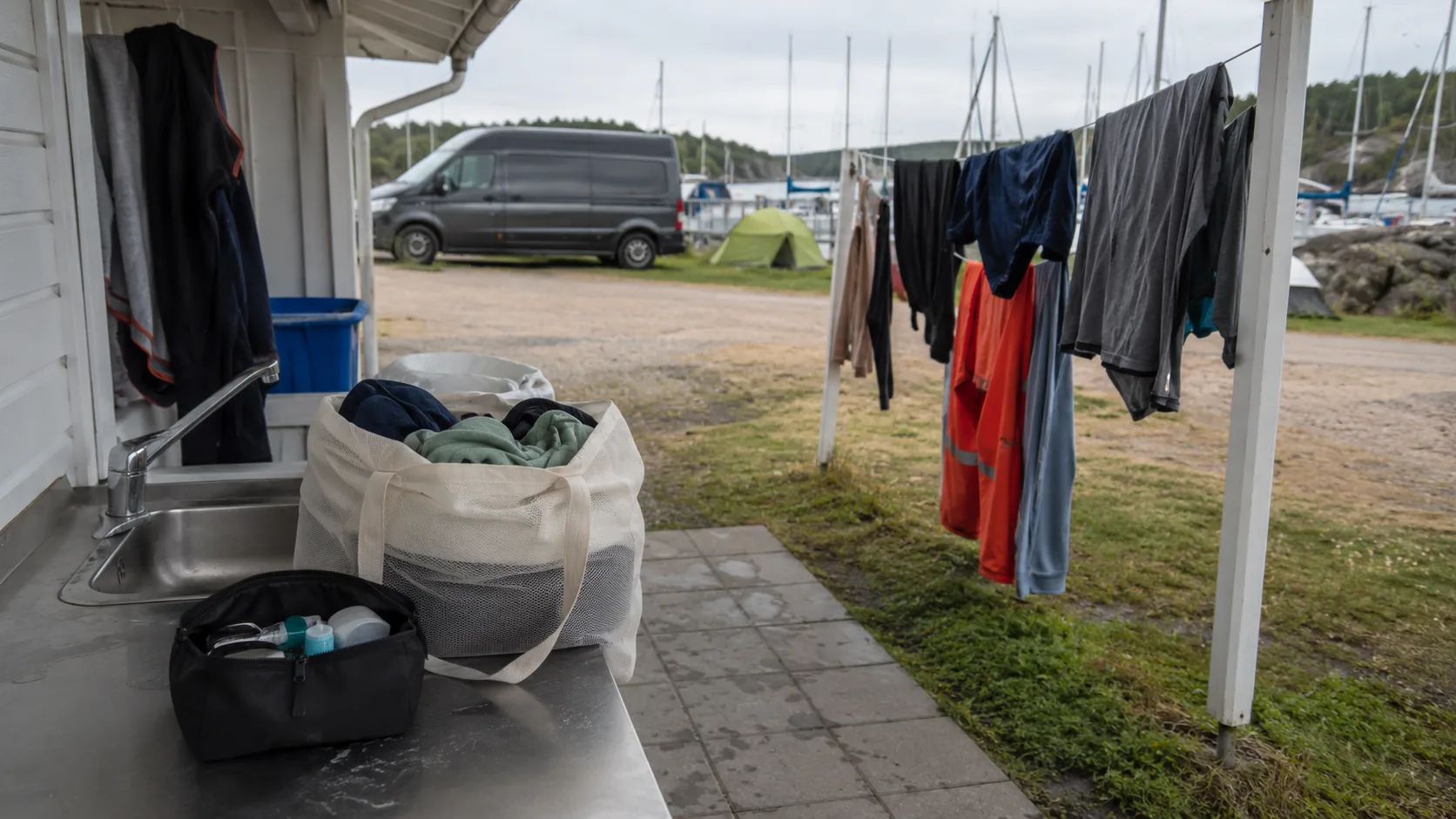
Give wet equipment its own zone
Keep wet jackets, shoes and dog towels away from sleeping equipment, food and clean clothes. A sealed bag contains water while driving, but textiles need ventilation at the next opportunity.
Dirty laundry gets one bag. Wet towels do not remain inside it. Clean dishes and food stay separate from both.
Save the service stop that actually worked
Record entrance, vehicle parking, queues, laundry duration, price, confirmed water or disposal and the date checked. Add whether the stop deserved another visit.
FARON cannot replace the operator's current information, but its private archive can keep the useful experience with the journey. Add the next major service stop to an upcoming trip, then preserve what happened on the map.
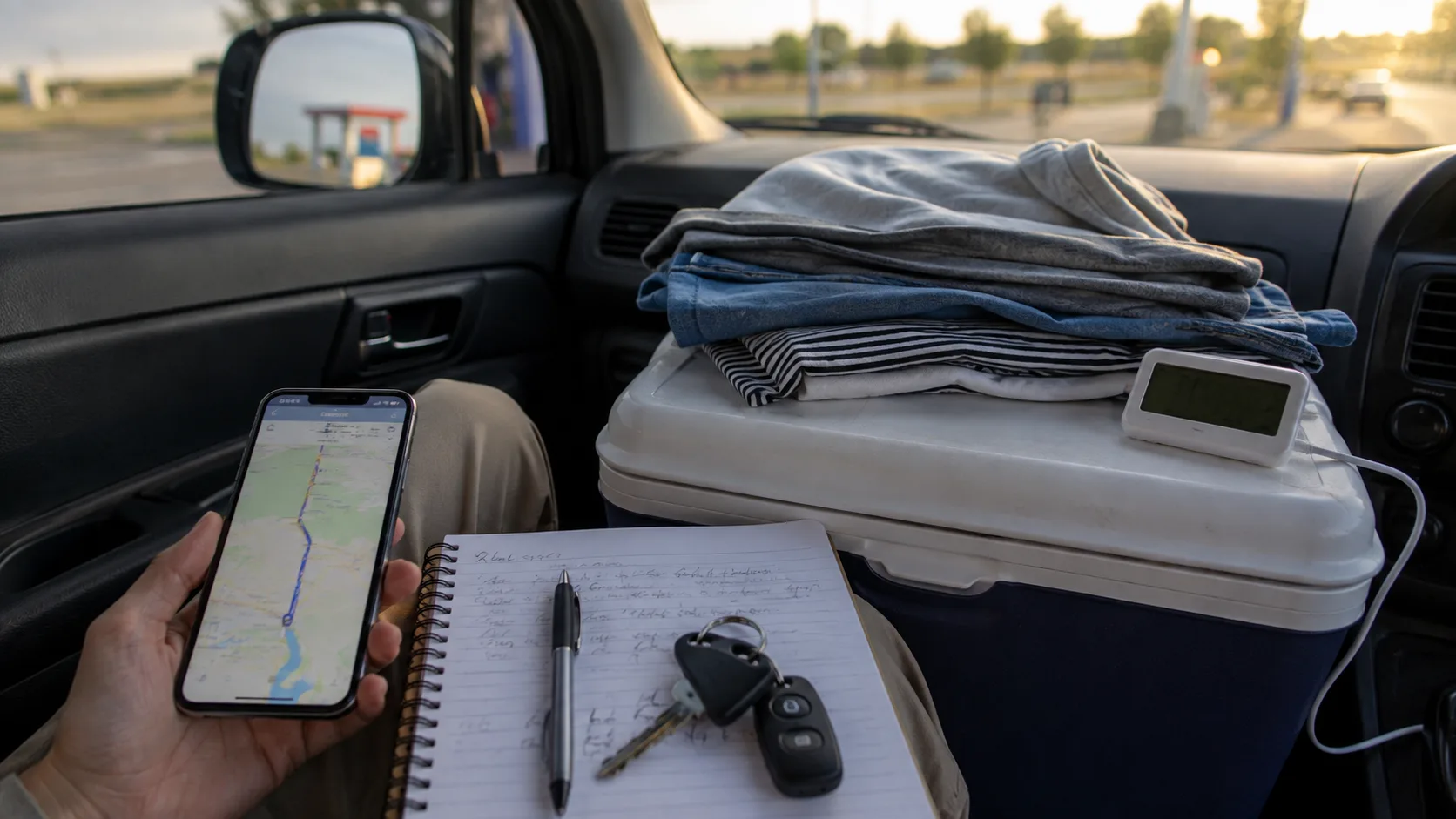
Build a weekly rhythm
Days one and two may need only refrigeration, water and toilets. On day three, laundry and shower move closer. Day four becomes the larger service stop. The following days return to simpler stops while food, water and damp equipment are checked every evening.
Next day first. Combined service when needs overlap. Current local confirmation before the detour.
Frequently asked questions
How do I keep food cold on a road trip?
Pack it cold with frozen ice packs, minimise opening and use a thermometer; aim for refrigerator-like conditions near 4°C.
Where can I shower while travelling by car?
Campsites, hostels, swimming pools and marinas may offer access, but confirm hours, price, season and admission for non-guests first.
How should I handle laundry and toilets?
Plan toilet stops continuously and combine laundry with a larger verified service stop when several needs overlap.
What should I record after a service stop?
Save access, hours, waiting, price, parking, water or disposal details, the checked date and whether you would return.