A campsite usually suits longer stays and several types of accommodation; a Swedish motorhome stopover mainly suits shorter stays with a motorhome. Compare the facilities you need, the full price and the booking terms for your dates.
I would list what you need before tomorrow morning: a shower, clean clothes, electricity or simply somewhere to sleep. Then compare prices for the same date, vehicle and needs.
Understand the difference between a campsite and a stopover
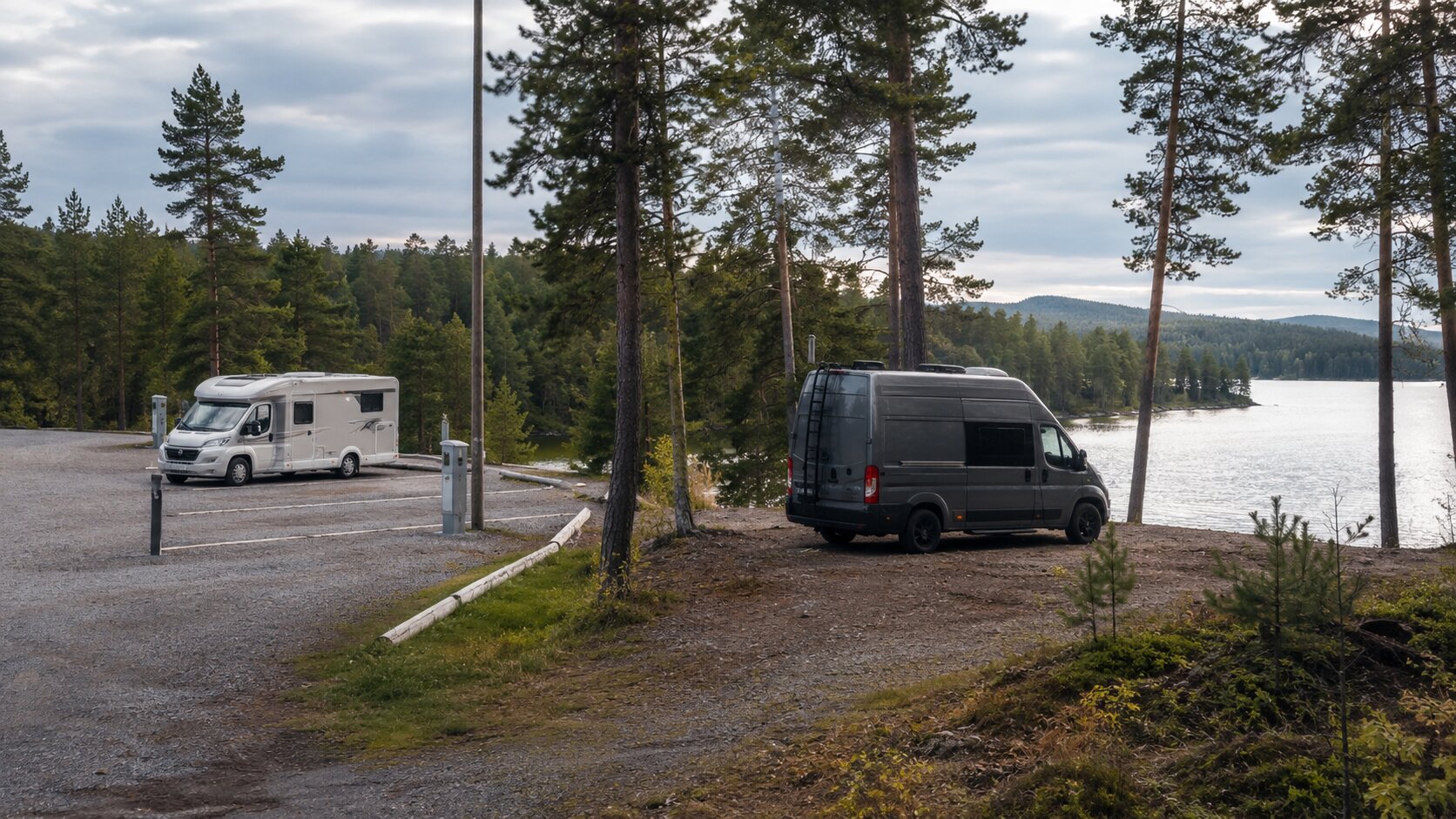
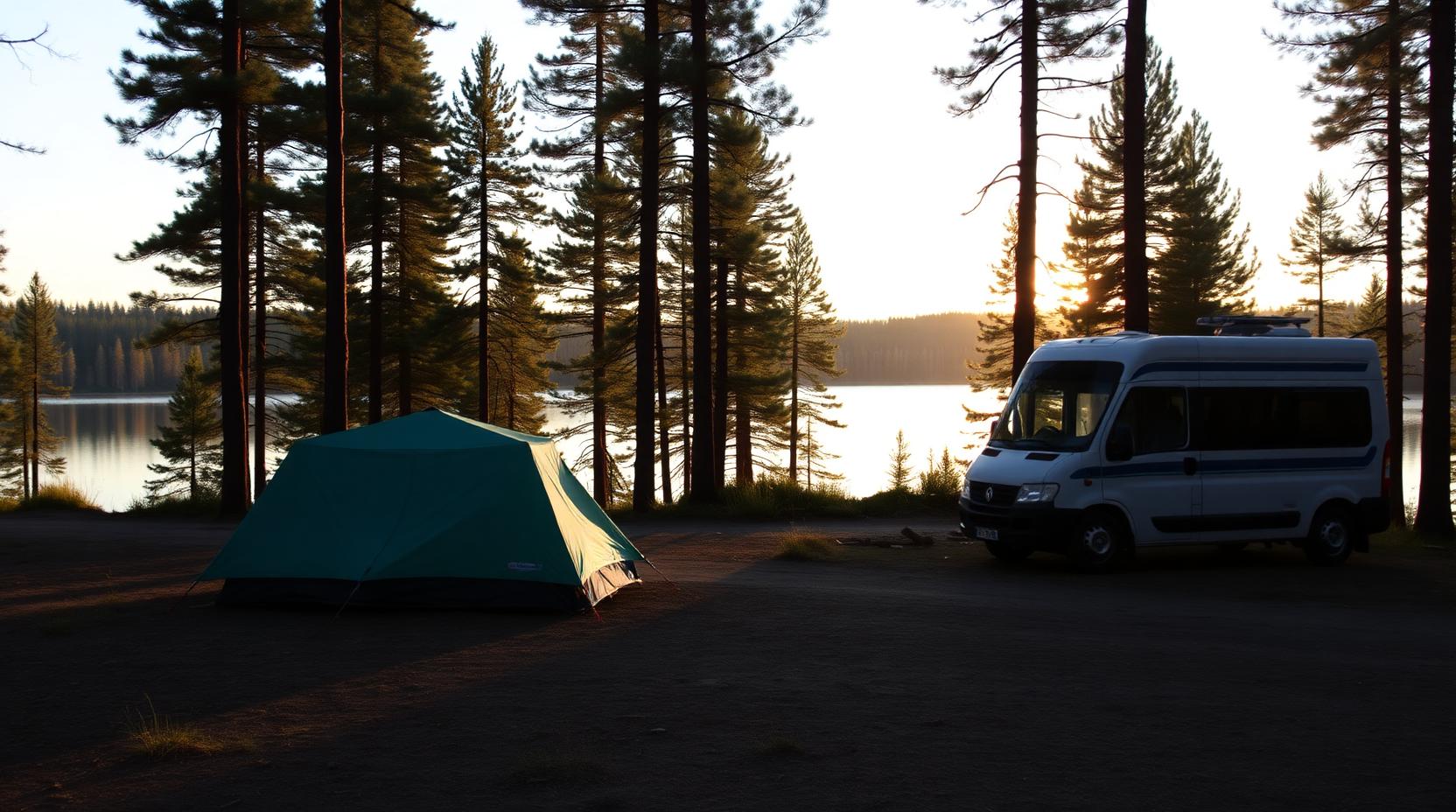
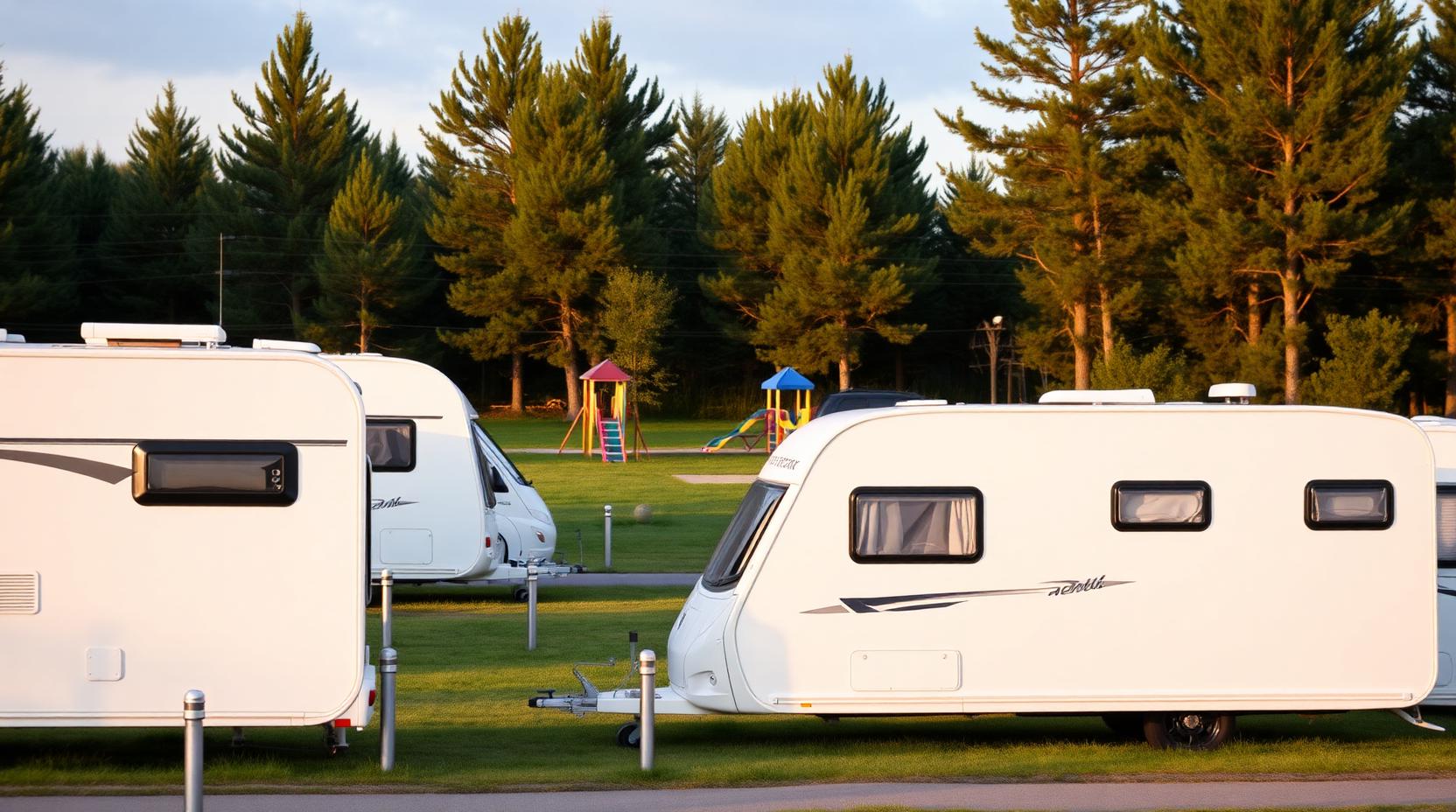
A campsite usually accepts several forms of accommodation, such as tents, caravans and motorhomes, and often provides more shared facilities for a longer stay. A Swedish ställplats mainly serves shorter motorhome stays. The operator determines which vehicles are accepted and how long you may stay.
The label does not guarantee a shower or rule one out. Camping.se describes wilderness campsites that may lack electricity and service buildings. Göta kanal lists stopovers ranging from simple pitches to showers and laundry facilities.
If you’re towing a caravan along the Göta Canal, you can book a pitch at Ställplats Sjötorp for a stay between June and September. Unhitch there and park the tow car outside the site. The stopover at Norrqvarn locks accepts motorhomes only. To keep the car beside your caravan overnight, look for a campsite that allows both on the same pitch and has room for them.
Check that the booking information accepts your van or rooftop tent. A motorhome pitch does not automatically accommodate every vehicle or an unfolded tent. See the guide to rooftop tents at motorhome stopovers for that particular choice.
Compare the total overnight cost
Compare two options for the same night and party. Include electricity, showers, water, waste disposal and any booking fee. Check whether payment covers a full day, a stay until a stated checkout time or only parking without access to facilities.
For a hypothetical example, a stopover at SEK 250 plus SEK 50 for electricity and two SEK 20 showers totals SEK 340. A campsite at SEK 350 including the facilities you need is only SEK 10 more, not SEK 100. These invented amounts demonstrate the calculation; they are not prices for a named site.
Choose the date. Add it up. A lower base rate helps little if you must still buy the same services elsewhere or make a long detour to reach them.
Include the cost of changing your dates
A reserved pitch gives you a destination for the evening, but check what happens if your journey moves by a day. Check the deadline for changing the arrival date and the cost of cancellation. Apply the same questions to both campsite and stopover bookings.
Camping.se's booking terms state that cancellation depends on the chosen rate agreement. Some offers cannot be changed or refunded; the confirmation identifies the terms. Leaving early does not normally produce a refund unless otherwise agreed.
Suppose two nights cost SEK 700 on a non-refundable rate and SEK 800 on a rate that allows the change you need. The difference is SEK 100, but losing the first booking and paying elsewhere costs more. These are invented comparison figures. For an uncertain arrival after a day along Göta kanal, I would read the actual change deadline before choosing the cheaper rate.
Choose a campsite when you want to stay put
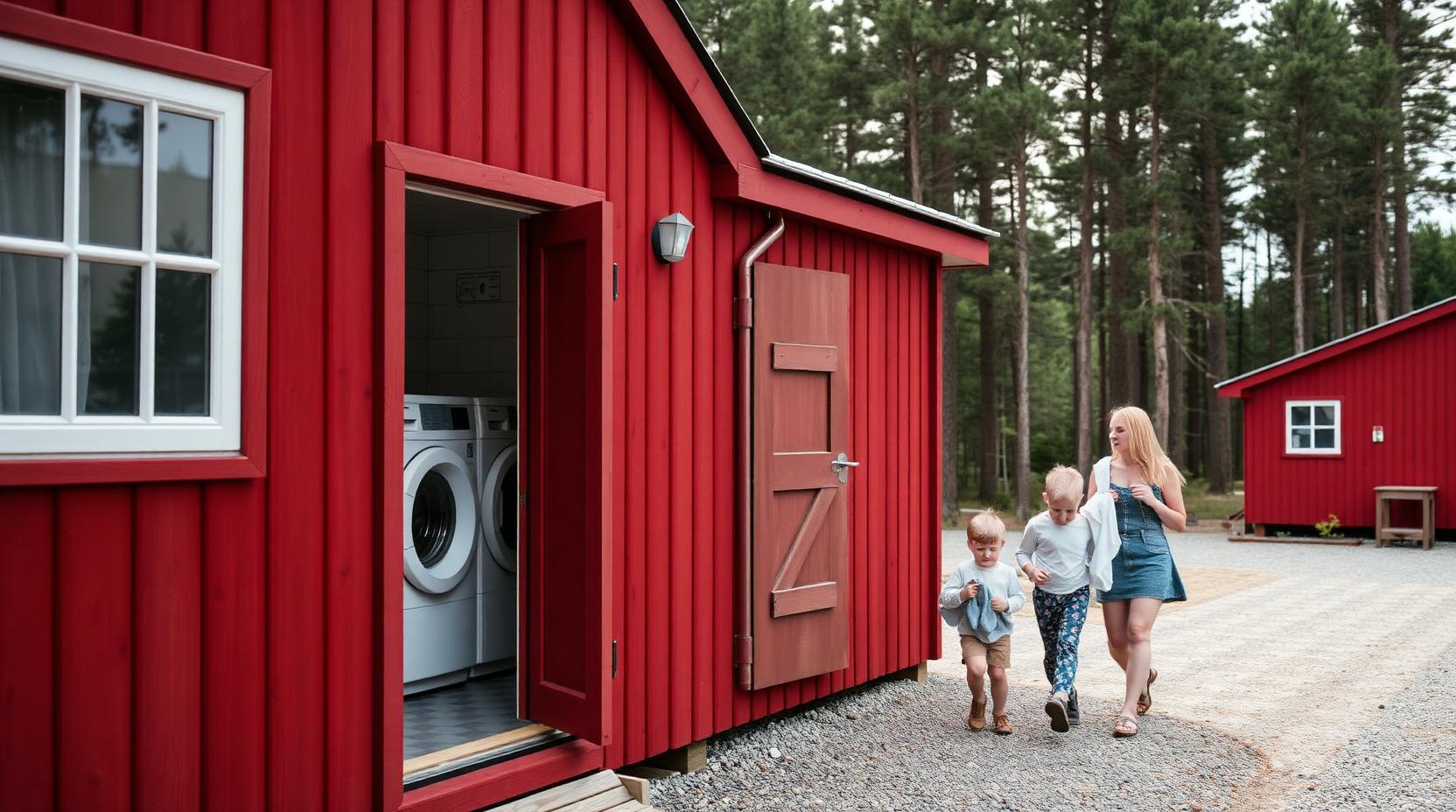
A campsite can suit a stay built around a shared kitchen, laundry, children's play area or two nights without moving the vehicle. Choose somewhere that actually provides what you need, with facilities open during your visit.
After a wet day, I would prioritise drying clothes and a simple dinner over another hour of driving. An attractive campsite without laundry facilities will not solve a bag of wet clothing.
Choose a stopover for a straightforward night
A stopover can work when your vehicle already supplies what you need and the location fits tomorrow's journey. Walking distance to town may matter more than a large site. Space, facilities and booking arrangements still vary between neighbouring stopovers.
For a late arrival, establish how payment, barriers and access codes work before driving there. An unstaffed site does not automatically allow arrival at any hour, and a drop-in pitch is not a reservation.
Check seasonal facilities before setting off
Open parking does not necessarily mean open facilities. Göta kanal states that its stopovers have no facilities or other services during the low season from 1 October to 6 May. Read the individual site's information for your dates before relying on water, showers or waste disposal.
If a shower is essential tonight and the facilities are closed, choose another site while you still have alternatives. Keep a second option for a full first choice.
Mix accommodation to suit the journey
No fixed ratio of campsite and stopover nights fits every three-week trip. Place a laundry night or rest day where it helps, then choose other nights around the route and how everyone feels. Allow room in the budget for a changed plan.
If you are also considering nights outside managed sites, read the separate stopover and wild-camping comparison. That choice involves different conditions from booking a campsite pitch.
Remember why the night was worth its price
Imagine comparing two past nights along Göta kanal for next summer. One was close to the day's stop; the other made time for laundry and a slow morning. Save the night, a photograph and a short note in FARON to find your own experience again on the private trip map.
Write what made that night different, such as why you wanted to stay another day. That is more useful than trying to recall every site name after returning home.
Frequently asked questions
What is the difference between a campsite and a motorhome stopover?
A campsite usually accepts more accommodation types and often offers broader facilities for longer stays; a stopover mainly serves shorter motorhome stays. Facilities and accepted vehicles depend on the operator.
Is a campsite always more expensive?
No. Compare the total for the same date, party and services, including electricity, showers and booking fees.
Do I need to book in advance?
Book when the operator requires it or when you need a confirmed overnight place. Both campsites and stopovers can offer reservations or drop-in pitches; check late-arrival arrangements too.
Do motorhome stopovers have showers and toilets?
Some have showers, toilets and even laundry facilities, while others have none. Check both the facilities offered and whether they are open during your visit.