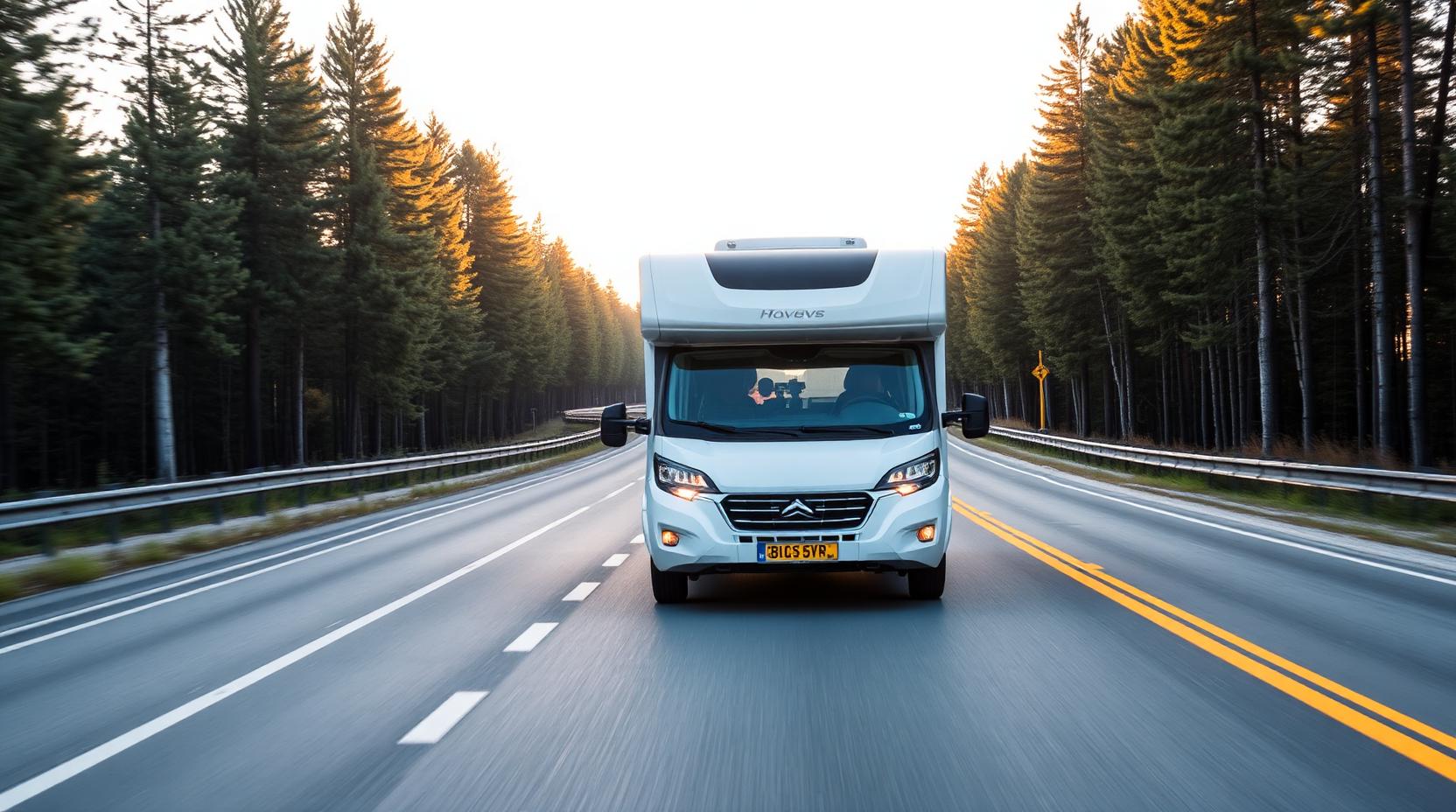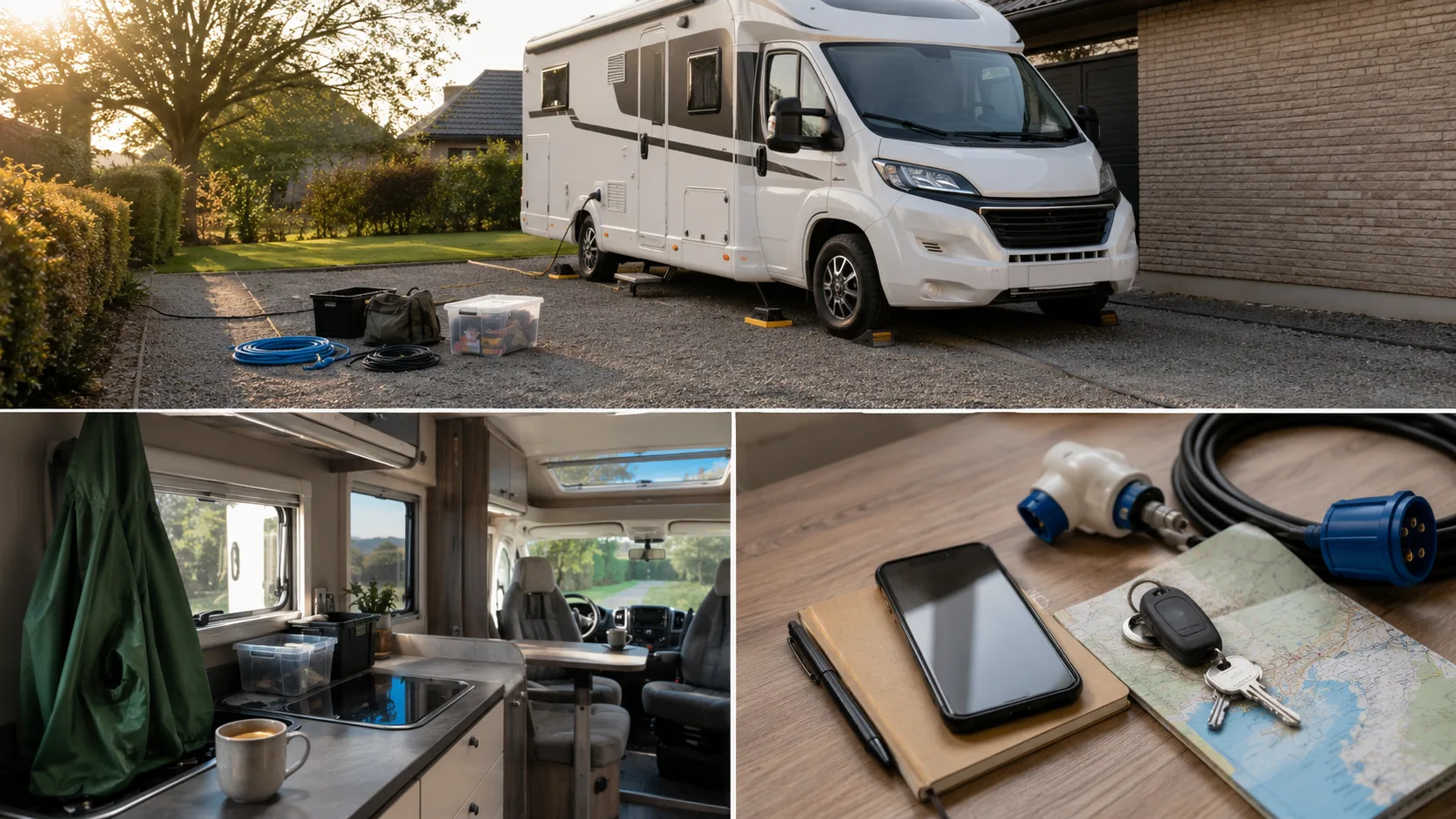
Water. Electric cable. Refrigerator. First night. That is where a motorhome journey becomes real.
If the motorhome leaves Enköping for a first night along the E4, the packing must work at the evening stop, not after everything has been unpacked two days later. Begin with what you need to arrive, eat, make the beds and wake to a functioning morning.
For three to six nights, think in three layers: systems to check before departure, items needed on the road and equipment that can remain stored until you stop.
Check water, electricity and cooling before driving
Test the motorhome's systems at home: fresh and waste water, toilet, leisure battery, refrigerator and gas equipment. Installations differ, so a valve position, operating mode or cable suitable for one vehicle may be wrong for another. Follow the vehicle and component manuals.
Match the water load to the first stage and the permitted payload. One litre weighs approximately one kilogram, so 40 litres uses about 40 kilograms before food, clothing, bicycles and passengers. Check registered limits and actual weight rather than assuming the tank should always be full.
Run the pump, taps and toilet. Empty what must be empty and keep hoses, connectors and gloves accessible. The first evening is the wrong time to discover the correct fitting beneath the bed.
For mains hook-up, carry undamaged equipment intended for the purpose. Swedish electrical-safety guidance states that caravan and motorhome supply outlets should be protected by a residual-current device rated at no more than 30 mA. Still check the site connection, your motorhome manual and the cable instructions; an adapter does not make an unsuitable connection safe.
Test the refrigerator before loading food and confirm which energy source your model permits while driving. A visible refrigerator thermometer provides a real reading after four hours on the road.
Follow written gas-system instructions. Check for leaks after changing a bottle and respect service intervals for hoses, regulators and seals. Whether gas may remain open or equipment may operate in transit depends on the installation — look it up rather than guessing.
Load for weight, security and access
Volume is only one limit. Use the registration certificate, payload and storage instructions. Sweden's 3,500 kg threshold also matters for driving-licence categories; read our motorhome licence and speed guide for the distinctions.
Secure heavy items where the manufacturer permits them. Give light objects a fixed place too: a bottle, frying pan or tablet becomes dangerous under hard braking. Close cupboards and rooflights, secure the load and walk through the living area before every departure. Short check. Same order. Fewer doubts.
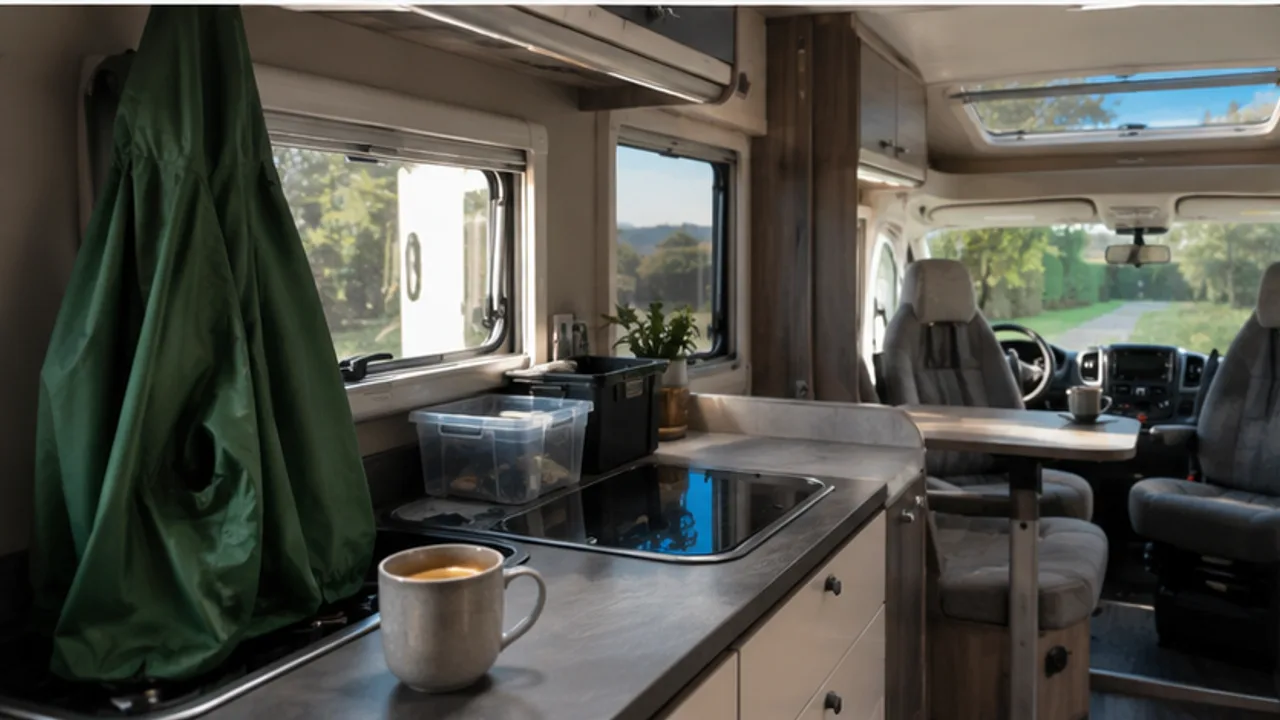
Waterproofs, work gloves, a torch and first aid should be reachable from the door or cab. The same applies to medicines, documents, a charging cable, a child's change of clothes and the dog's lead. If the garage must be emptied to reach a reflective vest, the vest is stored incorrectly.
Choose a place for wet shoes, towels and jackets. A sealed tub, hooks by the door or the shower can work. Keep one towel and dry change outside the main clothing bags so the first wet walk does not spread through bedding and upholstery.
Pack one self-contained first evening
Choose a simple dinner, breakfast and backup that does not depend on the same energy source. If the refrigerator, cooker or hook-up fails, nobody should need to find an open shop late along the E4.
Keep first-night food together with coffee or tea, washing-up liquid and a bin bag. One accessible bag prevents four hungry people searching while the beds remain unmade.
Check the living-area lights and keep a charged torch in a known place. Do not use candles as emergency lighting near curtains or bedding.
Night clothes, toothbrushes and children's bedtime items belong together. If a table or seat converts into a bed, store its panels, straps and bedding in the order you need them.
Save a backup overnight stop and check any latest arrival time. A planned 220-kilometre stage can grow through traffic, roadworks and breaks. Plan for the most tired person in the vehicle, not the mapping app's fastest estimate.
Run a ten-minute departure check
Keep licences, bookings, vehicle details and insurance information where both driver and companion can find them. For international travel, check current authority requirements and policy terms for every country on the route.
Review the route, first stop and backup. Check weather, roadworks, ferries and arrival conditions. Download maps when supported, then test offline behaviour before coverage disappears.
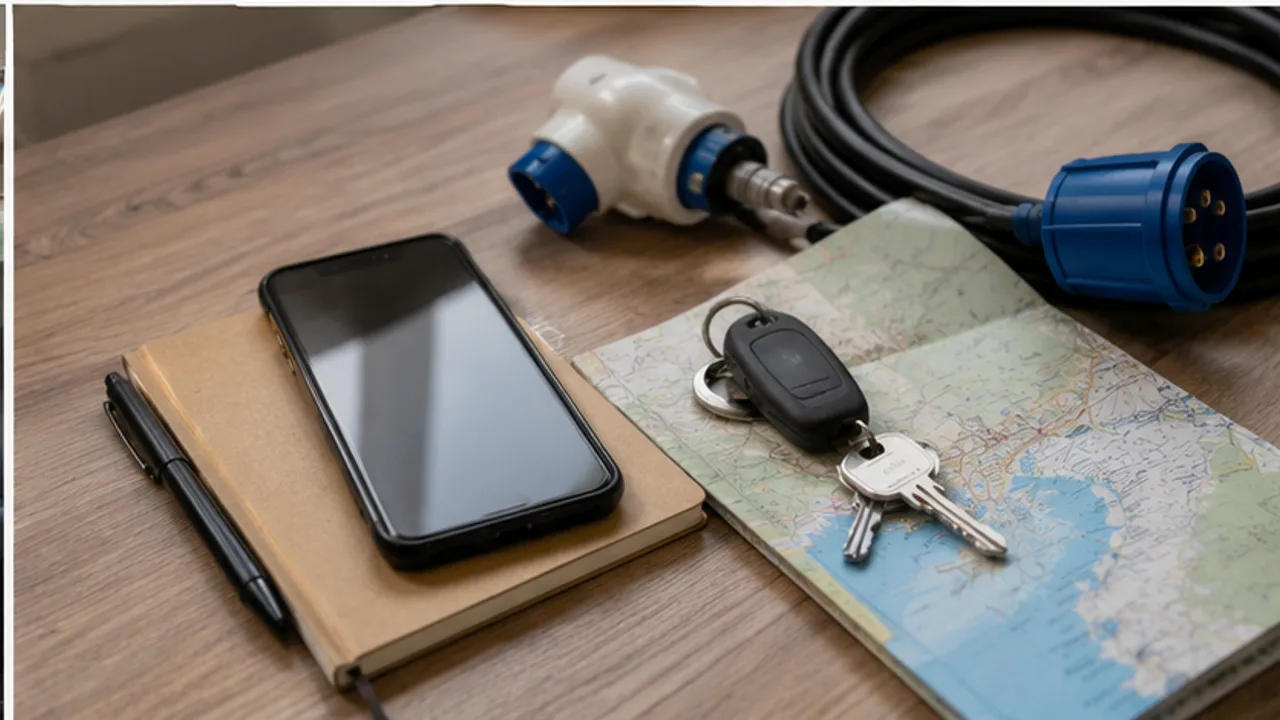
Use the same sequence: exterior, cab, living area, documents and route. Let the vehicle manual define model-specific items.
Save what should change next time
After the first night, you know whether the cable was accessible, the gloves were not, 40 litres of water were sufficient and three extra pairs of shoes merely occupied space. Record those differences while concrete.
When you plan an upcoming trip, keep your own checklist beside the stops and preparations. Before departure, collect essential trip information in a private PDF travel guide.
Afterwards, save the narrow entrance, ground level, water point and unused equipment. FARON is a private archive and planning aid, not a campsite directory, legal adviser or automatic GPS tracker.
Keep both successes and changes. Then the next checklist begins with your own evidence rather than a generic list.
FAQ
What should be easy to reach in a motorhome?
Keep waterproofs, a torch, first aid, medicines, documents, charging equipment and first-night items accessible without unloading the garage, and secure everything before driving.
How much water should I carry?
Carry enough for the first stage within the permitted payload. One litre weighs about one kilogram, so check actual weight, refill plans and vehicle guidance.
What should I check immediately before departure?
Check the exterior, cab, living area, documents and first route in the same order. Use the manual for model-specific checks.
How do I keep my own checklist for the next trip?
Save a customised checklist with the planned FARON trip, then add missing items and remove unused ones after returning.