Choose rain pants by trying them over your walking clothes and boots. You should be able to pull them on, close them and walk without forcing the fabric, and the product description should specify the rain protection you need.
Check rain protection before weight
Water-resistant walking trousers and waterproof overtrousers serve different purposes. REI's rainwear guide describes water-resistant garments as protection for brief, light rain. Persistent rain calls for waterproof protection. Breathability means releasing water vapour; it does not mean you cannot get sweaty inside the shell.
For a walk on Omberg, I would read the forecast and decide whether the trousers will stay in the pack as a backup or be worn for most of the outing. In the first case, pulling them over boots matters particularly. In the second, I would spend more time trying movement and ventilation with all my layers on.
Try the opening with your own boots
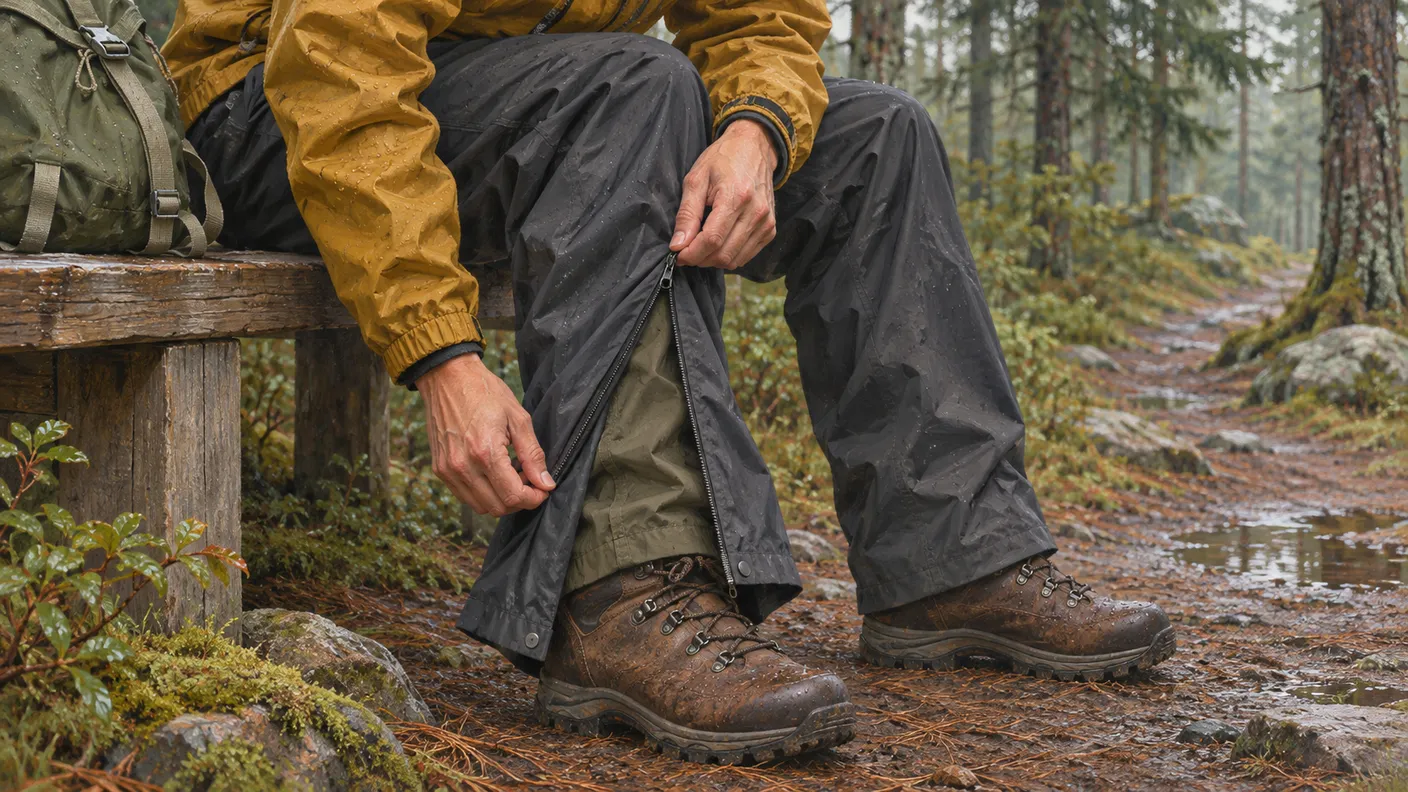
Bring clean boots to the shop or try the trousers indoors at home within the return conditions. Open the cuffs fully. Sit down. Pass your foot through without forcing the edge of the sole against the fabric.
If the boot catches here, I would try a different leg opening. A larger waist size will not necessarily solve a problem at the foot. If the model requires removing footwear, that needs to work where you plan to use it, with somewhere to sit and keep your socks dry.
Zip length offers a clue, but does not replace the fitting. Two manufacturers describe their designs as follows:
| Model | Manufacturer's opening details | Listed weight |
|---|---|---|
| Patagonia Torrentshell 3L, men's | Two-way cuff-to-thigh zip, also used for ventilation | 335 g |
| Rab Downpour Mountain, men's | Full-length two-way zip and adjustable hems | 271 g in size M |
These are construction examples, not a comparative field test. The weight listings do not specify the same size basis. Check the version and size you are buying, and try closing the zip protection after venting.
Use movement to judge the fit
Put the trousers over your intended walking layers and fasten your backpack's hip belt. Use these checks to find what needs changing before you buy:
| Try | Look for | If it does not work |
|---|---|---|
| Take a high step and squat | Fabric follows your knee and seat without pulling the waist down | Try a different cut or size with the same layers |
| Walk and sit with the hip belt fastened | Elastic, cords and buckles do not press on the same spot | Adjust the belt and retry; choose another waistband if pressure remains |
| Walk with the cuffs closed and adjusted | The hem stays clear of your heel and covers the boot shaft when your knee bends | Try a different leg length; tightening cannot fix the wrong length |
Also try reaching the trouser pocket where you keep your key or phone. If the overtrousers cover it completely, that item needs another place during rain.
Manage warmth before getting soaked in sweat
Long side zips can let air in, but the opening needs managing to keep rain out. Close the exposed section when rain reaches your leg and follow the model's instructions. Adjust your pace or layers beneath the shell if you become too warm.
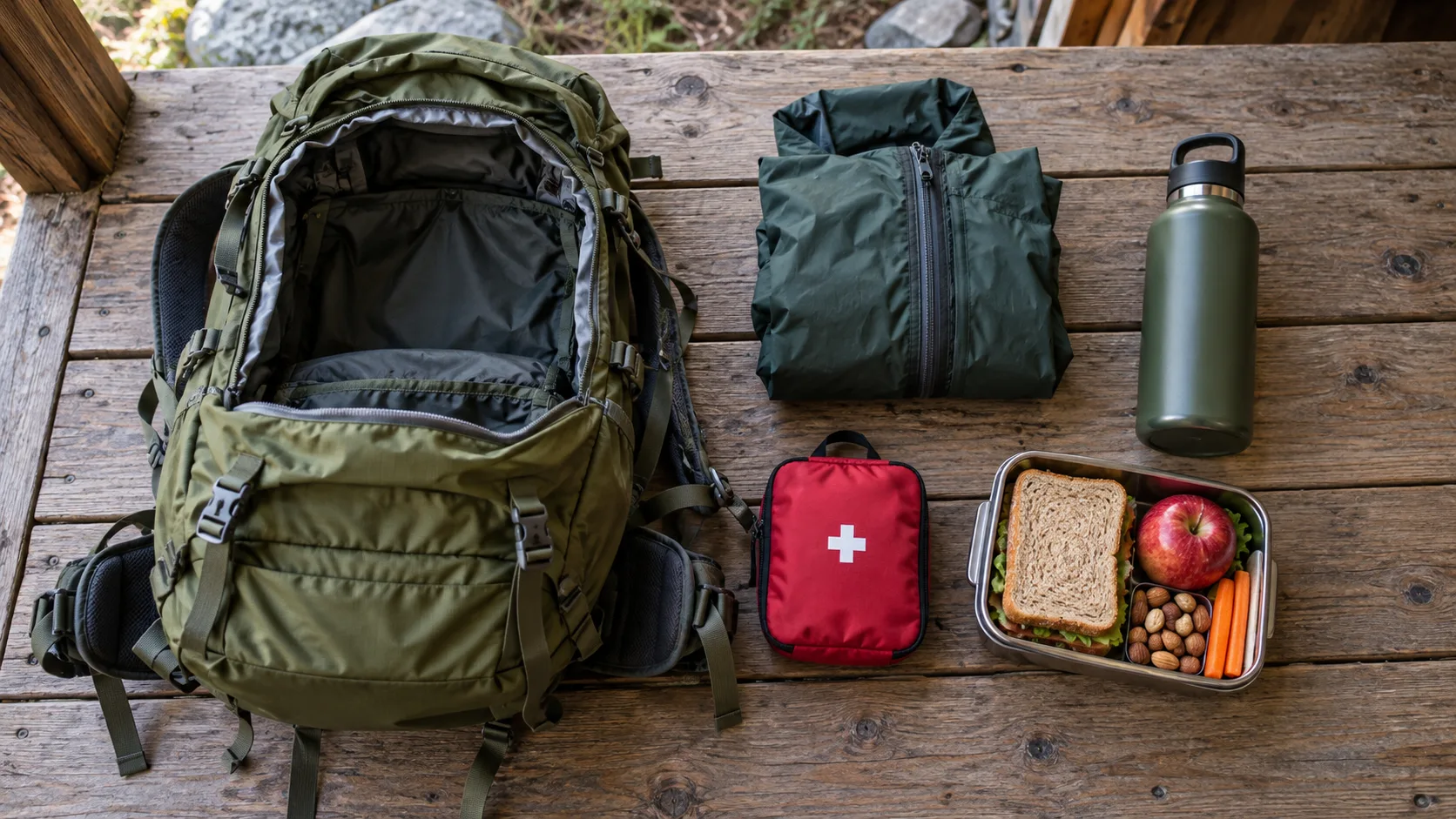
I would pack rain pants just below the backpack opening so they can come out without putting lunch on wet ground. Practise putting them on with your pack beside you before leaving. A stiff zip or tight opening may reveal that this model does not suit you.
Investigate wet patches before treating the garment
Tell the shop where and when moisture appears: beside an opening, a hole or across the base layer. Ask for advice before treating the garment.
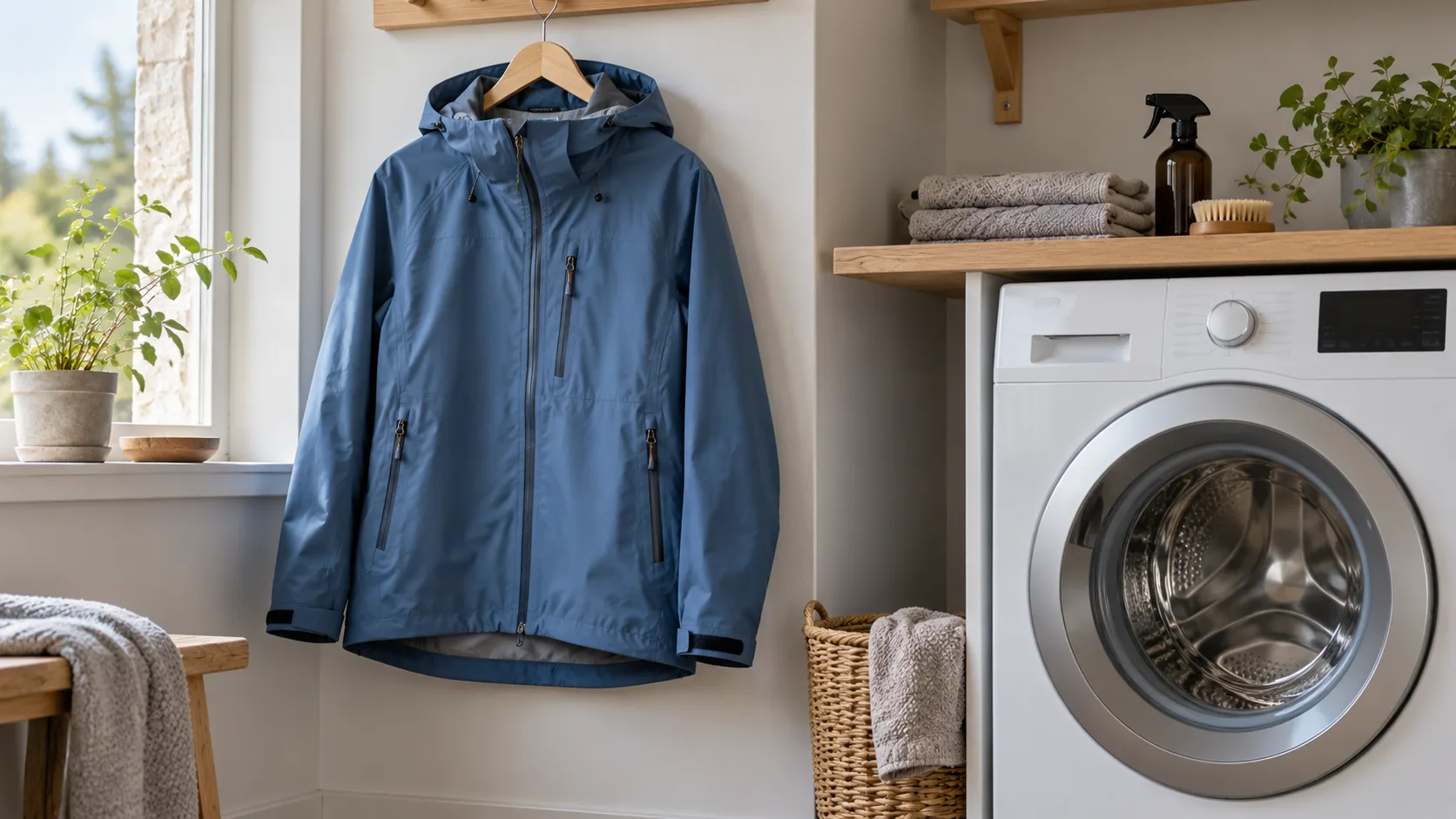
For this Torrentshell model, Patagonia specifies a cold machine wash, no fabric softener and low tumble-drying heat. Other rain pants may need different care. The guide to washing and treating waterproof clothing explains the steps; the trousers' own label determines the method and temperature.
Find the outing again
After walking on Omberg, you may want to save the view over Lake Vättern for another visit. In FARON you can put the stop on your map with a photo and note. Keep your own stops on the trip map to remember where you walked.
Frequently asked questions about hiking rain pants
Should I buy a size larger?
Use the model's size chart and try it with your layers. Overtrousers may already have extra room; sizing up can give you the wrong waist or leg length.
Do I need a full-length side zip?
No, a shorter opening can work if your boots pass through without forcing the fabric. Try a full-length zip if shorter openings catch.
Does getting wet inside mean a leak?
Not necessarily; sweat and water entering an opening are also possible causes. Describe where and when moisture appears before making a claim or treating the garment.
Can I keep my current rain pants?
Yes, if they provide the weather protection you need and work when putting them on and moving in your equipment. Lower weight alone is no reason to replace a working pair.