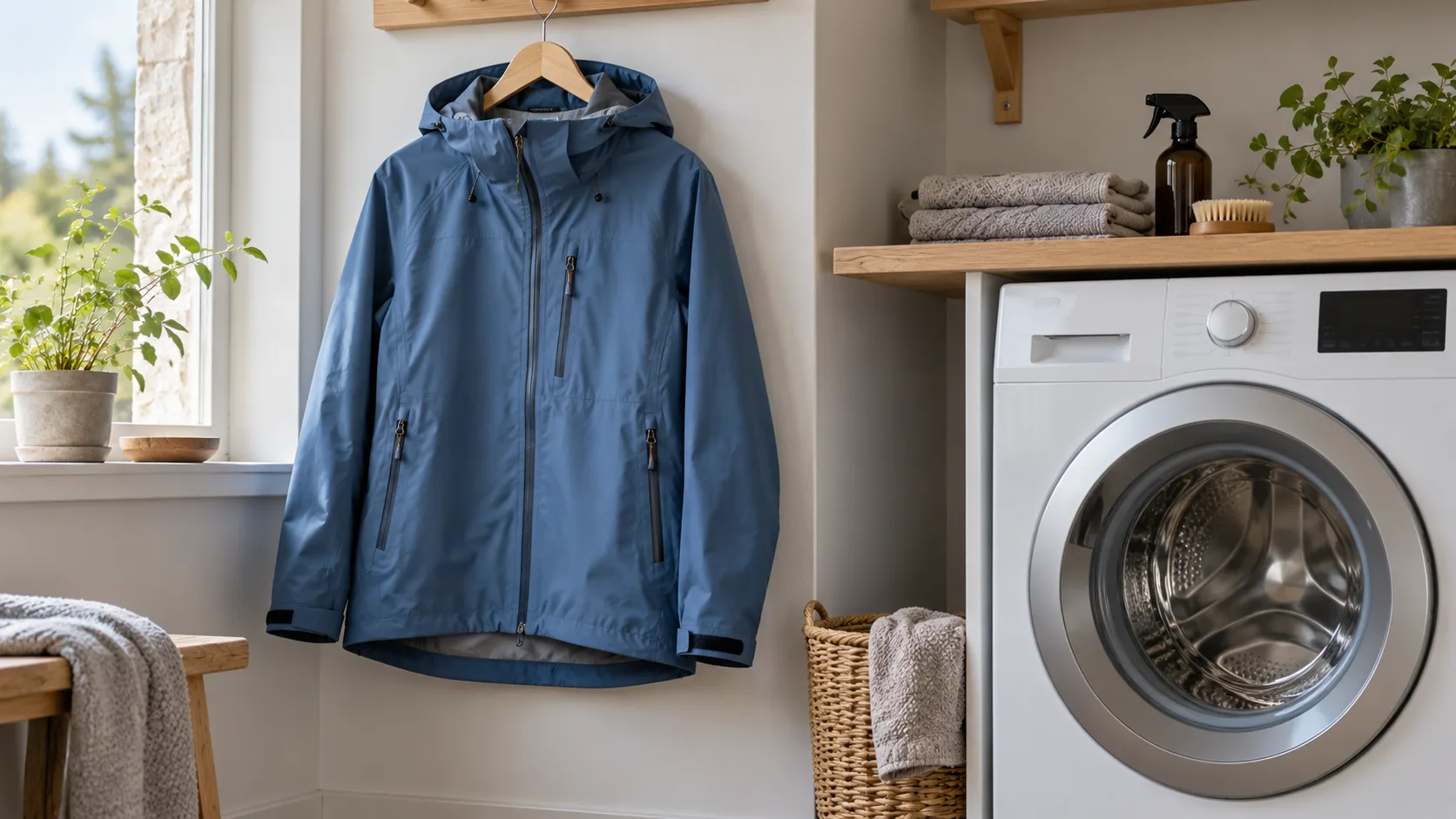
Wash a waterproof shell according to its care label, rinse out detergent thoroughly and use only the drying method the garment allows. A jacket whose outer fabric absorbs rain may need cleaning and reactivation of its water-repellent treatment before you buy more proofing product.
Read the label before loading the machine
After a wet weekend in Tiveden, Sweden, the jacket might have muddy sleeves and smell of the evening campfire. I would find the model's care instructions while it is still out, leaving time to wash it before the next trip. A general guide cannot establish what your particular lining, membrane and finish can tolerate.
Empty the pockets. Close the zips. Fasten loose straps and hook-and-loop tabs as the manufacturer advises. Remove loose dirt first and avoid washing the shell with heavily soiled clothing.
Use a small dose and rinse thoroughly
Haglöfs' shell-care instructions recommend a small amount of liquid detergent, preferably suitable for technical fabrics. They specify 40 °C, a gentle programme, low spin and an extra rinse unless the garment label says otherwise. The same instructions advise against powder detergent, fabric softener, bleach and stain removers.
Follow the product dosage and garment label. Adding more because the jacket smells smoky leaves more detergent to rinse away. If the label is unreadable, the model name can help the manufacturer identify the right instructions.
Dry only as your model permits
Some shells allow tumble drying; others need different care. The GORE-TEX outerwear guide recommends a further 20 minutes of gentle tumble drying after ordinary GORE-TEX outerwear is dry to reactivate its water-repellent finish. This is advice for specified products, not a universal drying time for rain jackets.
The same guide includes exceptions: GORE-TEX SHAKEDRY must not be tumble dried, ironed or treated with DWR. Identify the model before applying heat. Where the label permits ironing and the manufacturer recommends it, follow its instructions for temperature, protective cloth and steam as well.
Check water repellency after washing
DWR is the treatment that helps water bead on the outer fabric. Once the jacket is clean and dried as instructed, check whether droplets bead and roll off again. If the outer fabric still absorbs water, it may need a compatible water-repellent treatment. Follow both the garment and treatment instructions.
Imagine having 2 days at home between camping weekends beside Lake Siljan. Wash early in that gap so there is time to dry the jacket and assess the result. If it still leaks, a seam has come apart or material is peeling, ask the manufacturer about repair rather than repeatedly applying more treatment.
Leave the equipment ready for another trip
Put the dry jacket where you will find it before departure. Wet sleeping bags and footwear need their own methods: read about washing and drying a sleeping bag and caring for hiking boots. One detergent and temperature will not automatically suit every item.
After 3 weekends, photographs of rainy forest paths can blur together. In FARON, you can attach a photograph and short note to the overnight place on your map. Log your first night from the trip you want to find again.
Frequently asked questions
Which temperature should I use?
Use the temperature on the garment label. The 40 °C advice for some shells applies only when the model's instructions allow it.
Can I use fabric softener?
Avoid fabric softener according to Haglöfs and GORE-TEX care advice. Use the recommended detergent and rinse thoroughly.
Do I need to reproof after every wash?
No: assess water repellency after washing and permitted drying or reactivation. Reapply treatment when needed according to the garment instructions.
Can every shell jacket go in a tumble dryer?
No: the model and care label decide. SHAKEDRY is one example that must not be tumble dried.