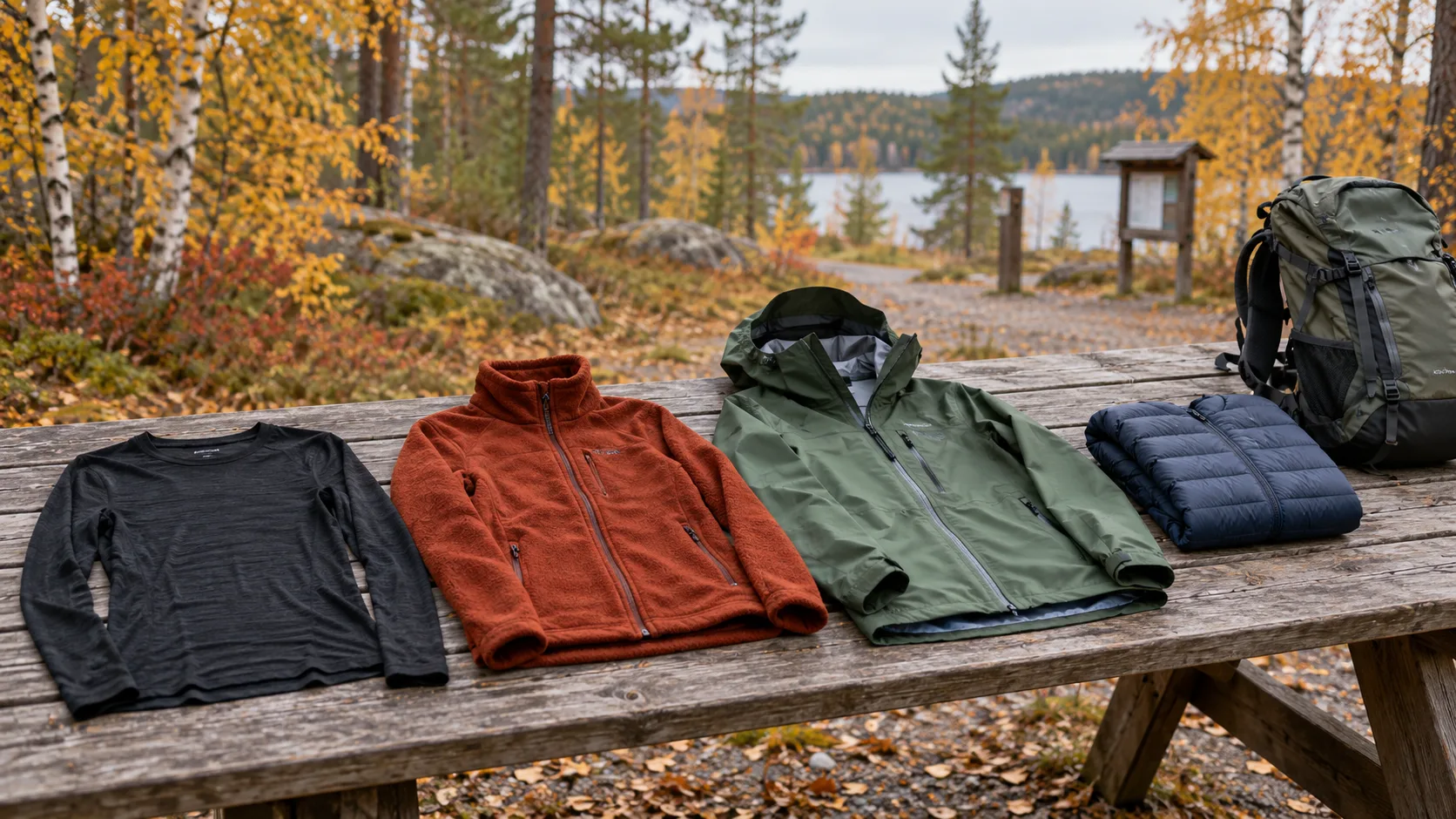
Layering lets you change your clothing as your pace, the wind and the weather change. Use a base layer that handles moisture, a warm middle layer and an outer layer for weather protection, with extra warmth easy to reach for breaks.
Pack for walking and stopping
An autumn day at Omberg beside Lake Vättern can include a warm climb, wind at a viewpoint and a seated picnic. The same outfit may not suit all three. I would choose clothes that can be added or removed without emptying the daypack.
Try the combination at home. Close the jacket. Raise your arms and check that the middle layer fits without pulling the clothes tight. That is more useful than buying another garment that will not fit under the shell.
Choose a base layer for movement
Fjällräven's layering guide describes the base layer's job as moving moisture away from the skin and recommends wool or synthetics over cotton. This gives you a starting point for a walk that alternates between effort and standing still.
Choose a thickness you can move in. A thick top next to your skin is harder to adjust than a thinner base with a separate middle layer. Consider how the fabric feels too; a garment you keep rearranging will not improve the walk.
Adjust warmth while walking
The middle layer provides warmth. Fleece or a wool jumper may suit, depending on the outing and conditions. The Swedish Tourist Association's layering advice uses several layers that can be adjusted as conditions change.
Open ventilation or remove a layer when you get too warm. Do not wait for the next planned picnic if the clothes already feel wrong. Ask the group for a short stop so that the slowest walker can adjust their layers as well.
Choose the outer layer for the weather
The outer layer protects against wind and weather. The protection you need depends on the forecast and route; a sheltered woodland walk and an exposed mountain outing make different demands. Read what the garment is designed for and choose a route that fits both weather and equipment.
For an imagined 5-kilometre walk in Tiveden, I would keep the rain jacket accessible without unloading everything onto the ground. With 2 hours remaining to the car, a jacket in the boot offers little help if rain arrives on the trail. Those figures are a planning example, not advice for a specific route.
Keep another layer for breaks
Lundhags' layering guide also describes an extra layer for pauses. Put it within reach when you stop, along with a hat and gloves when the weather calls for them.
A 20-minute break is a different situation from continued walking. Try getting the extra garment out as soon as you stop instead of searching for it once you feel cold. Keep a dry change protected from rain if the outing needs that margin. Clothing layers do not replace the option of turning back when weather or energy requires it.
Keep what worked for the next outing
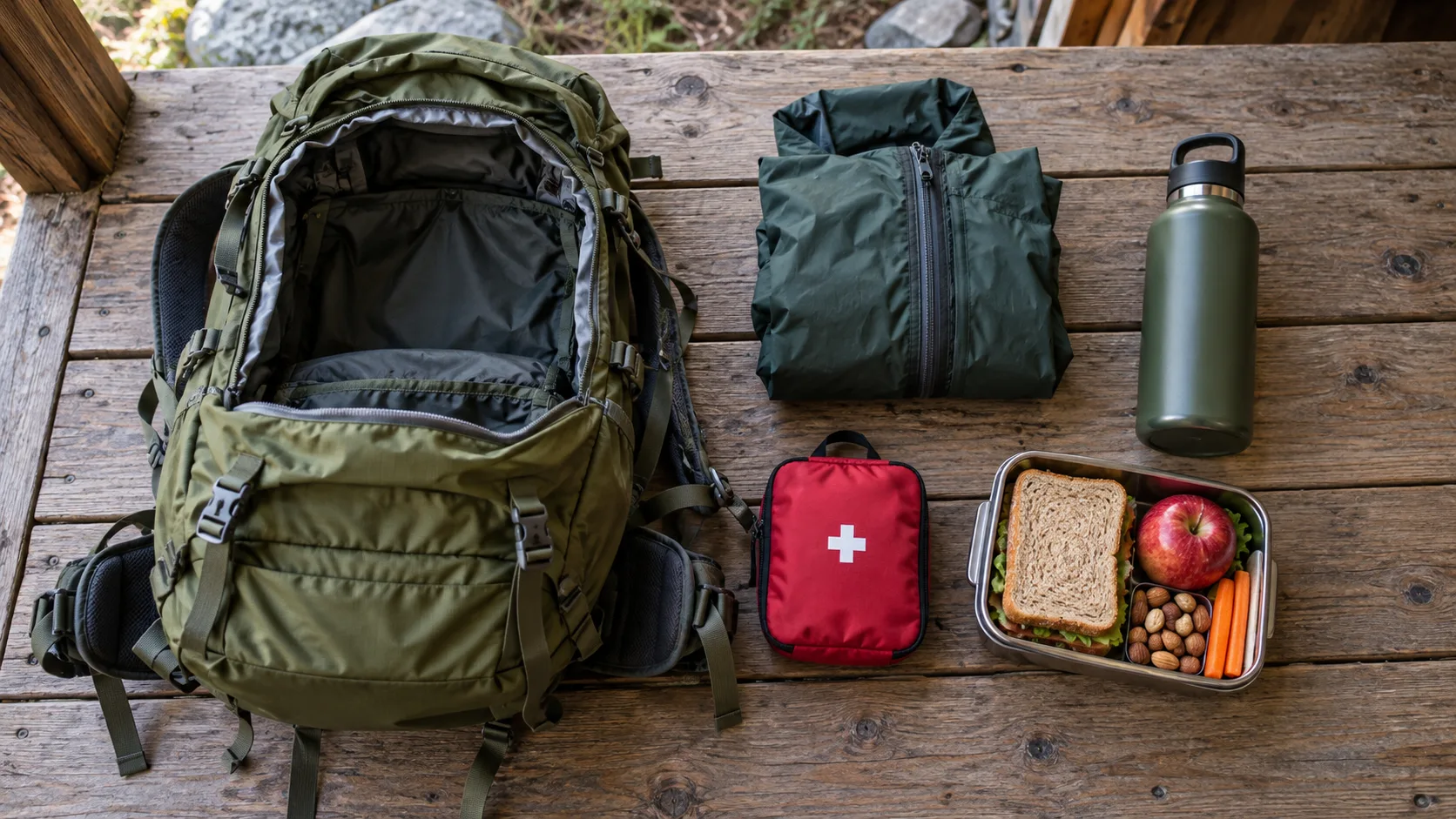
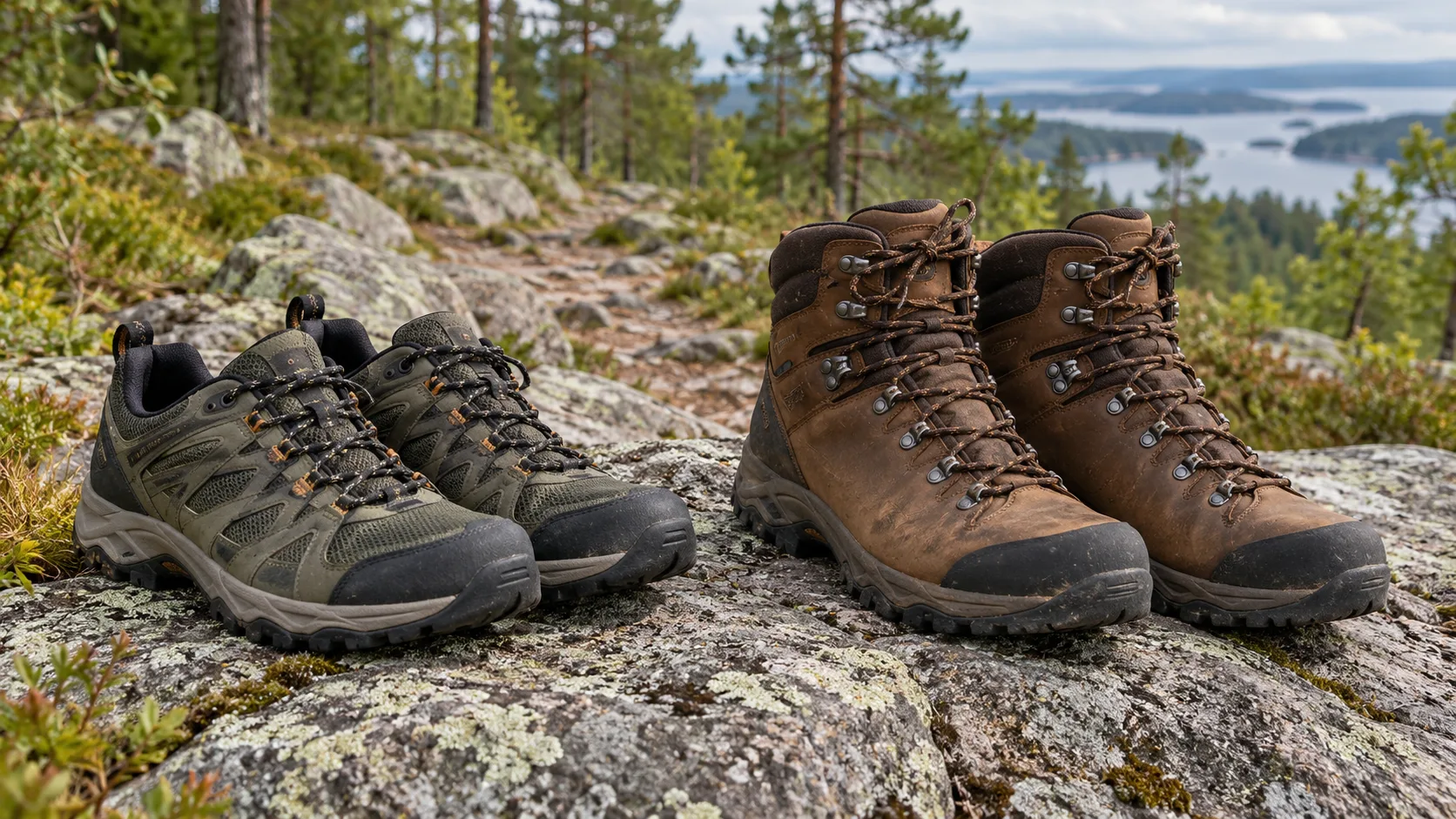
Arrange your bag so rain protection and warm clothing are accessible. The guide to packing a hiking daypack helps with organisation; shoes or boots is a separate choice for the terrain and your feet.
After several outings beside Lake Vättern, a photograph may show the view without recalling which walk included the long picnic. In FARON you can save the stop with a photograph and short note on your map. See your own stops on the travel map when you want to return.
Frequently asked questions
Should I wear all three layers throughout the walk?
No: add and remove layers for the activity and weather. The system should be adjustable during the outing.
What should I wear next to my skin?
Wool or synthetics are common choices for a base layer that handles moisture. Choose a garment that feels comfortable and suits the effort involved.
Do I need extra clothing for a short break?
Pack extra warmth when the weather and route call for it. Sitting still may require different clothing from walking.
Is there a fixed clothing list for each temperature?
No: wind, rain, pace, break length and your own response all affect the choice. Adapt both clothing and route to the conditions.