Choose a tent for the weather you will use it in, the distance you will carry it and the sleeping space you need. Measure your sleeping pads before comparing floor dimensions; a two-person label does not mean your particular pads will fit comfortably.
Describe an ordinary night in your tent
A campsite weekend beside Lake Siljan in Sweden with the car nearby puts different demands on packed weight than a hike carrying the tent all day. Write down your most frequent use: number of people, season, carrying distance and whether you move camp daily. I would choose for those trips first, before paying for features that might never be used.
Hilleberg's tent-selection guide discusses use, weather, space and weight as trade-offs. A low weight therefore needs to be considered alongside the model's intended use. Winter trips and exposed locations need a separate assessment; this guide mainly covers ordinary camping and shorter hikes.
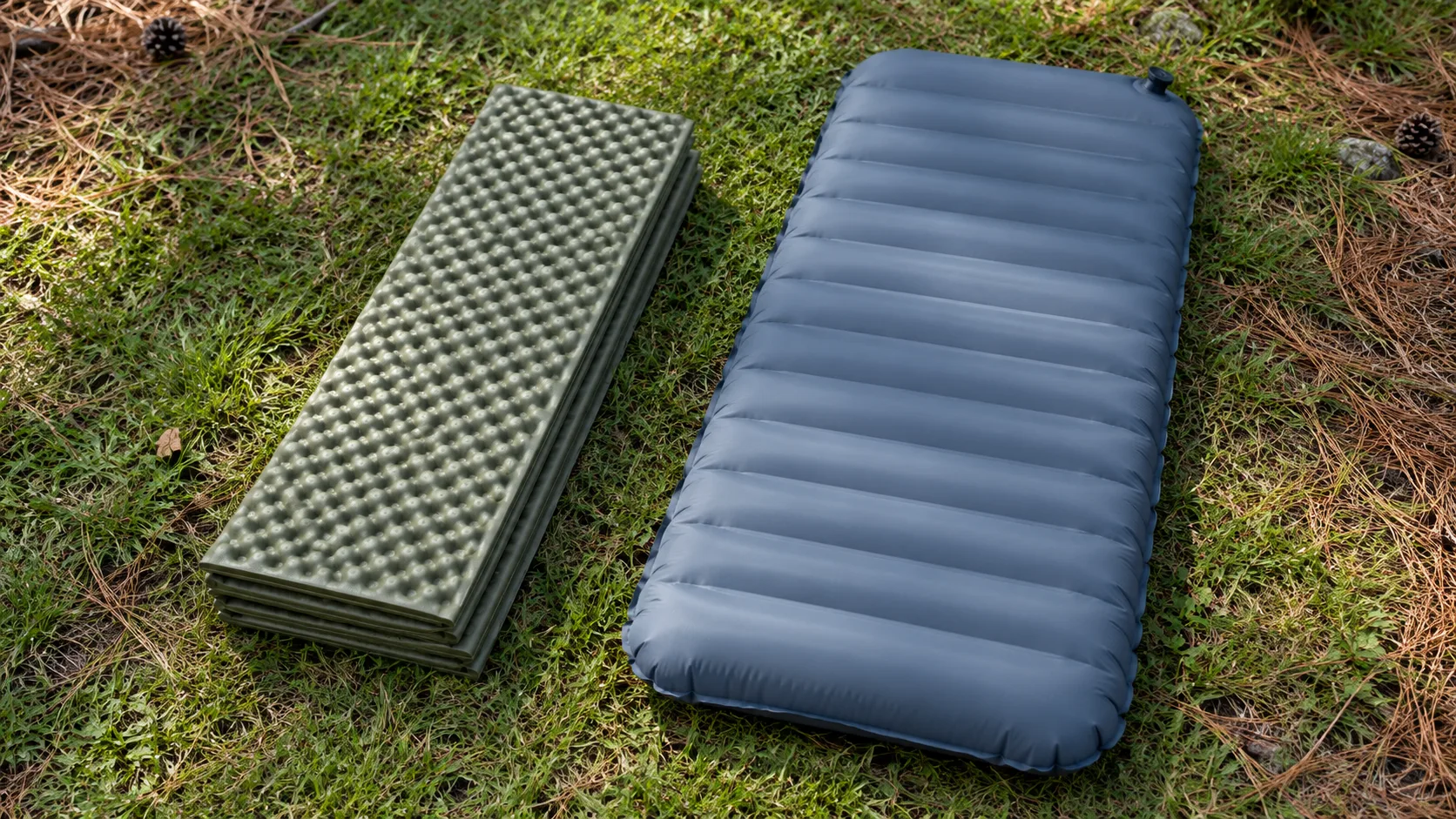
Try the sleeping space with your pads
Suppose your two sleeping pads are each 65 cm wide. Together they need 130 cm before you consider any surrounding space. Check whether the tent floor tapers towards the feet and whether the listed width refers to its widest point.
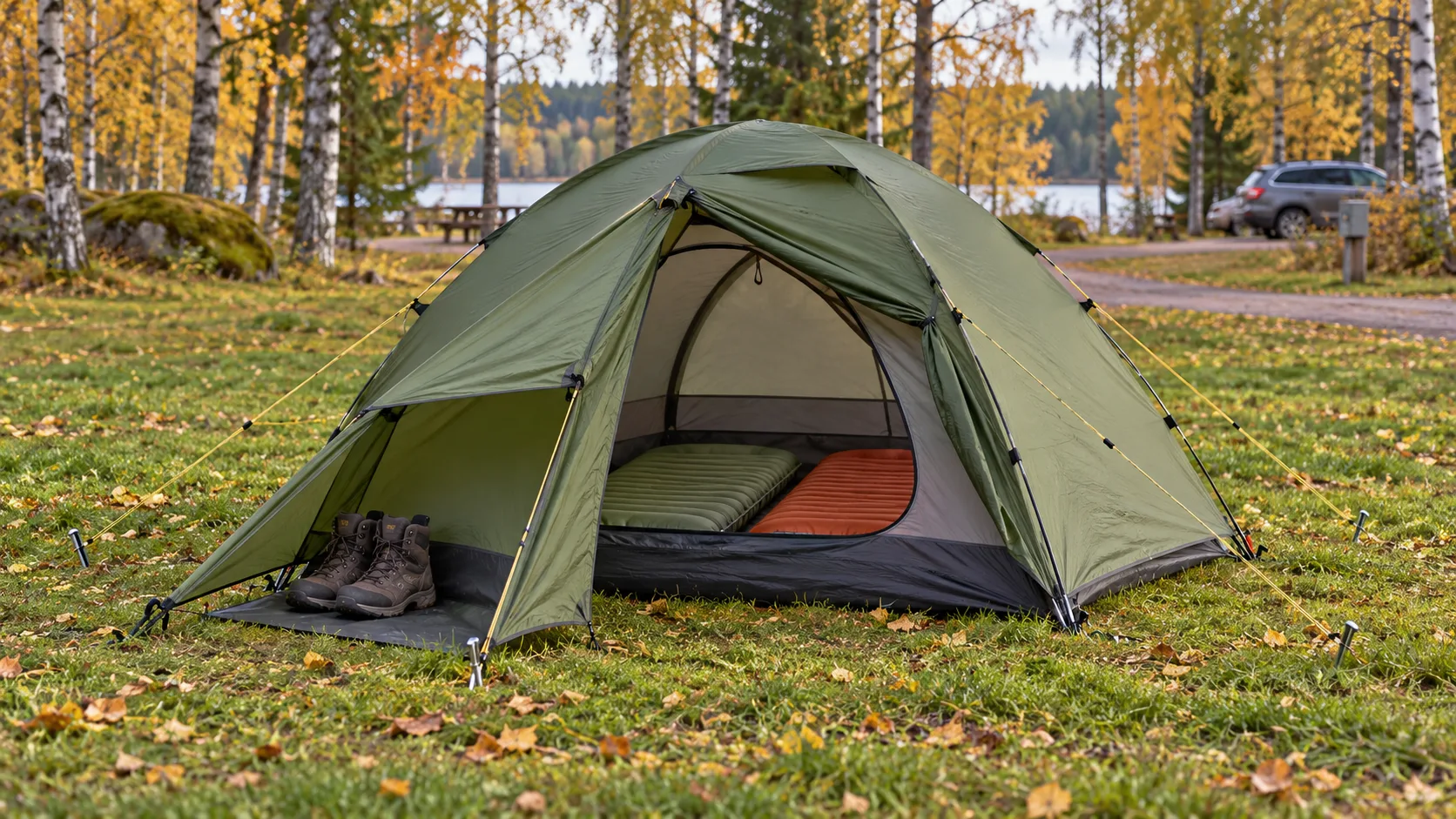
Lay out the pads. Sit up. Check whether your shoulders and sleeping-bag footbox fit without having to stay in one exact position all night. Sloping walls affect usable space above the floor, so a flat measurement cannot tell you everything.
If you have not chosen your pads yet, the guide to choosing a sleeping pad can help with that decision. Then compare the tent with the equipment you actually plan to sleep on, even if you need to borrow it for the trial.
Compare pitching arrangements for your campsite
Tunnel tents can offer generous space for their weight, while dome tents can suit a camp that stays in place longer. Compare the individual model's anchoring, sleeping dimensions and pitching process; its shape alone does not determine which is right for you.
Hilleberg describes these trade-offs and distinguishes fully freestanding designs from models with parts such as vestibules that need pegs. A self-supporting tent still needs anchoring according to its instructions and the conditions.
Ask to see the tent pitched. Practise inserting poles, attaching corners and tensioning lines with the people who will use it. Check which pegs and lines are included and what your intended ground requires. If you want to pitch it alone, try doing that before buying.
Leave space for boots and wet equipment
The vestibule is outside the inner tent but under the flysheet. Put your backpack and boots there during the trial and check that the entrance remains usable. A second entrance can make it easier to get out without stepping over a sleeping companion; you can assess that benefit with both people on their pads.
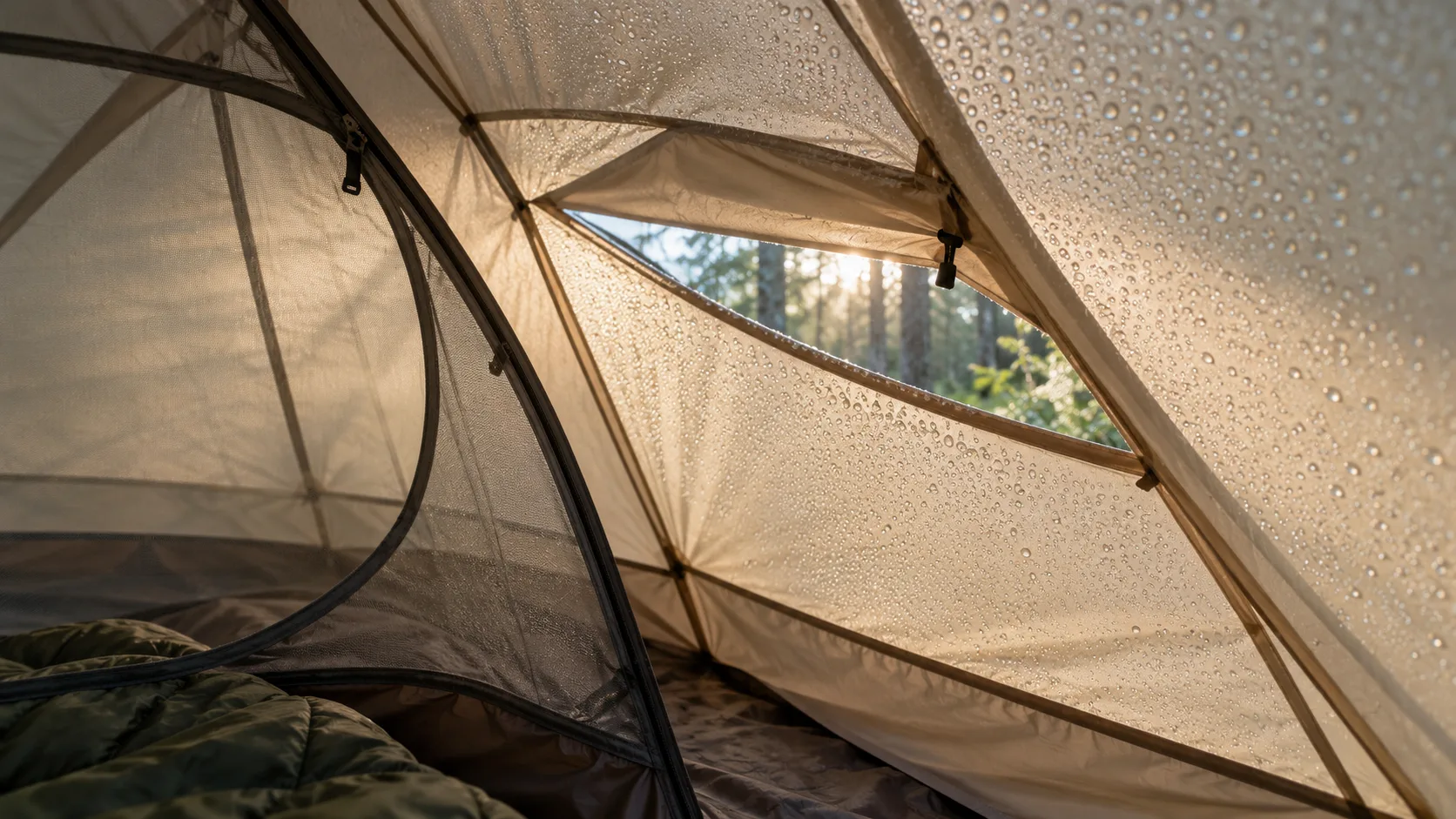
Look at the vents and how the manual says to use them. Buying a tent does not remove moisture from wet equipment or a night outdoors. Read about tent condensation and preparing to camp in rain before the first weekend.
Practise before departure
Pitch the tent once at home or somewhere nearby where pitching is permitted. Put the sleeping equipment inside, close the doors and then pack everything away again. This reveals a missing bag or a packed size that makes the tent awkward to fit into your backpack.
After the first nights, a photograph through the tent entrance can remind you which place you want to revisit. In FARON, you can attach that photograph and a note to the overnight place on your map. Log your first night once the tent has been out on a trip.
Frequently asked questions
Is a two-person tent enough for two adults?
It can be, but check the sleeping dimensions with your pads and try the space. The person count in the model name cannot replace that check.
Is the lightest tent best for hiking?
No: weight needs to be balanced against intended weather, space and use. Compare models designed for the same purpose.
Does a self-supporting tent need anchoring?
Yes: anchor it according to the manufacturer's instructions and the conditions. Being able to stand by itself is no guarantee against wind.
What should I try before the first trip?
Try the complete pitching process, sleeping space, entrances and packing the tent away again. Use the equipment and number of helpers you will have on the trip.