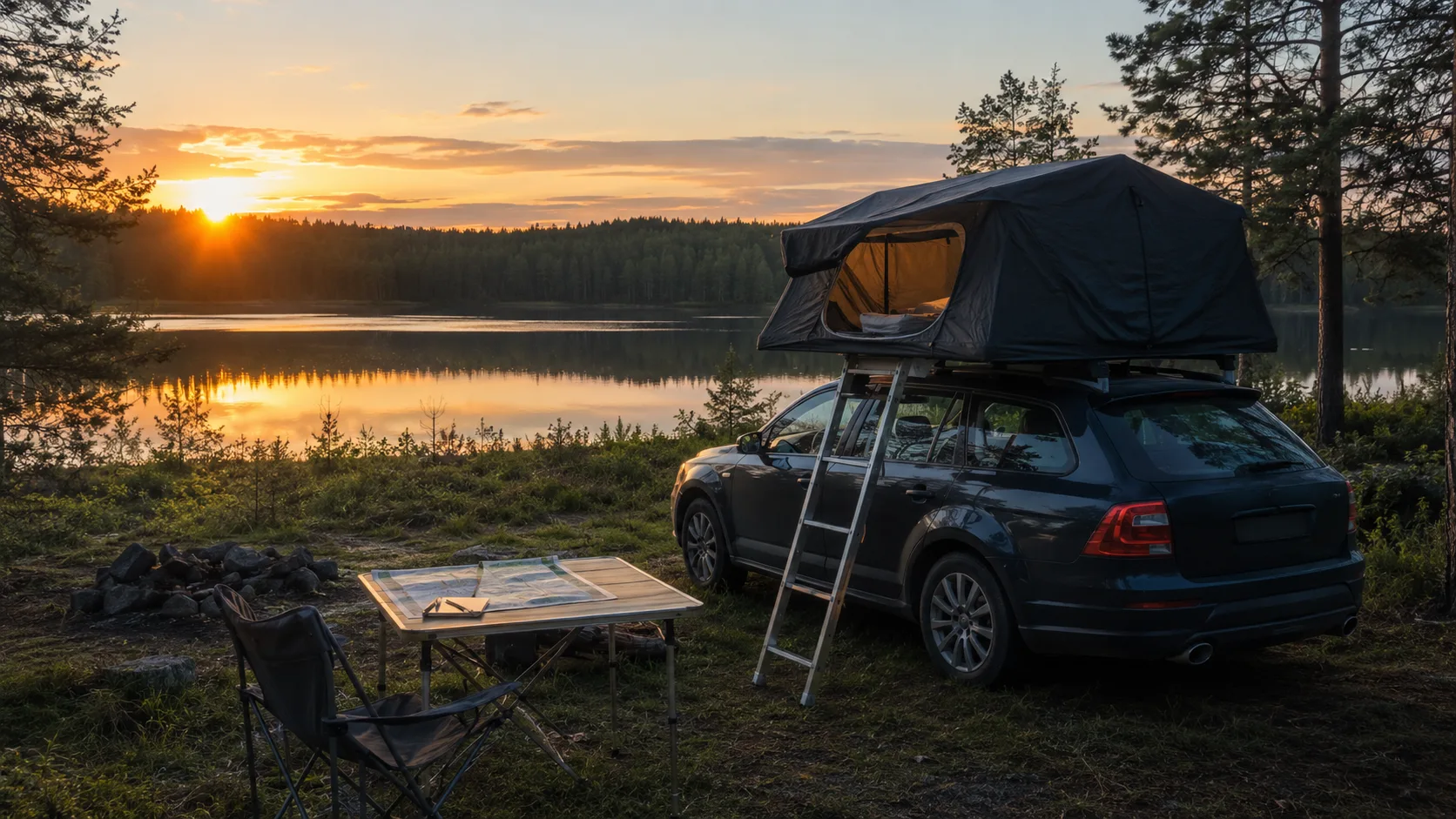
A comfortable sleeping pad still has to fit. For an imagined week camping in Dalarna, I would start with the tent floor and overnight conditions before comparing weight and packed size.
Separate insulation from cushioning
R-value measures resistance to heat transfer: a higher value means more insulation. Therm-a-Rest manufacturer Cascade Designs also explains why a pad matters beneath a sleeping bag: the bag's filling is compressed under your body and provides less insulation there.
Compare values measured using the same standard, such as ASTM F3340. An R-value is not a temperature limit in degrees. Choose for the whole sleep system and expected conditions, using the manufacturer's guidance. Do not assume a thick mattress is warm if its insulation is unspecified.
Measure the tent floor
Measure the width where you will actually sleep. Check the length and whether the floor narrows towards your feet. I would put the pads side by side rather than rely on the tent's stated capacity.
For example, two pads each 64 cm wide need 128 cm together. A 130 cm floor leaves just 2 cm across the width. These are illustrative measurements, not a particular tent's specifications. Add your actual luggage before deciding whether the space works.
Try your normal sleeping position
Lie down. Turn over. Check whether your hip presses through and whether your shoulders slip off when you lie on your side.
For a drive to Dalarna, I would accept a slightly larger packed size for better sleeping space. If the same equipment will be carried on a hike, weight needs another look. Those are two different uses even if they start in the same car boot.
Try the valve and follow the inflation instructions. For an inflatable pad, I would also check which repair materials suit the model. A home trial makes it easier to discover a leak before departure.
Choose something you can use again
If possible, borrow a pad for a trial night before a major purchase. Spend on the feature you are actually missing: insulation, width or support. More equipment does not always make it easier to organise your travel packing.
Save the night you want to remember
During a week in Dalarna, one night beside a lake may become the place you want to revisit. FARON lets you add that night to your map and keep a photograph from the evening. Log your first night with a place name you will recognise next time.
Frequently asked questions
Is a thicker pad always warmer?
No. Compare stated insulation and the test method rather than thickness alone.
Is R-value a temperature rating?
No. It describes thermal resistance and cannot be read as a minimum temperature in degrees.
Will two wide pads fit a two-person tent?
Check the actual dimensions: compare their combined width with the floor where you will sleep.
What should I try before leaving?
Try your sleeping position, available space and valve at home, and check an inflatable pad holds air as specified.