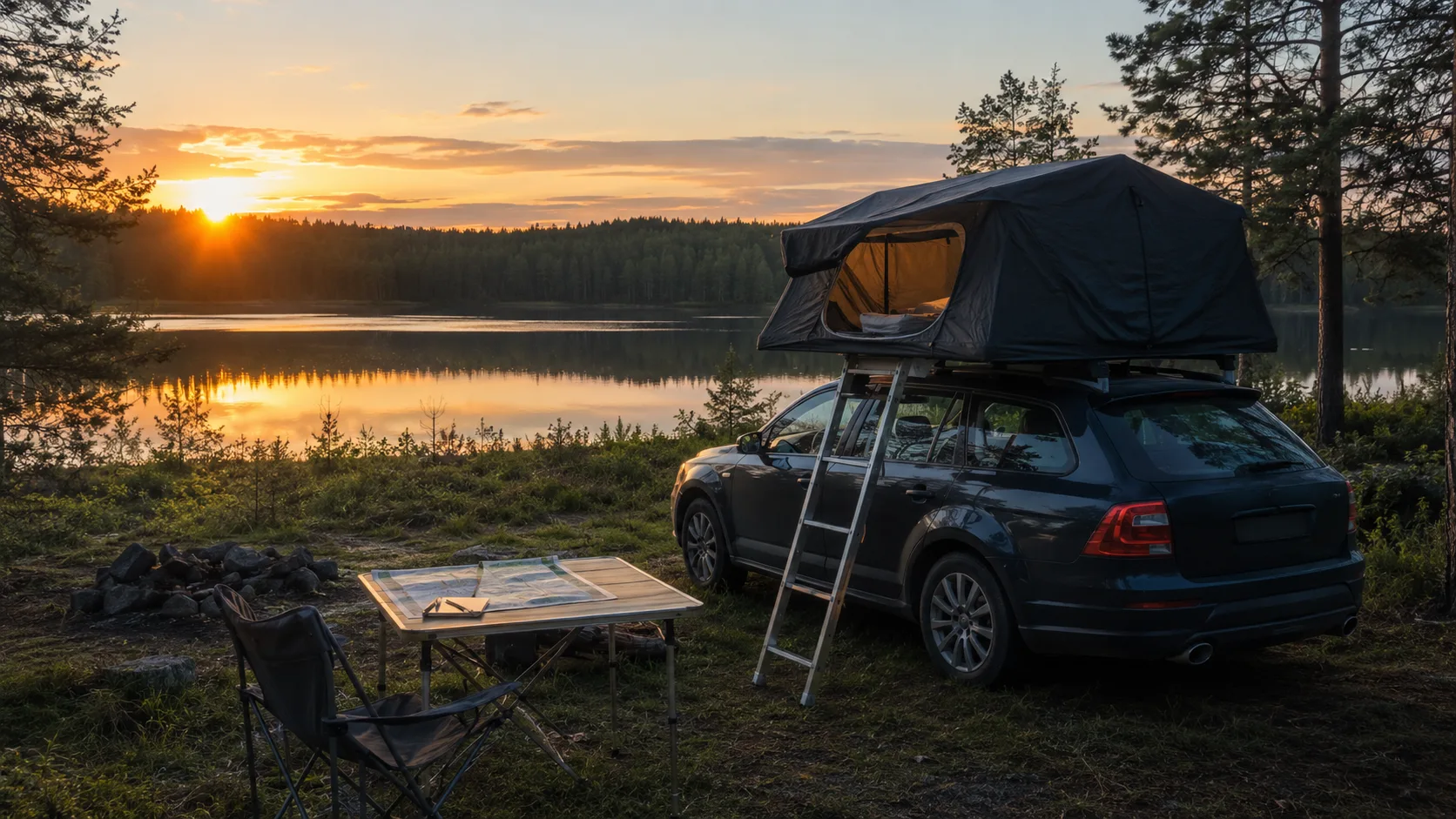
A wet tent wall does not necessarily mean rain has leaked through. For an imagined weekend beside Lake Siljan in Sweden, I would plan for two things: airflow overnight and time to deal with the tent in the morning.
Start with airflow
Condensation forms when moist air meets a cold surface. Tentipi explains the contribution of breathing and ground moisture, and how ventilation helps moisture escape. That is why fabric can be wet after a night without rain.
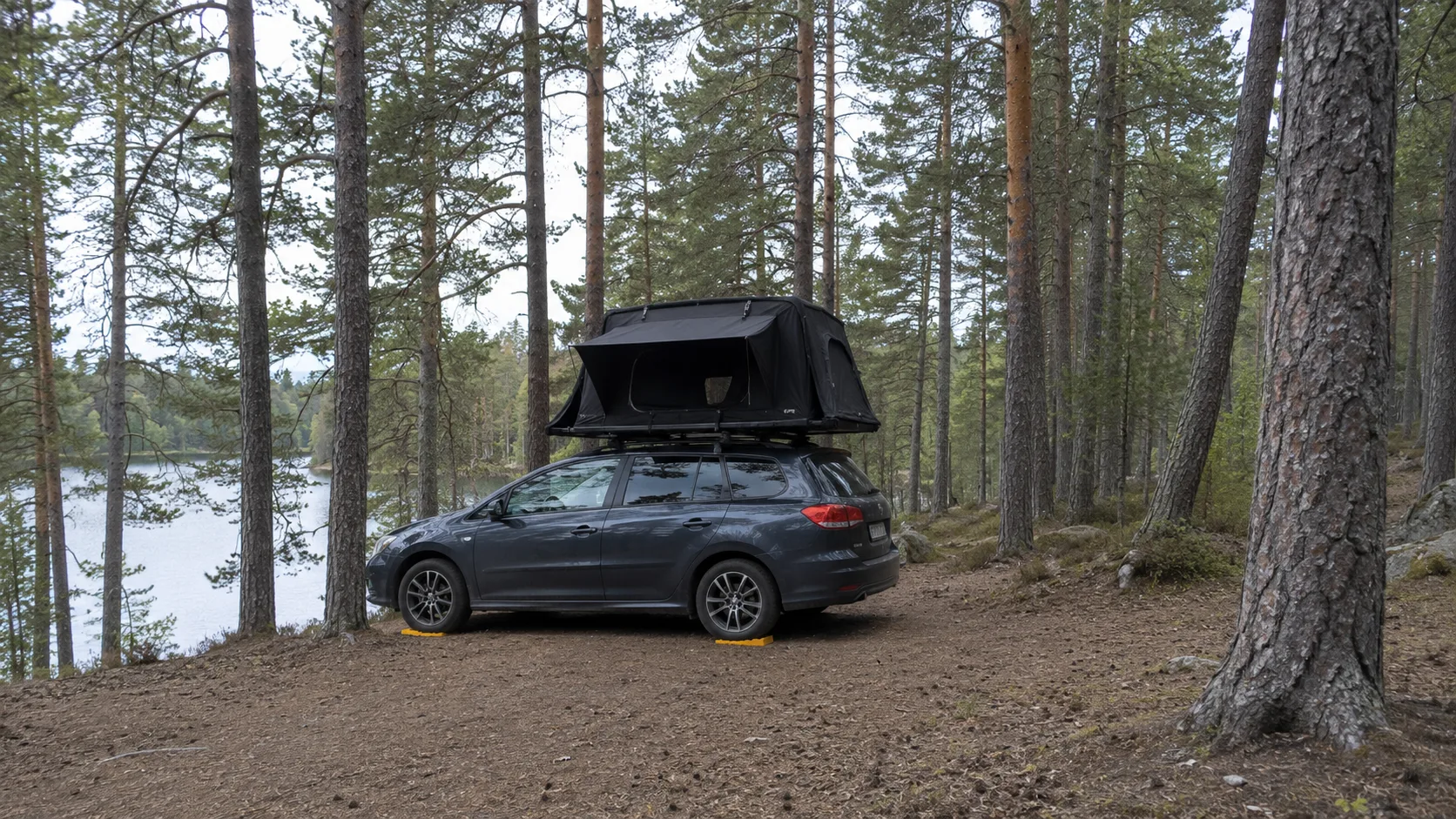
Read your tent's instructions before closing openings to retain warmth. Vents and rain protection differ between models. I would try the controls at home and check which can be reached from the sleeping area, particularly in a rooftop tent where getting outside is less convenient at night.
Pack for a damp morning
Make space. Keep things separate. Put your bedding where you can remove it without dragging it against wet fabric.
My suggested packing order has three groups: bedding in a dry cover, damp clothing separately, and a cloth within reach for droplets. This is a way to organise packing, not a promise of a dry tent. For a first trip, read the rooftop tent beginner's guide.
Imagine leaving Siljan at 09:00 and driving on to Mora. If the tent is still damp, I would prioritise dry bedding and a plan to open the tent again. An activity booked for 10:00 should not decide how equipment stays packed for the rest of the weekend.
Choose where you can open the tent again
Follow the manufacturer's drying and storage instructions. Before driving away, I would choose the next campsite or arrival home as a specific opportunity to spread things out. Do not assume a short coffee stop will be enough; check the material before storing it for longer.
Water that repeatedly appears at one seam or damaged area needs investigation. Do not dismiss every wet patch as condensation. Photograph the area and ask the manufacturer if you are unsure about waterproofing or care.
Keep the memory of the night
After two nights beside Siljan, one place might be worth returning to. FARON lets you save the overnight stay on your map with a photograph and a short note. Start by logging your first night and write what you want to remember about the visit.
Frequently asked questions
Can a tent get wet without rain?
Yes. Condensation can form when moist air meets cold tent fabric.
Should I close the vents when it is cold?
Follow your tent's ventilation instructions; do not assume closing the vents will solve moisture problems.
How long does the tent need to dry?
Check that the material meets the manufacturer's storage guidance rather than relying on a fixed number of minutes.
Is every drop inside the tent condensation?
No. Leaks or damage can also let water inside and need investigation.