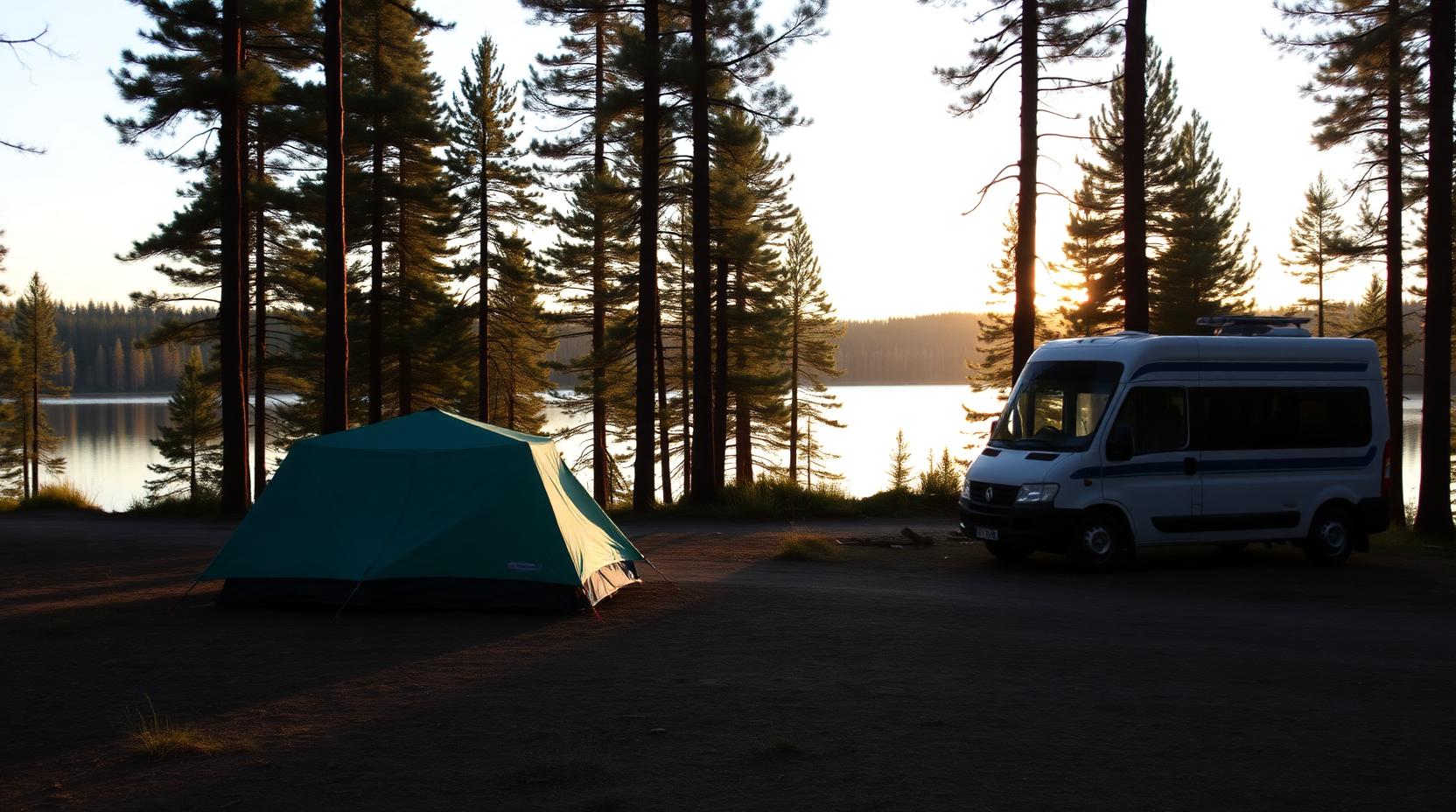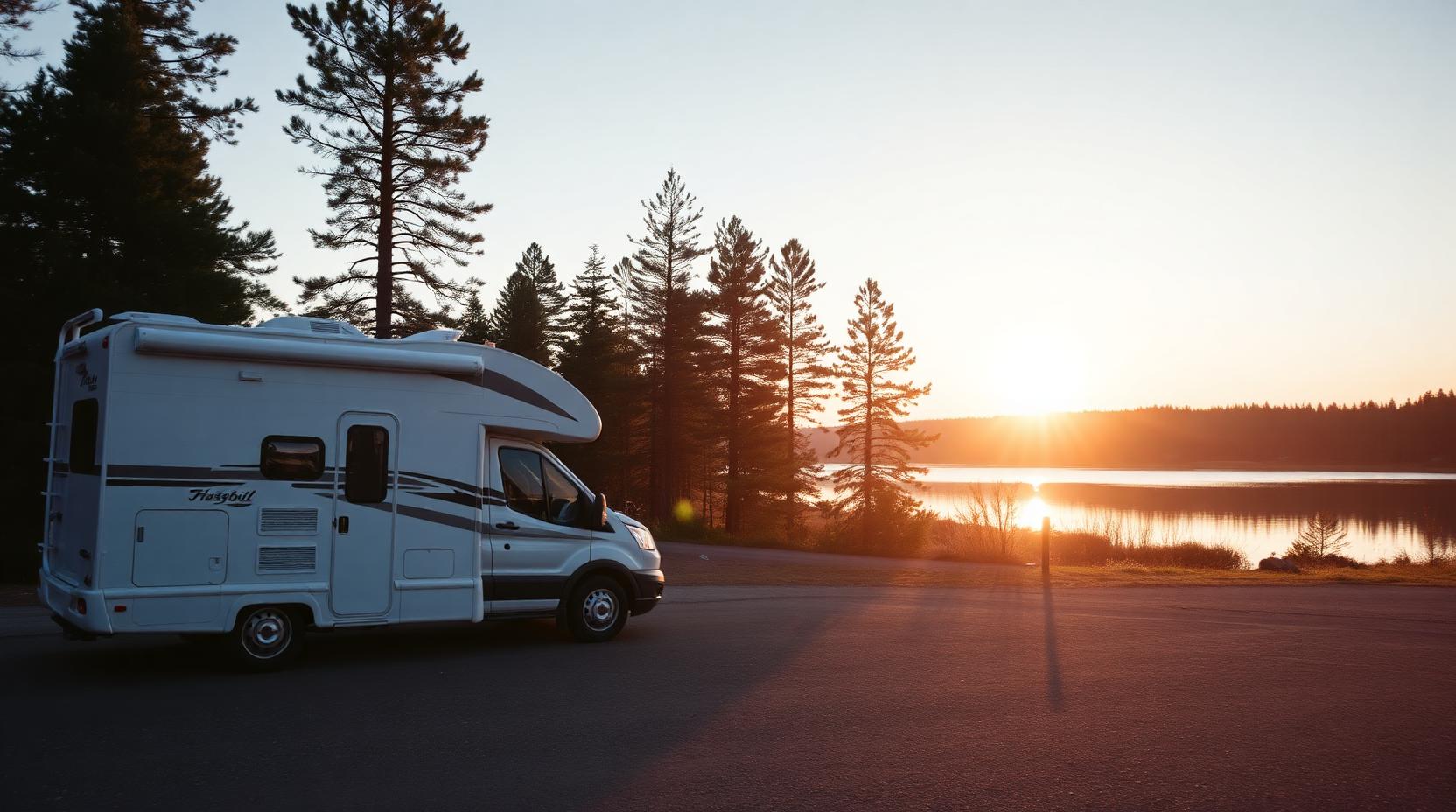
“The best motorhome stopover” is an odd question because the answer depends on the traveller. A family in July wants a playground, swimming jetty and working service point. A couple in September wants quiet, a view and space from the next vehicle. A solo traveller in April wants electricity that works before the season is fully under way. One place can be perfect for one party and wrong for another.
Start with three named stopovers to compare, then use the nature, town and coastal sections to narrow your choice. The examples show how facilities differ between sites.
Define a good motorhome stopover
Water, waste disposal, electricity and bins provide a useful baseline. Services rarely decide whether the night is good. The character of the place does: level ground, distance from neighbours, morning light and traffic outside the window.
A good stopover has enough space for your vehicle without a parking puzzle, a reasonable gap to the next motorhome and something nearby — a beach, trail, café or view — that makes another night appealing.
Start with what you need tonight. Water first. View second. A highly rated setting cannot refill an empty tank.
Compare three named stopovers
These Göta Canal sites show how different two stopover nights can be. Select your dates with the operator for current prices and availability.
Kaffeteriet in Borensberg – for a service stop
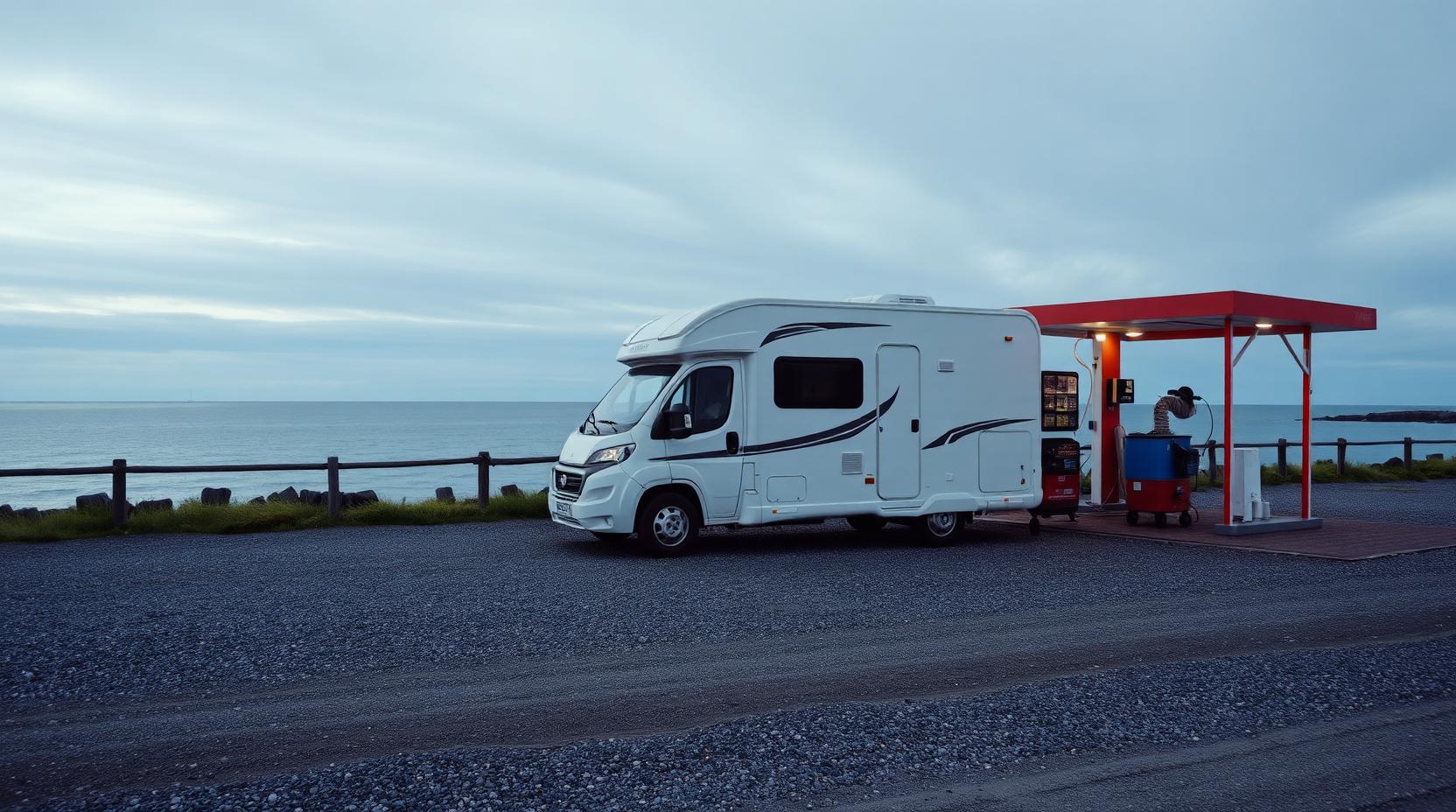
Kaffeteriet lists 45 spaces, 37 with electricity, plus showers, fresh water and toilet and grey-water disposal. I would start here when refilling and emptying are the main purpose of the night. The area is not cleared of snow in winter.
Tåtorp – when you can manage without connections
Tåtorp stopover beside Lake Viken has 10 spaces without electricity and a dry toilet, with no other services. Plan refilling and waste disposal elsewhere.
Söderköping – when the date changes the stay
Söderköping stopover is beside the canal near town. The operator lists 1 October–6 May as low season: parking remains open, but facilities, other services, snow clearance and gritting are unavailable. An October night needs a different plan from a July stay.
Suppose you are choosing between Tåtorp and Borensberg and need a shower and waste disposal that evening. Tåtorp drops out on facilities alone. That decision helps more than comparing scenic photographs.
Choose nature when the place is the experience
These stopovers sit outside towns: a gravel area beside a Småland lake, a meadow by a Värmland river or a forest opening in Dalarna. Facilities may amount to a dry toilet and bins, but the location itself justifies the journey.
Small sites can fill during the holidays. Find out whether spaces are bookable or allocated on arrival, then choose a nearby backup. Check the operator for current prices, payment methods and vehicle limits.
Useful areas to research include Värmland around the Klarälven, Dalarna near Siljan, the Småland lake districts around Bolmen and Åsnen, and much of inland northern Sweden.
Stay near towns for easy day trips
An urban stopover lets you walk to a restaurant, hire a bicycle, visit a museum or shop without moving the motorhome. This can suit families mixing nature and activities or solo travellers who prefer people nearby.
The trade-off is quiet. Morning activity and a car-park view are common. That is not a flaw when chosen deliberately, but it should not come as a surprise.
Places such as Visby, Lysekil, Strömstad, Mariefred, Gränna, Hudiksvall and Luleå have offered stopovers within reach of their centres. Availability and booking arrangements change, so check the current operator before relying on a particular site.
Let the coast set the conditions
Coastal stopovers form a category of their own. Bohuslän has classic positions close to the sea; Öland and Gotland mix open fields with small bays. The northern coast has fewer options, many of them considerably quieter outside July.
Wind is the deciding variable. A magical calm-weather site can become uncomfortable in strong wind, especially with a rooftop tent or tall motorhome. Check the forecast and keep a backup farther inland.
Areas worth researching include Strömstad and Smögen in Bohuslän, Mörbylånga and Byxelkrok on Öland, Klintehamn and Fårösund on Gotland, and Ullånger and Docksta along the High Coast. The Koster Islands make a car-free excursion from Strömstad rather than a motorhome stopover.
Use specialist stopovers for a specific activity
Some places exist beside a ski area, festival, harbour, trail or national park. Facilities range from full services to a plain gravel area; proximity to the activity is the point.
Check exactly what is provided before arrival. Carry water and plan disposal elsewhere when a remote site is basic.
Combine public discovery with a private list
Apps such as Park4Night, Campercontact and Camping.se help reveal what exists in an area. They cannot decide what works for you. A glowing review from another traveller may describe the wrong place for your needs.
Use a public database to discover options, test them yourself, then save the ones that work in a private archive. Next season begins with your own evidence, not only other people's ratings.
Save the night, a rating and a short note in FARON. See your choices on a map of Sweden and use them in the trip planner when shaping the next route.
Ask three questions before choosing
What is the purpose of the night: rest, an experience or logistics? Are you staying once or for several days? How much service do you need: full facilities or simply a permitted place to stand?
A transit night may only need electricity and easy access. A rest night needs quiet. An activity night needs proximity to the reason you came. Few places excel at all three.
FAQ
What is the difference between a motorhome stopover and a campsite?
A campsite often has more facilities, while a stopover mainly serves shorter vehicle stays. Services and charges vary in both categories; compare the actual offer in our campsite and stopover guide.
Can I wild camp instead of using a stopover?
Sweden's Right of Public Access does not give vehicles access to off-road land. Parking signs, local traffic rules and general parking restrictions apply; read our guide to wild camping in Sweden before choosing an alternative.
Do I need to book in advance?
Book when the operator offers reservations and you need a particular place on a fixed night. Keep an alternative for sites without booking; low season guarantees neither space nor working facilities.
How do I save my favourite stopovers?
Log each night in a private journal with its map position and a short note. FARON lets the list grow across seasons; the travel-journal overview explains the approach.