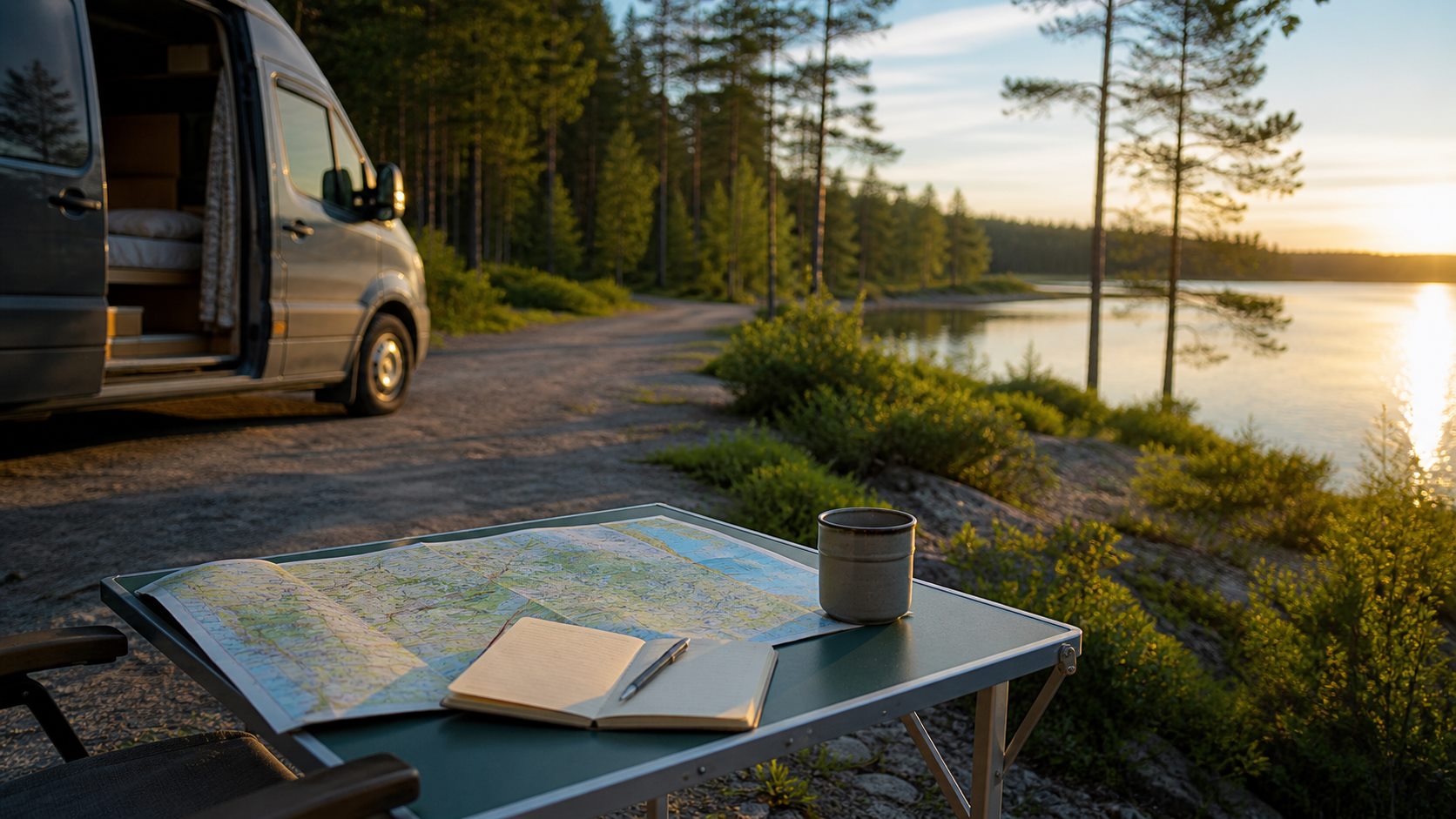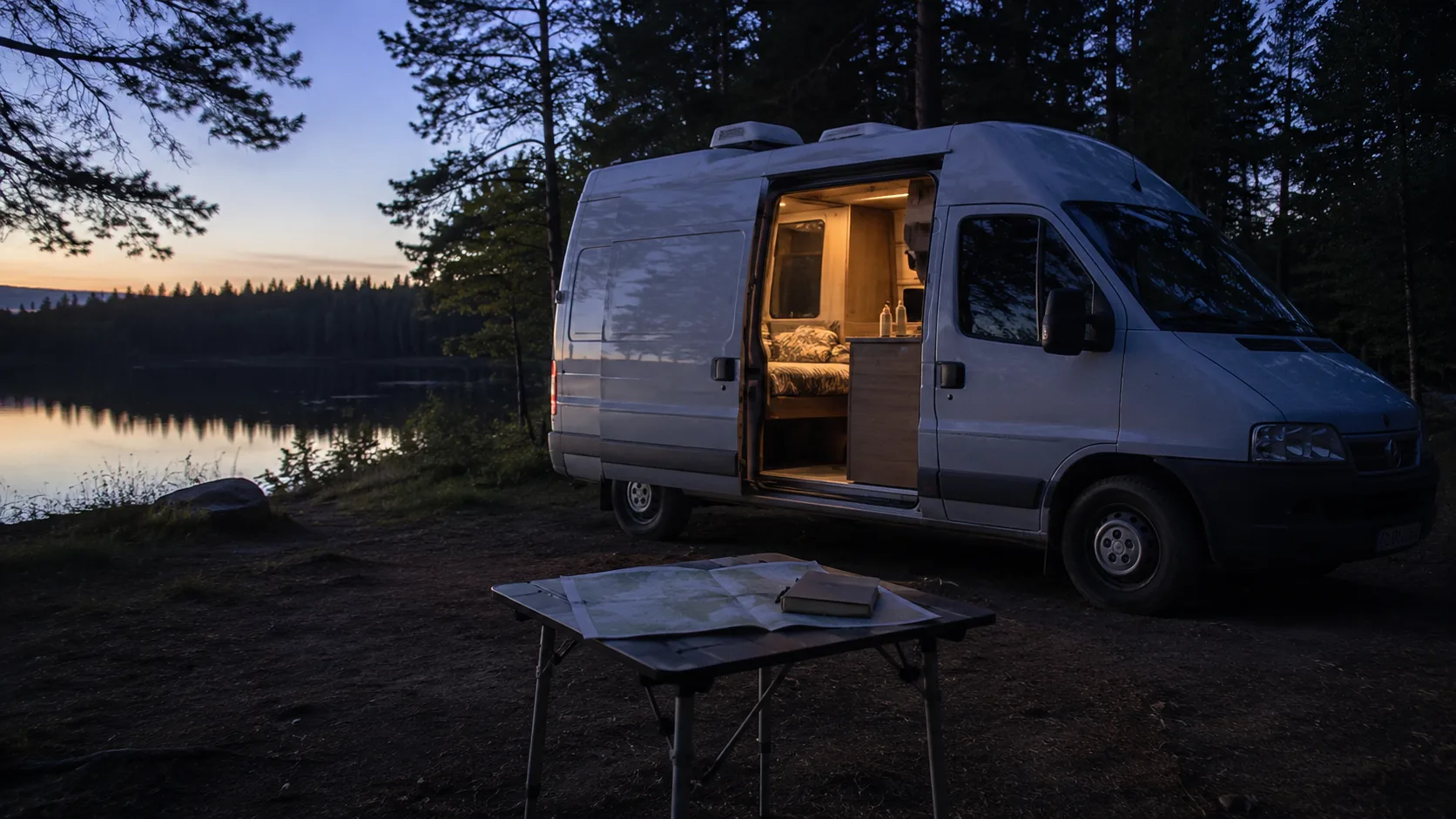
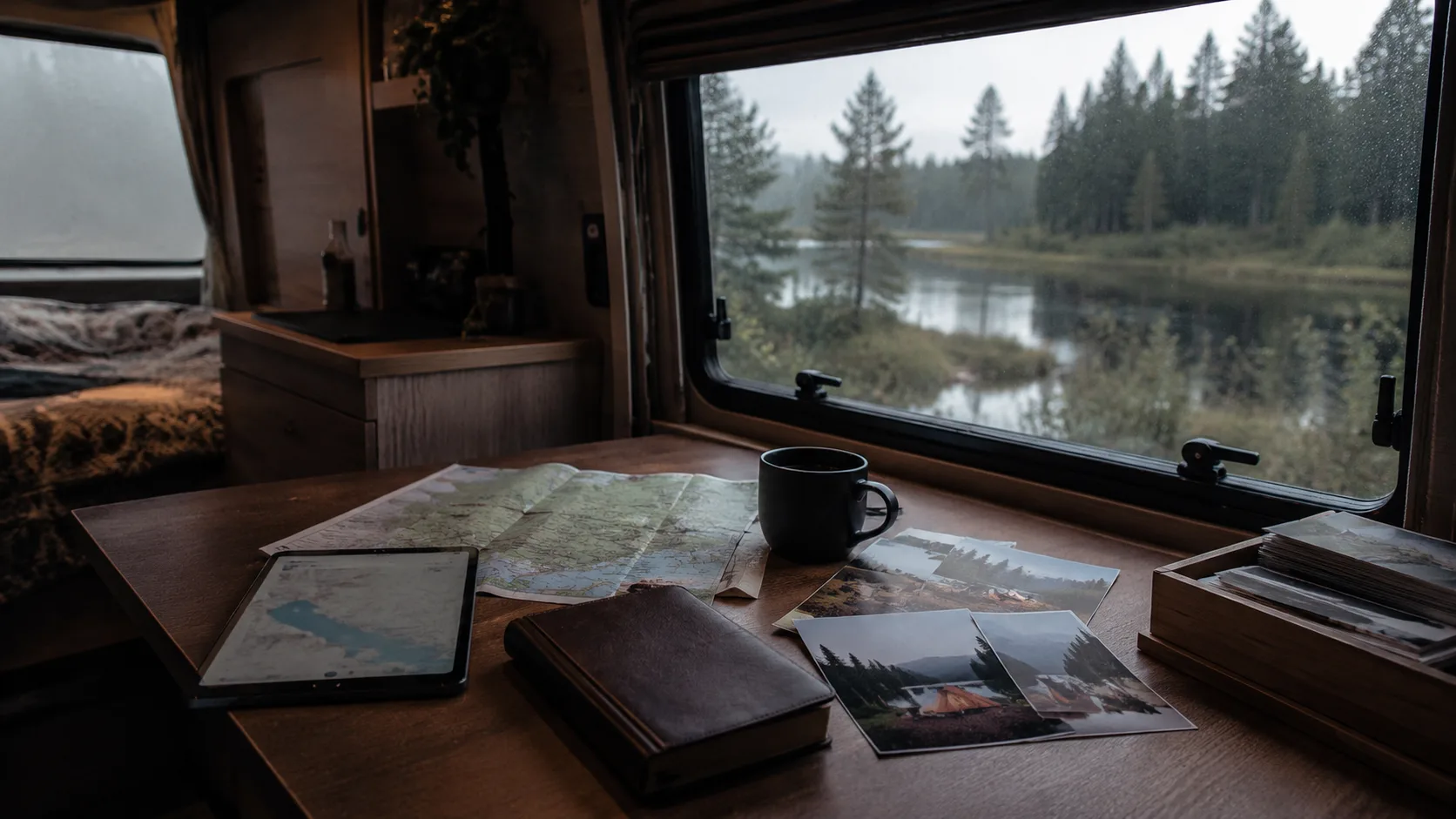
At 21:30, rain drums on the metal roof and the lakeside pin slopes hard to the right. The stove is buried under the bed frame, half the luggage would need to enter wet grass and condensation is already covering the windows.
The first van night rarely resembles social media. Treat it as practice, perhaps an hour from home, where learning the vehicle matters more than reaching a dramatic destination.
Choose an overnight place for sleep
Level ground comes before the sunset. Use paved, gravel or naturally firm surfaces while learning. Keep an easy departure route and enough room to turn without reversing through unknown obstacles after dark.
Road noise carries through thin vehicle walls. Rain can also turn a forest approach into mud. During poor conditions, a campsite or motorhome stopover provides level ground, electricity and certainty.
Sweden's Right of Public Access does not permit motor vehicles on natural ground. Check signs, reserve rules and municipal restrictions, remain away from homes and never block gates or working access.
Manage daily life in a small space
Know the remaining fresh water, legal grey-water disposal and next toilet-waste service. Handle them before they become evening emergencies.
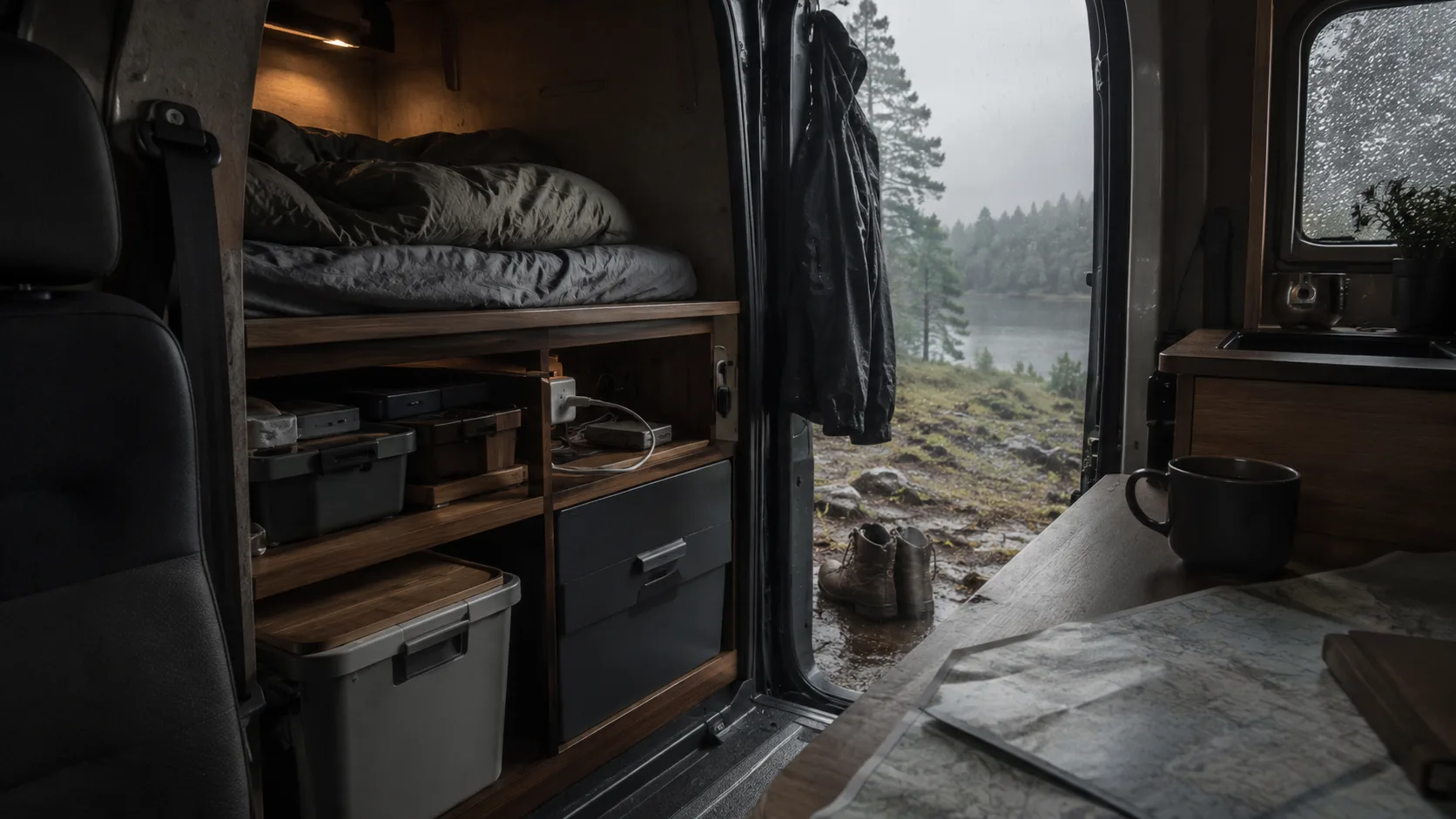
Ventilation remains essential in cold weather because occupants, wet shoes and cooking add moisture. Keep air moving and establish a wet zone that cannot touch bedding or clean clothes.
Start with one-pot meals and food requiring little washing. Learn the leisure battery's real capacity and charge high-demand equipment while driving when the vehicle's own system supports it.
Pack by access, not volume
A head torch, keys, rain jacket, warm layer and first-aid equipment must remain reachable in darkness and rain. Group pantry food, cables, tools and bedding into separate removable boxes.
Every object needs one home. In a van, an unassigned item quickly becomes permanent clutter across the only free surface.
Turn every first night into evidence
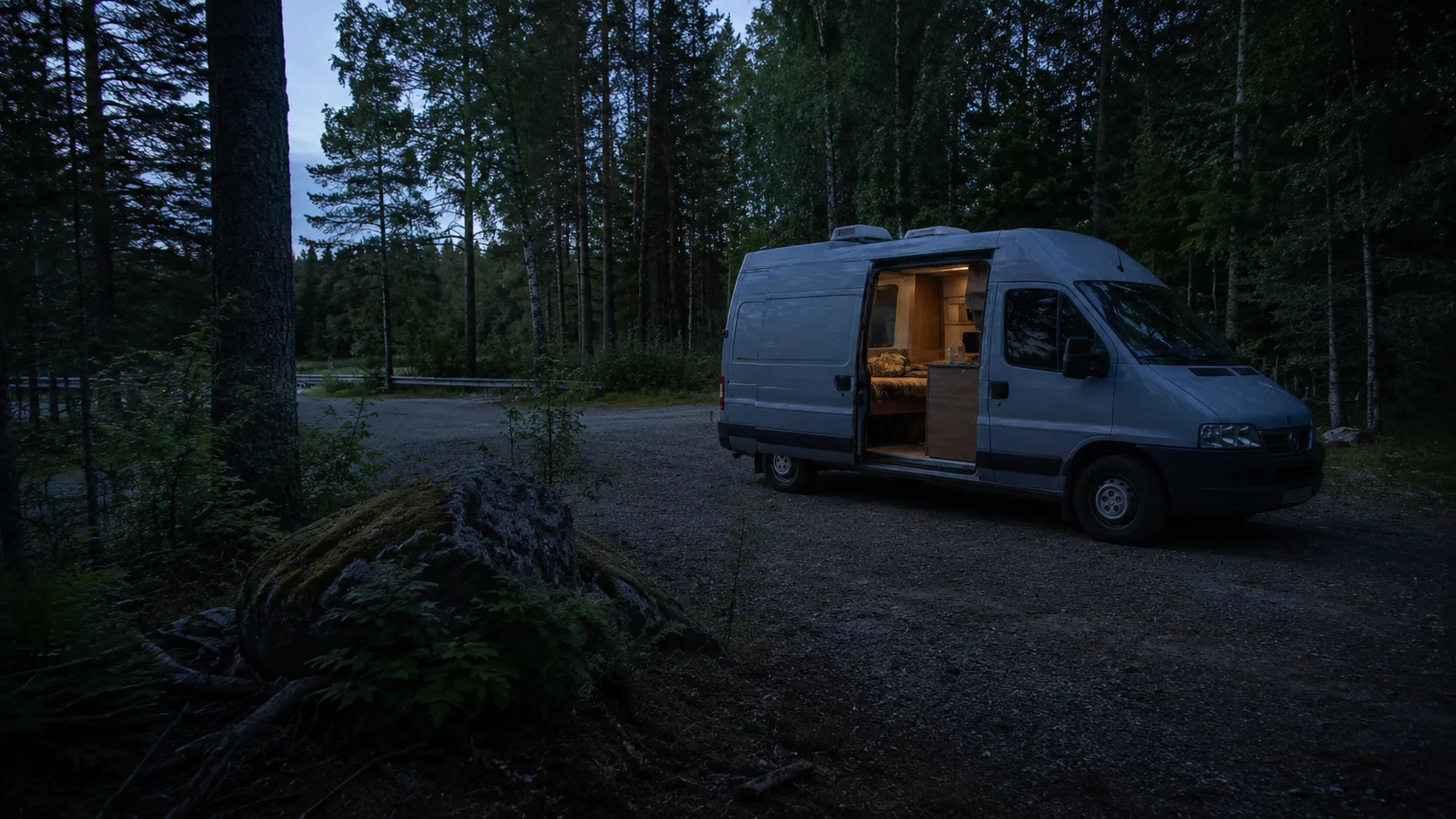
The plain gravel area may produce better sleep than the praised viewpoint. Record morning sun, road noise, coverage, water access, wind and the awkward piece of equipment.
For a longer journey, use the Swedish vanlife route guide. The beginner's task is smaller: establish reliable nights and routines before connecting many places.
Build a private vanlife archive
Use Log overnight stays to connect each coordinate, photograph and practical note. Then see how cautious local nights grow into longer journeys on the trip map.
FARON preserves your experience; it does not replace navigation, public site catalogues, weather or legal checks.
Frequently asked questions
What matters most on a first vanlife trip?
Keep it short and close to home while learning ventilation, electricity, bed setup and evening routines.
How do I choose a good van overnight place?
Prioritise lawful parking, level firm ground, an easy exit, acceptable noise and a place that feels safe.
How much should a beginner plan?
Know water and waste service, the intended night and at least one backup before darkness; every kilometre need not be fixed.
How should I retain early lessons?
Save the position, image and short notes about wind, road, service and the routine that succeeded or failed.