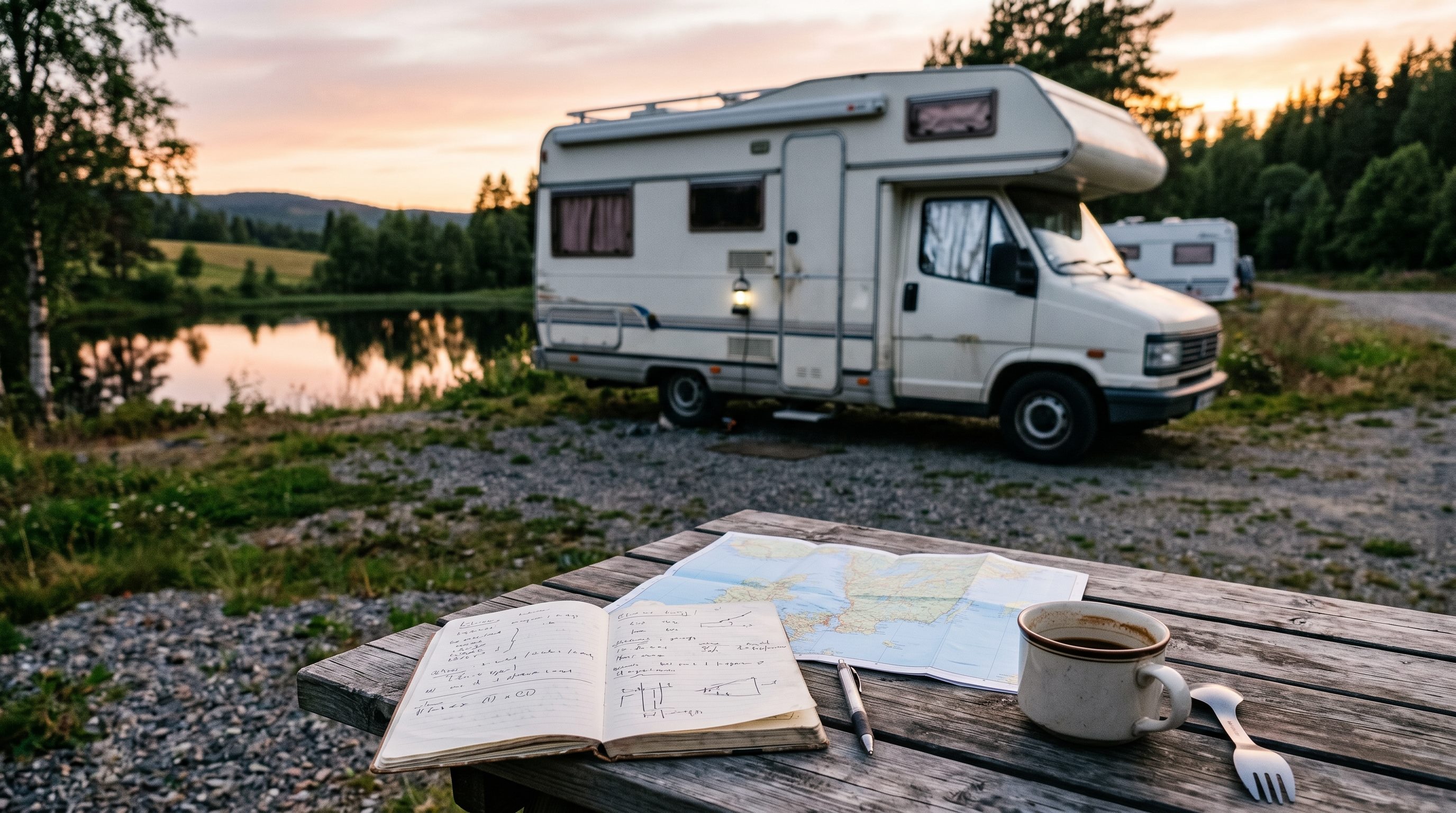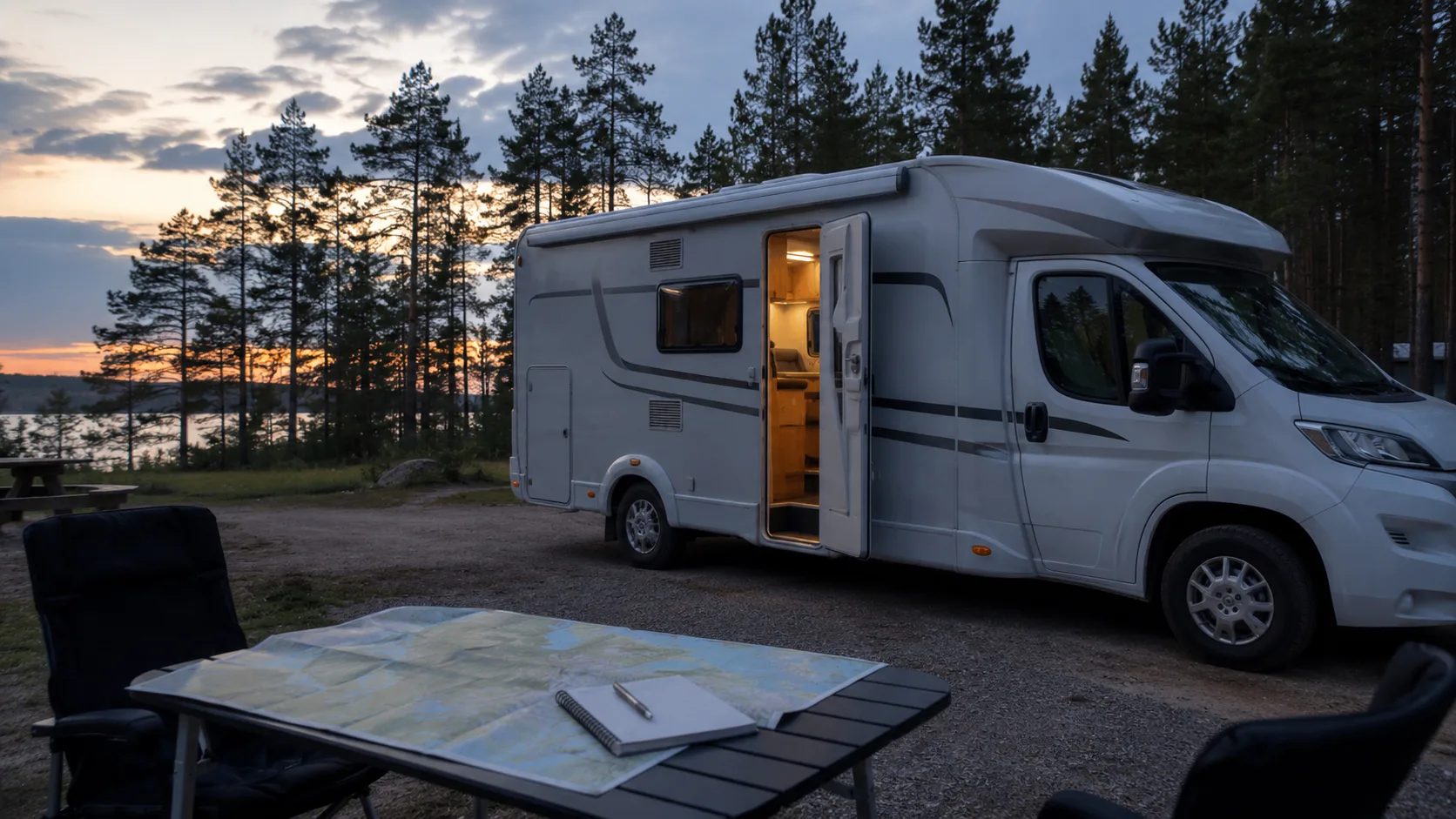
After 20:00, the harbour stopover is full, every electrical outlet is occupied and the narrow entrance feels smaller while reversing out. The driver is tired, the fresh-water gauge is low and the next lawful night is unknown.
Early motorhome trips become calmer when service, backups and the vehicle's size are understood before that evening.
Begin with a short test trip
Choose a spacious campsite or stopover thirty or forty kilometres from home. Learn length, width, turning and parking without combining them with a long unfamiliar route.
Use every system: refrigerator modes, hot water, main switch, lighting and bed. The first night reveals missing adapters, hose length, gloves and simple kitchen tools better than a driveway checklist.
Service before it becomes urgent
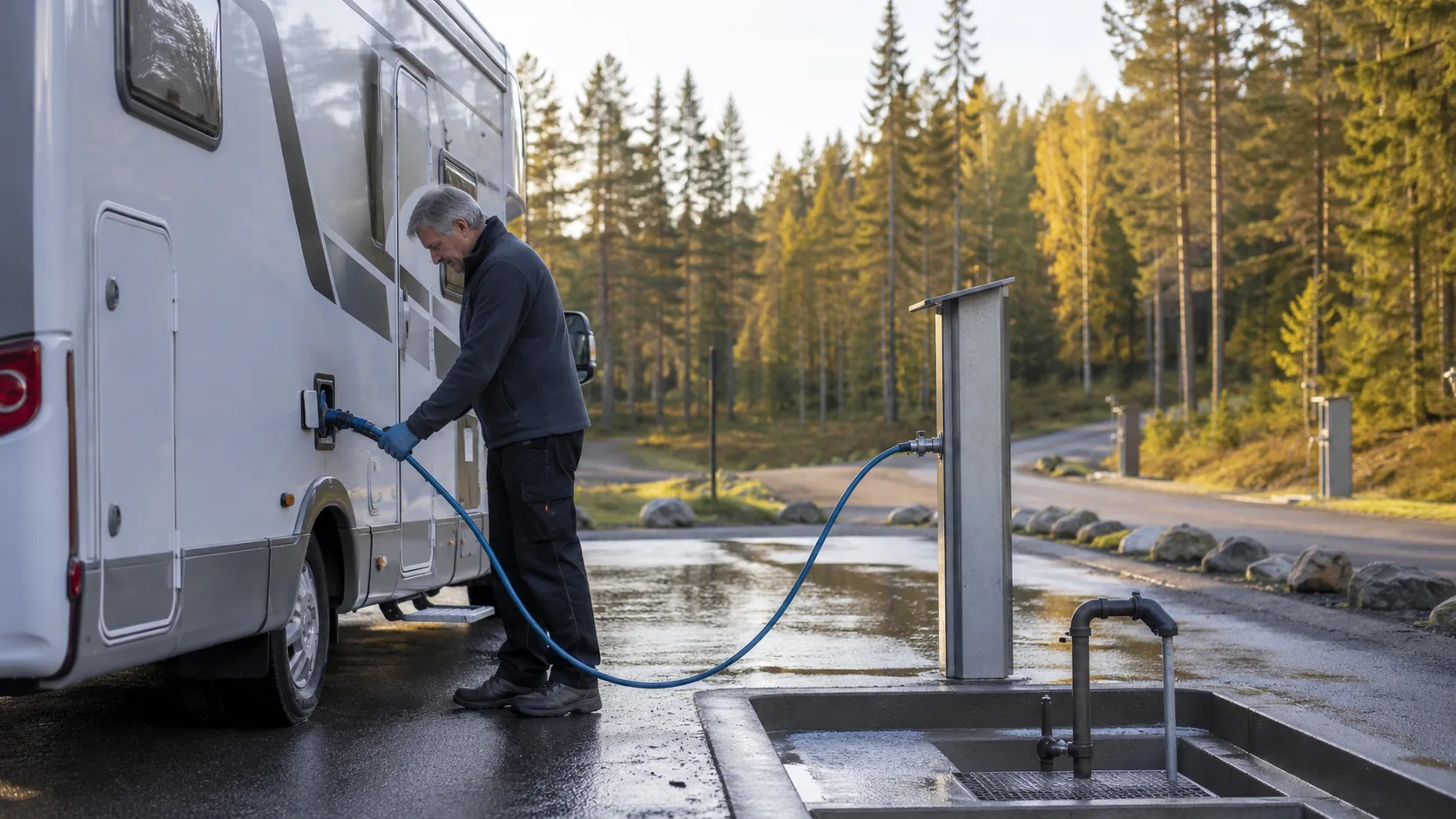
Fill fresh water and empty grey water and the toilet cassette at appropriate service points while there is still capacity. Waiting for every gauge to reach its limit creates late problems.
Learn how the leisure battery behaves without shore power and what heating, lights, charging and refrigeration consume. Check gas before cold nights and dispose of rubbish at permitted facilities.
Choose an overnight place with backups
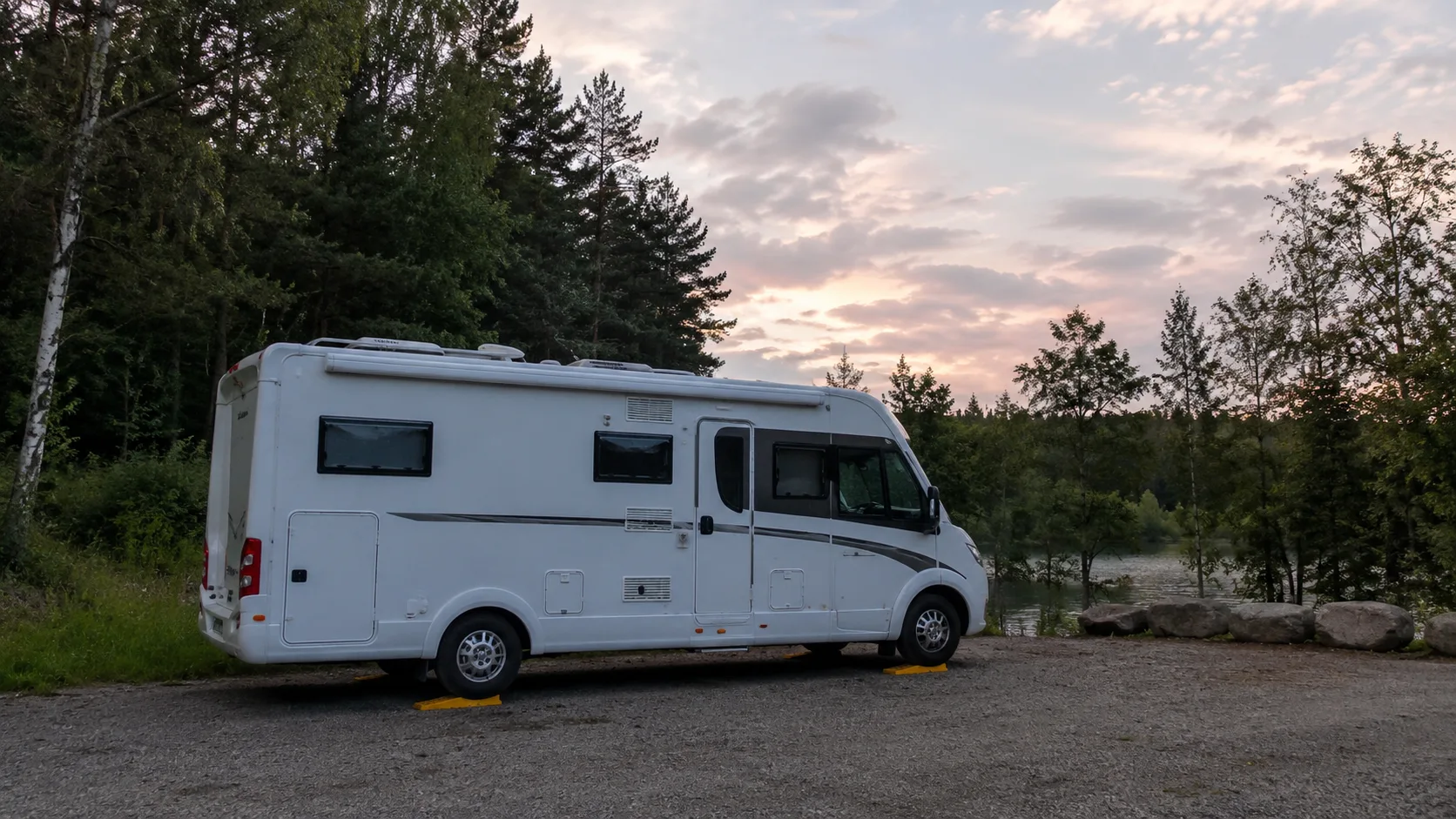
Keep two or three alternatives: campsite, motorhome stopover or another lawful vehicle night. Level ground improves sleep and can matter for older absorption refrigerators; levelling ramps make a modest place usable.
Assess noise, security, wind, morning departure and ground after rain. A plain gravel bay can outperform the waterfront when it is level, quiet and easy to leave.
Drive the dimensions, not the feeling
Write the exact height, length, width and registered weight near the dashboard. Ordinary car navigation may not protect a motorhome from low bridges, branches or narrow streets.
Remember rear overhang swing. Ask a passenger to watch outside when reversing; a camera cannot show every post, branch or moving bicycle.
Pack for immediate access
Keep shore cable, levelling ramps, torch, gloves and waste equipment near the correct hatch. Inside, rainwear, medicine, chargers and a simple meal must remain reachable after dark.
Store heavy items low and near the axles, secure all loose objects and clear tables and counters before driving.
Take responsibility for the night
The Right of Public Access does not grant heavy motor vehicles free use of natural ground. Check local signs and protected-area rules, remain away from homes, never block a gate and empty no wastewater or toilet outside designated facilities.
Save each early lesson
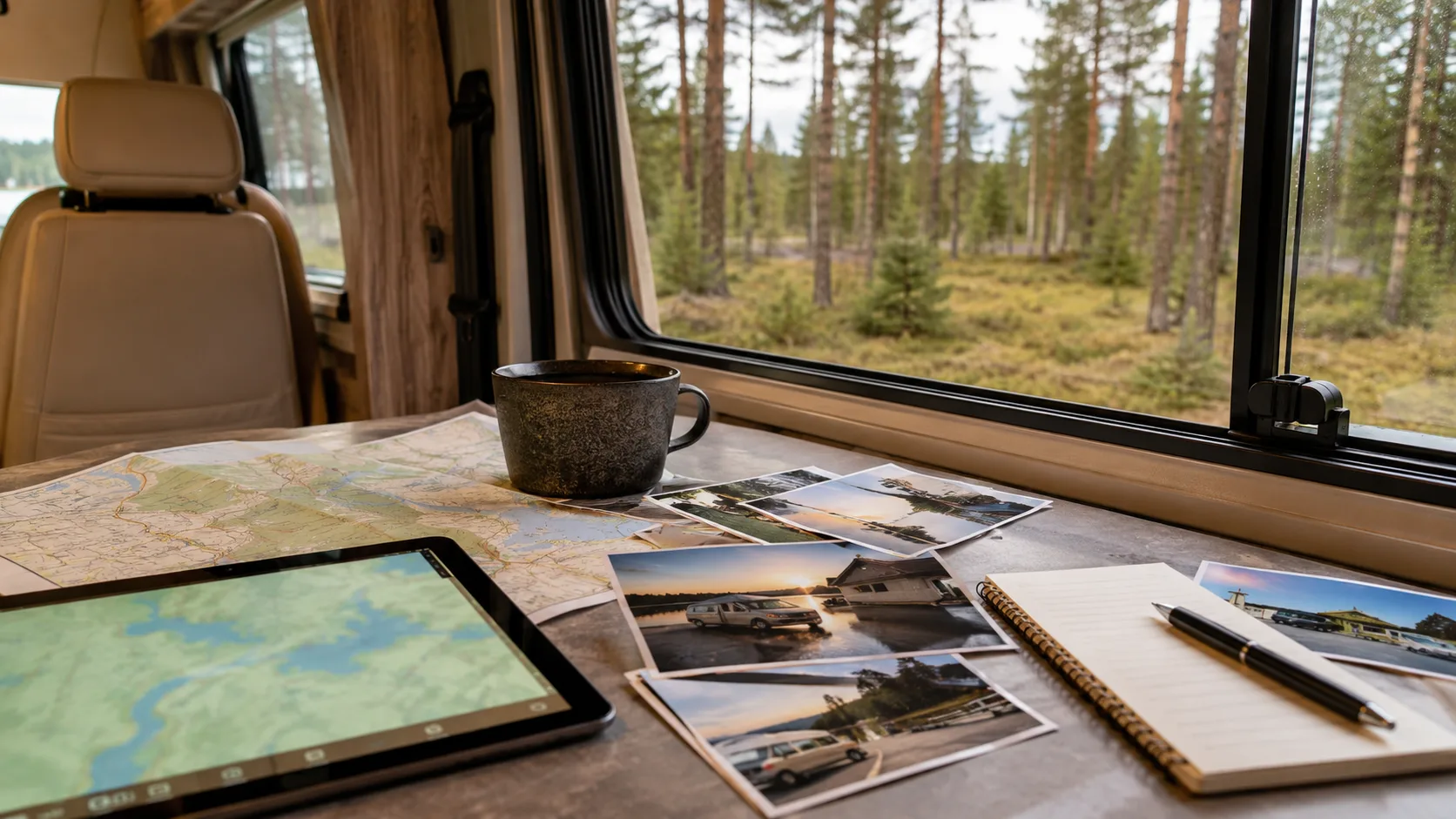
Record access, level, noise, turning space, water and the service point that saved the day. One line and a photograph are enough while memory is fresh.
FARON's motorhome archive connects these private notes to logged nights and the trip map. It does not replace navigation, booking or legal checks.
Frequently asked questions
What matters most on a first motorhome trip?
Keep it short and learn dimensions, systems, service and evening routines close to home.
How should a beginner plan service?
Fill water and empty grey water and toilet waste whenever a suitable service point appears, before any gauge becomes urgent.
How do I choose a good overnight place?
Prioritise lawful use, level ground, acceptable noise, safe access, turning room and at least one nearby backup.
How should I retain lessons from early trips?
Save the place, photograph and short notes about access, service, ground and noise immediately after the night.