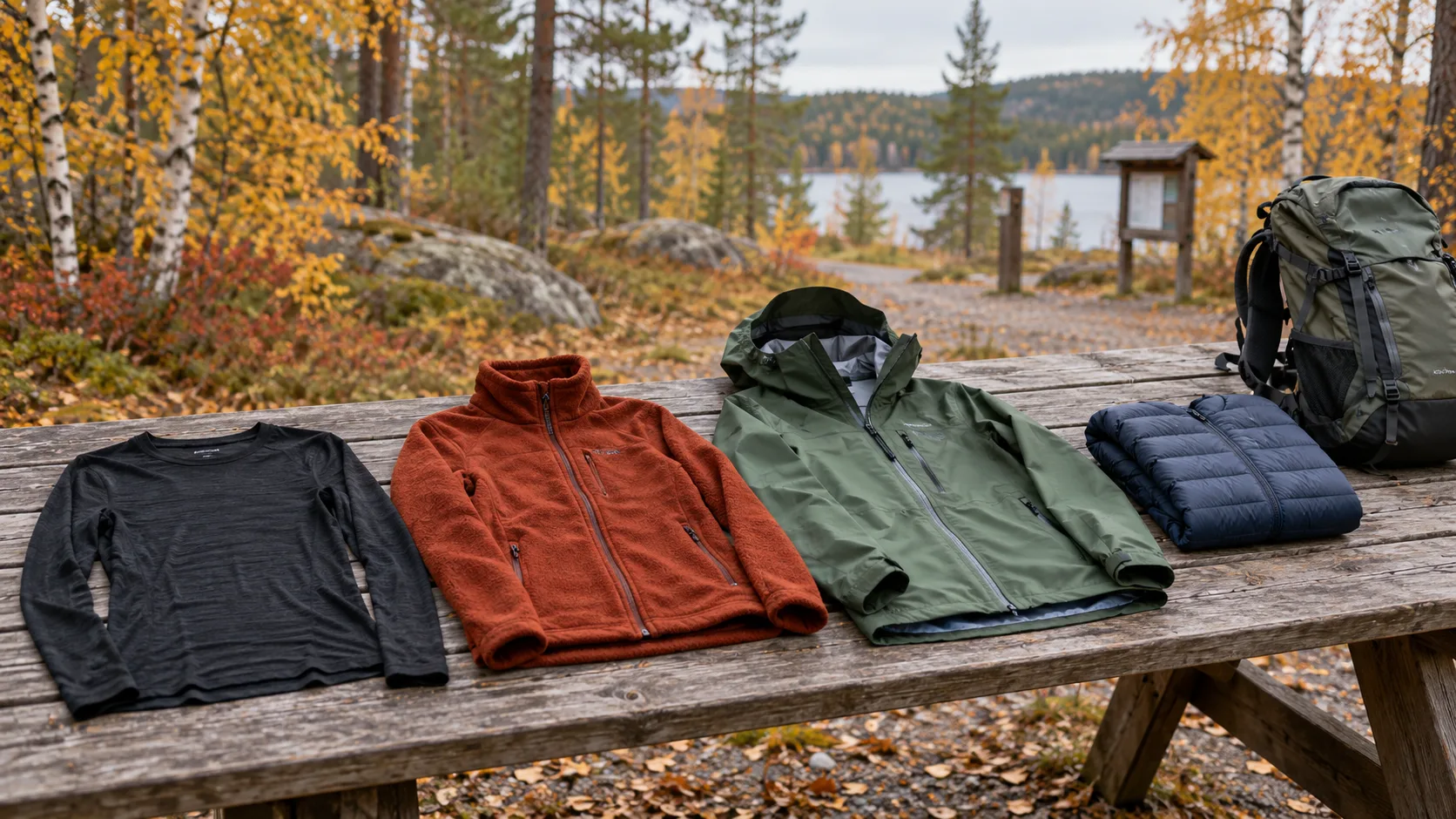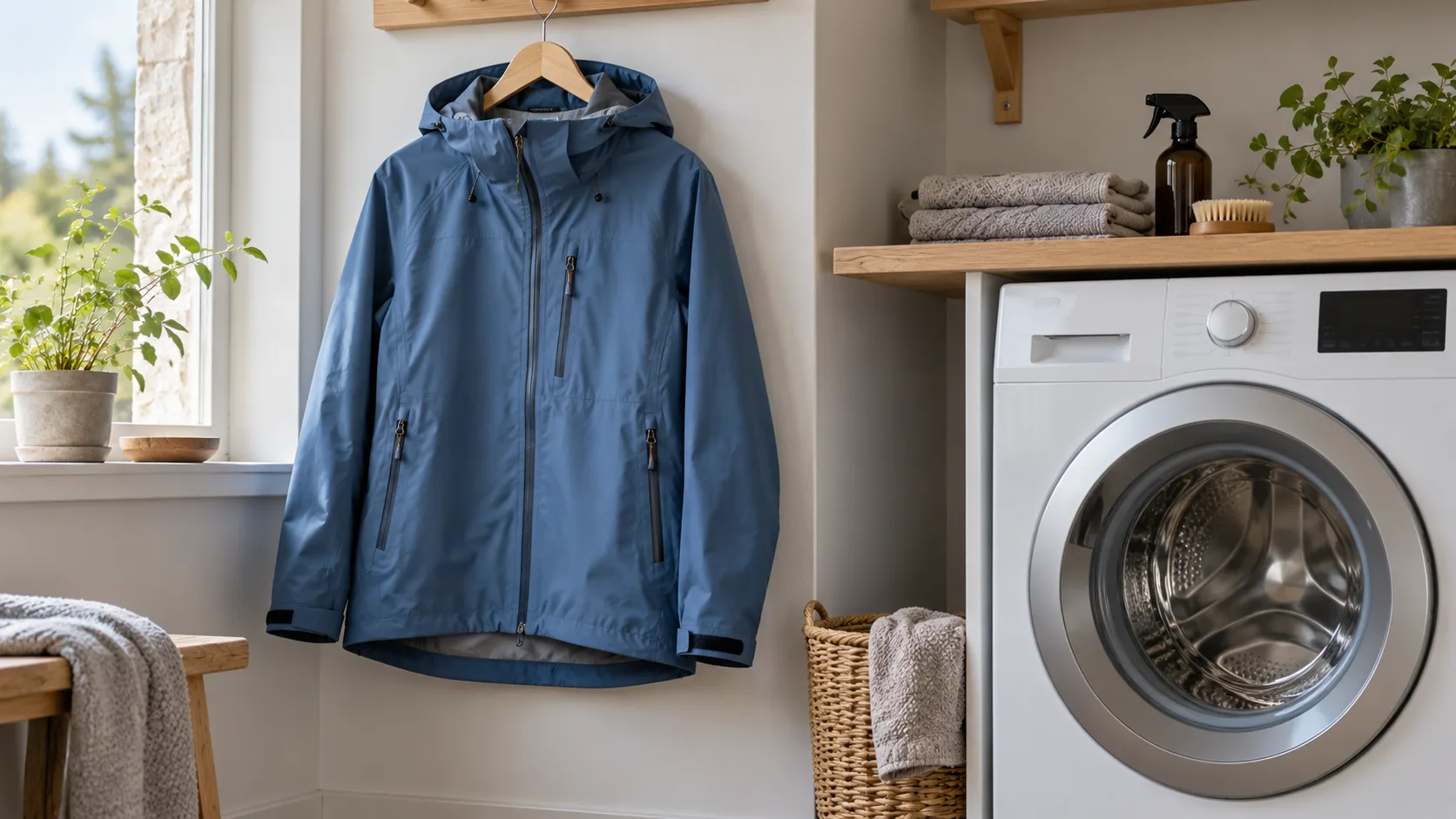
Wash wool base layers according to the garment label, using a detergent intended for wool. Air them first if they only need freshening up: different manufacturers' base layers may need different temperatures, programmes and drying methods.
Air the shirt after the trip
After a short autumn walk in Tiveden, Sweden, a base layer may have been worn without getting dirty. Hang it where air can circulate and assess it again once dry. Woolpower's care advice recommends airing between washes, using wool detergent when washing is needed and avoiding fabric softener.
A stain or visible dirt needs more than air. I would take the garment out as soon as I got home, rather than discovering it at the bottom of the pack before the next departure. Set aside the dry change of clothes for that trip too.
Read each garment's label
Both 30 °C and 60 °C appear in wool-care advice. That does not mean you can freely choose between them. Woolpower says its garments tolerate 60 °C, while other wool clothing may require a lower temperature or hand washing. The label and model instructions apply to the shirt in your hands.
Read the leggings' label as well. Two apparently matching garments may have been bought at different times or contain different fibre blends. If the label is unreadable, find the manufacturer's instructions before guessing with a hotter programme.
Use an allowed programme and wool detergent
Sort the garments. Empty the pockets. Do not add the base layer to an ordinary wash simply because the machine is already half full. Use the detergent's stated dose and a programme permitted by the garment label.
Devold's care FAQ distinguishes between garments suitable for a machine wool programme and those requiring hand washing. For hand washing it specifies no more than 30 °C, gentle handling and no twisting or stretching. A wool programme is therefore not permission to machine wash every wool garment.
Dry without pulling the garment out of shape
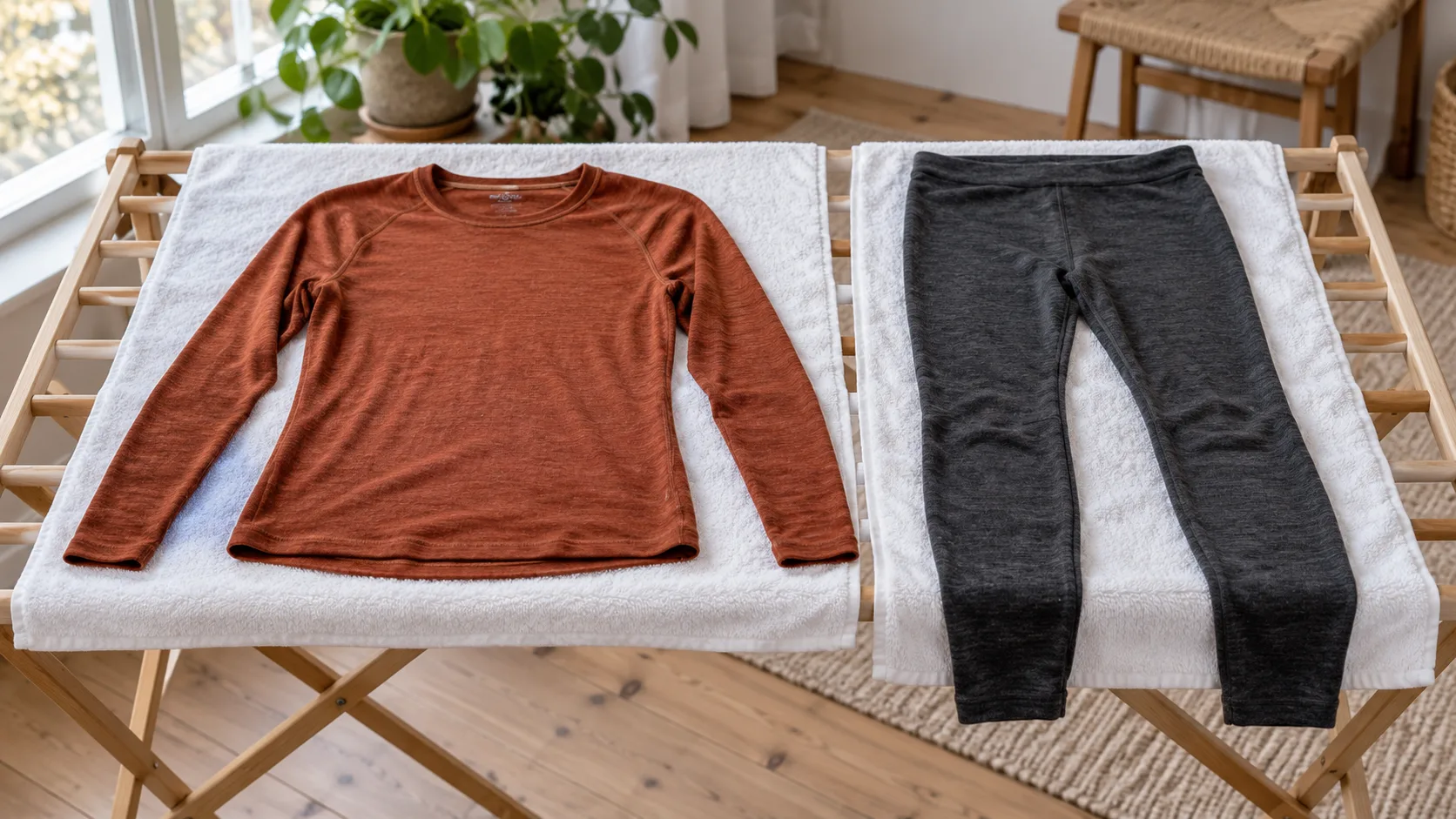
Read the drying symbols before choosing a dryer or rack. Devold gives different drying advice for different ranges; its hand-washed Originals should dry flat. Do not put every wool garment in the dryer based on what one shirt allows.
If the garment needs to dry flat, clear a suitable surface before washing. Shape it gently and support the sleeves and legs. Devold's wool-care guidance stresses gentle washing and following the label. Check the waistband and cuffs are dry before packing.
Set aside a dry change of clothes
Imagine packing for 2 nights beside Lake Siljan. Put the clean, dry base layer with your sleeping clothes if it is intended as a nighttime change. To compare the roles of different daytime garments, read about layering for hiking. A shell jacket needs its own washing and drying instructions.
Once the clothes are dealt with, the weekend's photographs still need sorting. You can attach a picture of the morning beside the tent and a few words about the lake to your overnight place in FARON. Log your first night to find that place again later.
Frequently asked questions
Do base layers need washing after every use?
No: airing can be enough when a garment only needs freshening up. Wash when necessary according to its care instructions.
Can merino wool be washed at 60 degrees?
Only if the particular garment's label allows it. The term merino wool alone does not determine the washing temperature.
Can I use fabric softener?
Avoid fabric softener according to Woolpower's advice. Use wool detergent and follow the garment instructions.
Can wool base layers be tumble dried?
Only when the garment's drying instructions permit it. Different wool garments have different treatments and drying requirements.