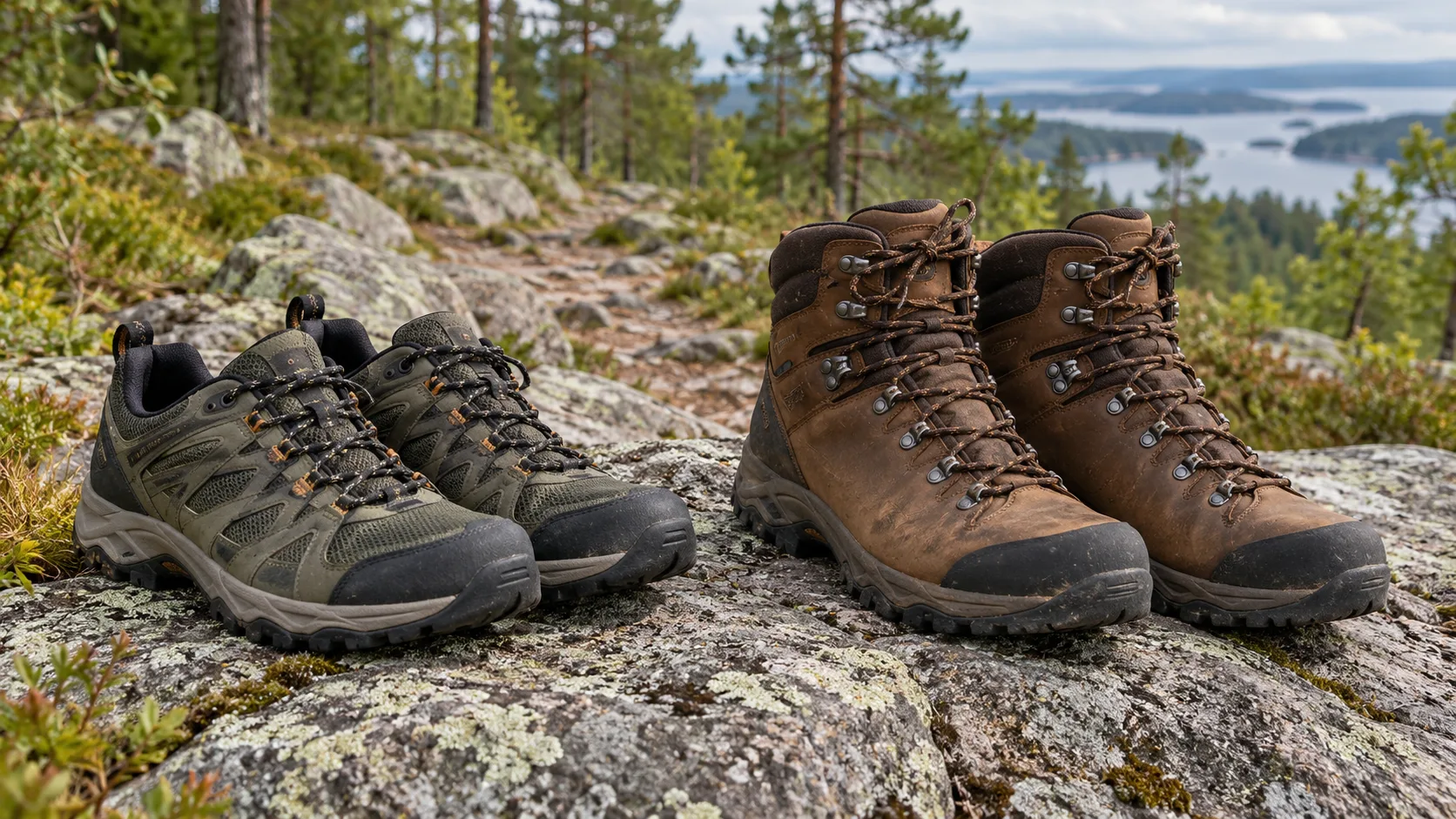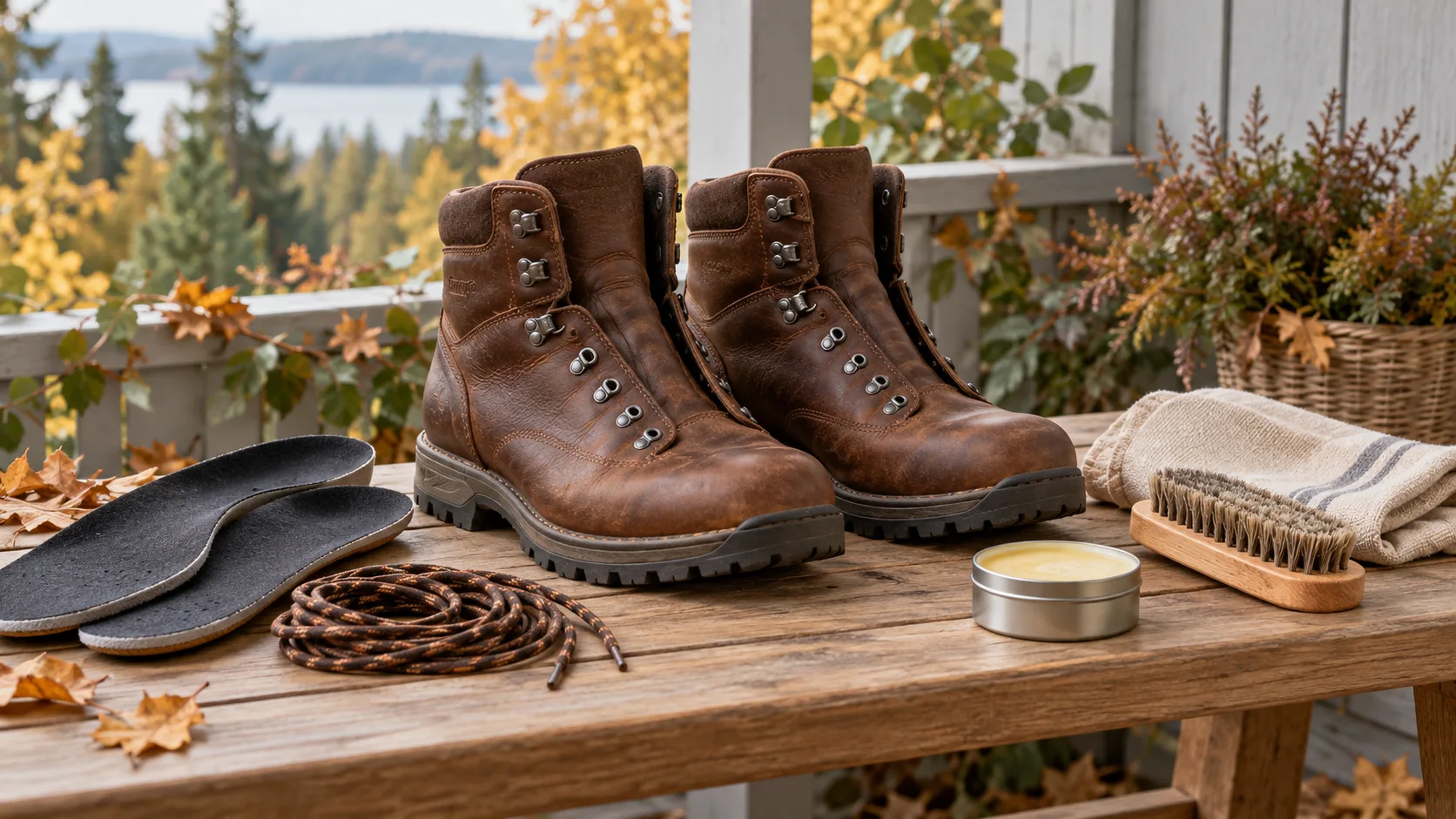
Mud, laces, insoles and a brush. After a wet walk in Söderåsen, I would start there before opening the wax tin. The boot's materials and its manufacturer's care instructions determine what comes next.
Remove dirt before treating the surface
Remove the insoles and loosen the laces to reach around the tongue. Brush away dirt and use lukewarm water as directed. Hanwag's care guide describes cleaning before treatment. Waxing over mud does not remove the need to clean it.
Remove grit around the lacing too. I would check for damaged laces and stitching while the boot is clean and open. Damage needs a separate assessment; waterproofing treatment does not repair it.
Dry at room temperature with air around the boots
Allow the boots to dry with ventilation and without direct heat. Hanwag's cleaning guide advises against radiators and other strong heat sources and describes soaking-wet boots taking up to 2 days. That is not a guarantee that every model will be dry by then.
Open the tongues. Remove the insoles. Let air reach the boots and loose parts, replacing any damp paper used according to the manufacturer's advice.
Imagine your next walk is in 12 hours and the lining is still wet. I would choose another pair or change the walk. Putting the boots right beside a stove to save time can damage the materials.
Choose treatment for your particular boots
The material name alone is not always enough. Hanwag recommends thin coats of wax for suitable leather models and advises against grease and oil. Lundhags' advice for its boots, however, mentions both wax and grease. These instructions concern different products; do not combine them into one universal rule.
For boots with textile panels, the treatment must suit the material and any membrane. Read both the boot's instructions and the treatment label. Follow the specified amount, ventilation and drying time, including whether to apply it to a dry or damp surface.
I would find the model name before buying a treatment. If there are no clear instructions, the manufacturer or retailer is a better next contact than trying a product that happens to be at home.
Expect nubuck to change appearance with wax
Wax can make nubuck darker and smoother. Lundhags' nubuck guidance explains the difference and mentions spray for preserving the surface. Make that choice before treating the entire boot.
If the manufacturer allows it, a small hidden area can show how the treatment affects the colour. Wait the specified time before judging the result. If you need to replace your footwear instead, read about choosing hiking shoes or boots.
Keep the photograph from your overnight place
After 3 nights on the road, the same muddy boots may appear in photographs from several places. In FARON you can attach a photograph to the saved night on the map. Log your first night with the place where you slept.
FAQ
Should I use wax or grease?
Use what the boot manufacturer recommends for the model. Hanwag and Lundhags give different advice for their products, so grease does not automatically suit every leather boot.
Can I dry boots beside a radiator?
Avoid direct heat and follow the manufacturer's drying instructions. Ventilated drying at room temperature takes longer but avoids strongly heating the materials.
Does wax darken nubuck?
Yes, wax can make nubuck darker and smoother. Read the model's guidance and choose a treatment with that change in mind.
Can waterproofing treatment repair a leaking boot?
No, it does not repair holes, damaged stitching or a broken membrane. Ask the manufacturer or a repairer to assess the damage.