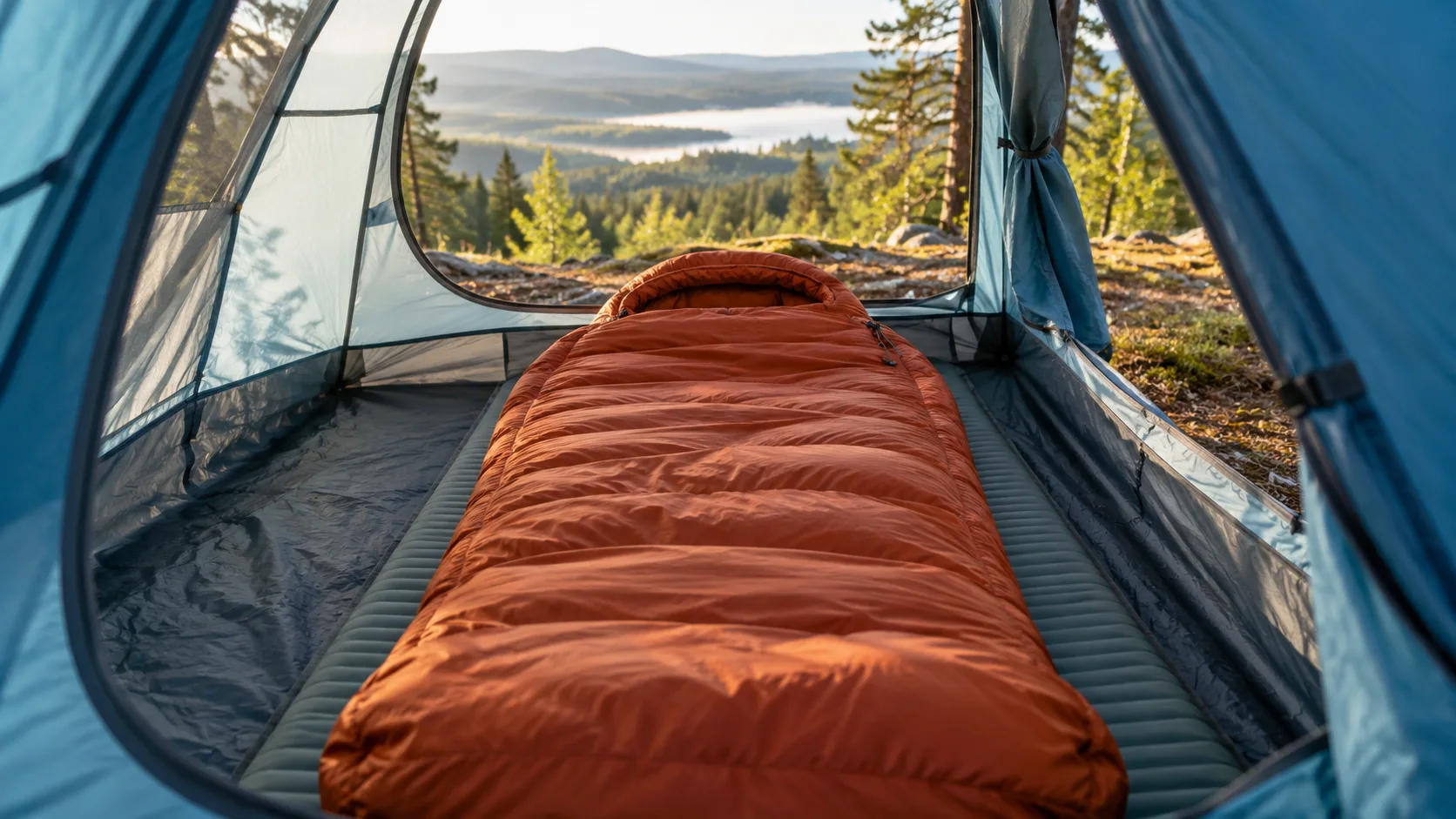
A small mark near the foot of your sleeping bag after a weekend at Lake Siljan need not mean washing the whole bag. I would start by airing it and cleaning the spot. If a full wash is needed, plan the drying first, especially when your next camping night is already on Friday.
Decide whether the whole bag needs washing
A small dirty patch and a thoroughly dirty sleeping bag are different jobs. Mammut's down and synthetic care guide describes spot cleaning as an alternative to a full wash. Follow the material's instructions even when treating just one mark.
Read the label. Identify the filling. Then find the washing and drying instructions for your model, rather than choosing a familiar machine setting by habit.
Match the detergent to the filling
Down and synthetic insulation do not always need the same detergent. Use the product recommended by the sleeping bag manufacturer and follow its dosage. Skip fabric softener. Clear old detergent from the dispenser before starting.
Rab's washing and drying instructions include a gentle 30°C programme for its synthetic bags. This is an example, not a universal temperature: your bag's label comes first. Rab also recommends an extra rinse to remove detergent.
Give the bag room in the drum
A roomy front-loading machine allows the bag to move. Mammut advises against machines with a central agitator that could damage the material. If the drum is cramped with the dry bag inside, I would find a larger machine or ask the manufacturer about a suitable alternative.
Imagine leaving for Tiveden in 2 days with the shared laundry room booked for just 3 hours. You need somewhere to continue drying afterwards. I would not begin a full wash simply because a machine happened to be free.
Dry the filling completely
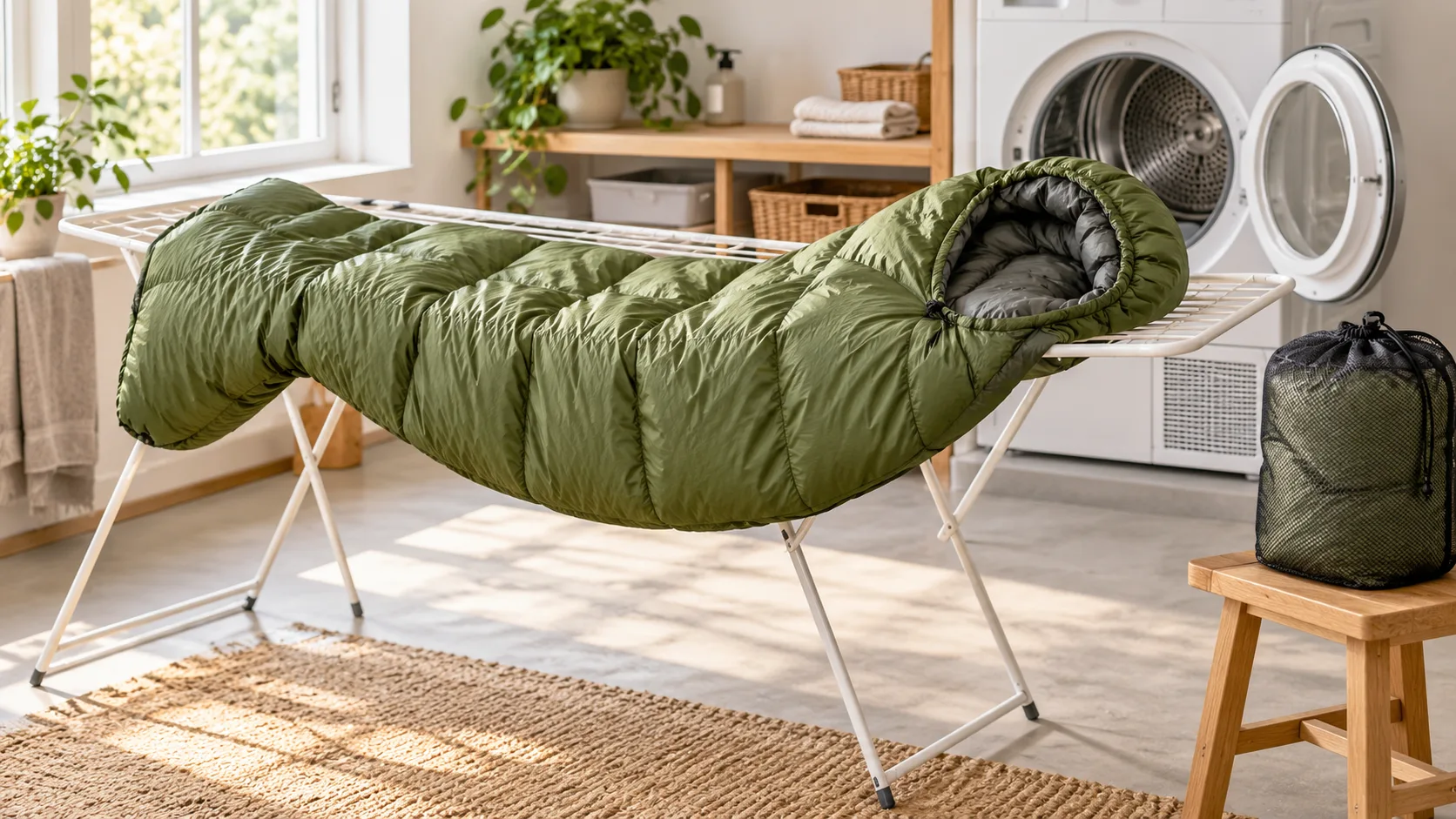
First check whether tumble drying is allowed and which setting to use. Rab describes low heat and dryer balls for down, with around 2–4 hours of drying, but the time varies. Feel through the filling; a dry outer fabric does not mean the down inside is ready.
Follow the model's instructions for redistributing clumped down. Do not pull hard at clumps. If the filling still feels damp, continue drying before putting the bag away.
Store the completely dry bag loosely in a roomy storage sack, following its care instructions. The small compression sack is for transport. If you are also considering warmth for your next trip, read about choosing a sleeping bag for temperature and fit.
Keep the night's photograph after unpacking
After 2 nights near Lake Siljan, photographs of the tent pitches can be easy to confuse. In FARON you can attach a photograph to the saved night on the map. Log your first night with the place you want to return to.
FAQ
Can I use a regular washing machine?
Yes, if the label permits machine washing and the machine is suitable and roomy enough. Follow your model's instructions for the programme and spin cycle.
What washing temperature should I choose?
Use the temperature on the care label. Some manufacturers specify 30°C, but that does not automatically apply to every model.
How long does a down sleeping bag take to dry?
Until all the filling is dry. Rab's 2–4-hour example is not a deadline; the machine, bag and remaining moisture all affect the time.
Must I wash it after every camping weekend?
No, a full wash is not needed after every weekend. Air it and assess the dirt; a small mark can often be treated separately according to the care instructions.