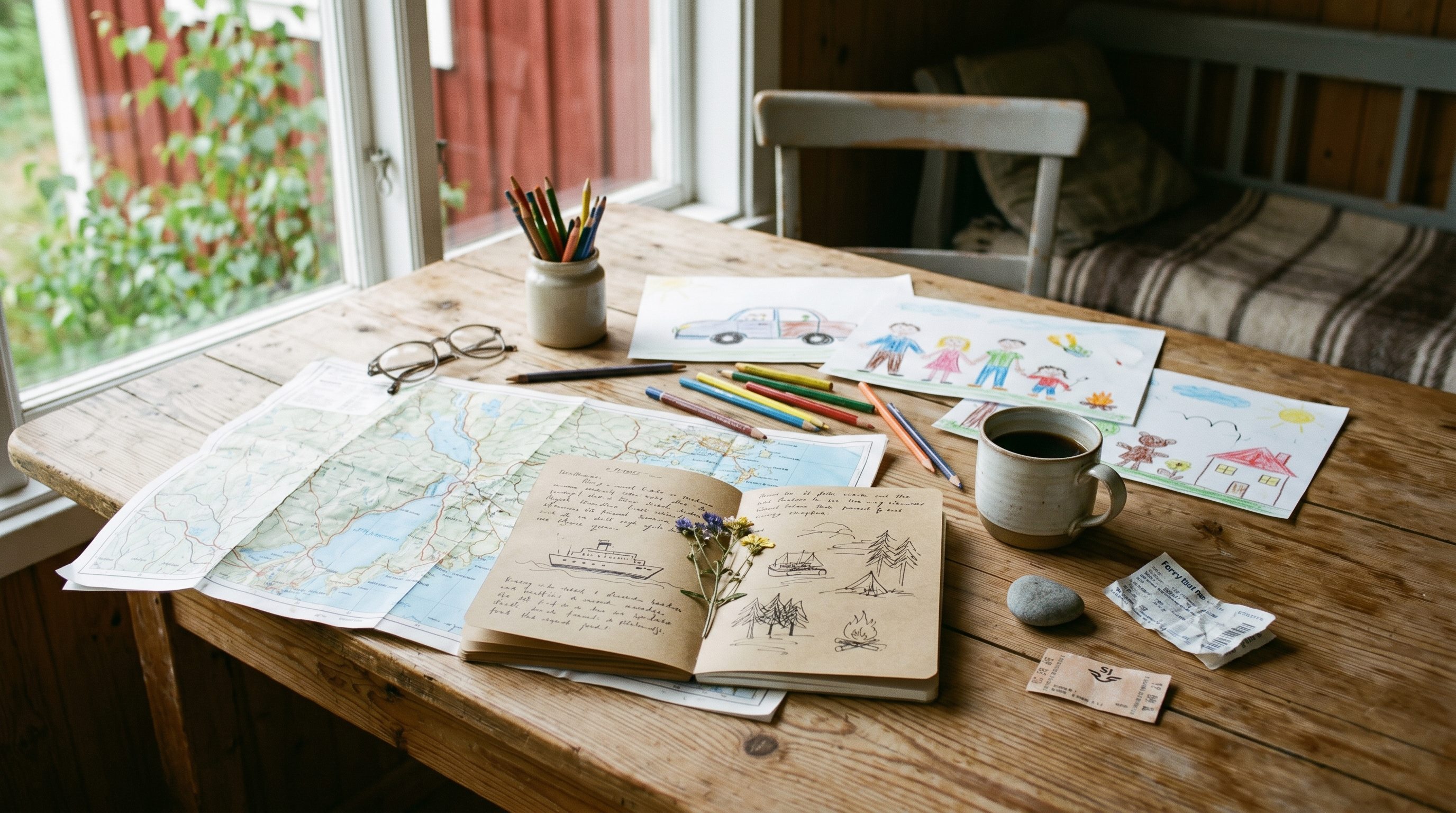
A travel journal with children can start with 1 picture and the child's own sentence about it. I would let the child choose what to include and add only the place and date myself. After a day in Varberg, a detail on the seafront might earn a page even if the fortress took most of the time.
Let the child talk, draw or write
Choose the format according to what the child wants to do that day. Someone who prefers talking can say a sentence for an adult to write down. Someone who wants to draw can have a blank page. A child who enjoys writing can add a few lines independently.
A small notebook and a pencil are enough to begin. Put the date and place at the top and leave the rest open. On a phone, the child can choose a photograph while an adult writes the caption. You do not have to use the same format throughout the trip.
Keep the child's words. Do not rewrite the story. A sentence that sounds like the child is more useful here than polished prose an adult could have written alone.
Try 3 questions after a stop
I would start with one of these questions and continue only if the child wants to say more:
- What would you show someone who was not here?
- What small thing would you like to remember?
- What would you like to do again if we came back?
One answer is enough. These are conversation suggestions, not boxes to complete every evening.
If nothing comes to mind, look through the day's photographs together and choose one. Ask what its title should be. If the child does not want to make an entry that day, leave a gap.
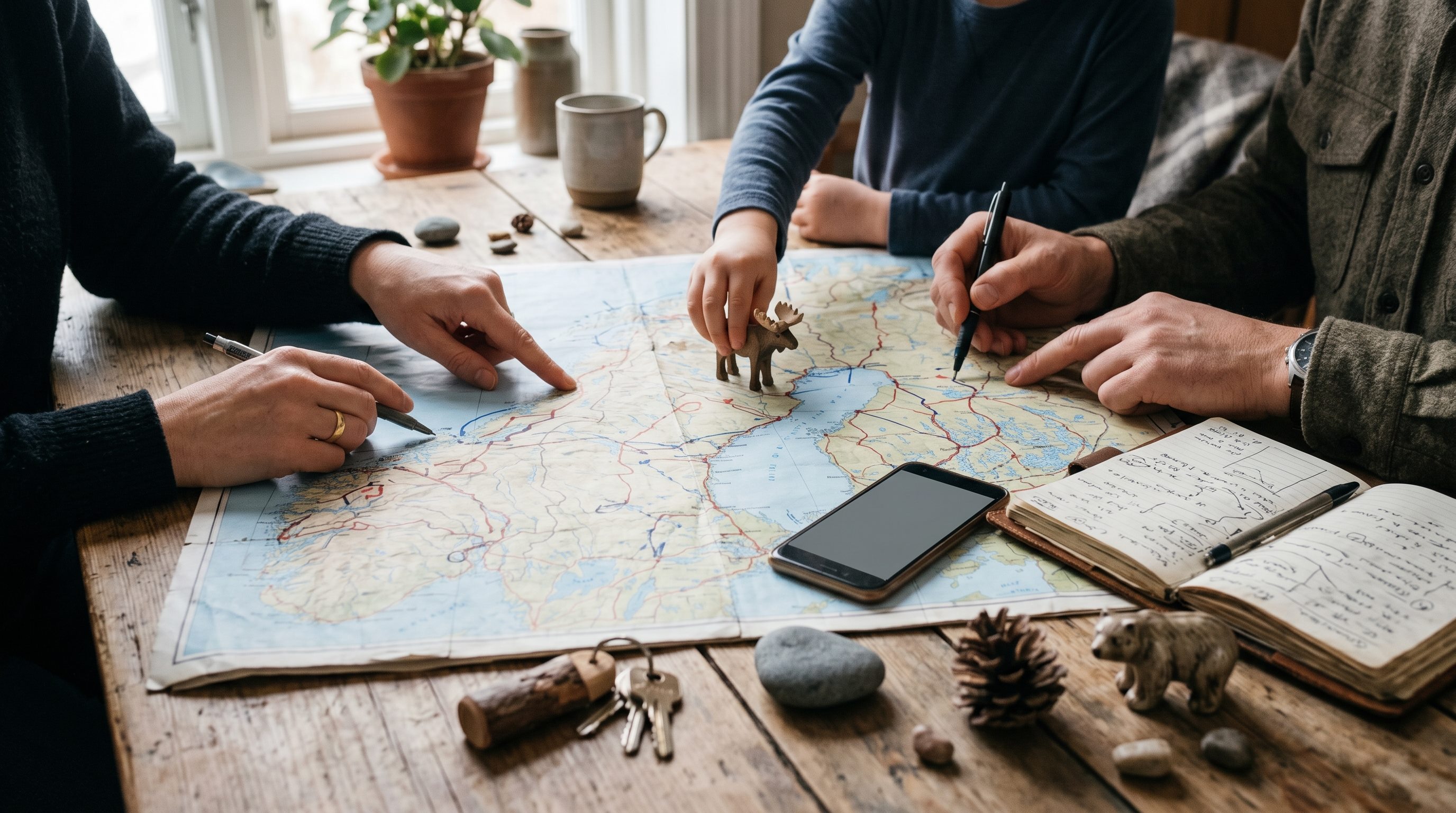
What a page from Varberg could look like
Imagine a family walking beside the sea after visiting Varberg Fortress:
- Place: the seafront in Varberg.
- Photograph or drawing: waves against the stones.
- The child's sentence: “The water jumped higher than me.”
- The adult's addition: our walk after the fortress, before lunch.
Replace the example with something that actually happened to you. The adult's line helps locate the moment without explaining what the child should have thought about it.
For a 3-day trip, you could try one page per day. Let a drawing fill the page if that is what the child wants to keep. Two siblings can choose different memories from the same stop.
Choose together what to keep
Show the child the photograph or note before adding it to the family journal. A drawing they want to keep to themselves does not need to be photographed. The same applies to a comment they no longer want included.
Keeping something for the family and showing it to other people are separate choices. Decide together which pictures and words can be shown if you later share part of the trip with relatives or anyone else. The journal can be useful even if nobody outside the family sees it.
Look back without filling every gap
Set aside, for example, 5 minutes after coming home and let the child choose which page to open first. Add a missing place name. If another memory comes up, add a line; blank days do not need to be reconstructed.
Before your next outing, read the answer about what the child wanted to do again. The journal now has a simple use: helping you choose a stop someone in the family actually wants to revisit.
Give the memory a place on the map
After 3 stops along the coast, several beach photographs may look alike. A note naming Varberg and a picture the child chose help you find the right moment when you open the trip again.
In FARON, an adult can collect the trip's stops, photographs and notes in a map-based travel journal. Save the child's sentence beside the place and keep any drawing in the paper notebook, or add a photograph of it if the child wants. The child does not need to manage an app.
If you need help with your own short line, there are more examples of what to write in a travel journal.
Frequently asked questions
How do you start a travel journal with children?
Let the child choose a photograph, drawing or sentence from a stop, then add the place and date. Try one page before deciding whether to continue daily.
Can a child who cannot write yet take part?
Yes, the child can say a sentence for an adult to write down or draw something from the trip. Read the sentence back so they can say whether it is right.
What if the child does not want to write a journal?
Skip the writing and offer a choice of a photograph or drawing, if the child wants. A travel journal does not need an entry for every day.
Does a family travel journal have to be shared?
No, it can remain in the family's notebook or private travel archive. In FARON, an adult can collect stops, photographs and notes without publishing the trip.