A short woodland walk near Mora does not automatically need the same footwear as a hike carrying a tent. I would start with the ground and the load, then try what works on my feet.
Choose for the ground you will cover
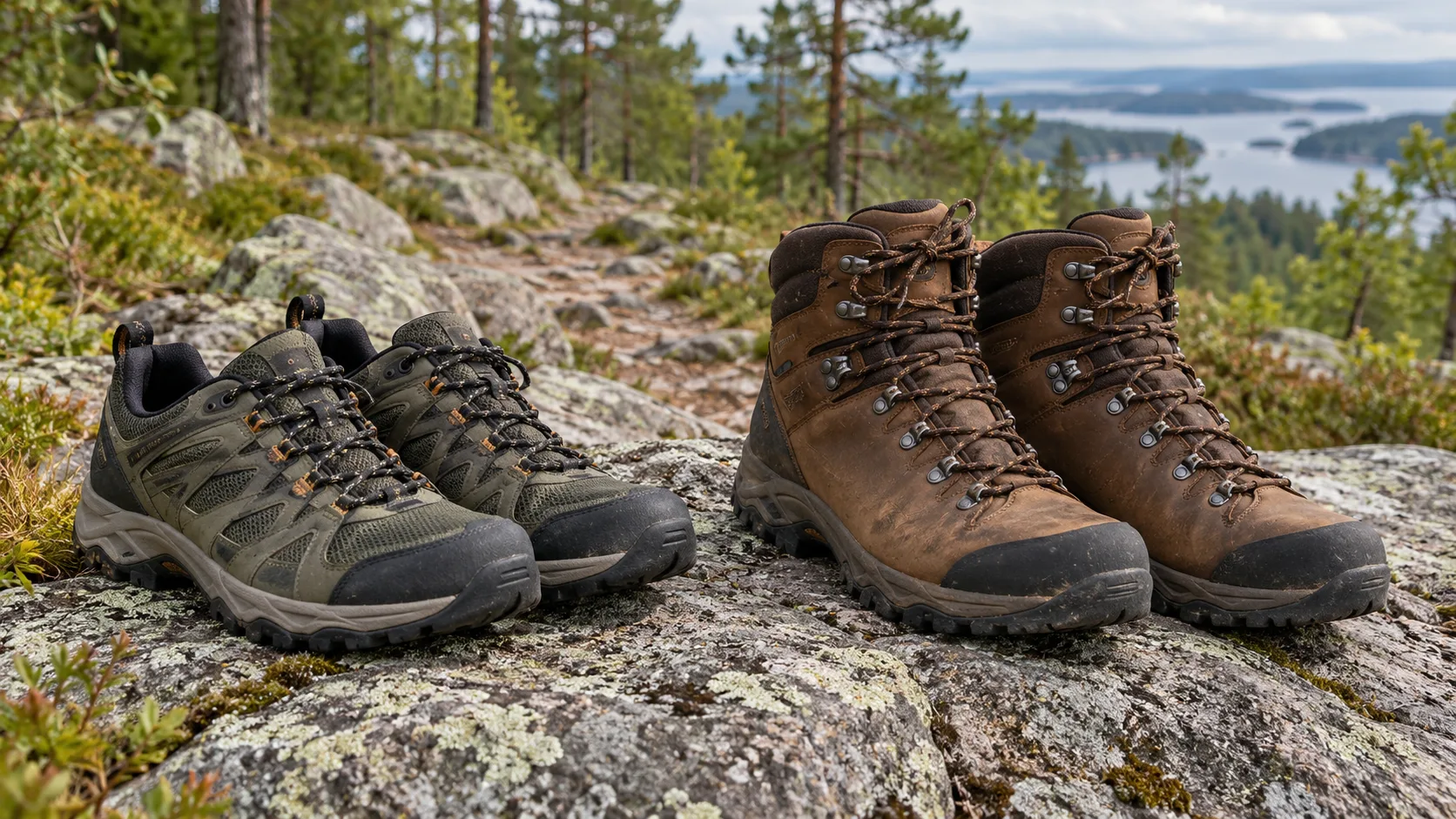
STF's footwear advice explains that low hiking shoes or running shoes can work, although non-waterproof pairs mean accepting wet feet in wet conditions. STF recommends boots for heavy loads or when more support is needed.
For a light day walk on a clear path, I would therefore try familiar low shoes before buying boots. For more weight or wetter ground, I would compare them with a boot. No single choice suits every walk and every foot.
Try the fit before choosing ankle height
Lundhags stresses fit and advises trying different models and lasts. Its material guidance concerns its own shell boots, rather than describing all walking footwear.
Bring the socks you intend to wear. Try both shoes, lace them and walk on the shop's testing area. I would compare at least two models if the first presses, rather than hoping my feet will get used to discomfort.
Take a short trial walk first
Imagine two choices for a weekend in Mora: a short walk from the car or a longer route with an overnight stay. If the shoes have only been tried indoors, I would choose the short walk first, with an easy way back.
Lace them up. Walk a little. Notice whether your heels move, your toes hit the front or anything presses when walking downhill.
As a suggested trial, start with 20 minutes near home and take a longer walk another day. This helps spot problems early; it is not a fixed breaking-in time for every shoe. Stop and adjust if anything rubs.
Include the backpack in the trial
Try the footwear with the backpack you actually expect to carry. An empty pack in a shop says less about the complete setup than your real load. Pack for a specific trip, such as one night, before judging how everything feels together.
Bring dry spare socks as needed and plan how wet footwear can dry between walks. Follow the model's care instructions. The guide to choosing a sleeping bag covers another part of the overnight load.
Keep the walk you want to repeat
After two stops around Mora, you may want to remember which place suited a short walk. FARON lets you save the stop with your photograph and note on the map. Log your first night when you start keeping your trip's places together.
FAQ
Do I need boots for a day walk?
No. Low shoes can work depending on the ground, weather and load. Try the pair that suits the planned walk.
What matters most when trying footwear?
The fit needs to work with your socks and while walking. Do not choose a pair that pinches just because the height or brand looks right.
Is trying one shoe enough?
No, try both and walk with them laced. Test level ground and a downhill slope if the shop's testing area allows it.
How long should the first trial walk be?
Start close to home with a short walk you can stop. Extend it according to how the shoes feel, rather than a fixed number of minutes.