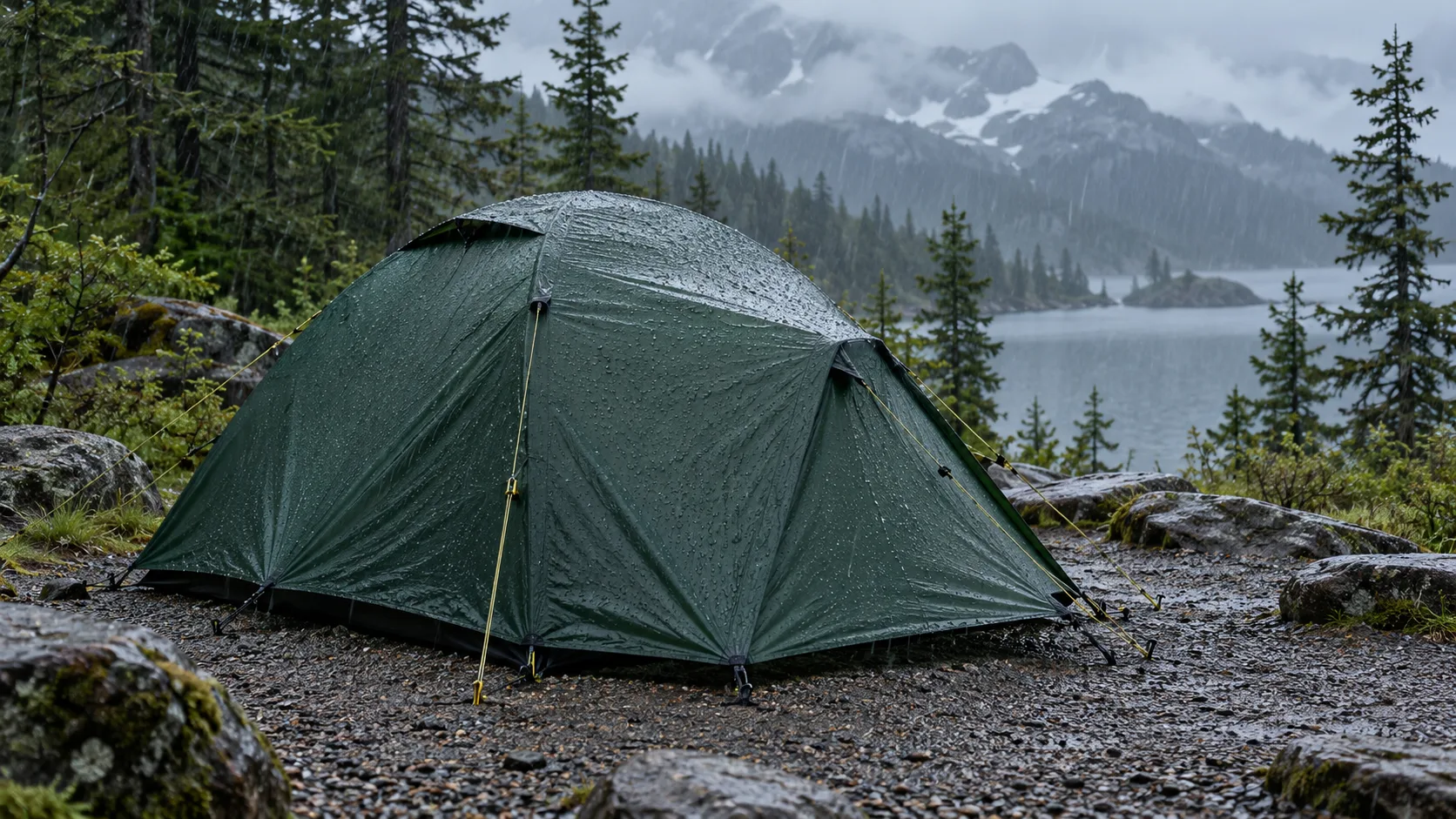
A muddy tent after 2 nights beside Lake Siljan does not automatically need a washing machine. Start with loose dirt, lukewarm water and the tent's own care instructions. Above all, decide where the entire fabric can dry before you put it away.
Separate dirt from damage
Empty grass, sand and needles from the inner tent before reaching for water. Then examine the flysheet, floor and zips. Mud needs cleaning; a hole or a peeling coating needs a different response. I would identify the problem before buying a cleaner.
This guide covers camping and hiking tents. Cotton, synthetic fabrics and different coatings may need different care. Follow the model's instructions even if another tent looks similar. A rooftop tent's mattress and hard shell also need their own care instructions.
Clean gently where needed
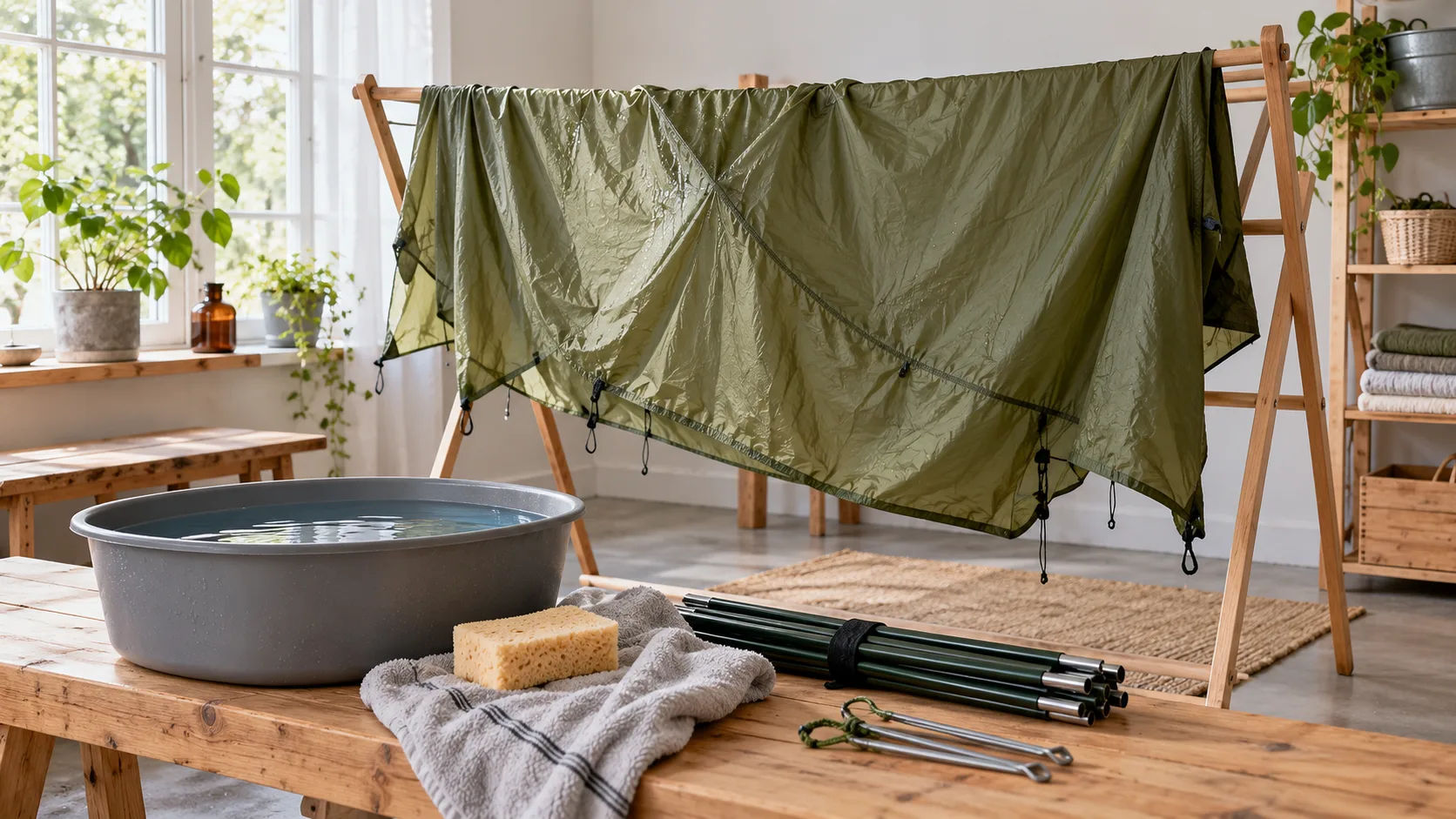
Remove loose debris. Dampen the sponge. Work gently on the dirty area without scrubbing the fabric's coating hard. A small mark does not mean you need to wash the entire tent.
Hilleberg's Atlas care instructions specify lukewarm water and a sponge when cleaning is needed. Follow your own model's instructions for cleaning products.
Do not treat machine washing as the default. If the care instructions do not explicitly allow a method, ask the manufacturer before trying it. The same applies to strong stain removers: a cleaner surface is little help if treatment damages the fabric's function.
Give zips, poles and pegs their own check
Sand in a zip does not disappear when the flysheet is clean. Hilleberg recommends cleaning zips with a small brush, particularly after sandy or dusty trips. Remove soil from the pegs and inspect the poles for damage at the same time.
Keep the components together afterwards. Count the pegs against the tent's packing list and replace anything missing before the next departure. That is easier at home than when the tent is already spread out on the campsite.
Dry the entire tent before storage
Imagine returning from Tiveden on Sunday evening with only 1 hour before the week takes over. I would prioritise hanging the wet fabric with room for air to circulate and deal with remaining dirt later. Leaving it compressed in its bag solves neither problem.
Hang the tent in a dry, well-ventilated place as instructed by its manufacturer. Open doubled-over sections so they can dry too. Check the floor, seams and folds before packing: a dry outer surface does not mean every part is ready.
There is no single drying time for both a small hiking tent and a large family tent. Airflow, moisture and the amount of fabric all matter. Put it away only when completely dry, using the storage method specified for the model. Hilleberg describes hanging it in a dry, cool place away from direct light as an option when space allows.
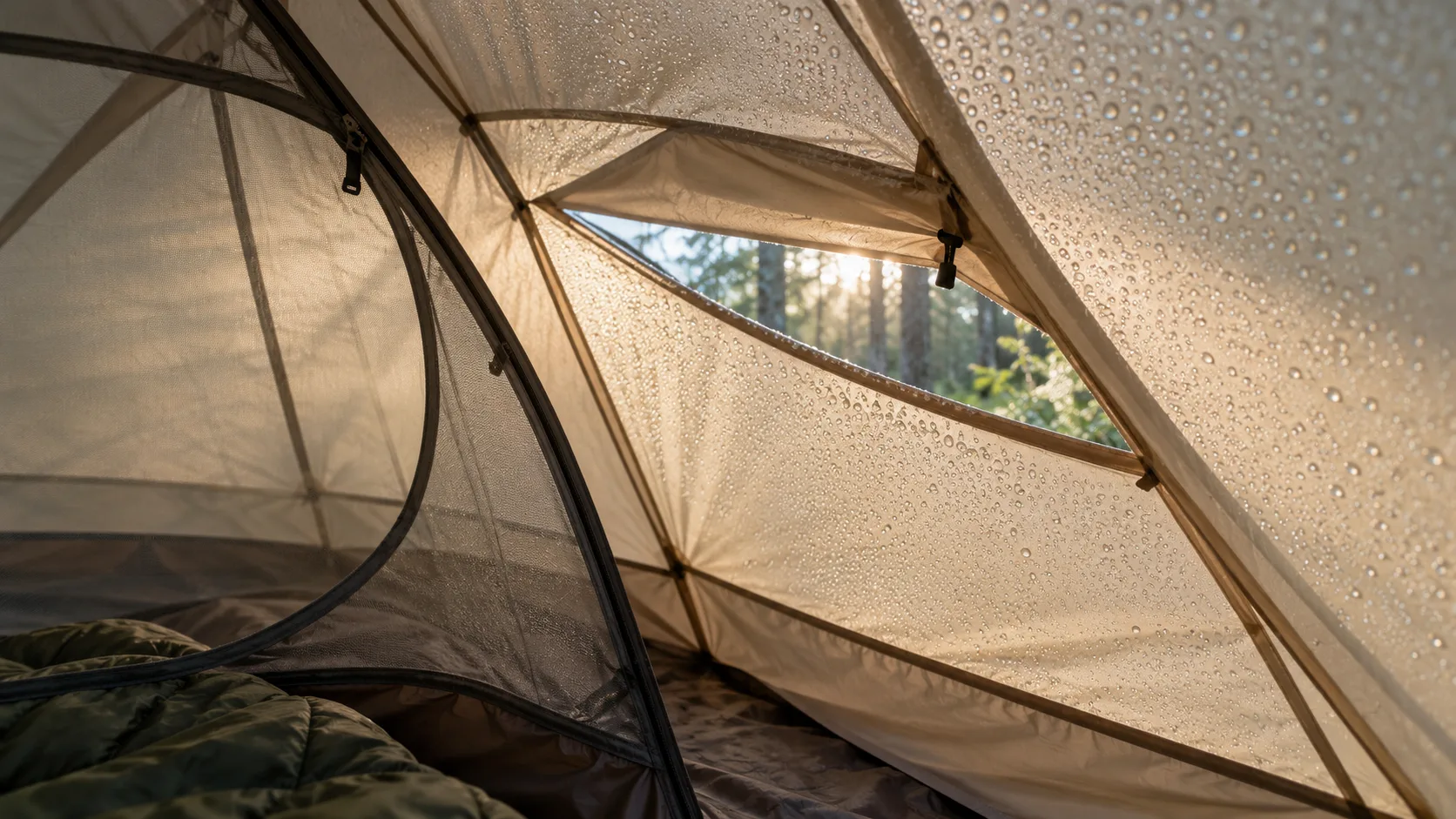
If moisture mainly appears during the night, read about condensation and tent ventilation too. Cleaning does not replace the airflow needed while using the tent.
Ask before treating stubborn stains
A mouldy smell, sticky coating or marks that resist the recommended cleaning method are reasons to contact the manufacturer. Describe the model, material and anything you have already tried, with photos if possible. Avoid trying several chemicals in succession without knowing how the fabric will react.
A remaining discolouration and a damaged coating are different problems. Ask for advice before deciding whether the tent needs further cleaning, repair or an approved treatment. The guide to camping in the rain helps with the next trip once the equipment is ready.
Keep the place when the tent is packed away
After 3 separate camping weekends, lake photos can be hard to tell apart. In FARON, you can add a photo to a saved night on the map and find the right place again. Log your first night with the stop you want to remember.
Frequently asked questions
Can I put my tent in a washing machine?
Do not assume machine washing is allowed. Follow the model's care instructions and ask the manufacturer if the method is not listed.
Which cleaner should I use?
Use the product recommended by the tent manufacturer. Some instructions start with just lukewarm water and a sponge; ordinary laundry detergent is not a universal first choice.
How long does a tent need to dry?
Until every part is completely dry, including the floor, seams and folds. A fixed number of hours cannot cover different tents and drying conditions.
Should I wash it after every weekend?
No: assess the dirt and clean what needs attention according to the care instructions. Drying before storage still matters when the tent looks clean.