Choose tent pegs for the ground and your tent's instructions. A stake designed for hard campsite ground and a wide anchor for loose sand solve different problems, so check the supplied set before buying extras.
Count the tent's anchor points
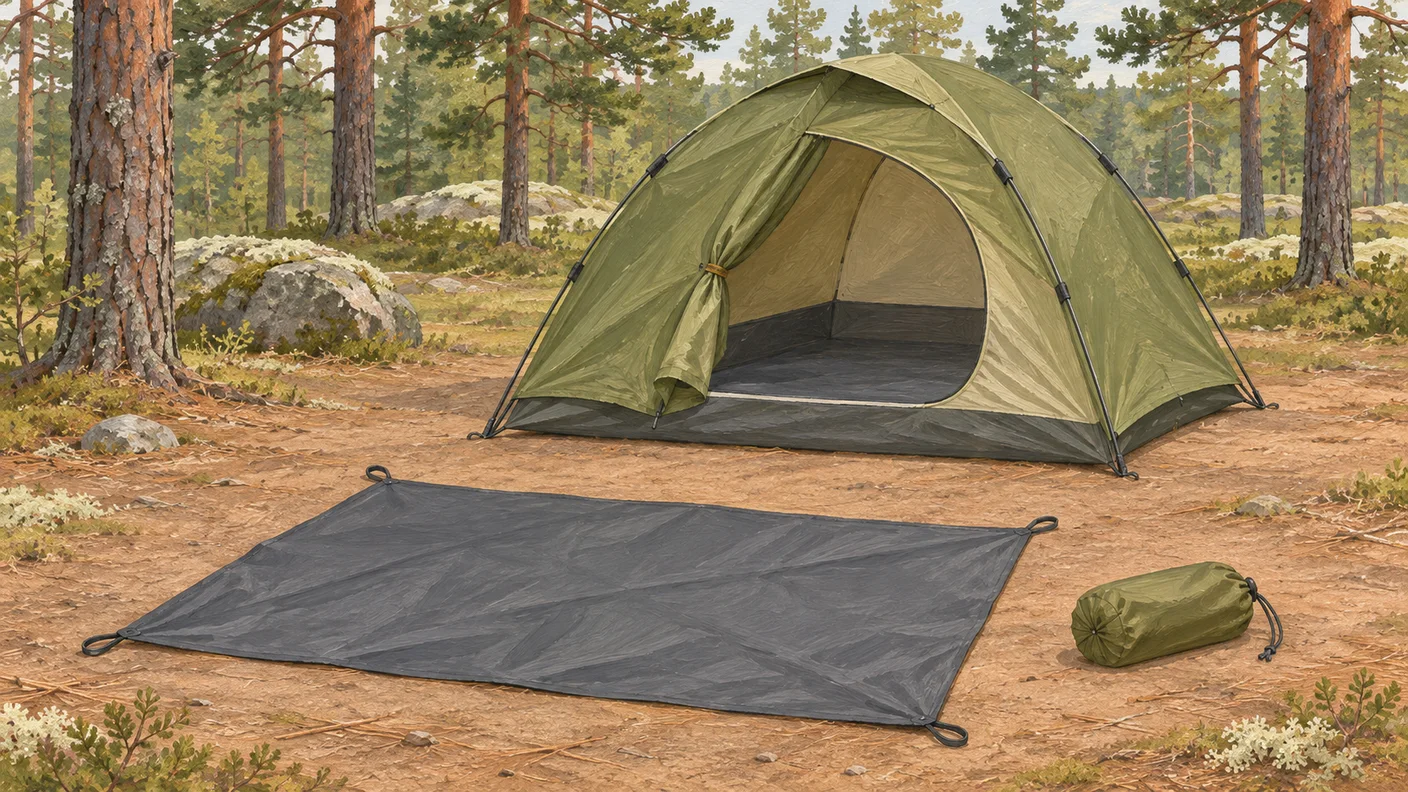
Lay out the pegs when you practise pitching. Count the corners, vestibule and guy lines required by the manual. The number of people printed on the tent bag does not tell you how many anchors its structure needs.
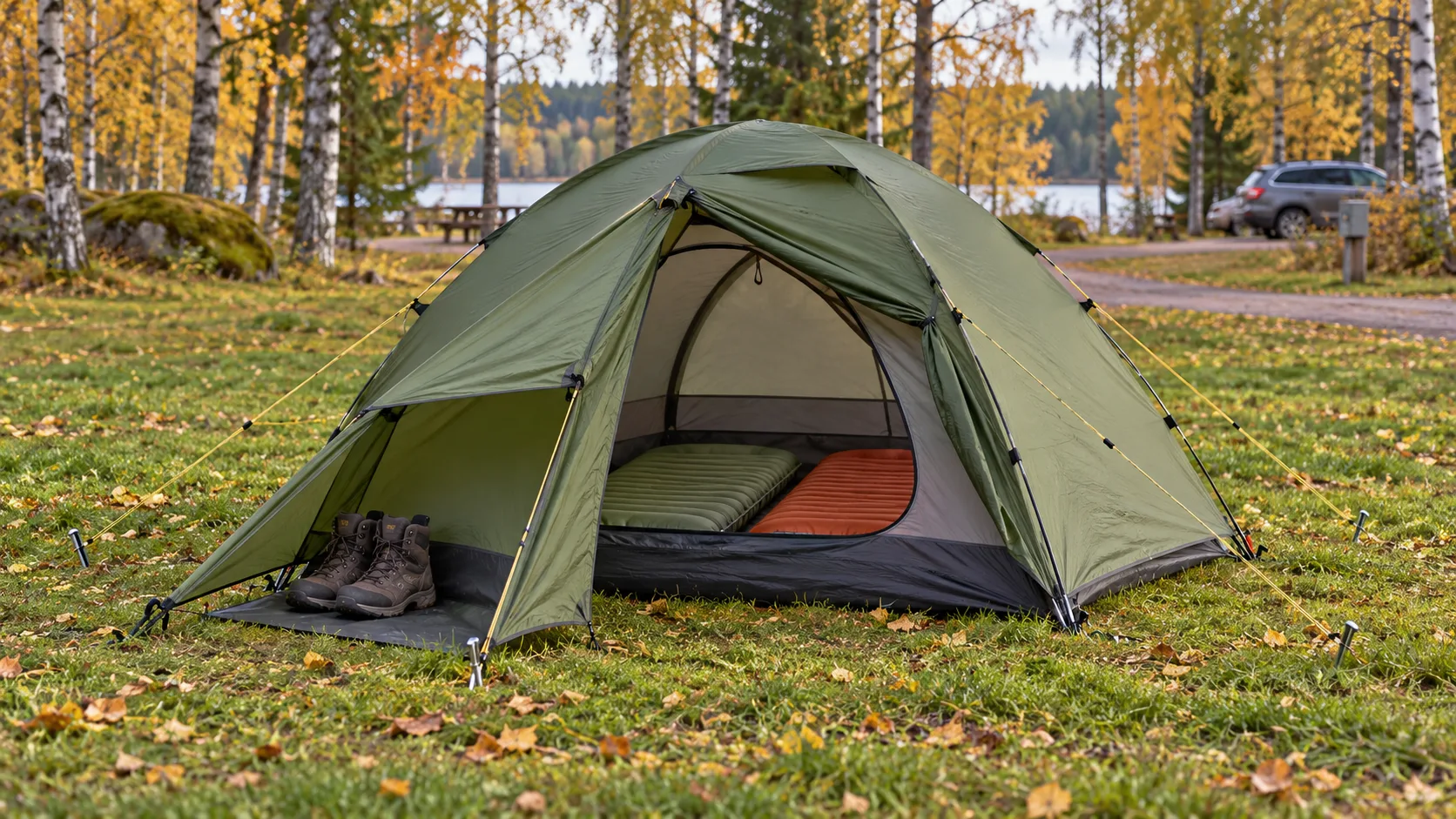
For two nights beside Lake Siljan, I would check the existing set first. Check that the pegs are intact and that there are enough for all the required points. Replacing a missing peg is easier at home than with a half-pitched tent at the campsite.
Compare pegs for different ground
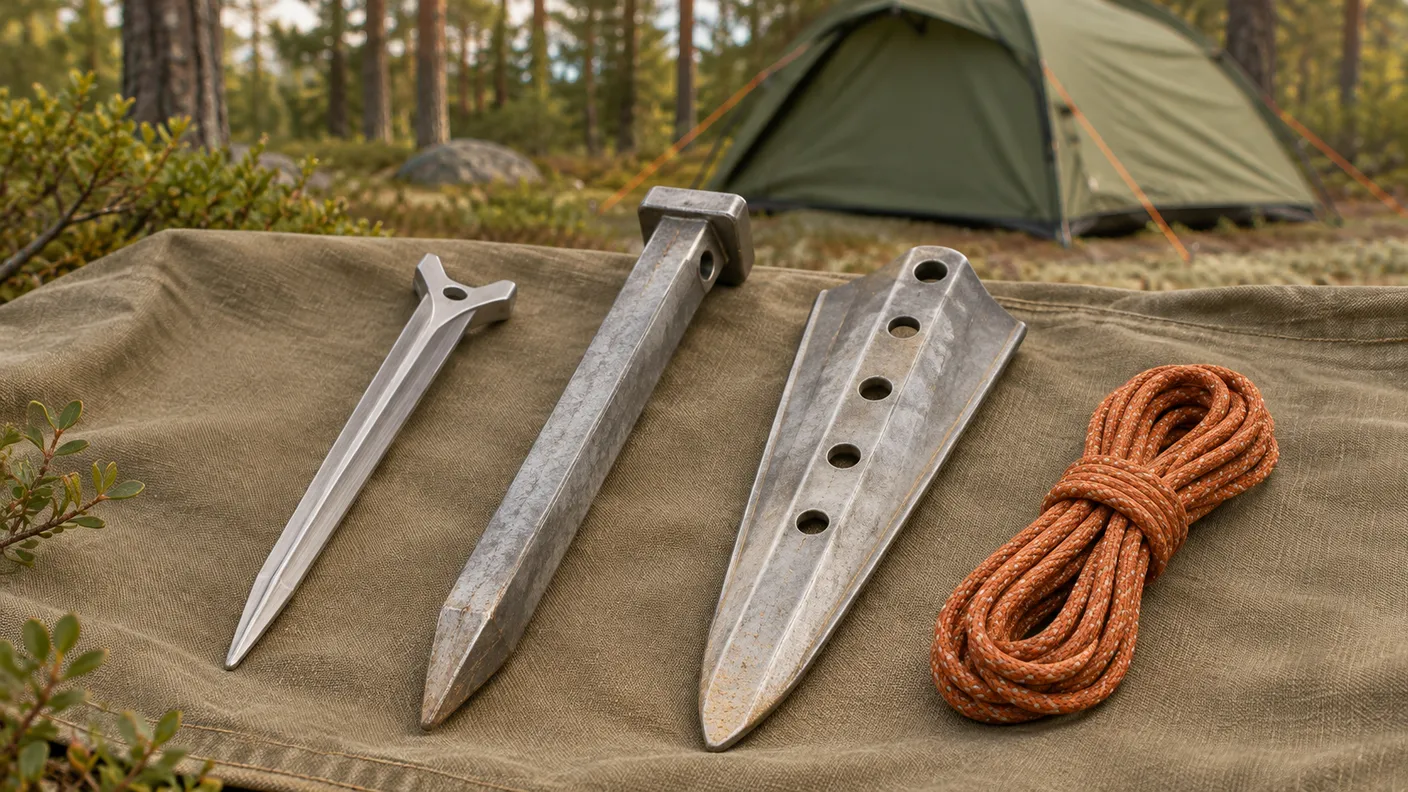
Hilleberg's peg range illustrates the differences. Its X-Peg measures 30 cm and weighs 68 grams, with a design intended for hard ground. The Snow & Sand model measures 31 × 3 cm and weighs 61 grams; it is made for snow and sand, with anchoring options described by the manufacturer.
These examples show why length alone is a poor buying guide. I would ask which ground a peg suits and how to use it with my tent. A wide sand anchor is no reason to replace every working standard peg for an ordinary grass pitch.
Consider the packed weight too. Replacing 10 pegs weighing 15 grams each with 10 weighing 30 grams adds 150 grams. That is an arithmetic example, not a recommended set. It may matter little when camping beside the car; on a walking trip you carry it every day.
Test the anchor without damaging the peg
Follow the peg and tent instructions for angle, guy line and insertion. Hilleberg explicitly allows hammering its X-Peg, but that advice does not automatically apply to a thin lightweight stake. Read the instructions before reaching for a hammer.
Stop at resistance. Move the anchor point. If a peg hits a stone, I would try another position within the tent's permitted pitching arrangement instead of hitting it until the metal bends.
Imagine a pitch at Lake Siljan where one corner sits on grass and another over a hard gravel layer. Ask the campsite host where the tent may stand and whether a more suitable pitch is available. If the ground will not hold the anchors, change the pitch or arrangement in line with the tent instructions.
Anchor a tent even when it stands on its own
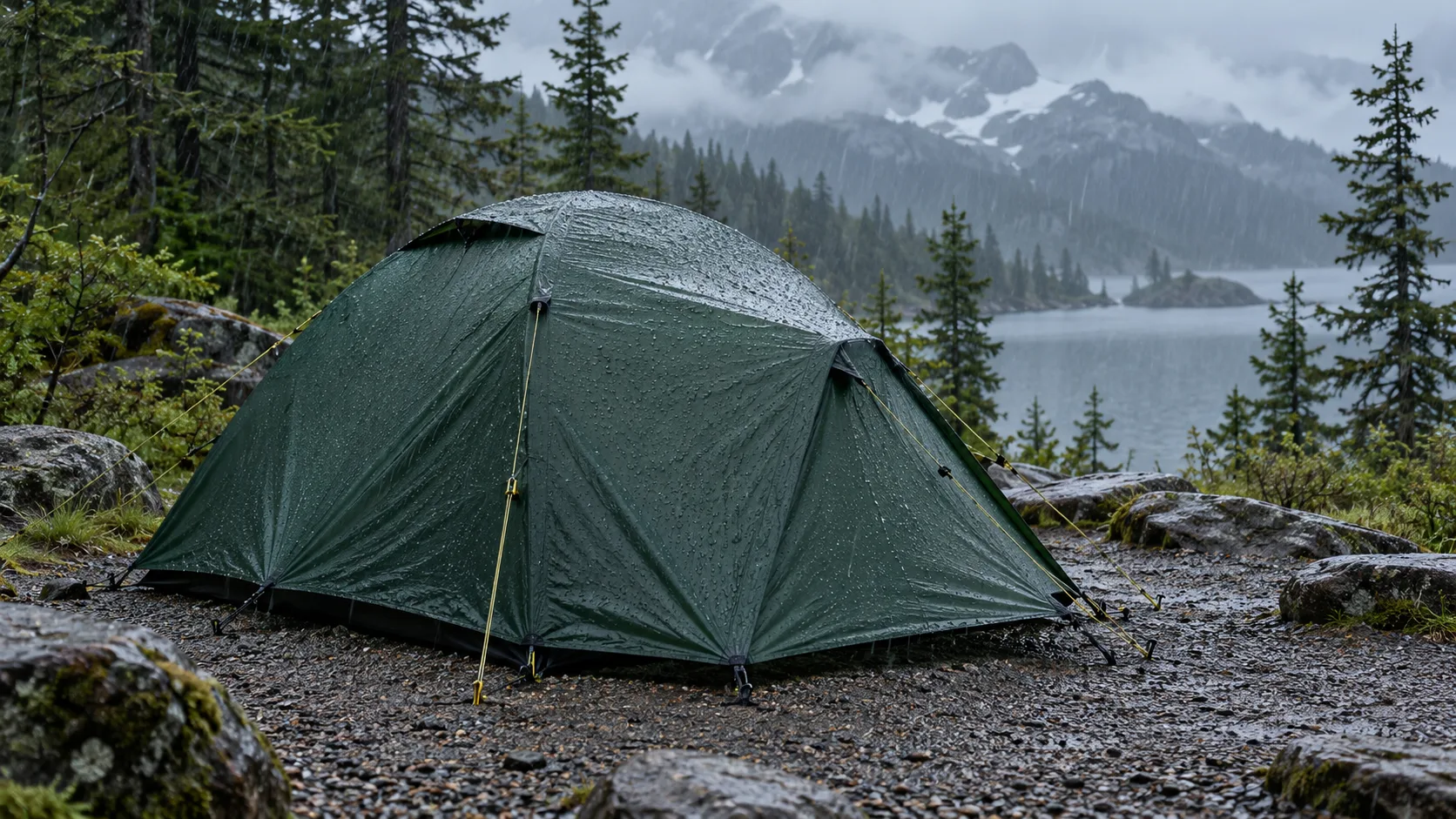
A self-supporting tent still needs anchoring. Follow its manual and choose a pitch for the weather and conditions; a particular peg offers no universal wind guarantee. For the structure itself, see the guide to choosing a tent for its use and sleeping space.
Take the complete set and spares appropriate to the trip. At home, count the pegs again while the tent is out. Put a damaged one with the items to replace instead of returning it to the bag out of habit.
Keep the campsite on your map
After two nights beside Lake Siljan, it may be the swim and evening walk you want to repeat. In FARON you can save the overnight stay with a photo on your map. Log your first night to keep the place for next summer.
Frequently asked questions about tent pegs
How many tent pegs do I need?
Count the anchor points and lines required by your tent manual. Check the actual bag before leaving and replace anything missing.
Can I hammer in every type of peg?
No, use only the method its manufacturer allows. Thin stakes can bend or be damaged by impacts.
Do I need special pegs for sand?
Loose sand may require dedicated anchors and a different anchoring method. Follow both tent and anchor instructions, and move if the anchoring does not work.
Is it enough that a dome tent stands without pegs?
No, anchor it according to the manual. Poles holding its shape do not mean the tent will stay put in wind.