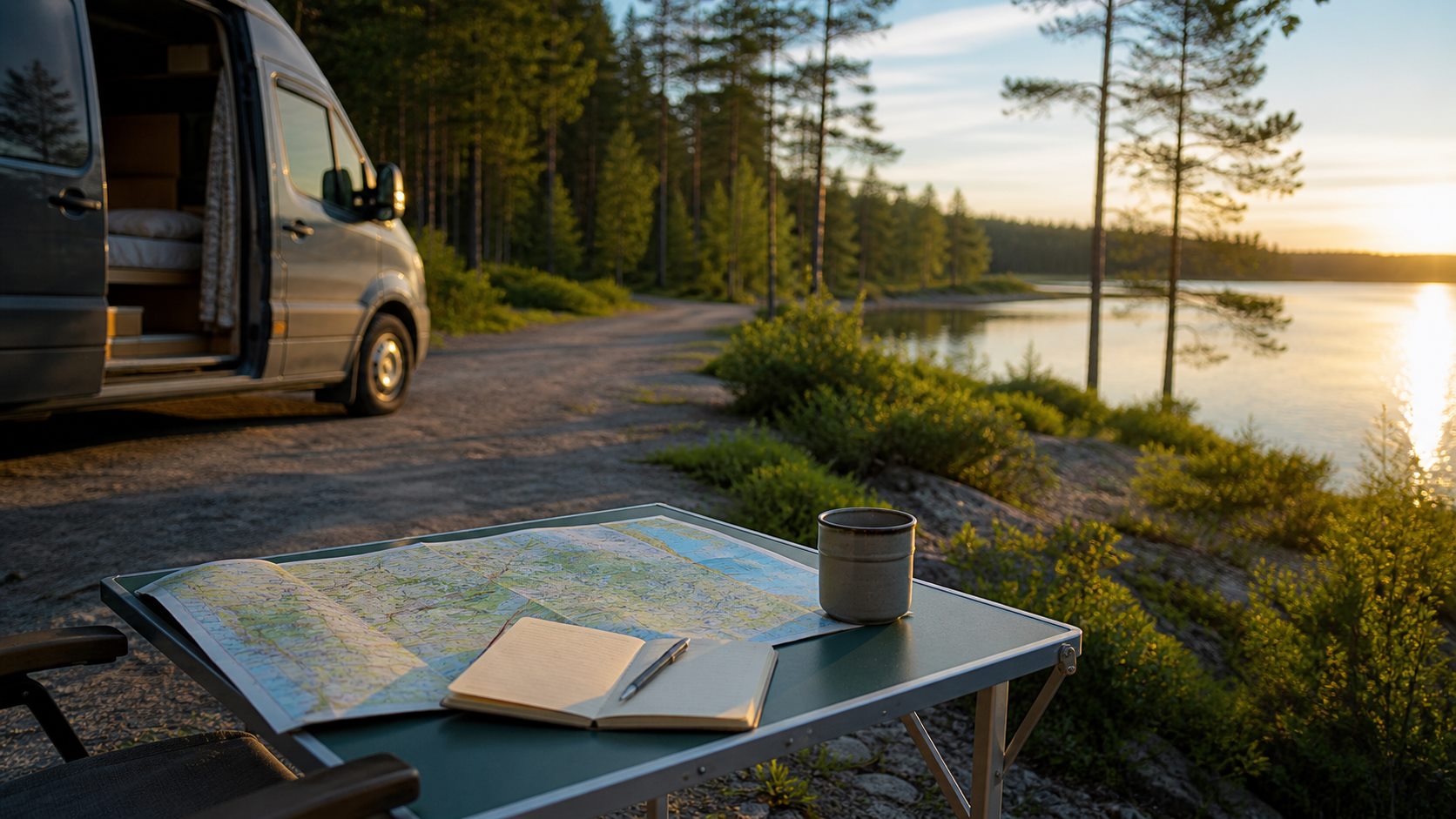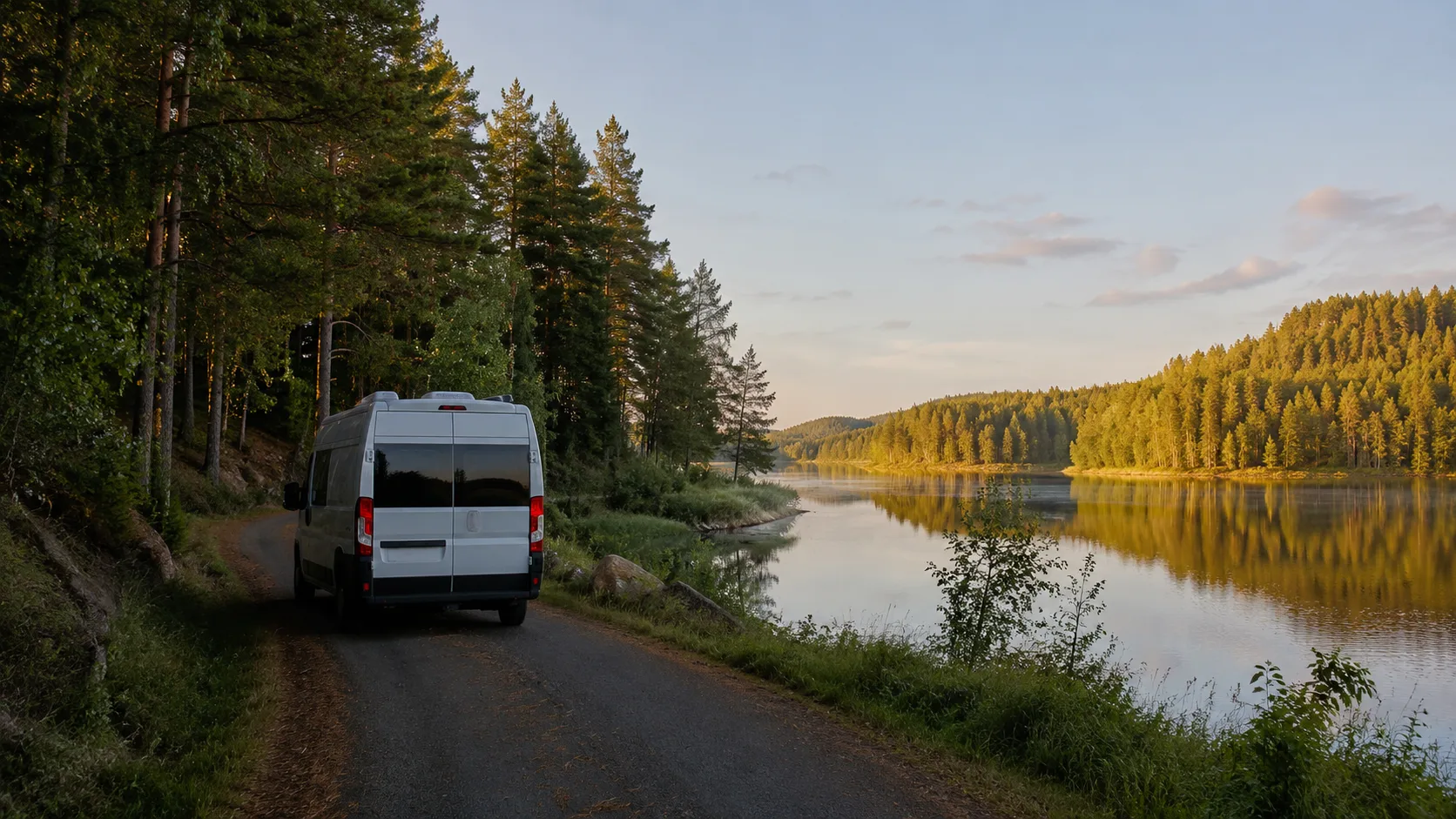
Karlstad presents two sensible directions. Hammarö and Lake Vänern lie south; the E18 runs west towards Grums, Borgvik and Arvika. Trying to cover both before lunch turns the first day into transport.
A first Värmland road trip works best as a loop through Karlstad, western Värmland, Fryksdalen and Sunne. Three or four days give Karlstad or Hammarö, Borgvik, Arvika, Glaskogen and Mårbacka enough room to become visits rather than quick walks around car parks.
Choose the loop before the stops
A practical clockwise route is Karlstad – Hammarö – Borgvik – Arvika – Glaskogen – Sunne – Mårbacka – Karlstad.
Hammarö is a detour south of Karlstad. Use it for a first night, swim or Vänern shoreline; skip it after a late arrival when Borgvik and Arvika matter more. Borgvik lies roughly forty kilometres from Karlstad and its old industrial village can fill a calm couple of hours.
Two days work. Three are better. Four leave time for rain, swimming and minor roads that take longer than the map implied. A fast two-day version should retain Karlstad, Borgvik, Arvika and Sunne. The whole loop usually totals roughly 300–350 kilometres once Hammarö and Glaskogen are included.
With five days, add the extra night in Glaskogen or Fryksdalen. Torsby, Årjäng, Kristinehamn and a full circuit of Vänern are separate expansions, not harmless additions after Mårbacka.
Drive the loop in three or four days
Day 1: Karlstad, Hammarö and Borgvik to Arvika
Buy food and fill water in Karlstad before turning towards smaller roads. Hammarö is about ten kilometres away, but the return north plus parking, a walk or swim can consume 45–90 minutes.
Continue through Grums to Borgvik. Two unhurried hours in the industrial setting and a proper fika give the village a clearer role than four partial E18 stops. Spend the night in or near Arvika, where shops and services make the next morning towards Glaskogen simpler.
Day 2: Arvika and Glaskogen
Glaskogen is about 36 kilometres from Arvika, normally around 45 minutes on slower roads. Lenungshammar is the natural base, with information, camping and seasonal service. The reserve covers almost 29,000 hectares and around 300 kilometres of marked trails, so a brief visit reveals very little.
Stay overnight when Glaskogen is a main destination. Motorhomes and caravans must use the campsite or designated stopover areas; reserve regulations prohibit setting them up elsewhere. Tent stays and fires also have specific limits. Check current reserve rules, fire risk and local information before arrival.
Day 3: Glaskogen to Sunne and Mårbacka
Leave in the morning, return towards Arvika and use larger roads before turning towards Sunne and Fryksdalen. This day is longer than it looks because its first section follows minor roads.
Do not combine a long morning walk, lunch in Arvika, several viewpoints and a fixed Mårbacka tour. Mårbacka lies at Östra Ämtervik, around ten kilometres from Sunne, and visits to Selma Lagerlöf's former home use guided tours with limited places. Confirm current times and book when it is central to the journey.
Stay in Sunne or Fryksdalen. That leaves the afternoon for Mårbacka and keeps the evening free.
Day 4: Sunne to Karlstad
The final day is deliberately light. Travel south via Kil, mainly on the E45, or remain longer in Fryksdalen when the weather is good. If Hammarö was omitted on day one, use Lake Vänern as the ending instead.
Add one day without filling the route
Put a fifth day where the vehicle can remain parked. Choose Glaskogen for walking, paddling or a full day away from town. Two nights also protect the visit from an afternoon of rain.
Choose Sunne and Fryksdalen for Mårbacka, swimming and a slower morning. This can work better with children, a dog or caravan because no new camp needs to be built for another detour.
Give each area a distinct role
Karlstad and Hammarö suit the first or last day, with services and access to Vänern. Arvika is the practical western base. Glaskogen deserves half or all of a day, ideally with a night. Sunne and Mårbacka form the natural end of the loop.
They do not need equal time: Karlstad may take two hours, Arvika an evening, Glaskogen a full day and Sunne one afternoon plus a night.
Choose a lawful overnight place
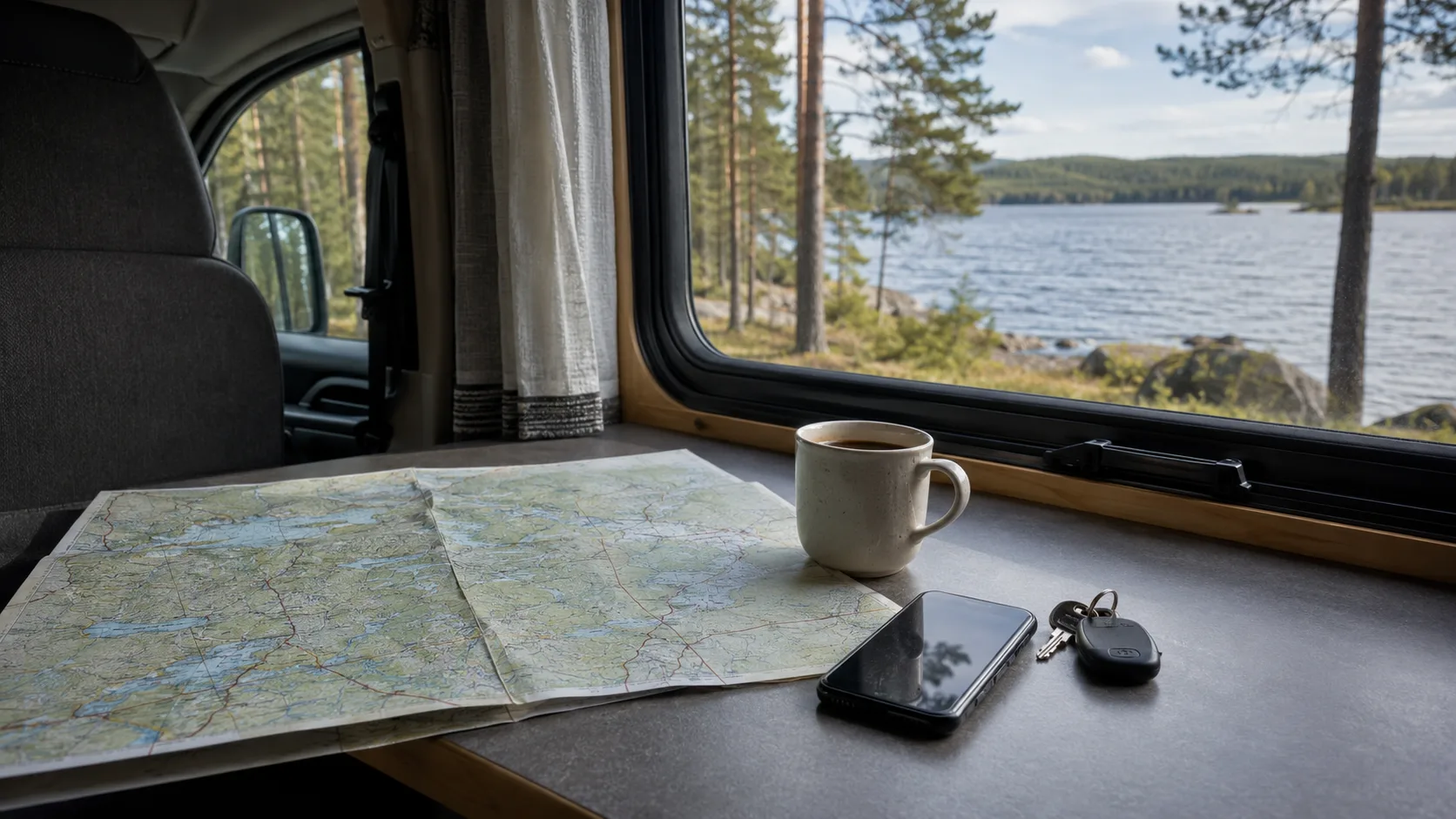
Campsites and official motorhome stopovers are the simplest choices for a motorhome, van or caravan. Book Glaskogen during popular summer weeks; elsewhere, choose the area first and the exact site when the day's progress is clear.
With a rooftop tent, separate tent access from vehicle access. Sweden's Right of Public Access does not allow a motor vehicle to drive onto or park on natural ground. Trail car parks, bathing areas and roadside pull-offs are not automatically overnight sites, and nature reserves apply their own regulations.
Plan for road speed and changing weather
The E18, road 61 and E45 move quickly; roads towards Borgvik and Glaskogen take longer per kilometre, especially with a caravan or large motorhome. Add at least thirty minutes before a booked tour and an hour on a Glaskogen day.
Check the Swedish Transport Administration's road map that morning. Roadworks and restrictions change too quickly for last week's screenshot. In heavy rain, use Arvika or Mårbacka and move Glaskogen. A Vänern wind can similarly make Hammarö a poor first night.
Save the route that actually happened
After four days, the real loop will differ. Wind removed Hammarö, roadworks changed the way past Kil or the ordinary-looking Glaskogen night became the highlight.
Save the actual route, nights, photographs and two useful sentences while they are fresh: “narrow final road but fine for a van”, “evening sun” or “book two nights next time”. FARON's map travel journal keeps those private details with the journey instead of publishing another campsite catalogue.
Frequently asked questions
How many days does a Värmland road trip need?
Three or four days suit Karlstad, Arvika, Glaskogen and Sunne. Two days require removing Glaskogen or Fryksdalen; five allow two nights in one place.
What is the best first route?
Karlstad–Borgvik–Arvika–Glaskogen–Sunne–Mårbacka–Karlstad is a practical first loop, with Hammarö added at either end.
Can I wild camp with a motorhome or rooftop tent in Värmland?
A motorhome must use a place where parking and overnight stays are permitted. Tent access and vehicle access are separate, and reserves such as Glaskogen apply additional rules.
Is Glaskogen worth the detour?
Yes, when you give it at least half a day and preferably a night. On a two-day trip, Sunne and Mårbacka create an easier route.