Hiking traction cleats need to fit your boots and the surface you plan to walk on. Try them on your own footwear before leaving, with the traction centred beneath the sole and no loose chains. They can add grip on snow and ice, but they cannot make every icy passage safe.
Choose for the trail you plan to walk
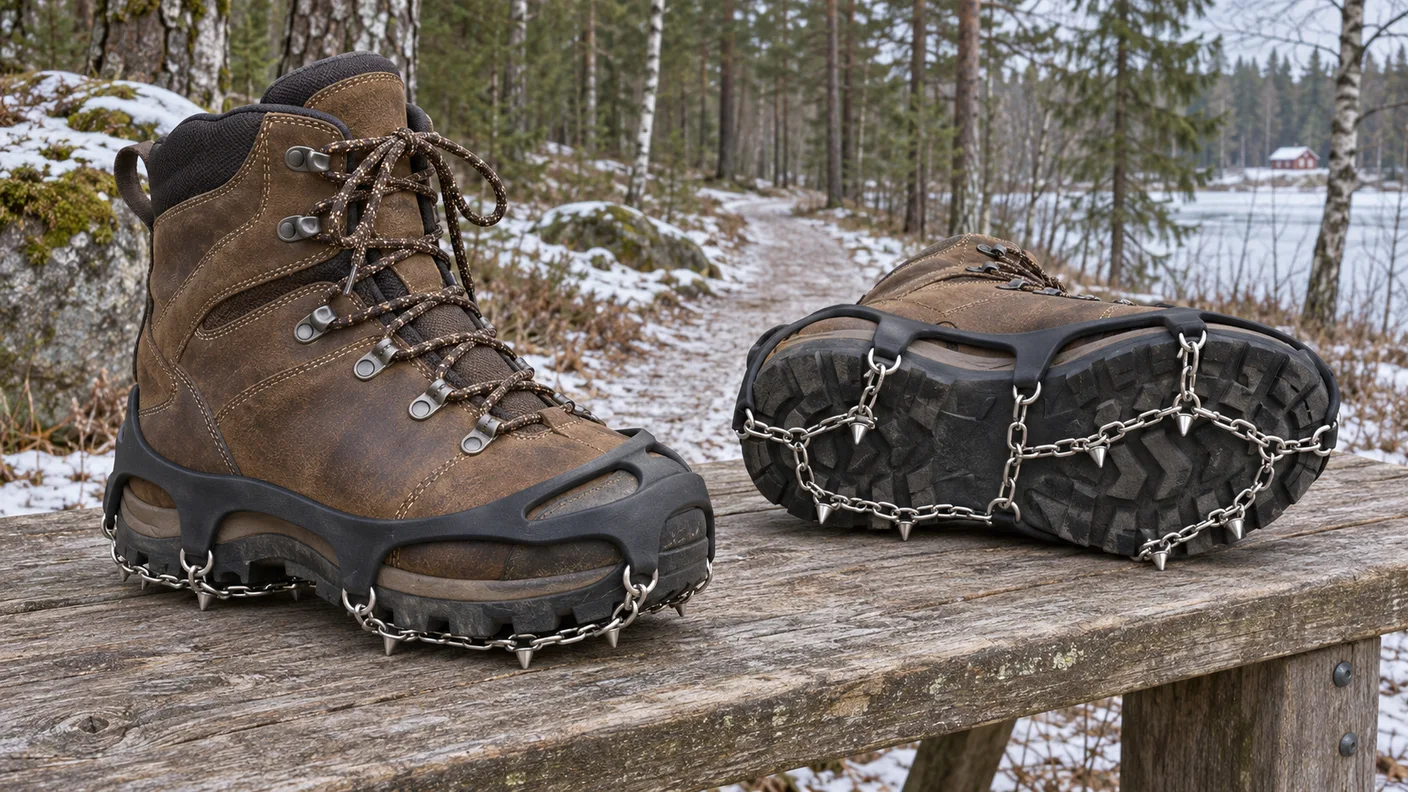
A short woodland walk near Mora and a steep mountain route call for different equipment. For an easy winter trail, I would choose a model explicitly intended for hiking on the expected surface and check its fit on my boots. For example, Kahtoola MICROspikes have 12 points per foot, each 10.4 mm long. Point count and length alone cannot tell you whether they fit.
Kahtoola specifies that MICROspikes are for walking on ice, snow and frozen ground, not mountaineering. Steep or technical terrain needs a different assessment of equipment and skills. Choose an easier route or turn back if the trip exceeds what you and your equipment can handle.
Bring both boots when you try them on
Footwear with the same size label can have different outer dimensions. An insulated winter boot takes up more space than a narrow hiking shoe. Kahtoola's sizing guide therefore has separate tables for hiking footwear and insulated boots. Use the right table and check the fit on your actual pair.
Fit the cleat as instructed. Centre the traction. The elastic harness should sit securely around the shoe without loose chains beneath the sole. Try both feet and take a few careful steps on suitable ground near the start. If the device twists sideways, correct the fit before continuing.
Leave room to pack them away
Imagine a walk with three parts: bare gravel, an icy woodland path and an indoor coffee stop. You need somewhere to put the cleats when you take them off. Keep a protective pouch near the backpack opening. Sharp parts should not lie loose against your waterproof jacket or lunch.
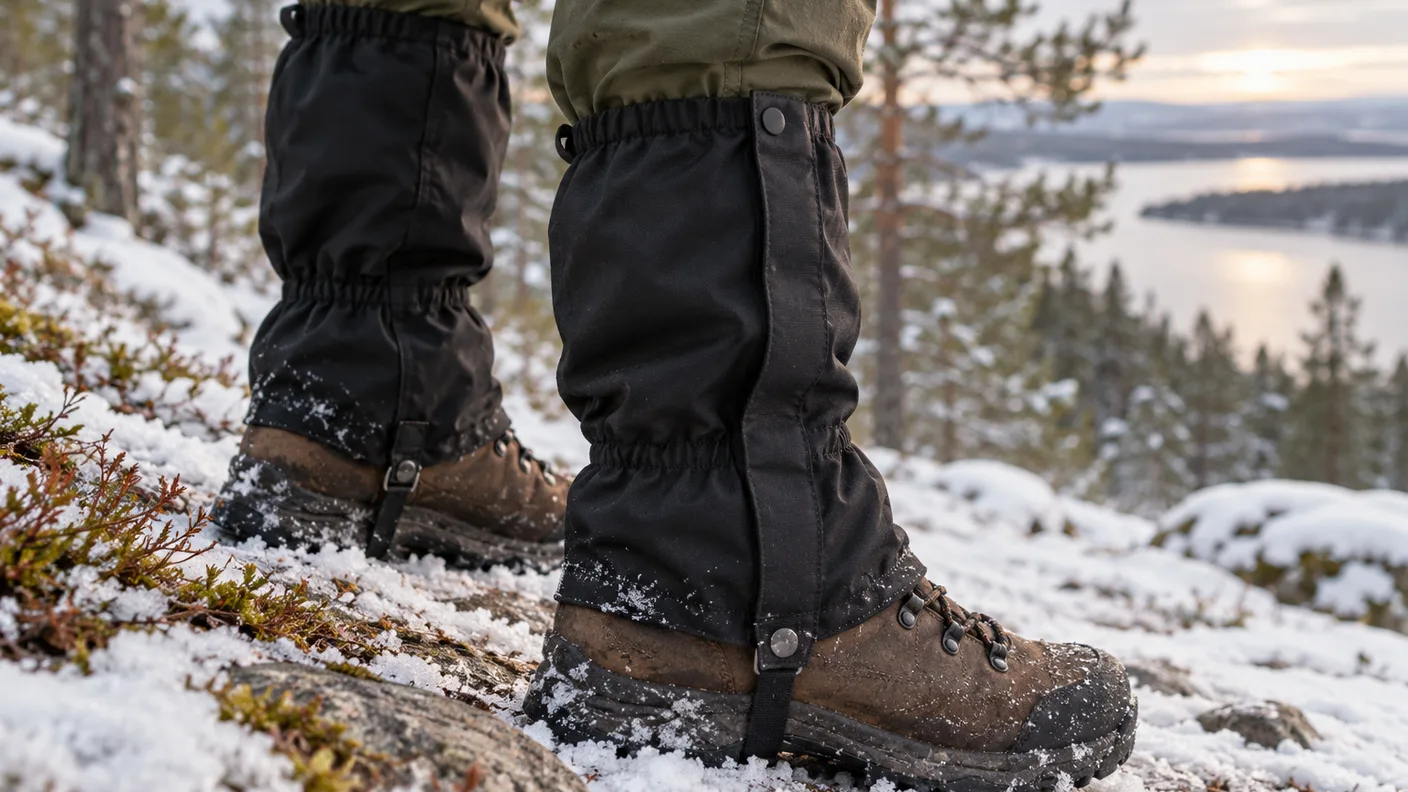
Practise putting them on and taking them off with the gloves you will wear. It is easier to discover an awkward heel tab at home than with cold fingers. For snow getting in above the boot cuff, gaiters provide separate protection; they do not change the traction beneath your foot.
Check wear and dry them after the walk
Look for cracked rubber, damaged links and worn points before use. Follow the model's retirement instructions. For MICROspikes, the manufacturer specifies lukewarm water and air-drying without heat, with the cleats clean and dry before storage.
A winter weekend might include two overnight stops but just one walk you want to repeat. In FARON, you can save that walking stop with a photo and note on the map, alongside the trip's nights. Log your first night.
Questions about hiking traction
Can I choose a size from my shoe number alone?
No. Use it as a starting point, then try the device on. Sole shape and boot volume affect the fit.
Can traction cleats replace crampons?
Ordinary hiking traction cleats do not replace crampons for technical mountain terrain. Equipment must suit both the route and your skills.
Will one pair fit running shoes and winter boots?
Only if the manufacturer allows that use and they fit both securely. Try each pair of shoes separately.
Where should I keep them in the car?
Put them away dry in a protective pouch so the points cannot damage other luggage. Keep it accessible if the walk is your first stop.