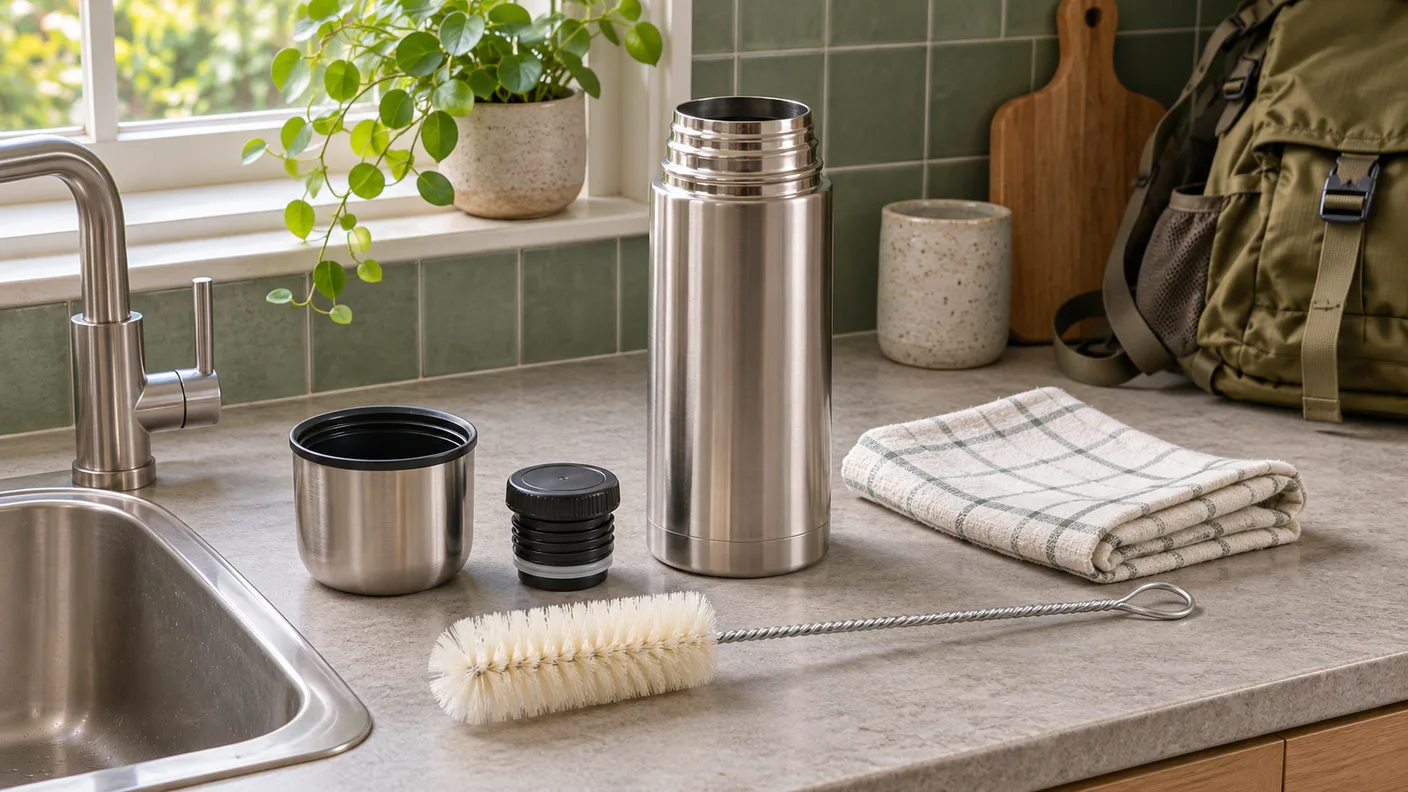
Clean your vacuum flask with warm water, mild washing-up liquid and a soft bottle brush, following its care instructions. Wash the stopper and any seals designed to be removed, then let every part dry completely. Old coffee smells can linger in the lid even when the bottle looks clean.
Remove the parts designed to come apart
After a coffee stop beside Lake Siljan, I would empty the flask when washing facilities are available rather than carry it closed through the rest of the weekend. Put the bottle, stopper and cup on the counter. Seeing all three parts makes it harder to overlook the stopper.
Stanley's cleaning guide highlights removable components, lids and seals. Designs vary. Read your flask's instructions before pulling out a seal or opening a push-button mechanism; not every visible joint is designed to come apart.
Reach the bottom and stopper edges
Wash the bottle. Rinse it out. Use a soft brush that reaches the bottom and work around the threads where the drink passes. A narrow opening needs a brush that fits through without forcing metal against the inside.
Wash the stopper separately and rinse away the detergent. Clean the seal's groove when the instructions allow you to remove it. If your flask has several small parts, a photo before disassembly can help you put them back correctly.
Use the model's stain-removal advice
A brown tea stain and a lingering smell may need different attention. Use the method and quantities specified for your bottle. I would avoid trying several home remedies in succession when cleaning the stopper or replacing a removable seal may be what is needed.
Dishwasher suitability also depends on the model. One dishwasher-safe Stanley cup or bottle tells you nothing certain about another flask or its painted finish. Check the instructions for both the container and its lid.
Dry it open before the next trip
Leave the parts to air-dry and reassemble them only when completely dry. Before packing the flask, use cool water over the sink to check that the stopper is fitted correctly and seals. Half a litre spilled inside a backpack is an avoidable start to a walk.
On a two-night trip, washing and drying may need to fit between driving and dinner. Our guide to food, showers and daily life on the road covers ways to organise these routines.
The waterside coffee spot may be worth keeping long after the flask is washed. Save the stop with a photo and short note in FARON, and find it on your map before the next trip. Log your first night.
Questions about flask cleaning
Should I wash it after carrying only water?
Yes. Follow the model's cleaning routine after use, empty it and let the parts dry before storage.
Can every seal be removed?
No. Remove only the parts described as removable in the instructions.
What if the seal is cracked?
Check whether the manufacturer sells a compatible replacement. Do not rely on a damaged seal as though it were intact.
Will cleaning fix a flask that no longer keeps drinks hot?
Cleaning cannot restore damaged vacuum insulation. Check the stopper and seal, then contact the manufacturer if heat retention is still poor.