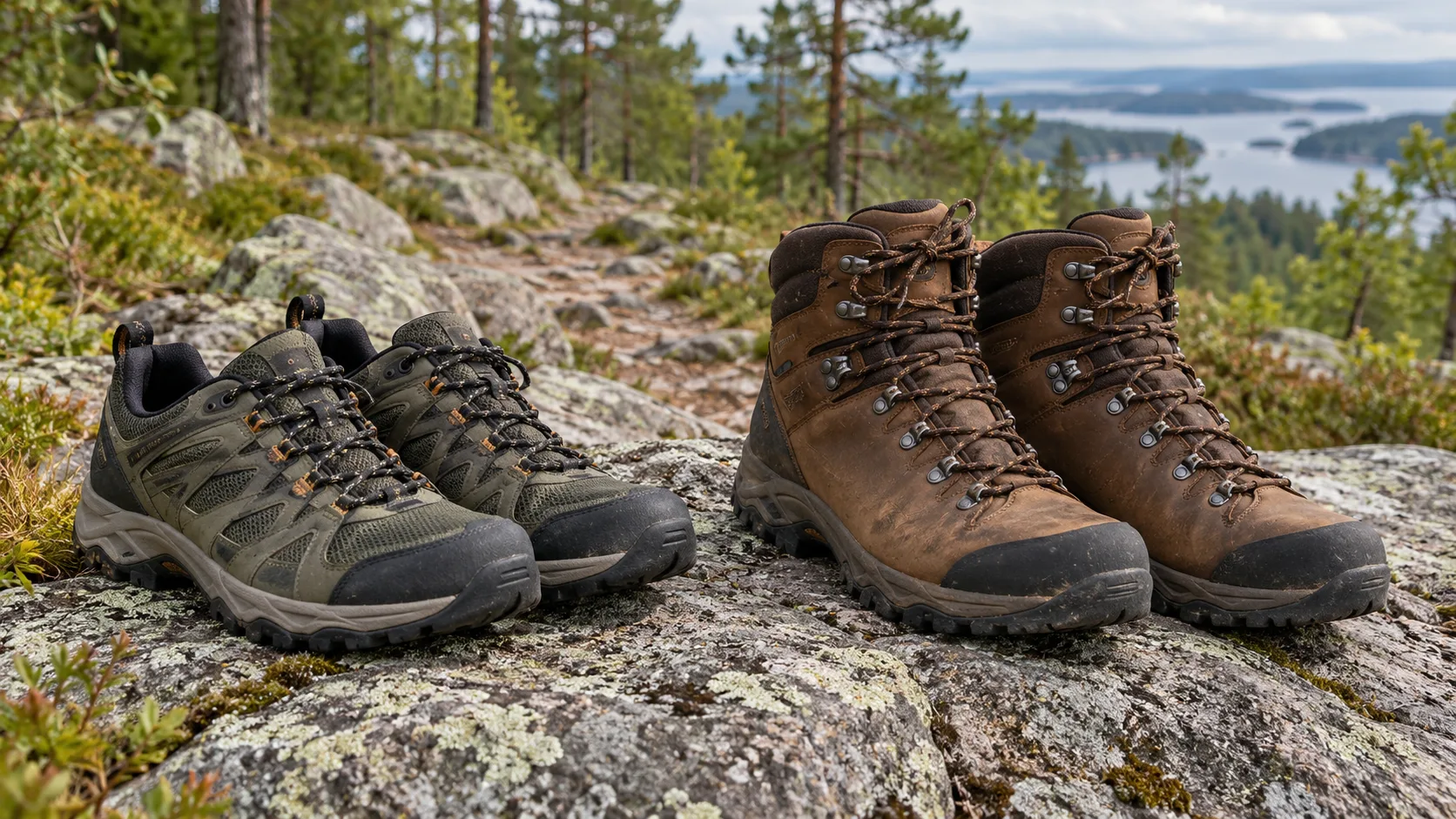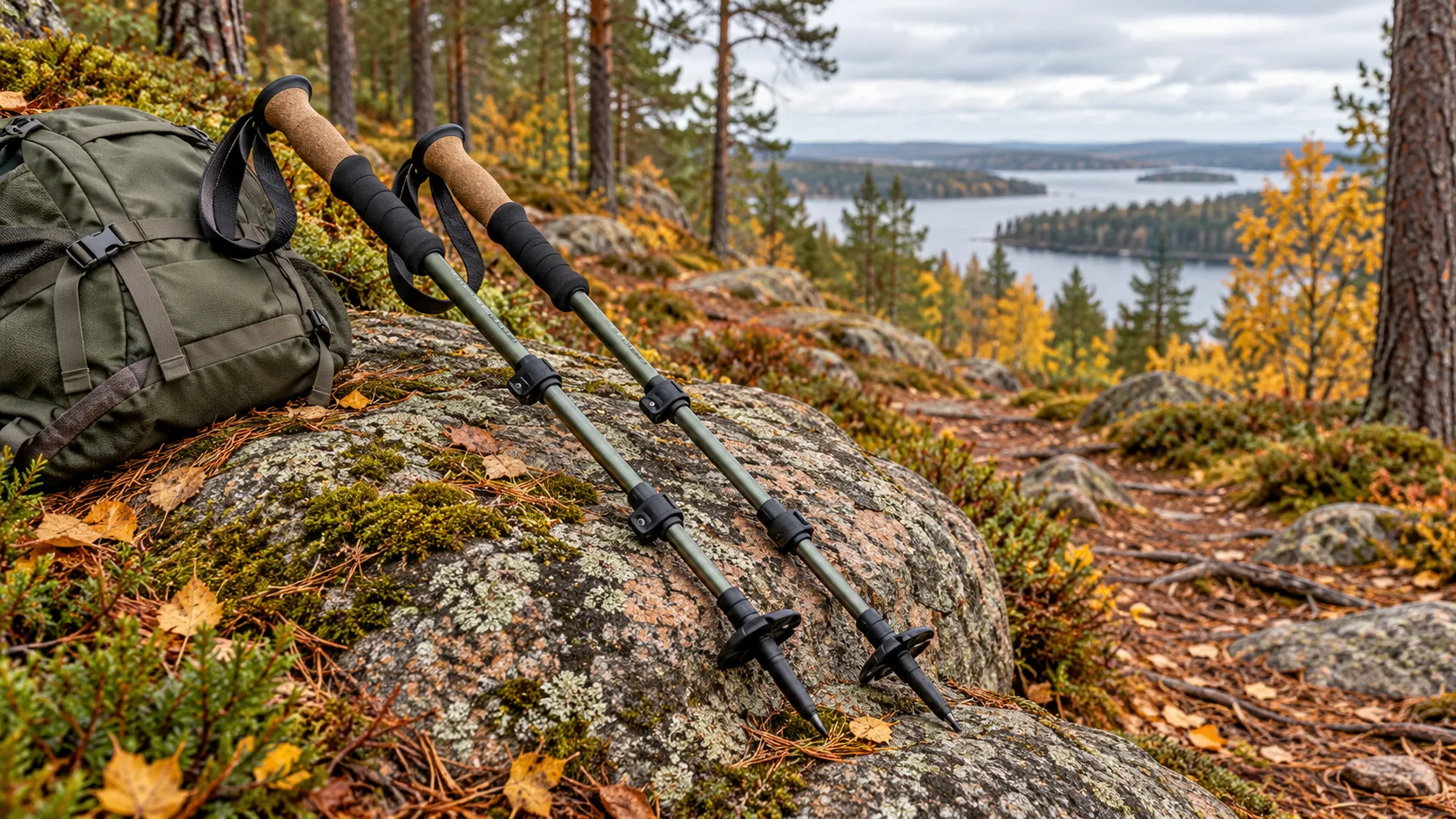
When trying trekking poles for the first time, I would start on a level floor wearing the shoes for the walk. Before a day hike in Tiveden, the feel of the grip and the length adjustment tell you more than a long list of material names.
Use your arm position as a starting point
LEKI's guide to using trekking poles starts with an elbow angle of roughly 90 degrees on level ground. Keep your shoulders relaxed and the tip on the ground. This is a position to try, not an exact angle to maintain through every step.
A sizing chart can help identify a suitable range. LEKI's length advice also considers body proportions, footwear and terrain. Try holding the poles while standing before deciding.
Try the adjustment before leaving home
For sustained climbs, LEKI describes shortening poles by around 5–10 centimetres and lengthening them similarly for descents. Adapt to the terrain and how it feels. Never extend a section past its marked limit.
Open the lock. Adjust the length. Close it according to the instructions and gently load the pole on stable ground to check that the section holds.
I would repeat this wearing the gloves for the trip. A lock that is awkward indoors is unlikely to be easier with cold fingers. Read the model's instructions if its lock needs tightening; different mechanisms require different adjustments.
Choose a packed shape for the times you put them away
Telescopic poles slide together in sections, while folding poles separate and fold. Some folding models also have length adjustment. Compare the actual packed length and adjustment range, rather than just the category name. LEKI explains its different pole types.
Imagine a planned 8-kilometre loop from the car, with a coffee stop and a short detour where you want your hands free. I would try attaching the poles to my own backpack. Their tips should not point into your body or towards other people when you turn.
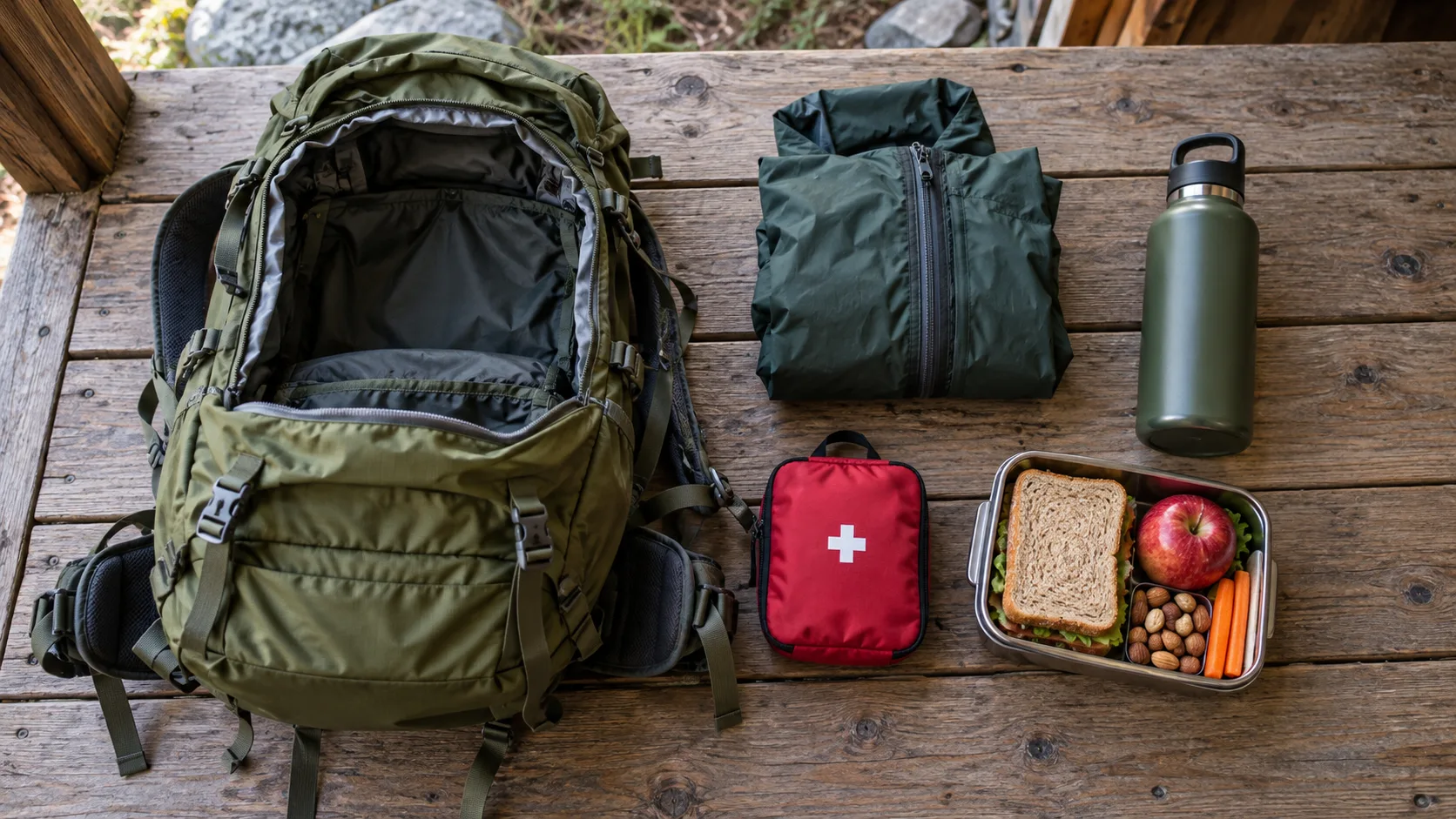
Bring your backpack when trying poles. The guide to packing a backpack for a day hike covers the rest of the load.
Learn the grip and strap on a short walk
Try the handle without gripping tightly. Follow the model's strap instructions; LEKI describes bringing the hand up through the strap from below before taking the grip. Practise letting go and removing your hand too. Where a pole could become trapped, you need to be able to release yourself.
Start on a familiar path. Try bringing the opposite arm and leg forward and let your steps find a rhythm. I would take a short walk before the first longer hike so there is time to change the length and strap. Poles do not replace suitable footwear grip or a route that matches the conditions.
Save your overnight place between day hikes
After 3 camping nights, several woodland photographs can look surprisingly similar at home. In FARON you can attach a photograph to the saved night on the map. Log your first night with the place from the trip.
FAQ
How long should trekking poles be?
Start with roughly a 90-degree elbow angle on level ground while wearing your walking shoes. Body proportions and terrain affect the length.
Should poles be shorter uphill?
A shorter setting can often suit a climb. LEKI suggests around 5–10 centimetres as a starting point; adapt and respect the extension limit.
Are folding poles always adjustable?
No, folding describes how they pack, not their full length range. Read the model's dimensions and check whether its length can be changed.
Should I try them with my backpack?
Yes, it helps you see how to carry the poles when they are not in use. Try the attachment points and tip positions with your intended load.