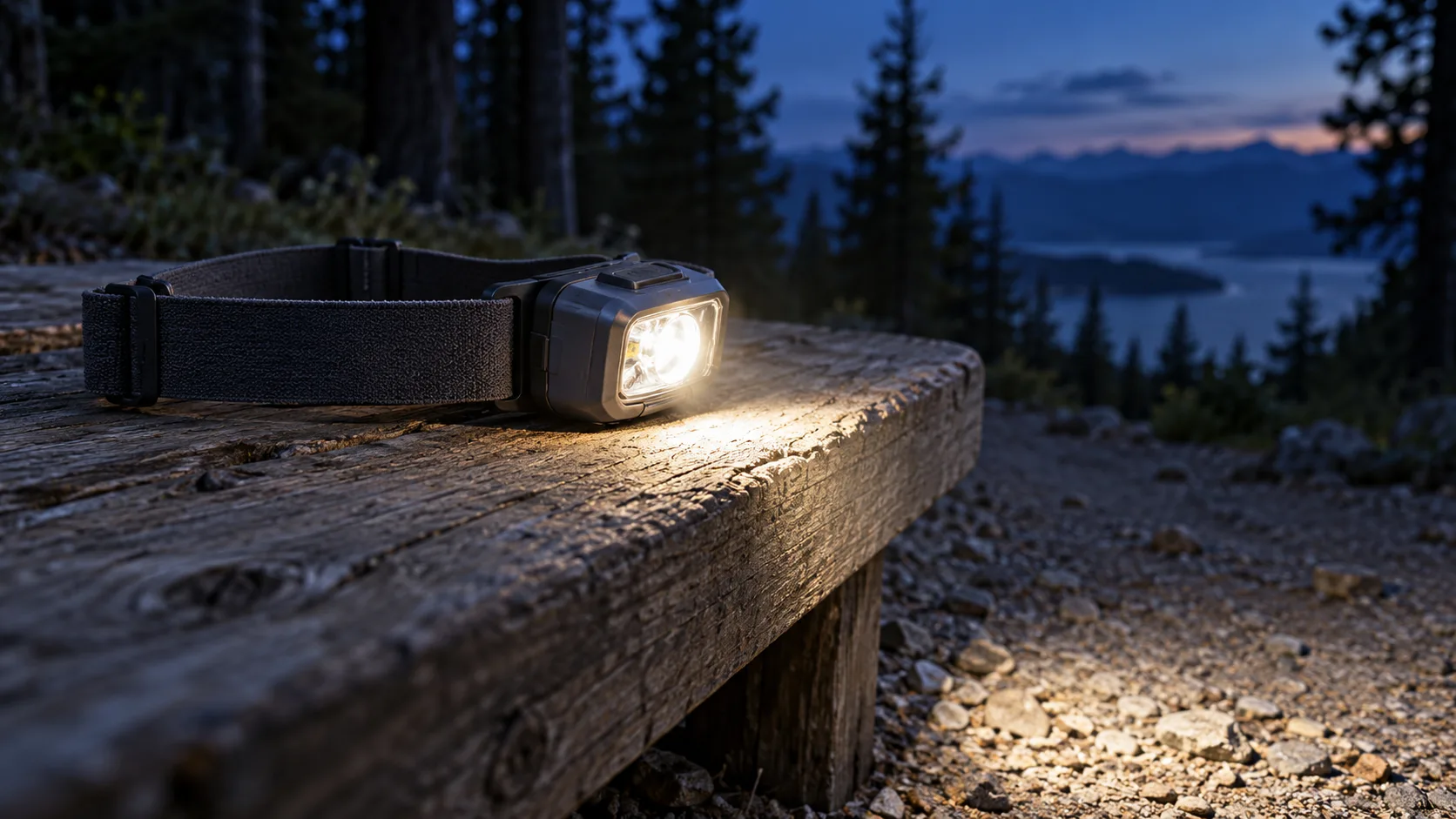
When choosing your first headlamp, the largest lumen number can catch your attention. For an autumn weekend near Lake Siljan, I would start with clear visibility along the path and enough battery life at the setting I actually use.
Compare the same row in the table
A lamp can have several lighting levels with different runtimes. Compare output and runtime for the same level, rather than maximum brightness from one row and longest runtime from another. Read how the manufacturer describes reserve mode and declining brightness too.
Petzl explains the relationship between brightness and runtime: with the same available energy, brighter light reduces operating time. I would compare the everyday setting that provides enough visibility, rather than just the maximum number.
Try the beam nearby and at a distance
Beam shape affects how far you can see. Petzl illustrates this with 100 lumens reaching around 40 metres in a wide beam or up to 100 metres in a focused beam. This explains the effect of optics; it is not a promise for every 100-lumen lamp.
For camping, I would try reading a map and finding things in a bag. For walking, I would also test the beam along a familiar dark path. A narrow spot in the distance does not alone show how clearly you can see the ground by your feet.
Try the button before your fingers get cold
Imagine standing beside the car wearing gloves and needing a dimmer setting. If the button is hard to find there, it is unlikely to be easier on the trail. Try the gloves you plan to bring.
Switch it on. Change the setting. Adjust the strap and walk a few steps to feel whether the lamp slips or presses.
Check the model's lock, battery warning and weather protection in its manual. I would also practise changing the battery or connecting the charging cable before packing it.
Plan power for the whole weekend
As a planning example, two evenings with one hour of use each mean two hours before any extra walking time. Compare that with the model's runtime at your chosen setting and allow a margin for your trip.
Bring a compatible spare battery or charging option and follow the manufacturer's instructions. A lamp does not replace planning your return and available daylight. If your overnight place has no charging facilities, read about camping without electric hookup.
Keep the evening photograph with its place
After two nights near Siljan, evening photographs can be hard to tell apart on your phone. In FARON you can attach a photograph to the saved night on the map. Log your first night with the place you want to remember.
FAQ
Are more lumens always better?
No. Beam shape, runtime and fit also need to suit the activity. Try the setting you intend to use.
Can I compare maximum output with the longest runtime?
No, they may refer to different settings. Read the figures from the same row in the model's table.
What should I try while wearing gloves?
Try switching on, changing levels and operating the lock if fitted. Check that the strap is comfortable too.
How should I plan spare power?
Plan for the trip's use plus a margin with a solution compatible with the lamp. Check its battery and charging instructions.